
Products
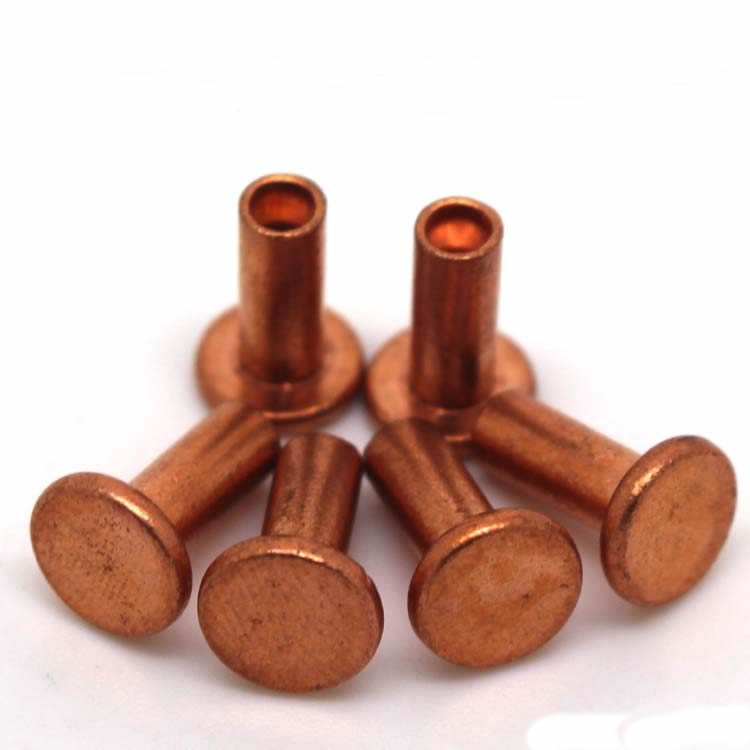
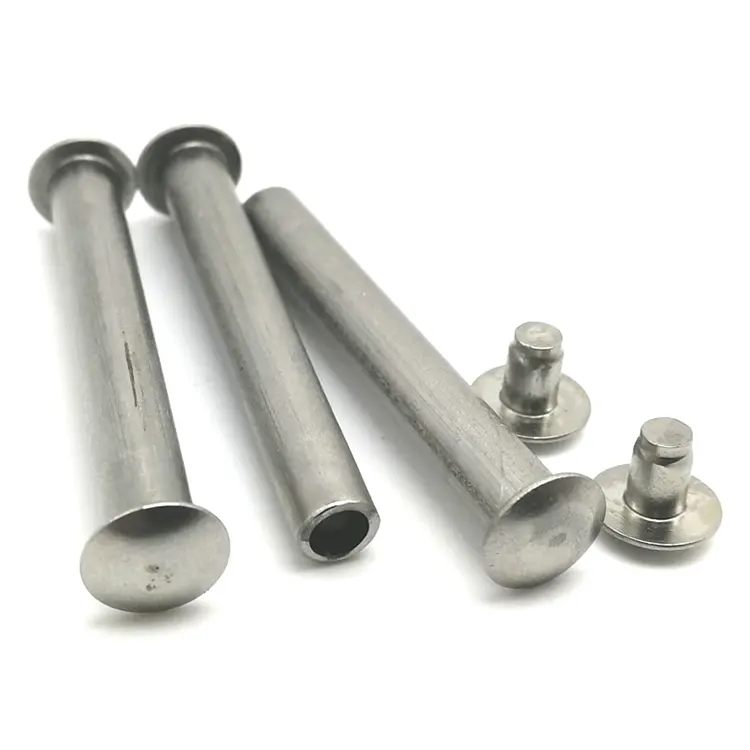
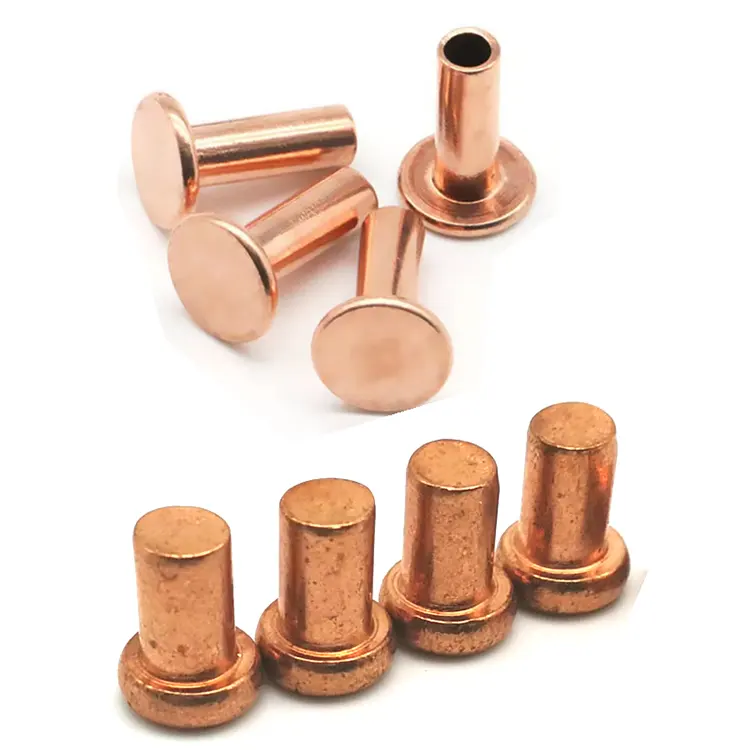
Copper Countersunk Head Rivets
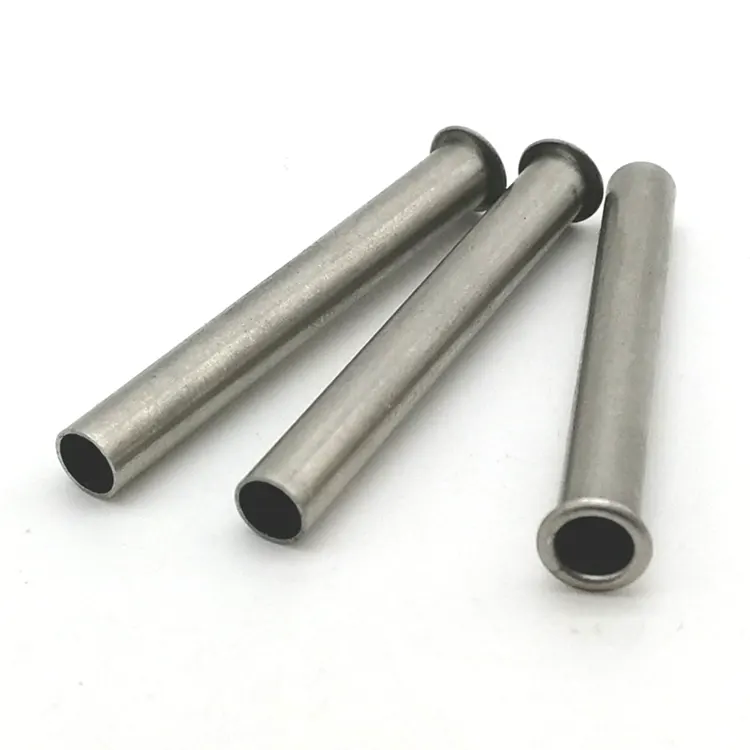
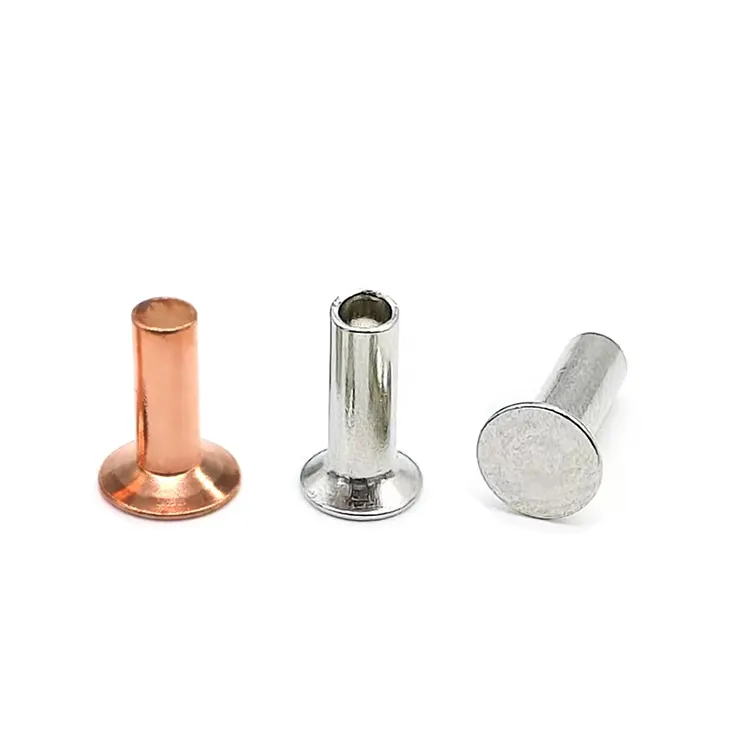
Copper countersunk head rivets produced by Nuote Metals in China are common metal fasteners used primarily in machinery manufacturing, electronic equipment, furniture assembly, and other industrial fields. As a traditional metal material, copper has excellent electrical and thermal conductivity and corrosion resistance, making it popular in specific applications. Countersunk head rivets are fasteners manufactured through cold heading or hot forging processes. Their simple structure requires tools for riveting to create a specialized connection.
Send Inquiry
Product Description
Copper Countersunk Head Rivets – Flush Finish Where Protrusion Is Not an Option
Some applications cannot tolerate a raised head. Boat decking that must feel smooth underfoot. Copper facades where every panel must sit perfectly flat. Precision instruments where a protruding rivet would interfere with moving parts. For these jobs, the Copper Countersunk Head Rivet is the only solution.
At Nuote Metals, we machine countersunk copper rivets to precise 90° angles that seat completely into a pre-cut tapered hole. The result is a surface that feels monolithic—no snag points, no visible fastener, just smooth copper. But flush finish comes with a trade-off: the head is thinner, the installation requires more precision, and not every copper application is suitable.
The Countersunk Trade-Off – Flush Surface vs. Reduced Head Strength
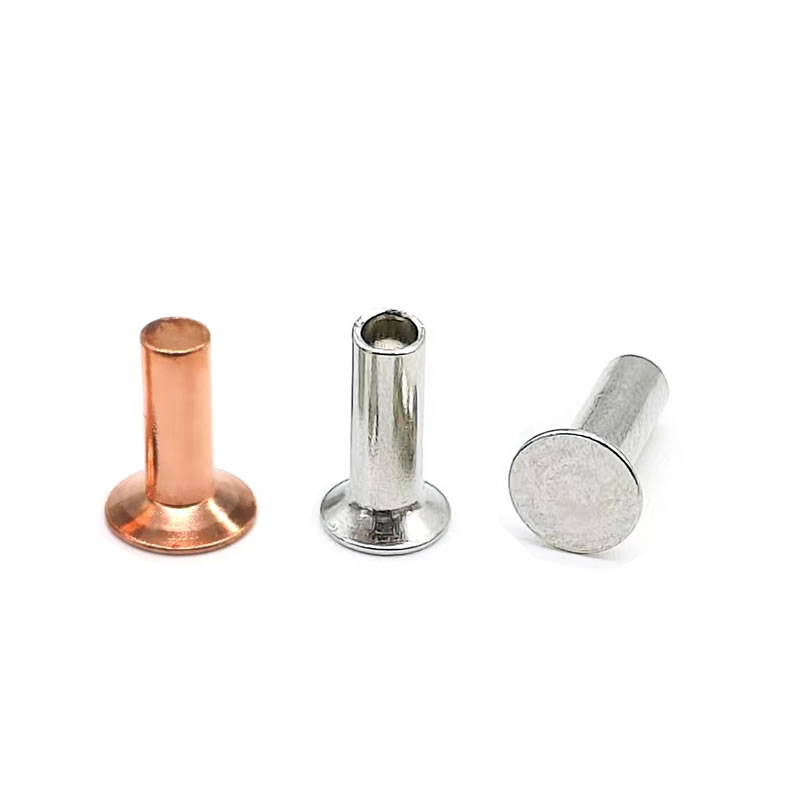
A countersunk head is conical underneath, designed to nest into a matching tapered hole. When installed correctly, the top of the head sits level with the surrounding copper surface.
What you gain:
- Completely flush finish – no protrusion, no snag points
- Smooth surface for painting, lacquering, or patina development
- Reduced drag in marine or aerodynamic applications
- Professional, finished appearance on architectural copper
What you give up:
- 15–20% lower impact resistance compared to round head – the countersunk head has less material mass over the shank.
- Lower pull-out resistance – the conical bearing surface has a smaller effective area than a flat or pan head.
- Requires pre-machined countersink – an extra production step that adds cost and time.
The critical rule for copper: Because copper is soft, the countersink must be cut cleanly and match the rivet angle exactly. A mismatched angle—even 3–5 degrees—creates a stress point that can crack the head during setting or lead to loosening under vibration. Nuote Metals supplies rivets with documented head angles and can recommend the correct countersink tooling for your copper thickness.
Technical Specifications – Copper Countersunk Head Rivets
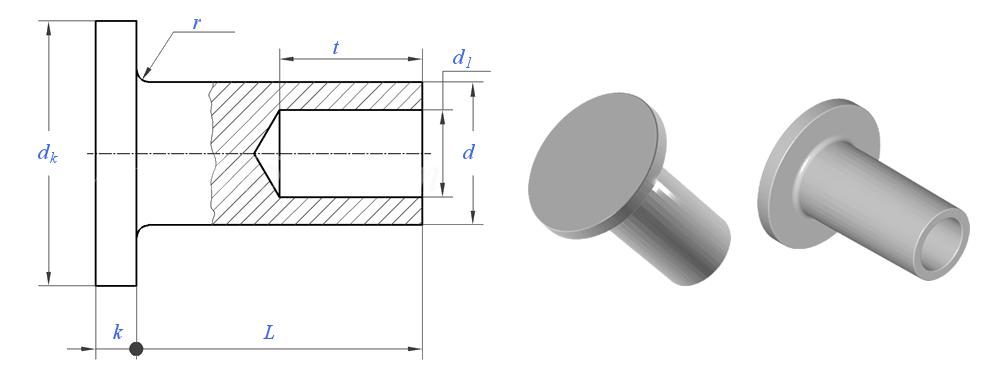
Manufactured to DIN 302 and ISO 1051 dimensions. Custom angles available.
| Parameter | Value / Range | Test Standard / Tolerance |
|---|---|---|
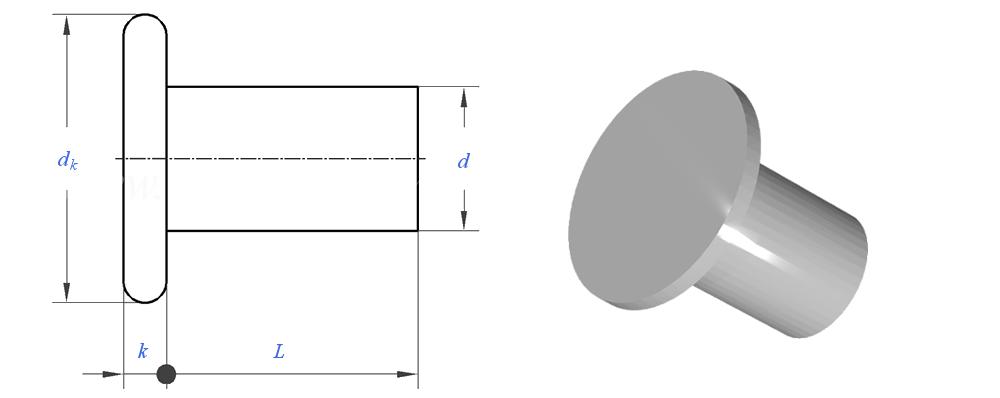
| Shank Diameter (d) | 1.5 – 10 mm | ±0.05mm (≤6mm) |
| Head Diameter (dk) | 1.4×d to 1.6×d | ±0.15mm |
| Head Height (k) | 0.3×d to 0.4×d | ±0.1mm |
| Countersink Angle | 90° (standard) or 120° | ±1° |
| Length (L) | 3 – 40 mm | ±0.3mm |
| Tensile Strength | 220 – 280 MPa | ASTM B152 |
| Shear Strength | 180 – 220 MPa | ASTM F606 |
| Conductivity | ≥58 MS/m (C11000), ≥59 MS/m (C10200) | ASTM B193 |
| Purity | ≥99.7% (C11000), ≥99.99% (C10200) | ASTM E53 |
| Standards | DIN 302, ISO 1051 | Custom per drawing |
Material grades:
C11000 (ETP): 99.9% copper, 0.04% oxygen. General marine, architectural, and electrical use.
C10200 (OFHC): 99.99% copper, oxygen-free. Critical electronics and cryogenic applications.
When Countersunk Is the Right Choice – And When It Is Not
Countersunk copper rivets are not a universal upgrade from flat or pan heads. They solve one specific problem—flush finish—and introduce others.
Choose Countersunk when:
- The surface must be completely flush – boat decks, copper roofing, instrument panels, aerodynamic surfaces.
- The copper is thick enough (≥2mm) to support a clean countersink without deforming.
- The joint faces low vibration and low impact – static architectural, marine decking, decorative trim.
- You can machine the countersink accurately – CNC or precision drilling, not hand tools.
Do not choose Countersunk when:
- The copper is thinner than 1.5mm – the countersink removes too much material and weakens the sheet.
- The joint experiences heavy vibration or impact – motors, generators, heavy machinery. Choose round head instead.
- You cannot guarantee angle match between rivet and hole – mismatch causes cracking.
A frequent mistake: Using countersunk copper rivets on thin copper sheet because the finished look is desired. The result is a weakened hole edge and premature failure. For thin copper, choose pan head—it provides a low-profile finish without removing material.
Solid vs. Semi-Tubular – Which Works Better for Countersunk Copper?
| Feature | Solid Copper Countersunk | Semi-Tubular Copper Countersunk |
|---|---|---|
| Setting force | 100% (baseline) | 50–60% |
| Shear strength | 100% | 80–85% |
| Risk of head cracking | Higher – full shank resists flow | Lower – hollow tip deforms easily |
| Best application | Thick copper, structural flush joints | Thin copper, high-volume flush assemblies |
| Production speed | Slower | 40–50% faster |
Key insight for copper: Because the countersunk head is thin, excessive setting force can crack it—especially with solid rivets. Semi-tubular countersunk rivets reduce force by nearly half and are more forgiving in copper. For any copper thickness under 3mm, we recommend semi-tubular. For thicker copper or where maximum shear strength is needed, choose solid with controlled force.
Countersink Preparation – The Step Most Copper Rivet Failures Come From
A countersunk rivet is only as good as the hole it sits in. In copper, this step is more critical than with steel.
Angle match: The countersink cutter must match the rivet angle exactly—90° or 120°. A 3° mismatch on a 6mm rivet creates a 0.15mm gap on one side. Under load, that gap becomes a crack initiation point.
Depth control: The countersink depth must equal the head height (k). Too shallow – the head protrudes. Too deep – the head sinks below the surface, and the thin copper edge can deform.
Burr removal: Copper produces stringy burrs when machined. If not removed, these burrs prevent the conical head from seating fully. Always deburr both sides of the hole before setting.
Anvil selection: Use a flat anvil for countersunk rivets. A concave anvil will deform the flat top and ruin the flush finish. The anvil diameter should equal or exceed the head diameter.
Our support: Nuote Metals can supply countersink depth gauges and recommend cutting tool specifications matched to your rivet order. For critical projects, we will produce a sample batch and test the seating on your actual copper material before full production.
Frequently Asked Questions About Copper Countersunk Head Rivets
Q1: Can I use Copper Countersunk Head Rivets on 1.5mm copper sheet without weakening the joint?
A: We do not recommend it. A countersunk hole removes material from the sheet—typically 0.3×d to 0.4×d in depth. On 1.5mm copper with a 4mm rivet, that removes roughly 25–30% of the sheet thickness at the hole edge, significantly reducing pull-out strength. For copper under 2mm, choose pan head or flat head rivets instead. They provide a low profile without removing material. If flush finish is absolutely required on thin copper, consider using a backing washer on the blind side to restore joint strength—Nuote Metals can supply matching copper washers.
Q2: Why do my countersunk copper rivets crack at the head during setting?
A: Cracking almost always comes from one of three causes: (1) Angle mismatch between the countersink tool and the rivet head—even a 3–5° difference creates a stress point. (2) Excessive setting force—copper requires only 40–60% of the force used for steel rivets. (3) Sharp fillet radius at the head-shank junction—if the radius is under 0.3×d, copper cannot flow during upsetting. At Nuote Metals, we maintain a minimum fillet radius of 0.5×d and control head angle to ±1°. If you share your rivet dimensions, countersink cutter spec, and setting pressure, we can identify the cause and recommend a fix.
Q3: Are Copper Countersunk Head Rivets suitable for boat building and marine decking?
A: Yes—and this is one of their classic applications. Copper countersunk rivets have been used in wooden boat building for centuries because they sit flush with the planking, resist saltwater corrosion, and do not react with bronze or brass fittings. For modern marine use, we recommend solid copper countersunk rivets with a natural or polished finish—no plating, which can introduce galvanic differences. The flush head prevents snagging on ropes, nets, or feet. Nuote Metals supplies countersunk copper rivets to boat builders and marine contractors across Europe and North America. For decking, we suggest a semi-tubular body to reduce setting force on softer woods and composites.
Hot Tags: Copper Countersunk Head Rivets,China Copper Rivets,Countersunk Head Rivets Copper
Product Tag
Related Categories
Send Inquiry
Please feel free to fill your inquiry in the form below. We will reply you in 24 hours.




X
We use cookies to offer you a better browsing experience, analyze site traffic and personalize content. By using this site, you agree to our use of cookies.
Privacy Policy