
Products
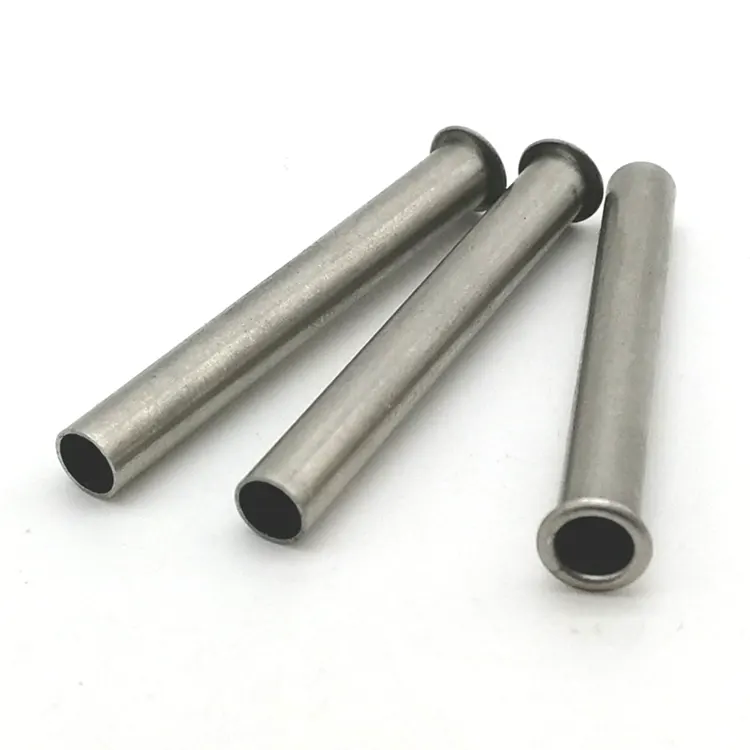
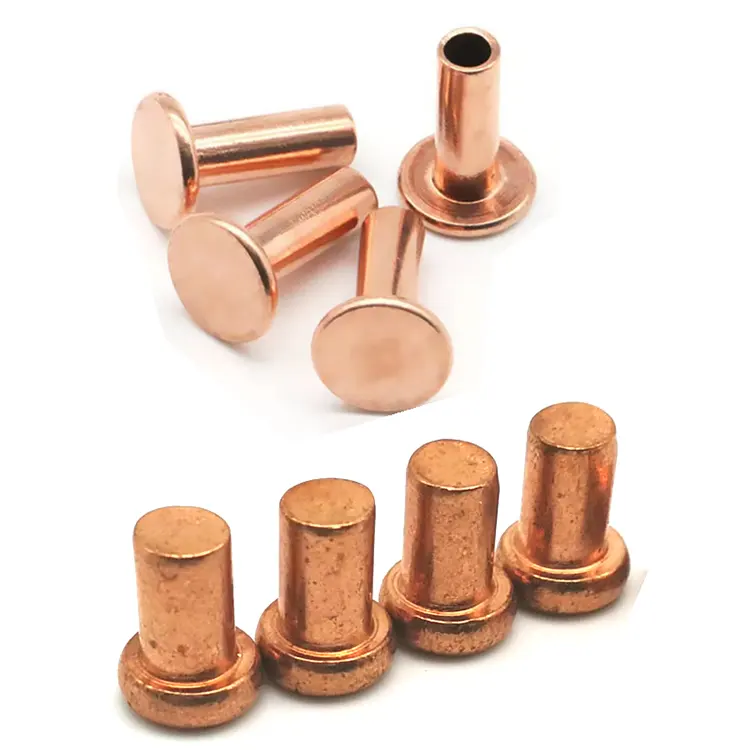
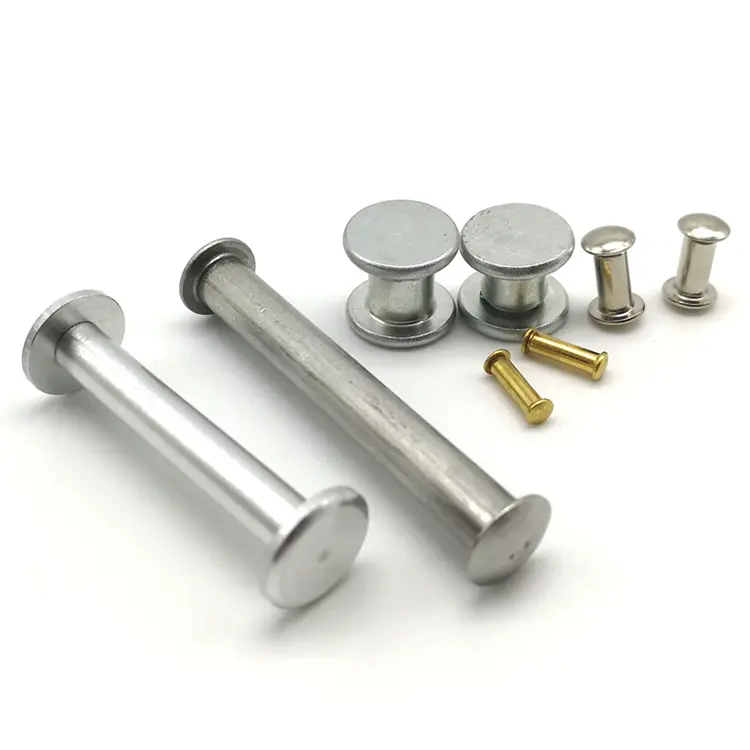
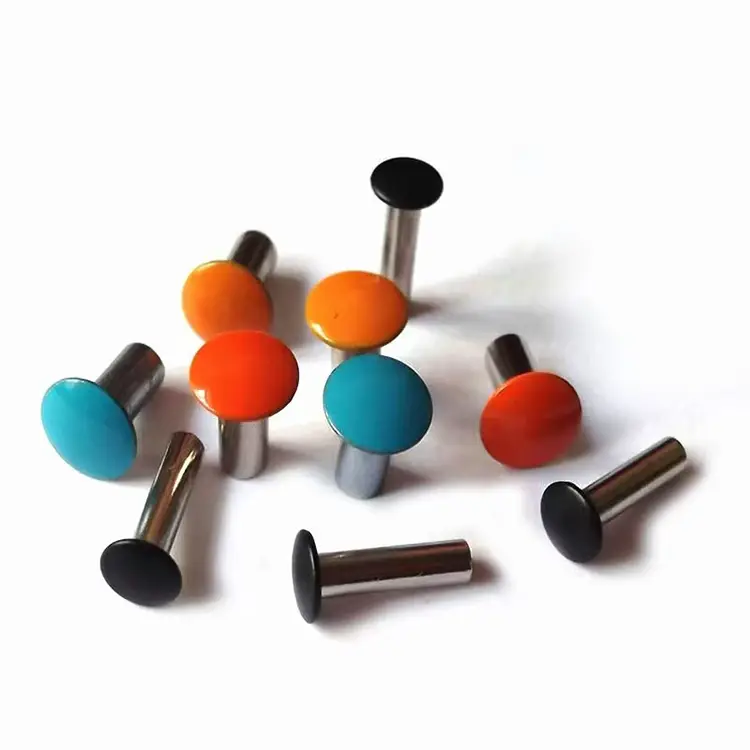
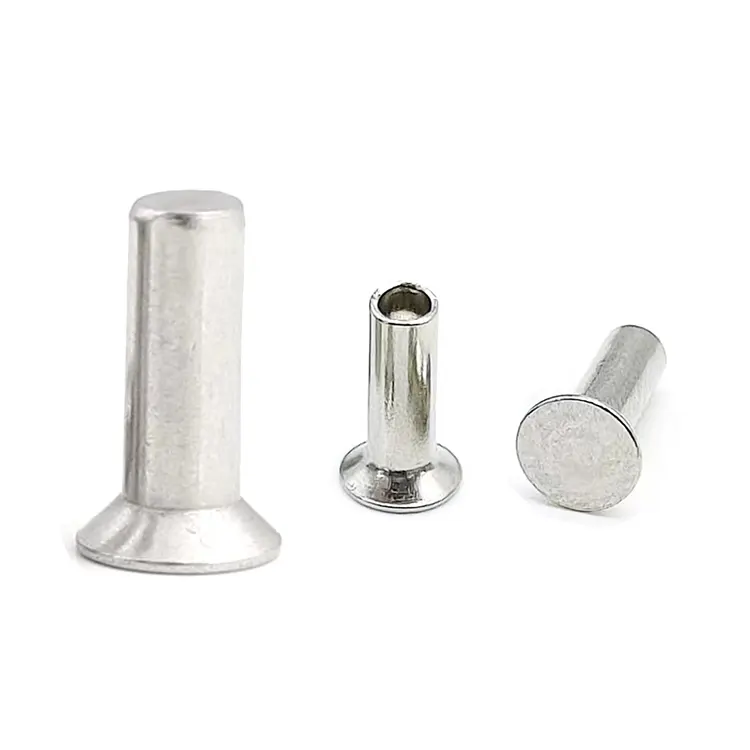
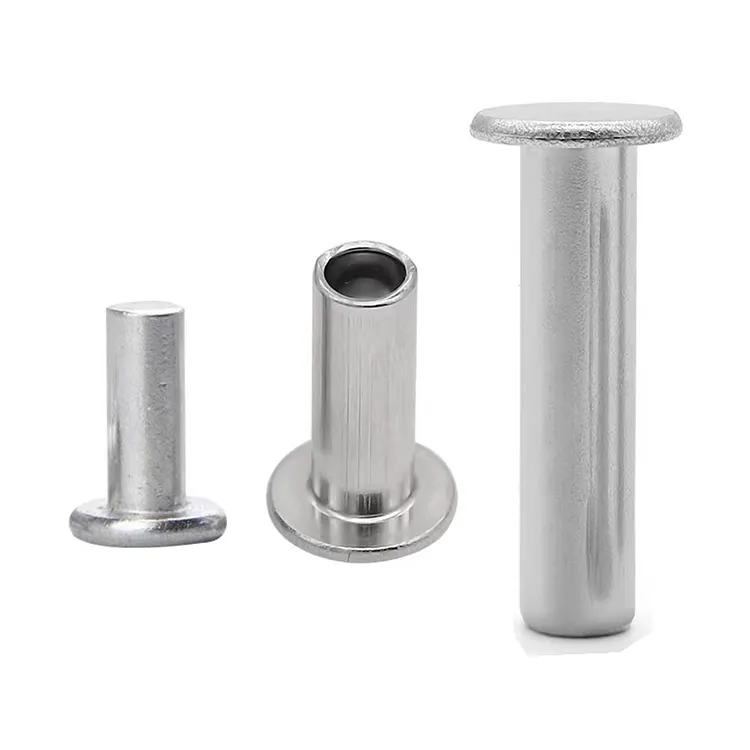
Copper Flat Head Rivets
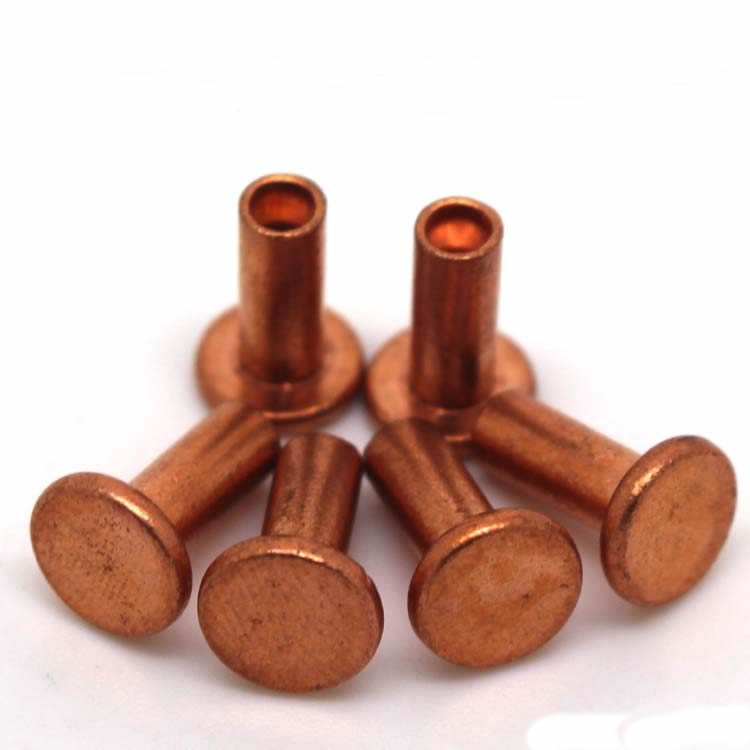
Nuote Metals, located in Dongguan, China, is a professional rivet manufacturer. Our rivets are of high quality and guaranteed delivery, earning them a favorable reputation among domestic and international customers. Our copper flat head rivets are made from high-quality copper, offering a smooth, delicate surface and a stable, firm feel. Their flat-head design not only increases contact area but also effectively disperses pressure, ensuring a more stable connection.
Send Inquiry
Product Description
Among fastener materials, copper is unique. It offers the highest conductivity of any common engineering metal, resists corrosion without plating, and develops a warm patina prized by architects and craftsmen. When paired with a flat head profile, you get a fastener that disappears into the surface while delivering electrical and structural performance.
At Nuote Metals, we've manufactured copper flat head rivets for over 20 years – for applications ranging from high-voltage busbars to hand-stitched leather goods. This is solid, high‑purity copper (C11000 or C10200), not a plated substitute.

Why Copper – And Why Flat Head?
Copper as a material:
- Conductivity: 58 MS/m (C11000) – second only to silver. The standard for busbars, transformer terminals, and grounding.
- Corrosion resistance: Forms a protective patina – no rust, no pitting.
- Non‑sparking: Safe in explosive environments.
- Aesthetics: Warms with age – specified for building facades and interior details.
Flat head as a profile:
- Lowest profile – only 0.2×–0.3× the shank diameter.
- No countersink required – simple hole prep, no special tooling.
- Snag‑free – smooth top doesn't catch wires, hoses, or clothing.
- Easy to conceal – paint, lacquer, or patina makes it invisible.
Flat Head vs. Countersunk: If you don't want to machine tapered holes – and most copper applications involve thin sheets where countersinking weakens the joint – flat head gives you a flush‑like appearance without the cost and material removal.
Manufacturing Expertise – What Sets Nuote Metals Apart
We don't just buy copper wire and head it. Our process is tailored to copper's unique behavior – softer and more work‑hardening than steel.
Raw material:
- C11000 (ETP) – 99.9% copper, 58 MS/m – for general electrical and marine use.
- C10200 (OFHC) – 99.99% copper, zero oxygen – for critical electronics and cryogenic applications.
Tooling & forming:
- Cold‑heading tools with larger fillet radii and polished surfaces to accommodate copper's flow.
- Multi‑stage forming for diameters above 8mm – reduces work‑hardening and maintains consistent grain structure.
Copper‑specific quality control:
- Conductivity testing: Every coil verified – we guarantee ≥58 MS/m.
- Microstructure inspection: Checks grain size – coarse grains lead to early fatigue failure.
- Head geometry: Optical gauging at 10x magnification – a 0.05mm height variation is visible.
Capacity:
- Diameter: 1.5mm – 12mm (larger on request)
- Length: 3mm – 40mm solid, 4mm – 60mm semi‑tubular
- Annual output: 500+ tons of copper rivets
- In‑house finishing: Tinning, silver‑plating, nickel‑plating, polishing, lacquering
This process control – from coil to finished rivet – is why OEMs across Europe, North America, and the Middle East trust Nuote Metals.
Technical Data – Copper Flat Head Rivets at a Glance
| Parameter | Value | Notes |
|---|---|---|
| Diameter range | 1.5 – 12 mm | Custom up to 16mm on request |
| Head diameter | 1.5×d to 1.8×d | Polished flat top |
| Head height | 0.2×d to 0.3×d | Lowest profile available |
| Length range | 3–40mm (solid), 4–60mm (semi‑tubular) | ±0.3mm tolerance |
| Tensile strength | 220 – 280 MPa | C11000 / C10200 |
| Yield strength | 70 – 100 MPa | – |
| Shear strength | 180 – 220 MPa | ASTM F606 |
| Hardness | 40 – 65 HRB | Rockwell B |
| Conductivity | ≥58 MS/m (C11000), ≥59 MS/m (C10200) | ASTM B193 |
| Purity | ≥99.7% (C11000), ≥99.99% (C10200) | ASTM E53 |
| Standards | DIN 661, ISO 1051 | Custom per drawing |
Solid vs. Semi‑Tubular – The Copper-Specific Trade‑Off
| Comparison | Solid | Semi‑Tubular |
|---|---|---|
| Setting force | 100% (baseline) | 50–60% |
| Shear strength | 100% | 80–85% |
| Shop head quality | Smooth, full upset | Rolled, slightly thinner |
| Production speed | Slower | 40–50% faster |
| Best application | Busbars, heavy marine | Leather goods, thin panels, high‑volume |
Copper's softness means: Solid offers maximum strength; semi‑tubular cuts setting force nearly in half and speeds production – ideal for automated lines.


Finishing Options for Copper Flat Head Rivets
| Finish | Conductivity Impact | Appearance | Best Application |
|---|---|---|---|
| Bright polished | None | Mirror-like copper | Decorative, architectural |
| Tinned | Slight reduction | Silver-white | Solderable, food‑contact |
| Silver‑plated | Enhanced (best) | Bright white | High‑frequency, low‑resistance |
| Nickel‑plated | Moderate reduction | Silver-grey | Wear resistance |
| Natural patina | None | Greenish-brown | Marine, outdoor aged |
| Lacquer coated | None | Maintains bright copper | Anti‑tarnish, indoor decorative |
Our recommendation: For electrical connections, choose tinned or silver‑plated. For marine, choose natural – plating can introduce galvanic issues with bronze fittings.
Installation – Copper-Specific Considerations
Hole size: d + 0.05mm to d + 0.1mm – tighter than steel. Copper flows and fills the hole; loose holes reduce load transfer.
Setting force: 40–60% of steel rivet force. Excessive force flattens the head beyond specification.
Anvil: Use a polished, flat anvil – scratches transfer directly to the soft copper surface.
Grip range: L – 1.0×d to L – 0.6×d (solid) or L – 1.2×d to L – 0.8×d (semi‑tubular).
For electrical connections: Clean surfaces with isopropyl alcohol before setting. Oxide films increase contact resistance – use tinned or silver‑plated for connections over 10A.
Frequently Asked Questions About Copper Flat Head Rivets
Q1: Can I use copper flat head rivets for grounding applications?
A: Yes – and they are among the best choices. Copper's high conductivity (≥58 MS/m) ensures low‑impedance paths to earth. For grounding busbars, we recommend solid copper flat head rivets with a tinned or silver‑plated finish – the plating prevents oxide formation at contact surfaces, maintaining consistent resistance over decades. Our rivets are used in grounding systems for telecom towers, data centers, and industrial substations across Europe and Asia. We can supply conductivity test reports per ASTM B193 upon request.
Q2: What is the difference between C11000 and C10200 copper – which should I choose?
A: The key difference is oxygen content. C11000 (ETP) contains ~0.04% oxygen – the most common electrical copper, offering 58 MS/m conductivity and good formability. Suitable for 90% of applications. C10200 (OFHC) is oxygen‑free (99.99% copper) with higher ductility – it resists embrittlement when exposed to reducing atmospheres or high temperatures. Choose OFHC for: (a) welding or brazing operations, (b) cryogenic temperatures, or (c) critical electronics where hydrogen embrittlement is a concern. For general electrical, marine, or decorative use, C11000 is perfectly adequate and more cost‑effective. Nuote Metals stocks both and can advise based on your application.
Q3: Do copper flat head rivets work with aluminum sheets – and will there be galvanic corrosion?
A: Copper and aluminum are galvanically dissimilar – in the presence of an electrolyte (water, especially saltwater), they will corrode. Do not directly connect copper rivets to aluminum in outdoor or wet environments unless separated by an insulator. For dry indoor applications (electronics, busbars), direct contact is acceptable – no electrolyte to drive corrosion. If you must fasten aluminum with copper rivets outdoors, consider: (a) protective coating over the joint, (b) using tinned copper (tin reduces galvanic potential), or (c) switching to aluminum rivets. Nuote Metals supplies both – we can help you choose the best material for your material combination and environment.
Hot Tags: Copper Flat Head Rivets,China Copper Rivets Supplier,Flat Head Copper Rivets Manufacturer
Related Categories
Send Inquiry
Please feel free to fill your inquiry in the form below. We will reply you in 24 hours.



X
We use cookies to offer you a better browsing experience, analyze site traffic and personalize content. By using this site, you agree to our use of cookies.
Privacy Policy