
Products
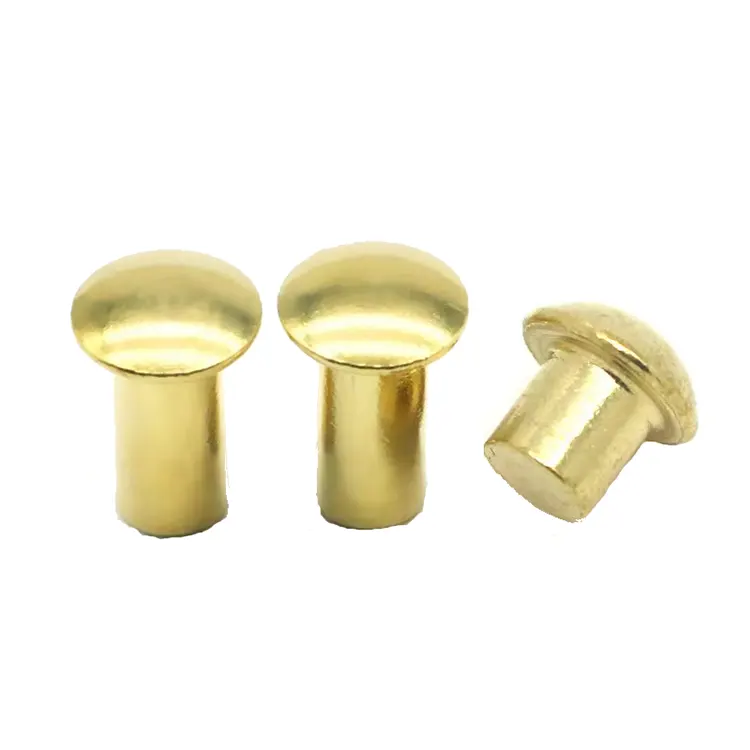
Brass Round Head Rivets
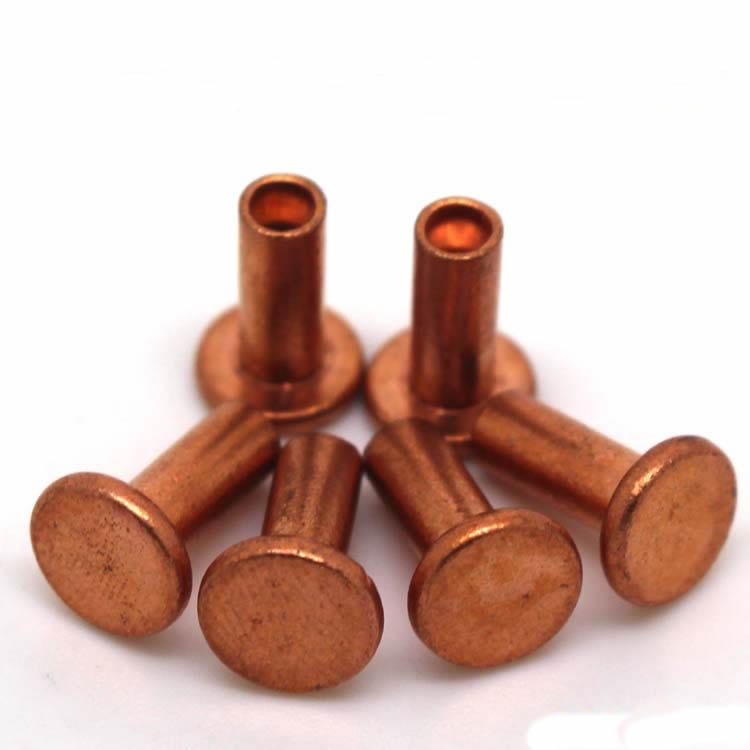
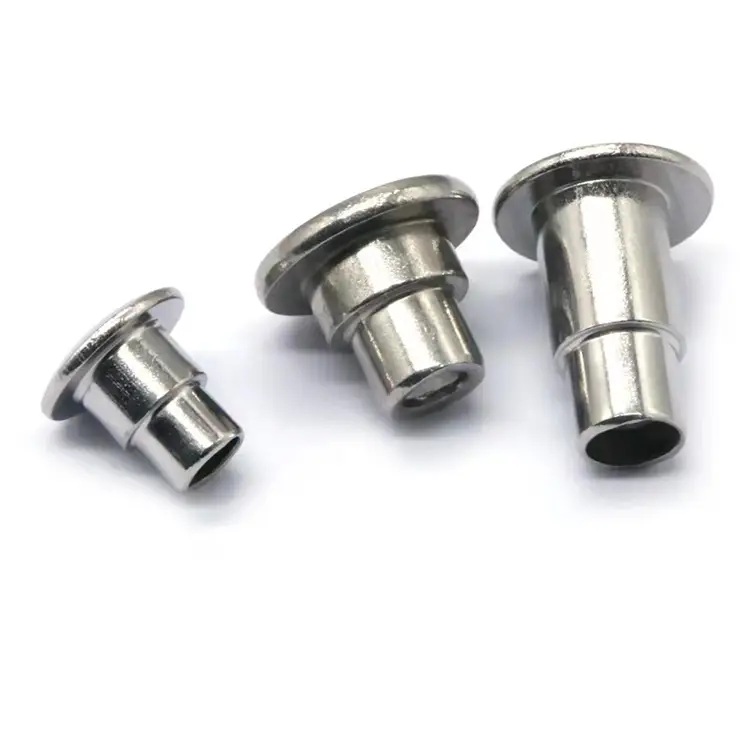
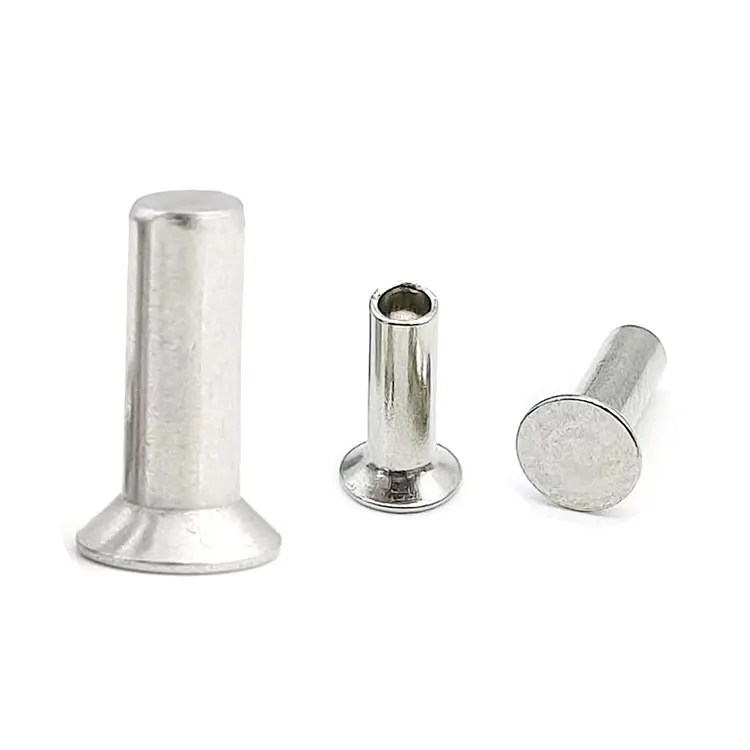
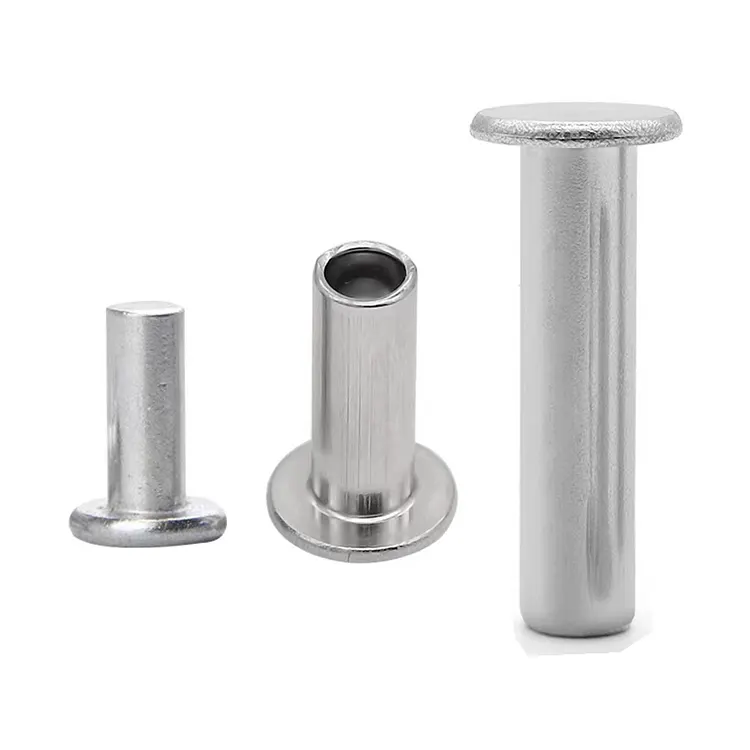
Nuote Metals specializes in the production and sale of brass round head rivets. We are located in Dongguan, China, a city with a strong industrial development. Our copper semi-bulgy head rivets consist of a shank and cap made of brass alloy. The semi-bulgy head design provides uniform pressure distribution, preventing damage to the joint surface. They are characterized by their combined electrical conductivity and corrosion resistance, simple construction, easy installation, high reliability, and long service life.
Send Inquiry
Product Description
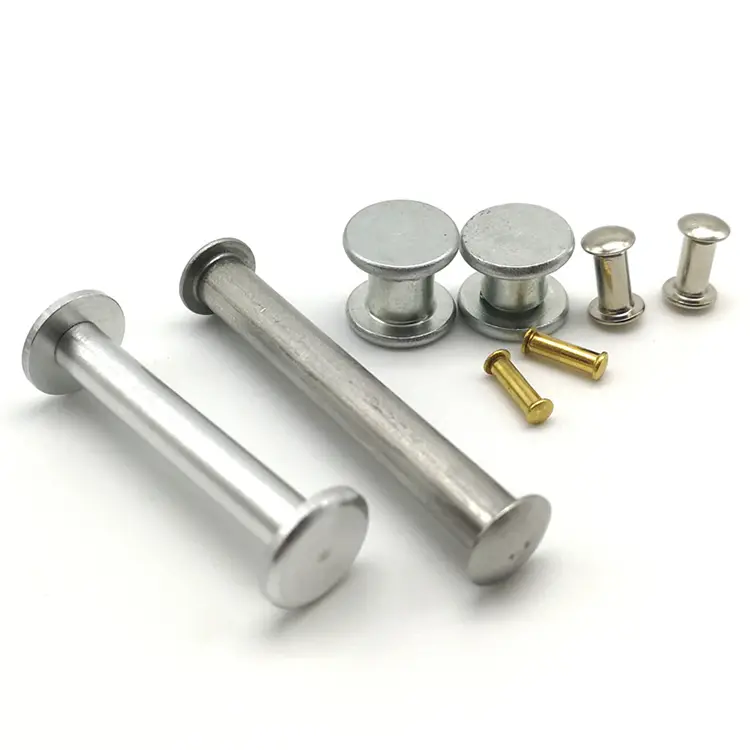
Brass round head rivets keep that classic appearance and add the natural advantages of brass: corrosion resistance, a warm gold color, and good electrical conductivity. They are used in marine hardware, electrical connections, furniture, luggage, and anywhere you want a fastener that looks traditional and professional.
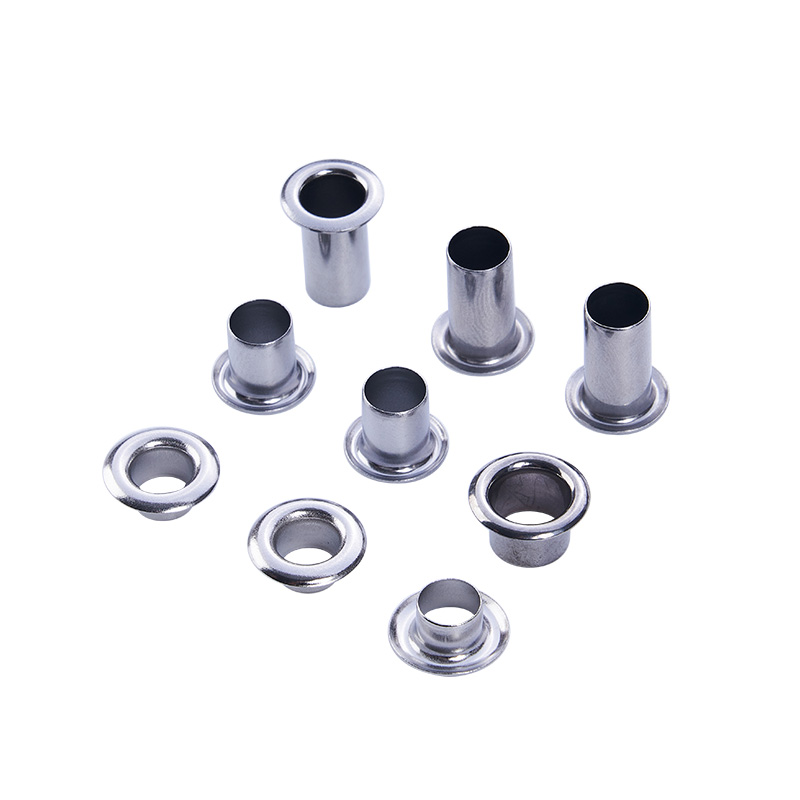
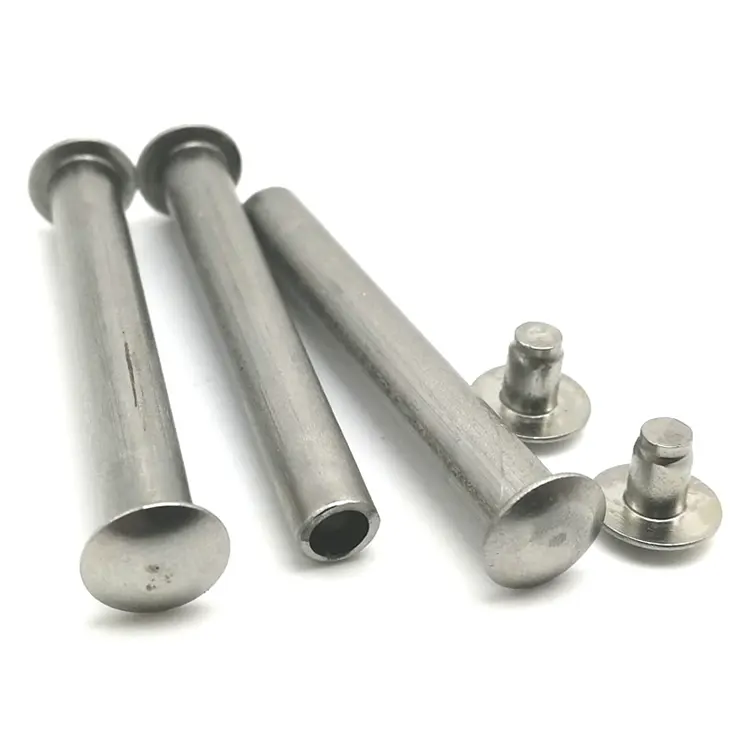
Available in both solid and semi‑tubular designs, you can choose the version that matches your strength requirements and production speed.
Round Head vs. Flat Head – The Classic Choice
| Feature | Brass Round Head Rivet | Brass Flat Head Rivet |
|---|---|---|
| Head protrusion (5mm shank) | 2.5 – 3.5mm | 0.8 – 1.2mm |
| Head diameter / shank ratio | 1.6 – 1.8 : 1 | 2.0 – 2.5 : 1 |
| Head strength | Maximum | Good |
| Appearance | Classic, prominent, traditional | Low, neat, finished |
| Best for | Visible assemblies, structural joints, impact resistance | Clearance‑limited, sliding surfaces |
Choose round head when: The rivet will be visible and appearance matters. You need maximum head strength and impact resistance. Clearance is not a constraint. You want a traditional, professional look.
Solid vs. Semi‑Tubular – Which Design Do You Need?
| Feature | Brass Round Head Solid Rivet | Brass Round Head Semi‑Tubular Rivet |
|---|---|---|
| Tail design | Fully solid | Partially hollow (45–55% of length) |
| Setting force | 100% | 25–30% of solid |
| Shear strength | Maximum (100%) | 80–90% of solid |
| Installation speed | Slower, heavy press | Fast, automated |
| Best for | Structural, maximum strength, high‑load | High‑volume, thin materials, fast assembly |
Choose solid for structural joints where maximum strength is required. Choose semi‑tubular for high‑volume production, thin materials, and faster assembly lines.
Materials and Finishes – What We Offer
Material: C2680 brass (64.0–68.5% Cu, 31.5–36.0% Zn). Offers good formability, corrosion resistance, non‑magnetic properties, and ~28% IACS conductivity.
Available finishes: Natural lacquered, nickel‑plated, tin‑plated, antique, plain.
One Real Application – Brass Cabinet Hardware
A manufacturer of high‑end kitchen cabinets needed visible fasteners for hinge attachments and decorative hardware. The rivets would be seen by homeowners – the design called for a classic round head that looked clean, traditional, and professional. The previous steel rivets rusted in humid kitchen environments.
We supplied brass round head semi‑tubular rivets – 4.0mm shank, 7.0mm head diameter, 8.0mm barrel length, natural lacquered finish. The round head matched the classic appearance the customer wanted. The brass material resisted corrosion in kitchen humidity. The semi‑tubular cavity cut setting force from 3.5 tons to 1.0 ton – no deformation of the cabinet panels. The customer tested 1,000 rivets across 500 cabinets. After 12 months of kitchen use, zero rust, zero loosening. They now order brass round head rivets in batches of 200,000 pieces annually.
About Our Company – How We Produce Brass Round Head Rivets
We are a Dongguan‑based fastener manufacturer with over a decade of experience in cold heading. Our facility runs 45 cold‑heading machines capable of producing rivets from 0.8mm to 10mm in diameter, in both solid and semi‑tubular designs.
Our production process:
1. Material Procurement – We purchase certified C2680 brass wire from approved mills. Each coil comes with a mill test certificate and heat number for full traceability.
2. Incoming Inspection – Wire is checked for diameter (±0.02mm), hardness, and material composition. Spectrometer verifies C2680 grade. Out‑of‑spec material is rejected before production begins.
3. Cold Heading – The wire feeds into a multi‑station cold header. In a single continuous sequence: wire is drawn to exact shank diameter, cut to precise blank length, squared, and formed into the round head. For semi‑tubular rivets, a third blow extrudes the cavity at 45–55% depth.
4. Trimming – Flash around the head edge is removed for a clean, burr‑free finish.
5. Tumbling & Deburring – Micro‑burrs are eliminated and surface is prepared for finishing.
6. Plating or Lacquering – Applied as specified – natural lacquered, nickel‑plated, tin‑plated, or antique.
7. Final Inspection – 100% optical sorting for critical dimensions. AQL sample manually verified. Dimensional report, material certificate, and Certificate of Conformance issued.
8. Packaging & Shipping – Packed to your requirements. Full documentation enclosed.
Sample lead time: 5–7 days standard; custom tooling: 15–20 days.
Why Customers Choose Us – Quality You Can Rely On
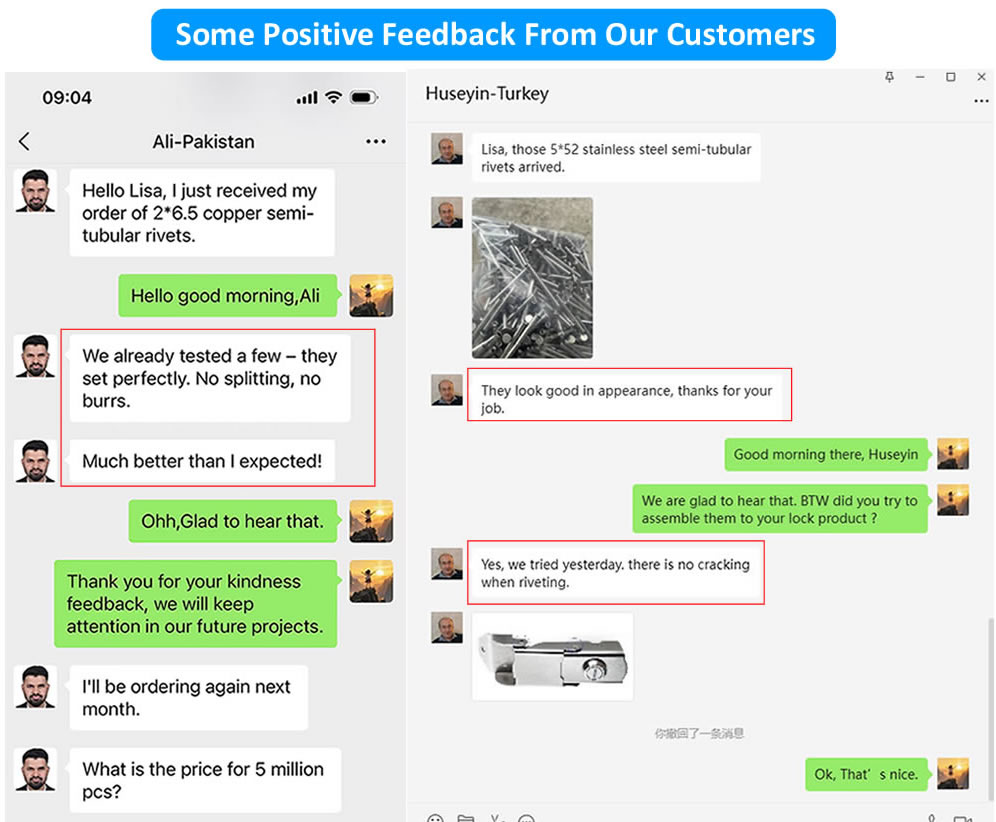
Manufacturers who use our brass round head rivets come back to us for consistent quality and reliable delivery. Here is what we do to earn that trust:
Material traceability – Every coil of C2680 brass wire comes with a mill test certificate and heat number. We can trace every batch back to the original melt.
Cold heading expertise – Our senior technicians have an average of 10+ years of experience forming brass rivets.
In‑process inspection – Operators pull samples every 500 pieces. Head geometry, shank diameter, and cavity depth (for semi‑tubular) are checked in real time.
100% optical sorting – Every rivet passes through a high‑speed optical sorting machine before packaging. Rejects are automatically ejected.
Full documentation – Every shipment includes a dimensional inspection report, material certificate, and Certificate of Conformance.
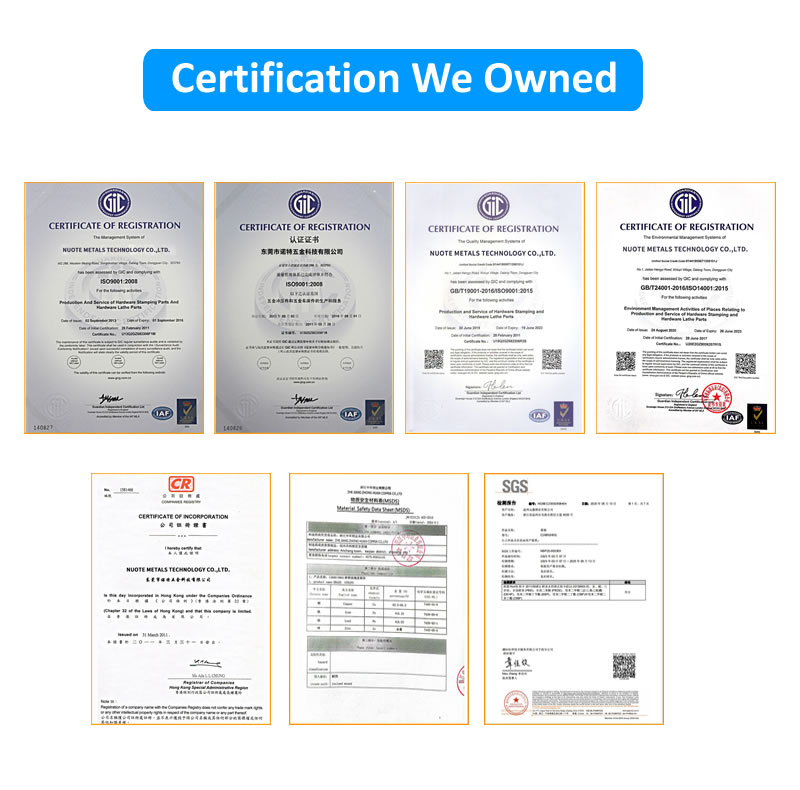
ISO 9001:2015 certified – Our quality management system is certified.
We work with manufacturers in furniture and cabinetry, marine hardware, electrical connections, luggage and cases, architectural hardware, and automotive interiors – across North America, Europe, and Asia.
Two Questions We Answer Often
Q: "When should I choose a round head over a flat head or countersunk head for brass rivets?"
A: Choose round head when the rivet will be visible and you want a classic, professional appearance. The dome is the most recognized rivet head in the world – it looks traditional and intentional. Round head also offers the highest head strength and impact resistance because of the thick dome. Choose flat head when clearance is limited and you need a low profile. Choose countersunk head when you need zero protrusion – for mating parts, sliding surfaces, or flush finishes. For most visible hardware, furniture, and decorative applications, round head is the standard choice. In the cabinet case above, round head was chosen for its classic appearance and maximum head strength.
Q: "Can brass round head rivets be used outdoors – will they tarnish or corrode?"
A: Yes, brass round head rivets can be used outdoors – but they will tarnish over time. Brass naturally develops a patina when exposed to air and moisture. This tarnish is cosmetic, not structural – it does not weaken the rivet or affect its holding strength. If you want to maintain a bright gold finish, specify lacquered brass round head rivets – the clear coating seals the surface and prevents tarnishing for 2–3 years. For marine or coastal applications, brass is a good choice because it resists saltwater corrosion better than steel, but it will develop a greenish patina over time. For applications where appearance must be maintained indefinitely, we recommend nickel‑plated brass or stainless steel round head rivets.
Hot Tags: Brass Round Head Rivets,Brass Rivets Manufacturer,China Round Head Rivets
Related Categories
Send Inquiry
Please feel free to fill your inquiry in the form below. We will reply you in 24 hours.



X
We use cookies to offer you a better browsing experience, analyze site traffic and personalize content. By using this site, you agree to our use of cookies.
Privacy Policy