
Products
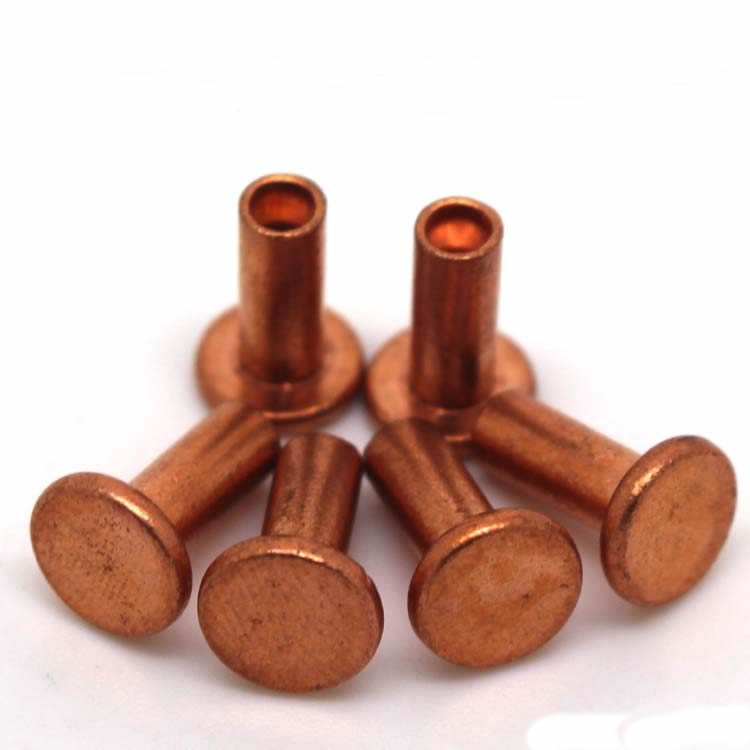
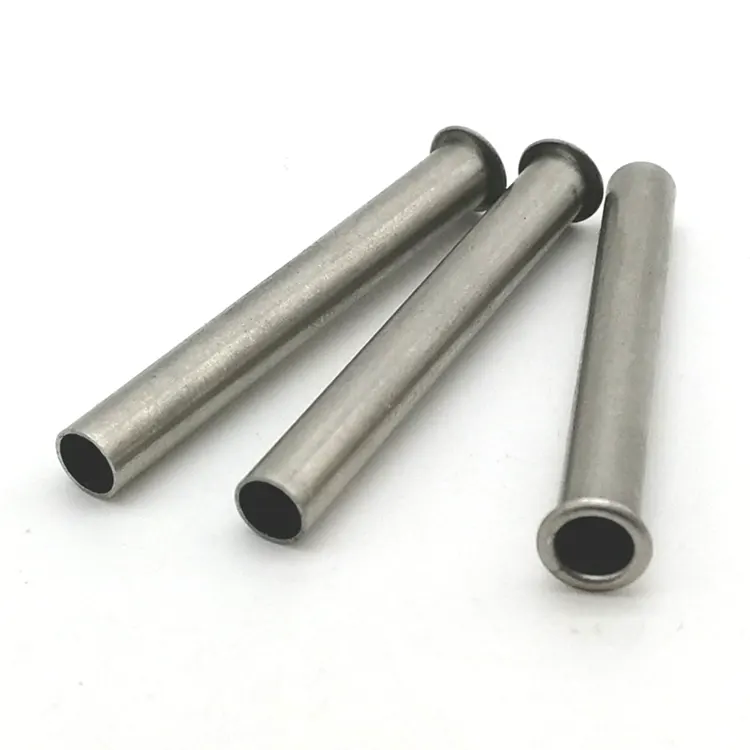
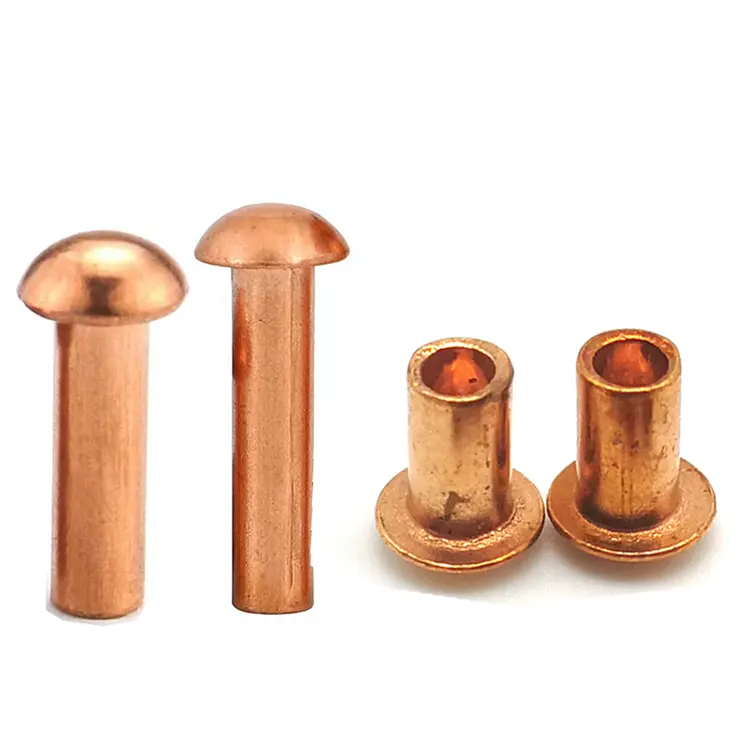
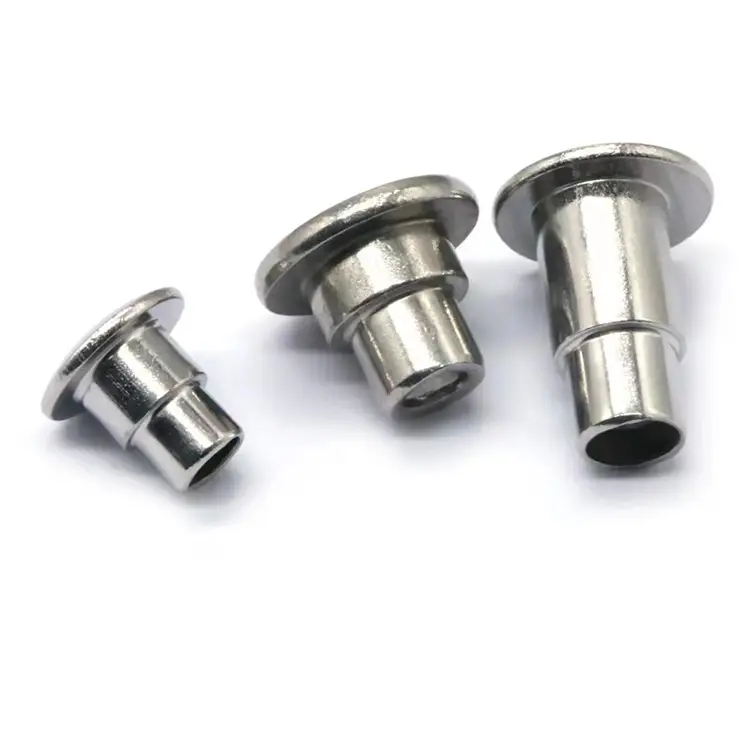
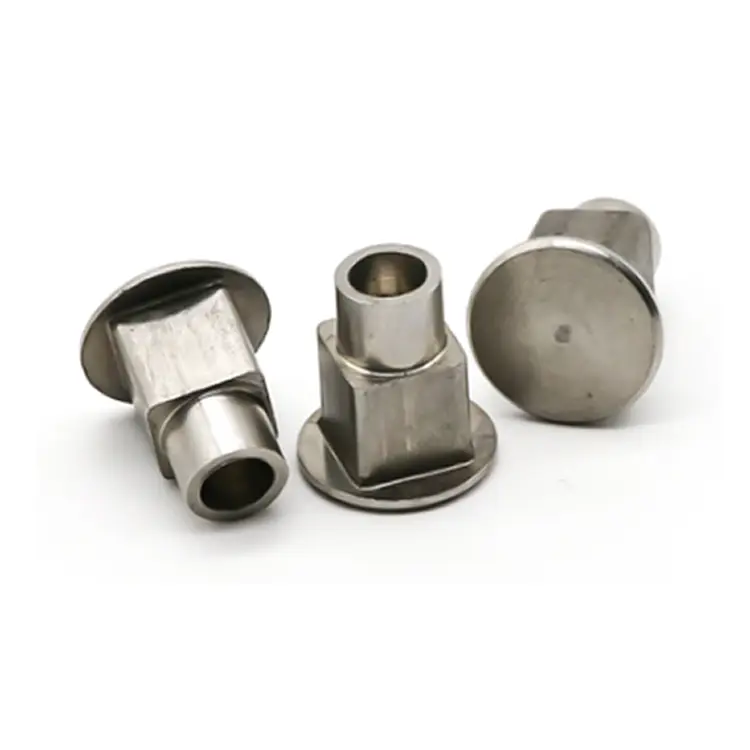
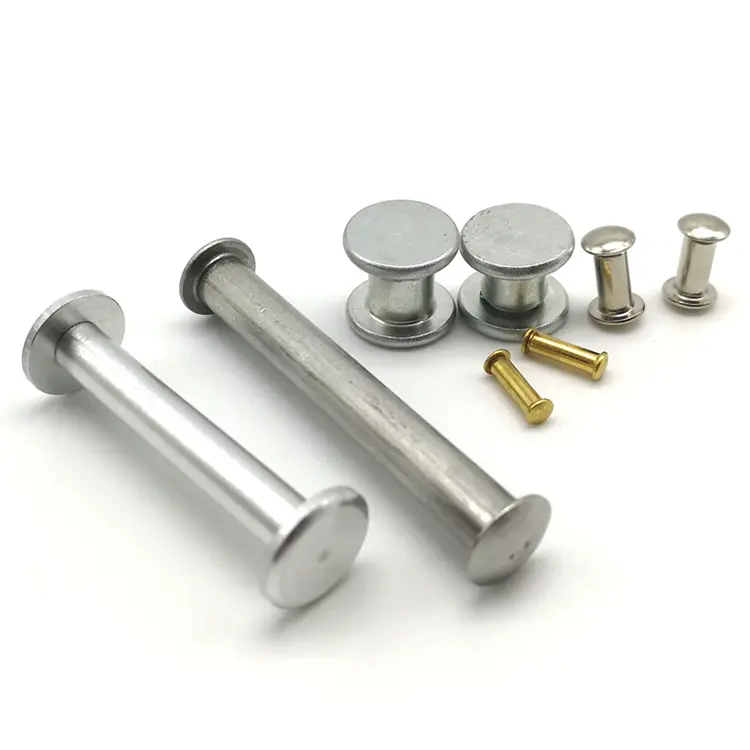
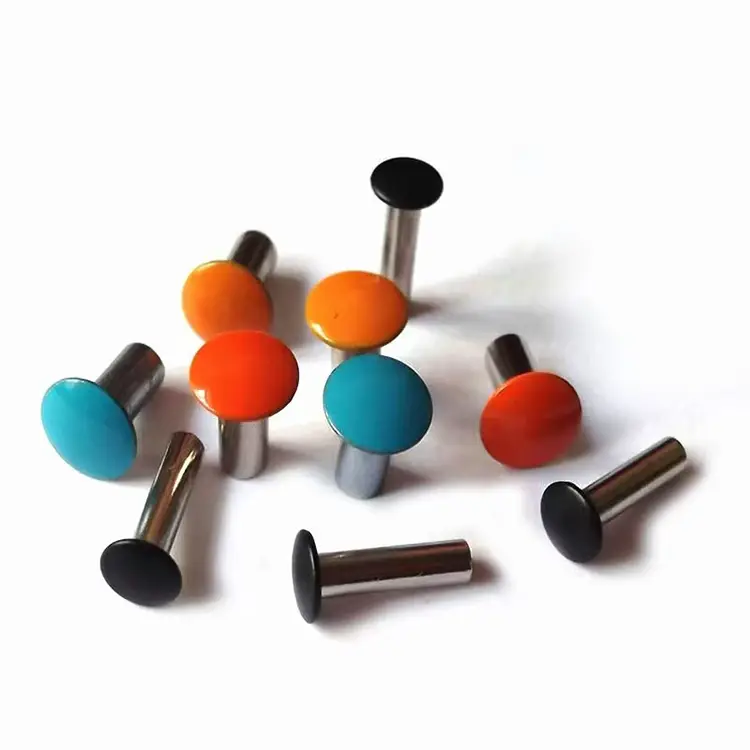
Copper Mushroom Head Rivets
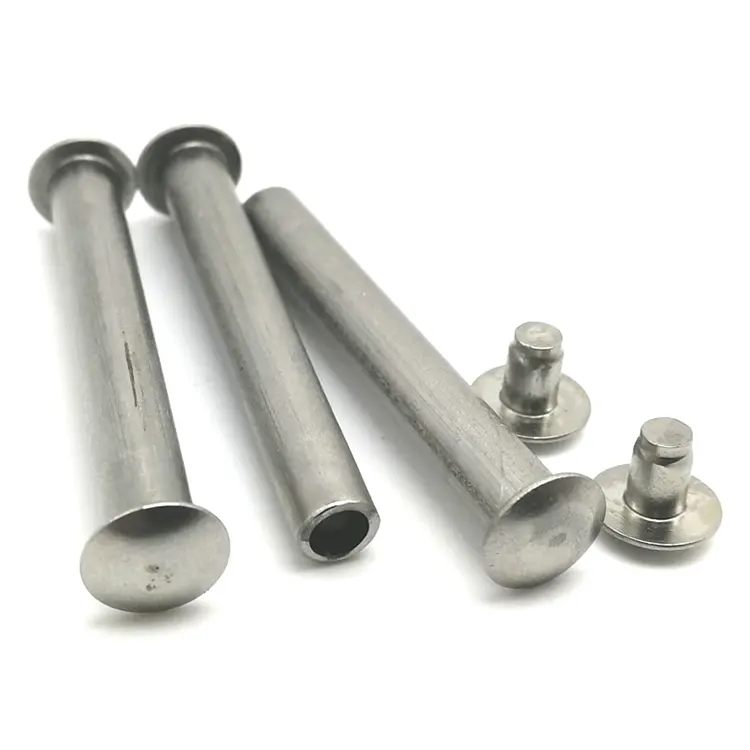
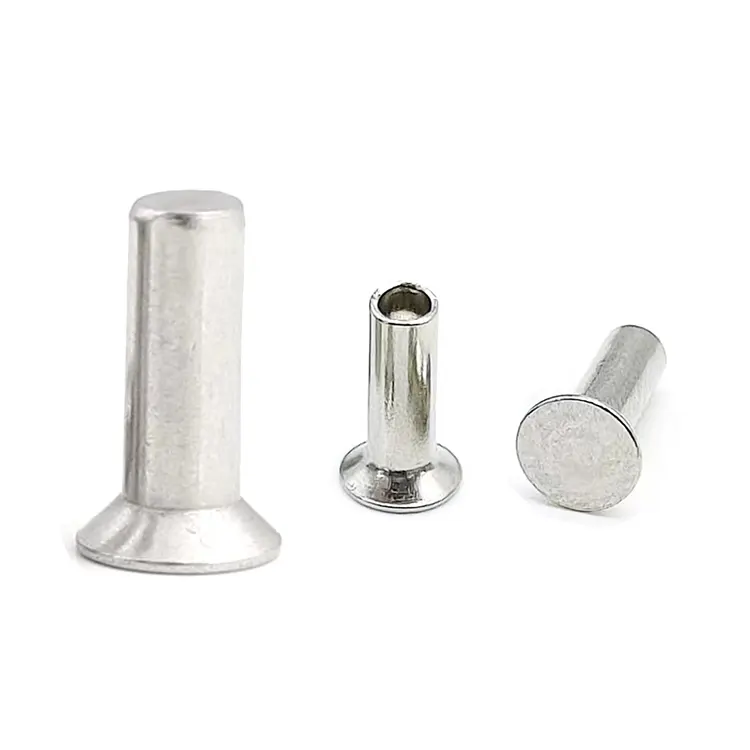
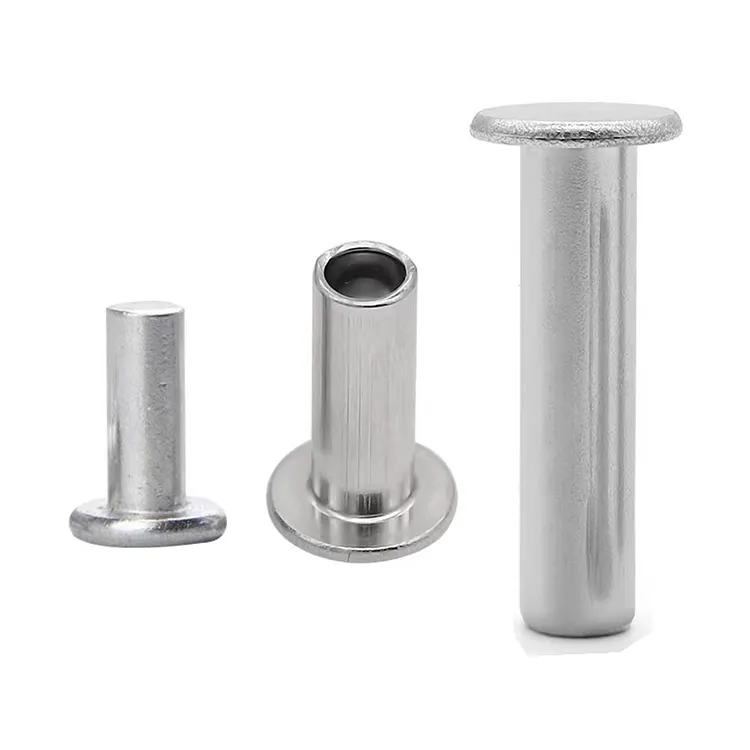
Copper mushroom head rivets are mechanical components used to fasten two or more materials. They typically have a mushroom-shaped head and a solid or semi-hollow rod at the other end. During installation, the other end is hammered or struck with a specialized riveting machine, causing it to expand and form the other head, which then snaps into place. Nuote Metals is a specialist in copper mushroom head rivets. We offer a comprehensive range of rivet specifications and utilize over 40 riveting machines of various sizes to meet customer needs.
Send Inquiry
Product Description
The Wide-Head Fastener That Eliminates Washers
When fastening soft copper sheets, thin panels, or decorative copper elements, a standard rivet head often creates problems. Too small, and it pulls through. Too tall, and it snags. Add a separate washer, and you introduce an extra part, extra handling, and a potential corrosion point between dissimilar metals.
Copper Mushroom Head Rivets from Nuote Metals solve all three issues at once. The mushroom head is exceptionally wide—2.0× to 2.5× the shank diameter—but low in height. It spreads clamping force across a large area, exactly like a built-in washer, while keeping a relatively low profile. For copper applications, this means you can fasten thin sheets without dimpling, eliminate loose washers, and maintain the natural beauty of copper.
What Makes a Mushroom Head Different?
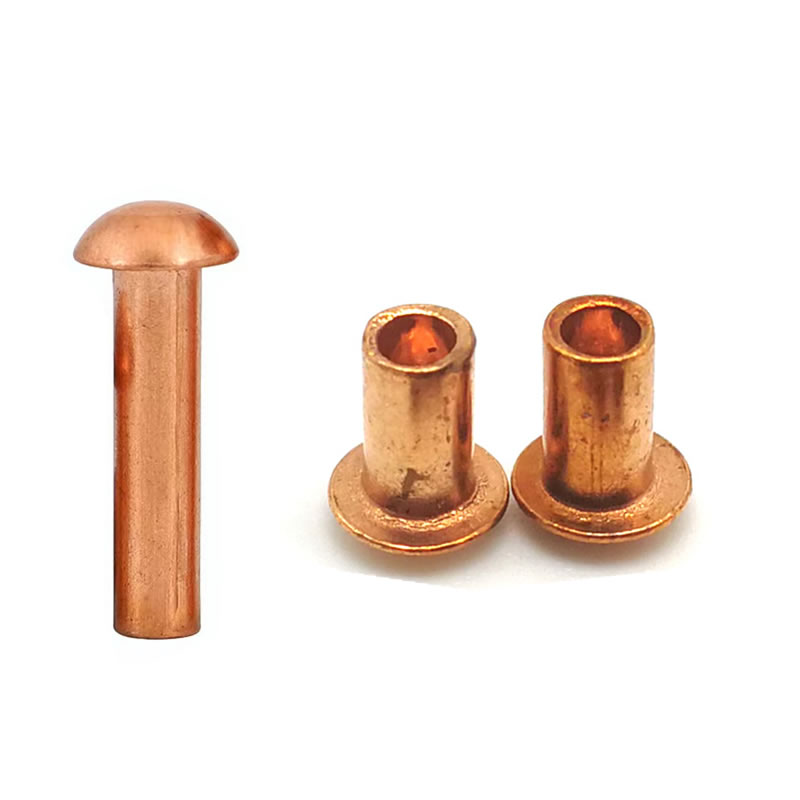
The mushroom head is the widest of all common rivet head styles. Its name comes from the broad, gently domed cap with a rounded edge that resembles a mushroom.
Key geometry:
- Head diameter: 2.0× to 2.5× the shank diameter (round head is only 1.6×)
- Head height: 0.4× to 0.5× the shank diameter (lower than round head at 0.7×)
- Underside: Flat with a generous fillet radius at the head-shank junction
- Edge: Rounded, not sharp—reduces stress concentration in soft copper
Why this matters for copper:
Copper is soft (70–100 MPa yield strength). A narrow head concentrates force and deforms the sheet. A mushroom head spreads that same force over a much larger ring of copper, keeping the sheet flat and the joint tight. In many cases, the mushroom head makes a separate flat washer unnecessary—saving assembly time and eliminating a potential galvanic mismatch.
Mushroom Head vs. Round Head + Washer – A Direct Comparison
Many customers currently use a round head copper rivet with a separate copper or brass washer. Here is how the mushroom head compares.
| Factor | Round Head + Washer | Copper Mushroom Head | Advantage |
|---|---|---|---|
| Bearing area | Large (washer diameter) | Large (integral head) | Equivalent |
| Number of parts | 2 (rivet + washer) | 1 (rivet only) | Mushroom – simpler |
| Assembly time | Higher – washer handling | Lower – single part | Mushroom – faster |
| Risk of washer loss | Yes – during handling | None | Mushroom – more reliable |
| Galvanic mismatch | Possible if washer is different alloy | None – solid copper head | Mushroom – safer |
| Head height | Round head + washer | Lower than round head | Mushroom – lower profile |
| Corrosion path | Crevice between washer and sheet | No crevice | Mushroom – better |
When to still use a washer: If you need a waterproof seal (e.g., neoprene washer for roofing), the mushroom head alone cannot replace that function. But for mechanical load distribution only, the mushroom head is a direct substitute.
Technical Specifications – Copper Mushroom Head Rivets
Manufactured to DIN 674 (solid) and DIN 675 (semi-tubular) equivalents. Custom head diameters available.
| Parameter | Value / Range | Test Standard / Tolerance |
|---|---|---|
| Shank Diameter (d) | 2 – 12 mm | ±0.05mm (≤6mm) |
| Head Diameter (dk) | 2.0×d to 2.5×d | ±0.2mm |
| Head Height (k) | 0.4×d to 0.5×d | ±0.1mm |
| Fillet Radius at Junction | 0.5×d to 1.0×d | ±0.15mm |
| Length (L) | 4 – 50 mm | ±0.3mm |
| Tensile Strength | 220 – 280 MPa | ASTM B152 |
| Shear Strength | 180 – 220 MPa | ASTM F606 |
| Conductivity | ≥58 MS/m (C11000), ≥59 MS/m (C10200) | ASTM B193 |
| Purity | ≥99.7% (C11000), ≥99.99% (C10200) | ASTM E53 |
| Standards | DIN 674 / DIN 675, ISO 1051 | Custom per drawing |
Material grades:
C11000 (ETP): 99.9% copper, 0.04% oxygen. General roofing, marine, and decorative use.
C10200 (OFHC): 99.99% copper, oxygen-free. Critical electronics and cryogenic applications.
Solid vs. Semi-Tubular – For Wide-Head Copper Rivets
| Feature | Solid Copper Mushroom | Semi-Tubular Copper Mushroom |
|---|---|---|
| Setting force | 100% (baseline) | 50–60% |
| Shear strength | 100% | 80–85% |
| Risk of head distortion | Higher – wide head needs controlled force | Lower – gentle clinching |
| Best application | Thick copper, structural joints | Thin sheets, roofing, high-volume |
| Production speed | Slower | 40–50% faster |
Key insight for copper: The mushroom head's large diameter means it is more sensitive to setting force than smaller heads. Too much force can flatten the dome or warp the wide edge. Semi-tubular mushroom head rivets reduce setting force by nearly half, making them the safer choice for copper sheets under 3mm. For thicker copper or maximum shear strength, choose solid and use a calibrated press.
Surface Finishes – Preserving Copper's Natural Appeal
Mushroom head copper rivets are often visible on finished surfaces—roofs, facades, boat hulls—so finish selection matters.
Available finishes:
- Bright polished – mirror-like copper for decorative panels
- Natural patina – aged green-brown for marine and architectural restoration
- Lacquered – clear coating to maintain bright copper indoors
- Tinned – silver-white, solderable, reduces galvanic potential
- Nickel-plated – silver-grey, wear-resistant
Our recommendation: For outdoor copper roofing or marine hulls, choose natural or polished without plating. Copper's own patina protects the rivet and blends with the surrounding copper. For indoor decorative panels where you want to maintain brightness, choose lacquered. For electrical grounding plates where oxide formation is a concern, choose tinned.
Nuote Metals – Copper Mushroom Head Manufacturing Expertise
Nuote Metals has specialized in copper fastener production for over 20 years from our ISO 9001:2015 certified factory in China. We export to 50+ countries, serving roofing contractors, marine builders, and architectural metalworkers.
Why our mushroom head copper rivets perform better:
1. Wide-head tooling designed for copper flow
Forming a 2.5×d head in soft copper without cracking requires more than a standard die. We use multi-stage progressive forming—three to five strokes—to let the copper flow gradually into the wide head shape. Our dies are polished to remove micro-scratches that become crack starters.
2. Controlled fillet radius
The junction between the wide head and the shank is the highest-stress area. We maintain a minimum fillet radius of 0.5×d and verify it with optical gauging at 10x magnification. A sharp radius will crack; ours will not.
3. Real-material testing
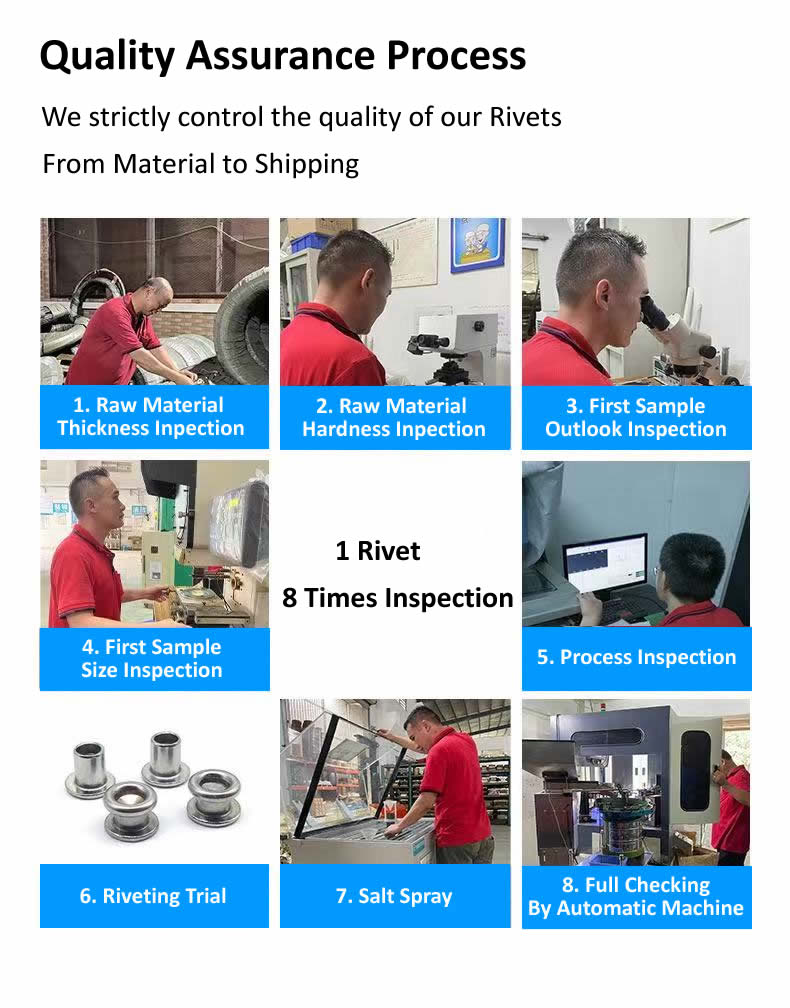
We test our mushroom head copper rivets on actual copper sheet—not standard coupons—to validate pull-through resistance and head deformation. For customers with specific copper thicknesses, we provide a pre-production sample batch with a setting report.
4. Full traceability
Every shipment includes ASTM B152 material certificates and conductivity reports. We share inspection data openly because wide-head performance depends on geometry you cannot see with the naked eye.
This application-level engineering is why roofing companies, boat builders, and architectural fabricators choose Nuote Metals for copper mushroom head rivets.
Frequently Asked Questions
Q1: Can a Copper Mushroom Head Rivet really replace a round head plus a washer?
A: In most mechanical applications, yes. The mushroom head's 2.0×–2.5× diameter provides a bearing area equivalent to a standard flat washer. It eliminates the separate washer, the handling step, and the crevice between washer and sheet where corrosion can start. However, if your washer serves a sealing function—such as a neoprene washer for waterproof roofing—the mushroom head alone cannot replace that. For load distribution only, it is a direct substitute. Nuote Metals can advise based on your specific joint design and whether a seal is required.
Q2: Will a wide mushroom head deform thin copper sheet during setting?
A: Not if you use the correct setting force and a semi-tubular body. The wide head actually reduces the risk of dimpling because it spreads clamping force over a larger area. The real risk is over-setting: applying too much force will flatten the dome and can warp the thin copper around the head edge. For copper sheets under 2mm, we recommend semi-tubular mushroom head rivets and a calibrated press set to 50–60% of the force used for steel. We also supply a flat anvil that matches or exceeds the head diameter—this prevents the head from cupping. With these controls, thin copper stays flat and the joint remains tight.
Q3: Are Copper Mushroom Head Rivets suitable for marine hulls and boat building?
A: Yes—copper mushroom head rivets are a traditional choice for wooden boat building and are still used today for copper sheathing, decking, and trim. The wide head holds copper sheathing securely without tearing the soft copper. The natural patina protects against saltwater corrosion. The flush-like low profile reduces drag and snagging. For marine use, we recommend solid copper mushroom head rivets with a natural or polished finish—no plating, which can introduce galvanic differences with bronze or brass fittings. Nuote Metals supplies these rivets to boat builders across Europe and North America. For thin copper sheathing, semi-tubular may be preferred to avoid over-compressing the copper.
Hot Tags: Copper Mushroom Head Rivets,China Mushroom Head Rivets,Copper Rivets Mushroom Head
Related Categories
Send Inquiry
Please feel free to fill your inquiry in the form below. We will reply you in 24 hours.



X
We use cookies to offer you a better browsing experience, analyze site traffic and personalize content. By using this site, you agree to our use of cookies.
Privacy Policy