
Products
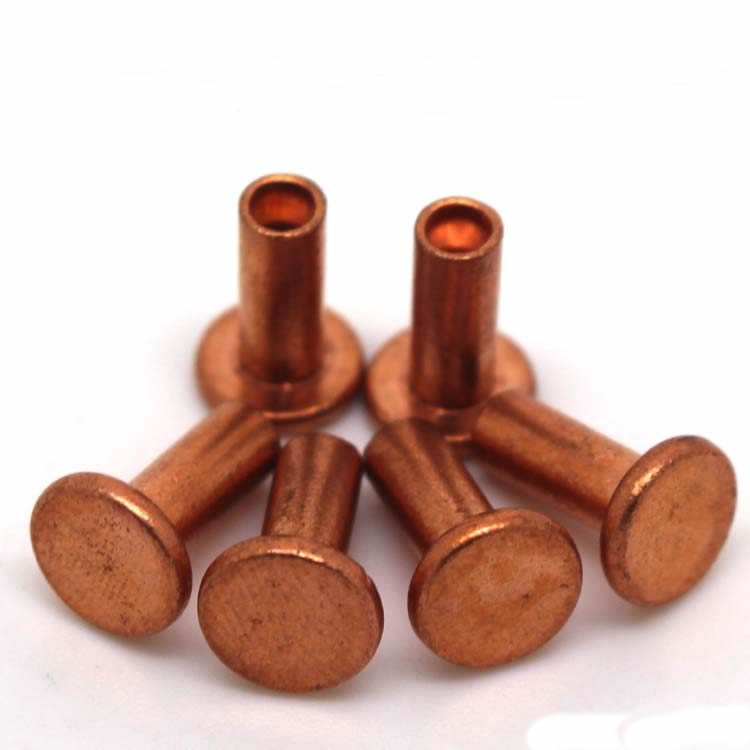
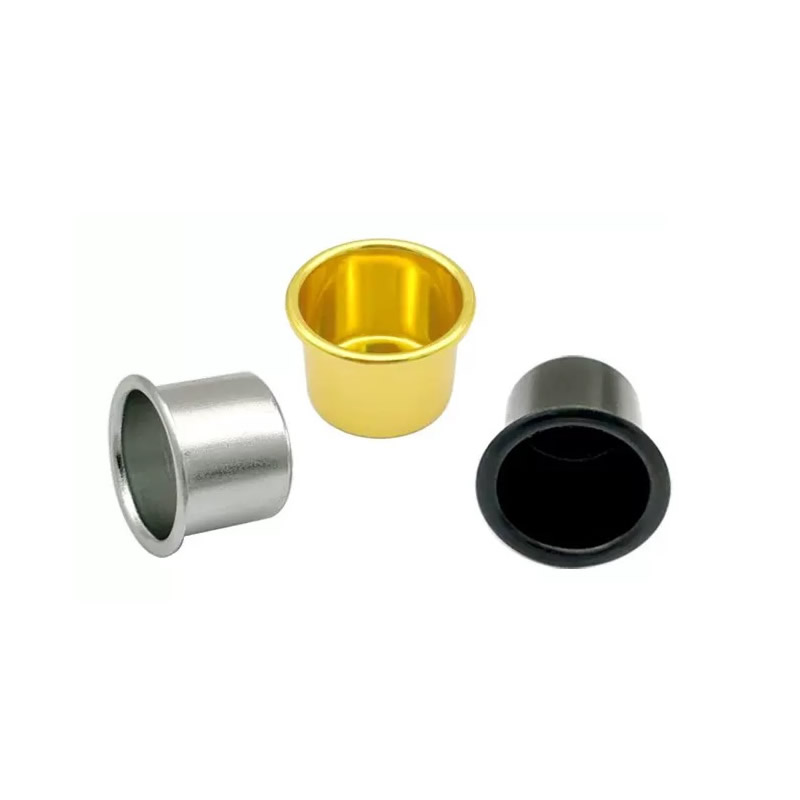
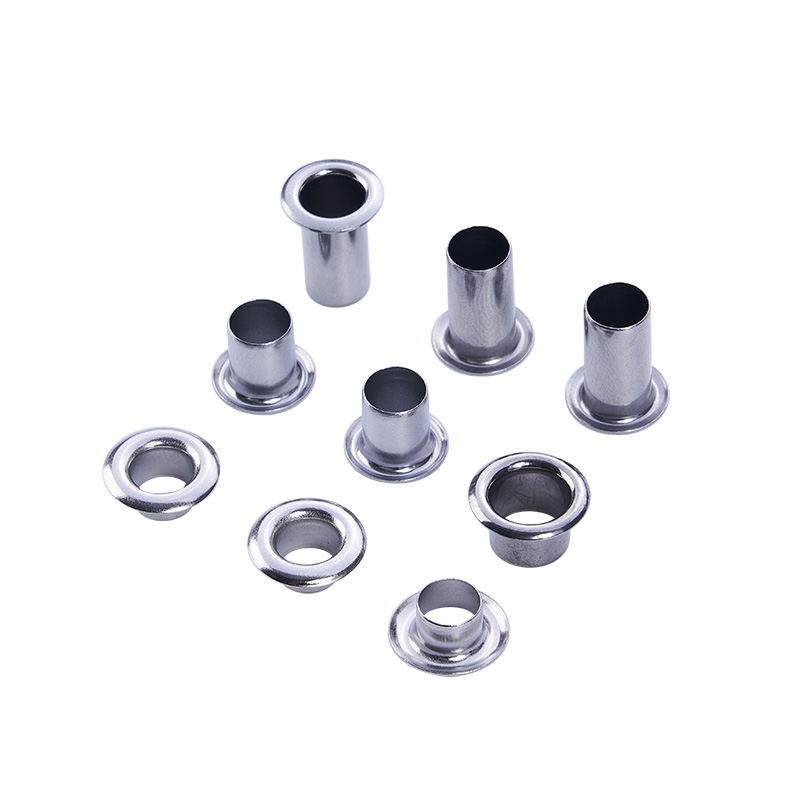
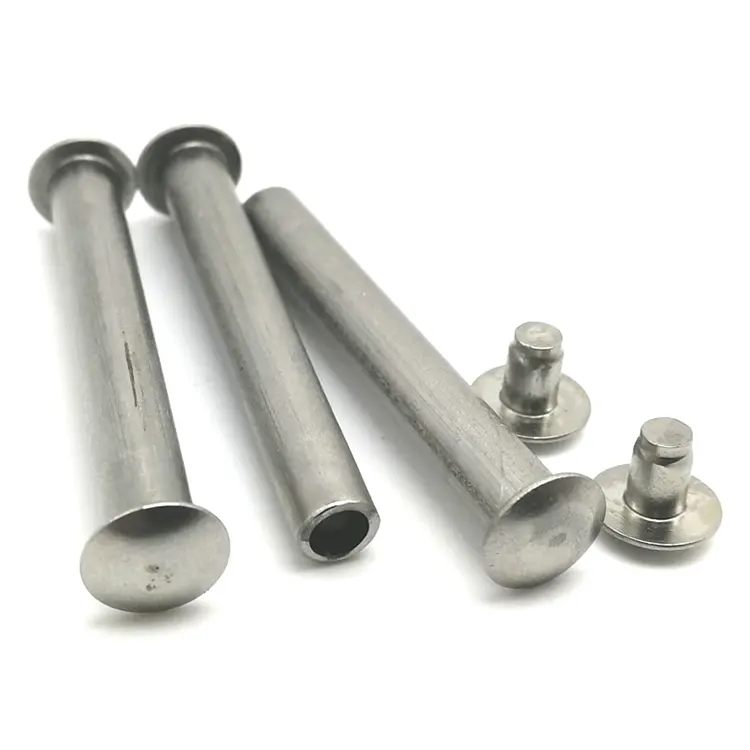
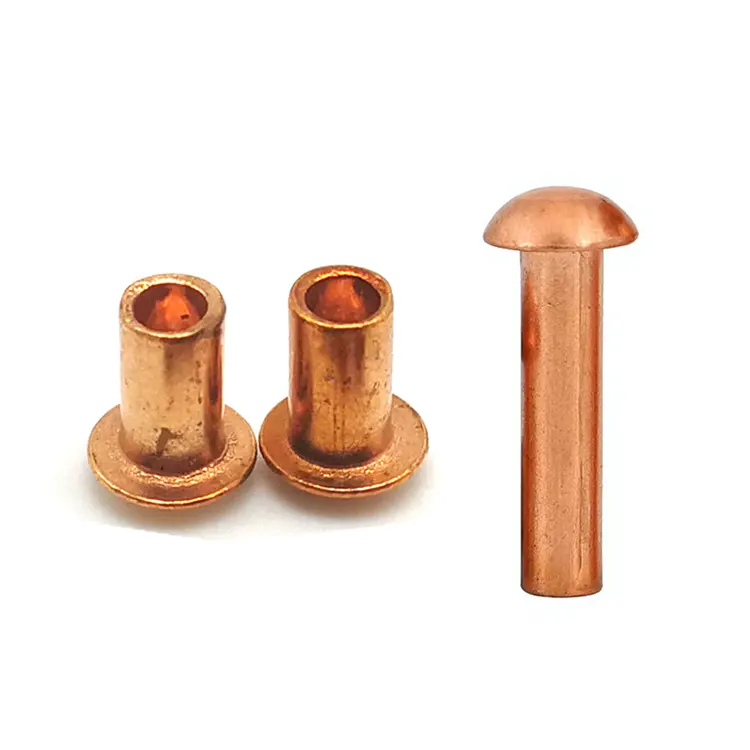
Copper Round Head Rivets
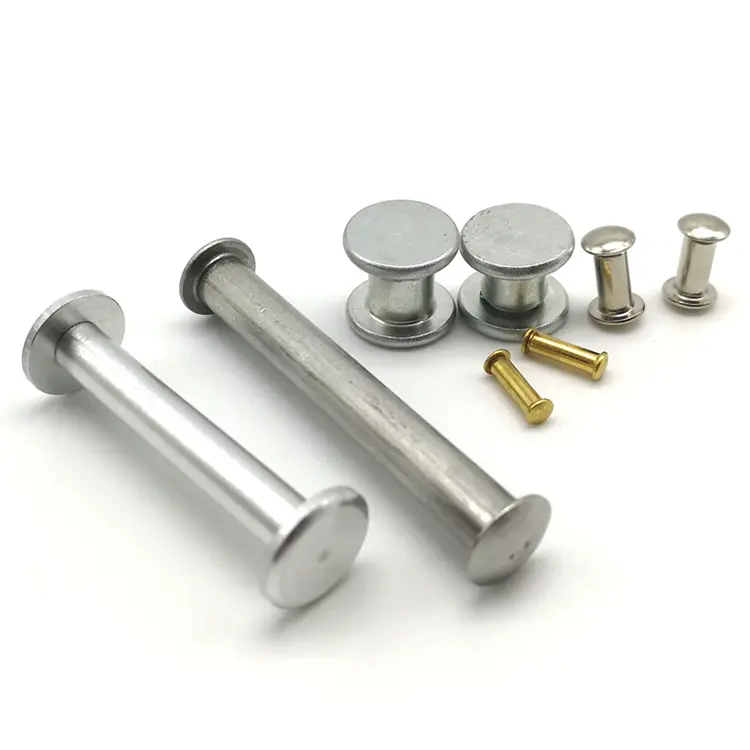
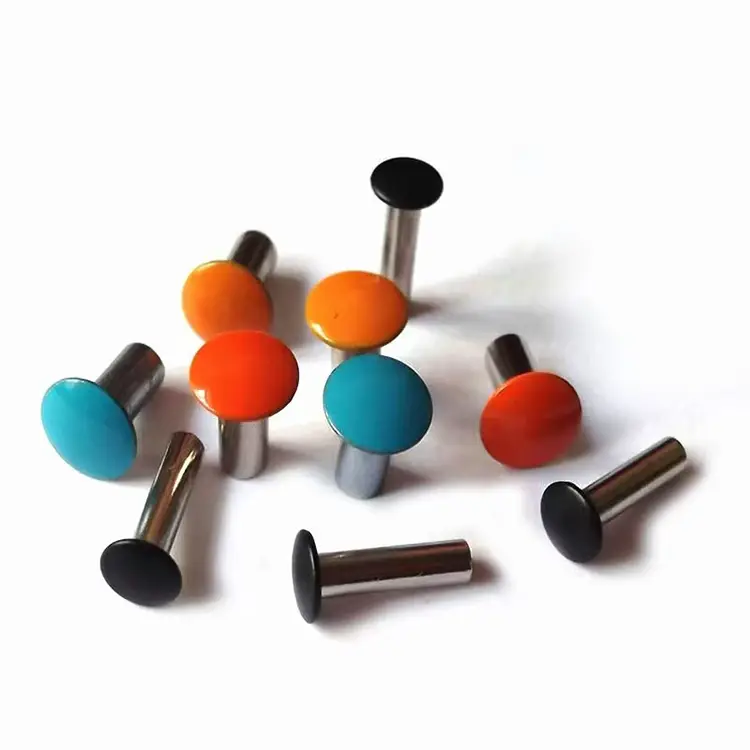
Copper round head rivets are a type of fastener widely used in industrial manufacturing, furniture making, and other fields. Copper, also known as oxygen-free copper, is a high-purity copper alloy characterized by excellent electrical and thermal conductivity, as well as good corrosion resistance and ductility. These properties ensure that copper round head rivets maintain stable performance in various environments, extending their service life. Furthermore, copper has certain antibacterial properties, which can reduce the risk of bacterial growth in products that frequently come into contact with the human body.
Send Inquiry
Product Description
Copper Round Head Rivets – When Conductivity Must Survive Vibration and Impact
In most electrical connections, a flat head or countersunk rivet works fine. But put that joint on a vibrating motor, a wave-battered marine fitting, or a rail-car grounding strap—and the rules change. The low-profile head that saved space now becomes a liability: less material over the shank, lower pull-out resistance, faster loosening under shock.
Copper Round Head Rivets solve this. At Nuote Metals, we combine high-purity copper (C11000 or C10200) with a deep, domed head that absorbs impact, resists vibration loosening, and maintains low-resistance conductivity for decades. This is not a general-purpose copper rivet. It is a fastener engineered for the toughest electrical and marine joints.
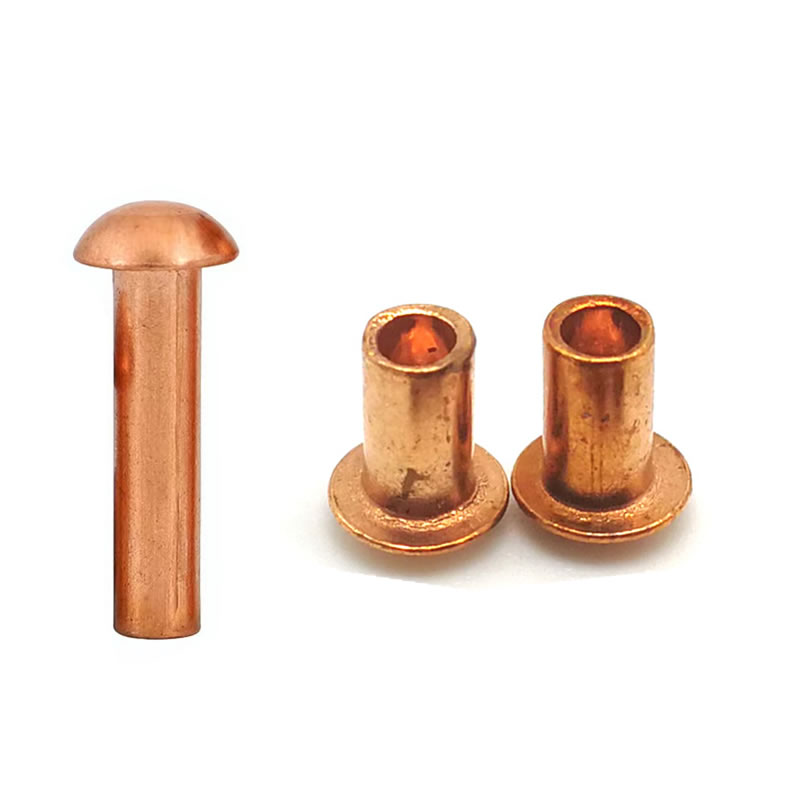
The Real Problem – Loose Grounds in High-Vibration Equipment
Vibration is the silent killer of electrical joints. A grounding strap that loosens by 0.1mm can increase resistance, generate heat, and eventually fail. Standard flat head copper rivets rely on clamping force alone—under constant vibration, that force drops.
Round head copper rivets change the physics:
- Dome geometry acts as a shock absorber – impact energy spreads over the curved surface instead of concentrating at the head-shank junction.
- More material mass over the shank – pull-out resistance is 25–30% higher than flat head equivalents.
- Self-locking tendency – when properly set, the domed shop head creates a mechanical interlock that resists loosening.
Field data: In drop-weight impact tests, our copper round head rivets absorb 35% more energy than flat head copper rivets of the same diameter. In vibration tests (10–2000 Hz, 10g), they maintain clamping force 3× longer before showing measurable loosening.
Technical Specifications – Copper Round Head Rivets
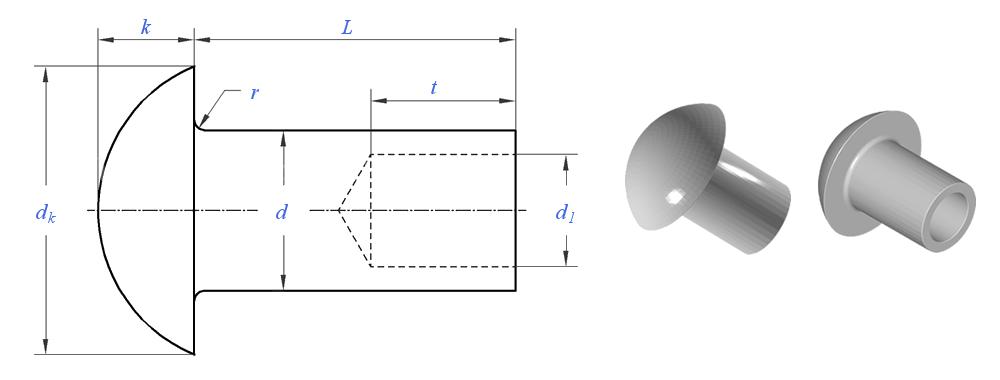
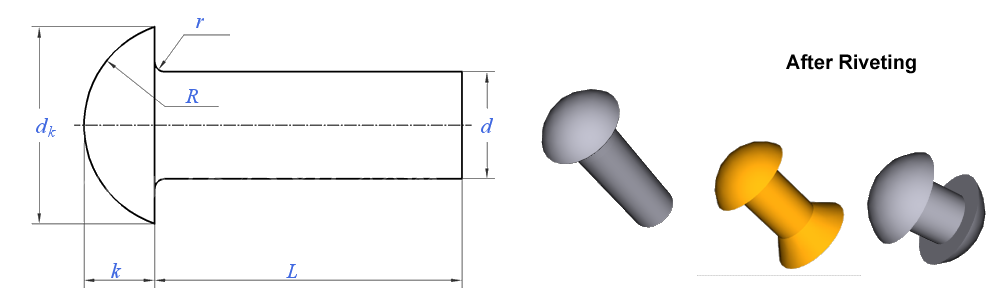
Manufactured to DIN 660 (1–8mm) and DIN 124 (10–36mm) equivalents. Custom sizes available.
| Parameter | Value / Range | Test Standard / Tolerance |
|---|---|---|
| Shank Diameter (d) | 1.5 – 12 mm | ±0.05mm (≤6mm) |
| Head Diameter (dk) | 1.6×d to 1.8×d | ±0.15mm |
| Head Height (k) | 0.6×d to 0.7×d | ±0.1mm |
| Length (L) | 3 – 50 mm | ±0.3mm |
| Tensile Strength | 220 – 280 MPa | ASTM B152 |
| Shear Strength | 180 – 220 MPa | ASTM F606 |
| Impact Energy Absorption | ≥35% higher than flat head | Internal drop-weight test |
| Conductivity | ≥58 MS/m (C11000), ≥59 MS/m (C10200) | ASTM B193 |
| Purity | ≥99.7% (C11000), ≥99.99% (C10200) | ASTM E53 |
| Standards | DIN 660, DIN 124, ISO 1051 | Custom per drawing |
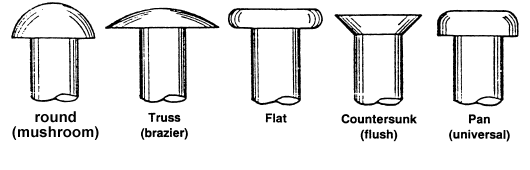
Round Head vs. Flat Head vs. Countersunk – For Copper Applications Only
This is not a generic head comparison. It is specific to copper's softness and conductivity.
Round Head: Best for vibration and impact. The dome absorbs shock and resists loosening. Slightly higher profile. Preferred for motor terminals, marine hardware, rail grounding.
Flat Head: Best for low-profile, snag-free surfaces. No countersink needed. But lower impact resistance—not ideal for vibrating joints.
Countersunk: Best for flush finish. Requires tapered hole. Thinnest head = lowest impact resistance. Avoid in high-vibration copper joints.
Our recommendation: If the joint will vibrate, choose Copper Round Head Rivets from Nuote Metals. The small profile penalty is worth the massive gain in joint reliability.
Solid vs. Semi-Tubular – For Vibration-Prone Copper Joints
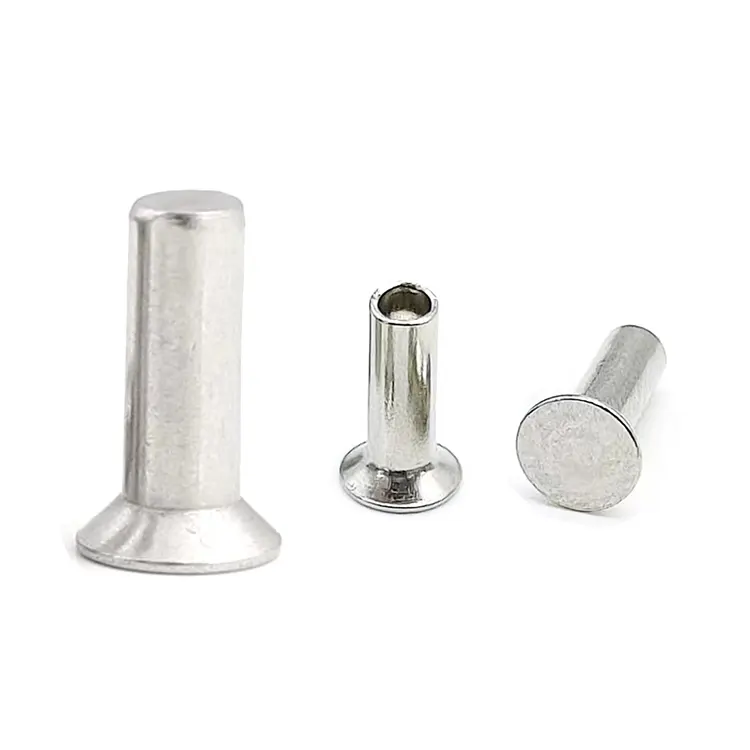
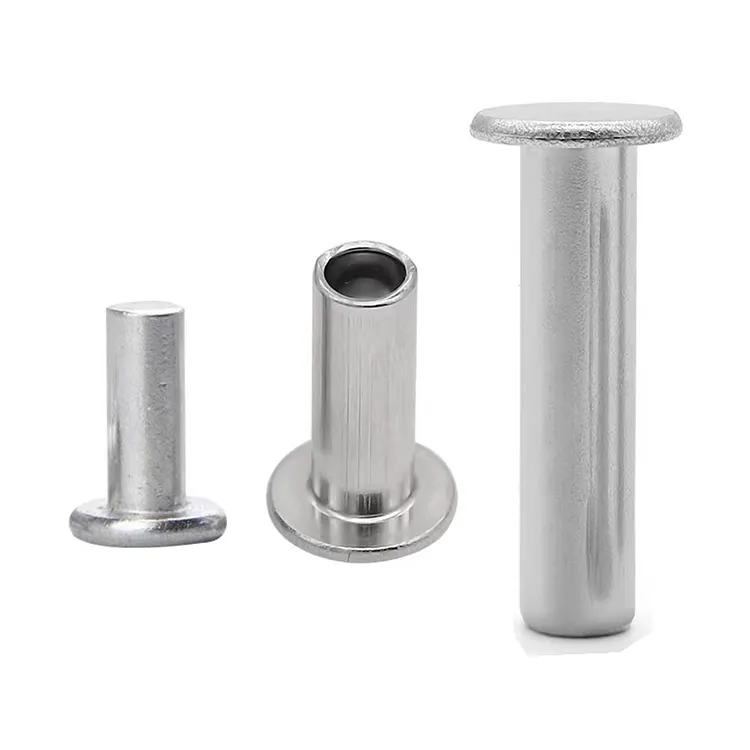
| Feature | Solid Copper Round Head | Semi-Tubular Copper Round Head |
|---|---|---|
| Setting force | 100% (baseline) | 50–60% |
| Shear strength | 100% | 80–85% |
| Vibration resistance | Superior – full shank interlock | Good – rolled tip |
| Best application | Motor terminals, heavy marine, rail | Thin panels, high-volume electronics |
| Impact performance | Maximum | Moderate |
Key insight: For maximum vibration resistance, choose solid. The fully filled shank creates a stronger mechanical lock. Semi-tubular is faster to set but slightly less resistant to long-term loosening.
How Nuote Metals Engineers Copper Round Head Rivets for Impact
Most copper rivet suppliers simply cold-head the wire and ship. We do more—because round head copper rivets fail differently than flat head.
The forming challenge:
Copper work-hardens rapidly. When forming a deep dome, the material must flow without cracking at the head-shank junction. Our tooling uses:
Progressive multi-stage forming – three to five strokes instead of one, reducing stress concentration.
Polished die surfaces – prevents micro-scratches that become crack initiation sites.
Controlled annealing – we soften the wire between stages to restore ductility.
Impact testing we perform:
Every batch of round head copper rivets is tested for:
Drop-weight impact – 5kg weight from 500mm, measuring deformation and cracking.
Vibration fatigue – 10–2000 Hz sweep for 8 hours, measuring clamp load retention.
Head-shank fillet inspection – 20x magnification to verify radius integrity.
Why this matters to you:
A copper round head rivet that cracks under impact fails the entire grounding circuit. Our process control ensures that every rivet absorbs shock rather than transferring it to the joint.
This application-specific engineering is why Nuote Metals supplies copper round head rivets to motor manufacturers, marine contractors, and rail signaling companies across 50+ countries.
Installation for Vibration-Prone Joints
Hole size: d + 0.05mm to d + 0.1mm. Tighter than steel—copper flows to fill the hole.
Setting force: 40–60% of steel rivet force. Excessive force flattens the dome and reduces impact absorption.
Anvil selection: Use a concave anvil matched to the dome radius. A flat anvil will deform the head and create stress risers.
Shop head formation: For maximum vibration resistance, form a full, rounded shop head—not a flat one. The rounded profile distributes load better.
Electrical prep: Clean all surfaces with isopropyl alcohol. For connections over 10A, use tinned or silver-plated rivets to prevent oxide formation.
Edge distance: ≥1.5×d from hole center to material edge.
Frequently Asked Questions About Copper Round Head Rivets
Q1: Why would I choose a round head copper rivet instead of a flat head for electrical grounding?
A: The decision comes down to vibration and impact. If your grounding joint is stationary—like a busbar in a dry, stable panel—a flat head copper rivet works fine and saves space. But if the joint experiences vibration (motors, generators, rail cars, marine engines) or impact (wave action, heavy machinery), the round head is the better choice. The domed head has 25–30% more material over the shank, which increases pull-out resistance. More importantly, the dome shape absorbs shock instead of transferring it to the joint. In our tests, round head copper rivets maintain clamping force 3× longer than flat head under the same vibration profile. Nuote Metals recommends round head for any grounding application where the equipment moves or vibrates.
Q2: How does copper's softness affect the setting of round head rivets—can the head deform too easily?
A: Copper is softer than steel, so it does deform more easily—but that's actually an advantage when controlled properly. The key is using the right setting force (40–60% of what you'd use for steel) and a concave anvil that matches the dome radius. If you over-set, the dome will flatten, reducing impact absorption and pull-out resistance. If you under-set, the shop head won't form fully, and the joint will loosen. At Nuote Metals, we provide recommended force curves and anvil specifications with every order. We also offer semi-tubular copper round head rivets, which require even lower force and are more forgiving in high-volume automated settings.
Q3: Can Copper Round Head Rivets be used with aluminum busbars or panels?
A: Only in dry, indoor environments—and even then, we recommend caution. Copper and aluminum are galvanically dissimilar. In the presence of moisture (even humidity), direct contact creates a galvanic cell that corrodes the aluminum. For outdoor, marine, or wet applications, do not connect copper rivets directly to aluminum. If you must join copper and aluminum, consider: (a) using a bimetallic transition washer, (b) tinned copper rivets (tin reduces the galvanic potential), or (c) switching to aluminum rivets for the aluminum side. Nuote Metals supplies both copper and aluminum rivets—we can help you choose the right material for your specific joint and environment.
Hot Tags: Copper Round Head Rivets,China Copper Rivets,Copper Round Head Rivets Manufacturer
Related Categories
Send Inquiry
Please feel free to fill your inquiry in the form below. We will reply you in 24 hours.



X
We use cookies to offer you a better browsing experience, analyze site traffic and personalize content. By using this site, you agree to our use of cookies.
Privacy Policy