
Products
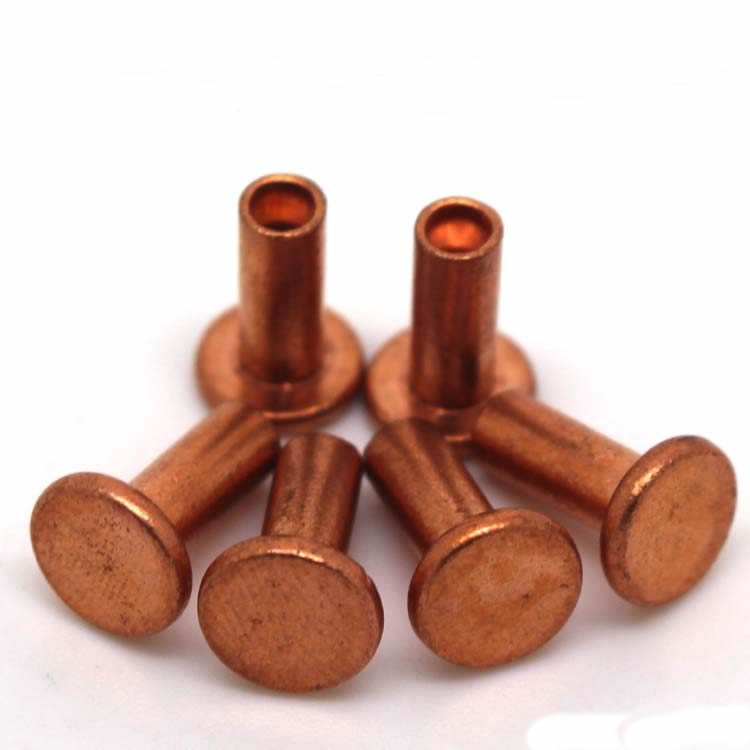
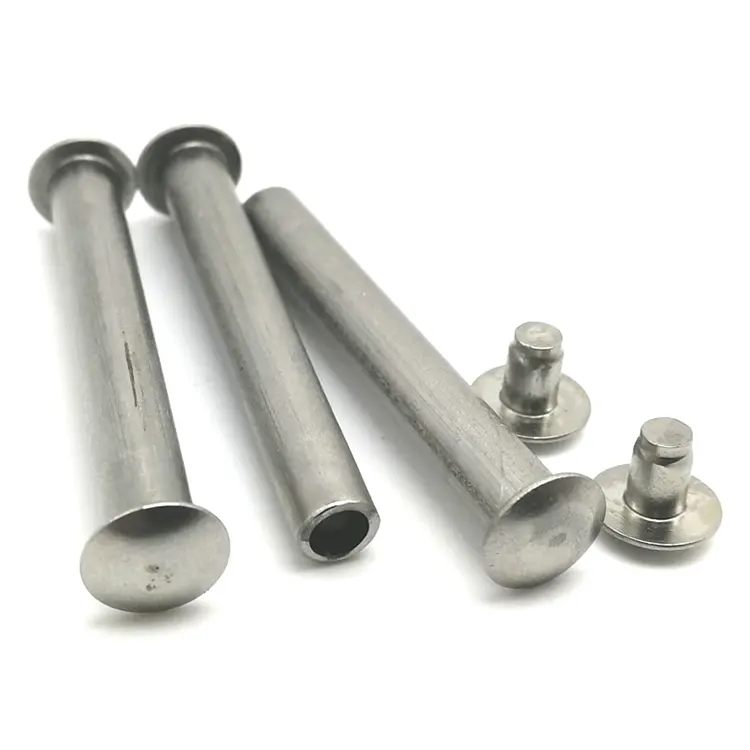
Iron Countersunk Head Rivets
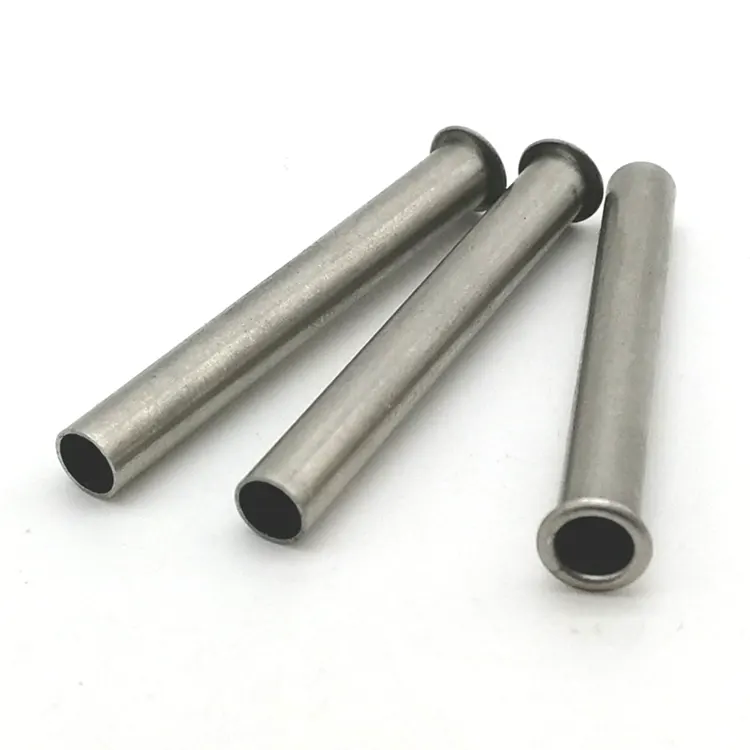
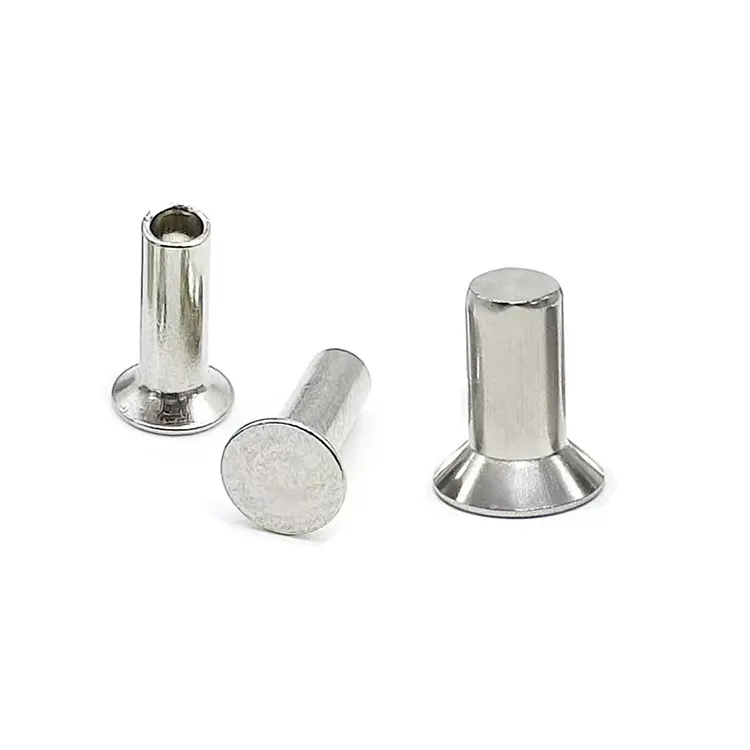
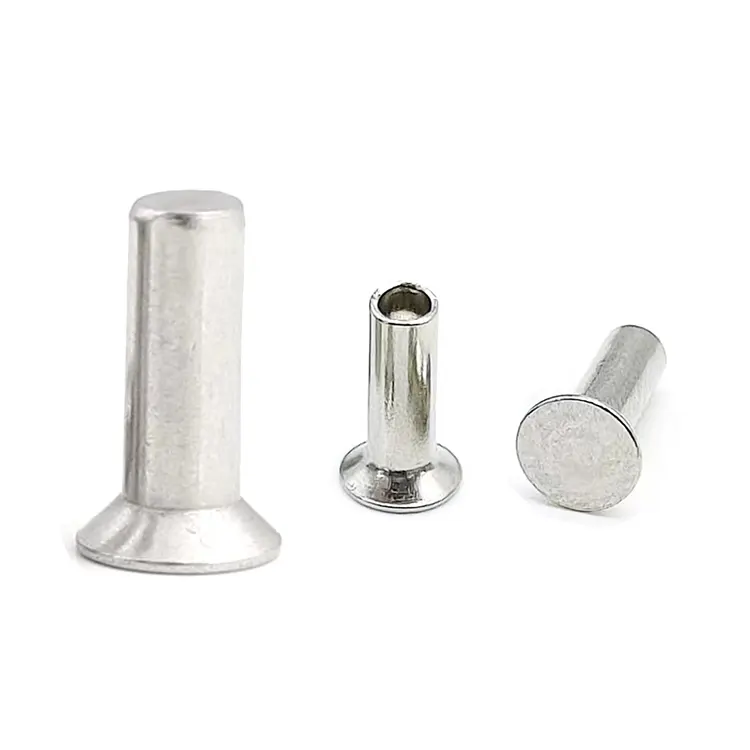
The head of iron countersunk head rivets are shaped like a truncated cone, with the cone typically angled at 90° or 120° to the rivet's axis. This shape allows the rivet's head to sit flush with the surface of the connected component after installation, resulting in a smooth appearance. This is particularly suitable for applications where surface flatness is critical. Come to Nuote Metals to customize your desired iron countersunk head rivet. Our engineers, with over 10 years of experience, are deeply familiar with the production of various rivet types.
Send Inquiry
Product Description
Not every rivet is meant to be seen—or felt. When your finished product demands a sleek, professional appearance with zero snag points, the Iron Countersunk Head Rivet is the answer. At Nuote Metals, we manufacture these fasteners with a precisely angled flat top that sits completely flush with the surrounding material after installation.
This flush fit eliminates protruding heads that catch clothing, cut fingers, or interfere with moving parts. That's why countersunk rivets are the standard choice for architectural metalwork, vehicle exteriors, railway carriage interiors, and any application where surface smoothness is just as important as joint strength.
What Makes a Countersunk Head Unique?
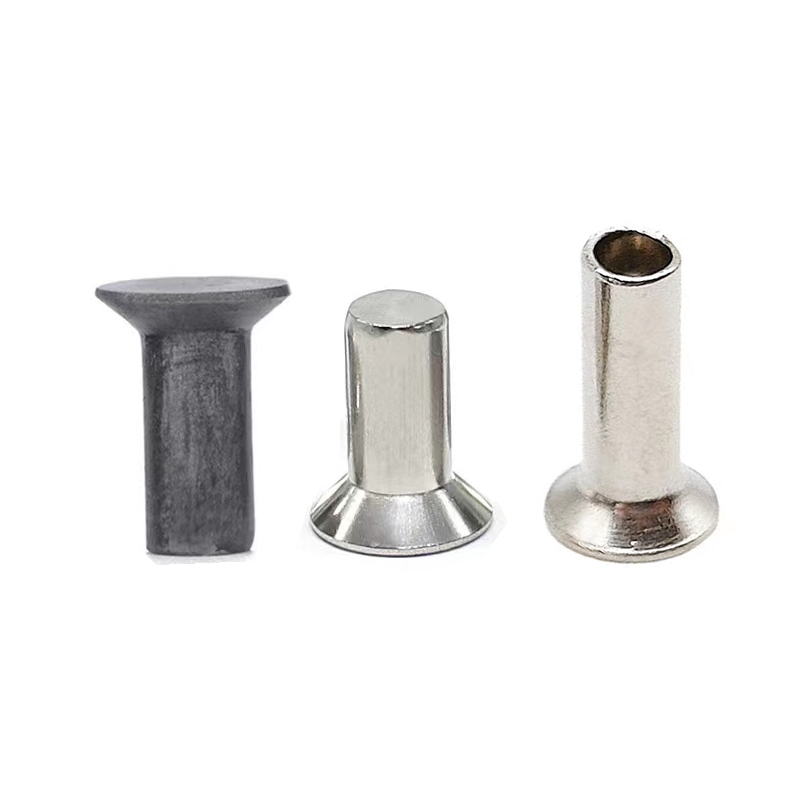
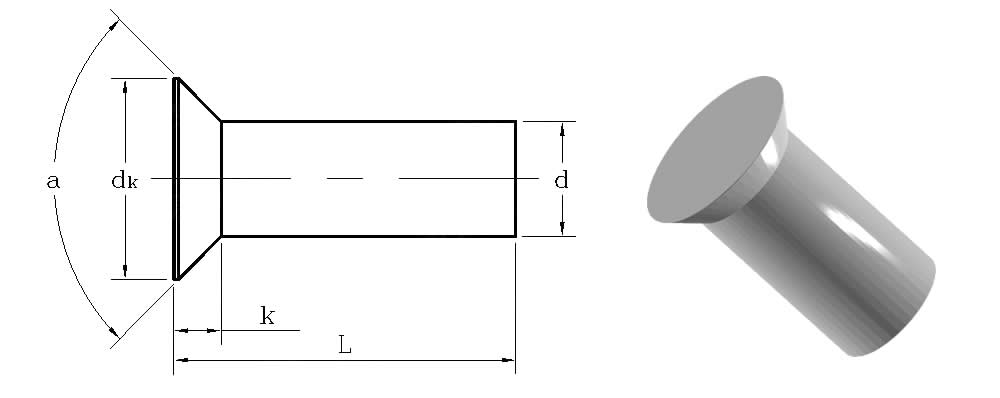
The countersunk (also called "flat head" or "countersunk flat head") is defined by its conical underside, designed to seat into a pre-drilled countersink hole.
Key geometry features:
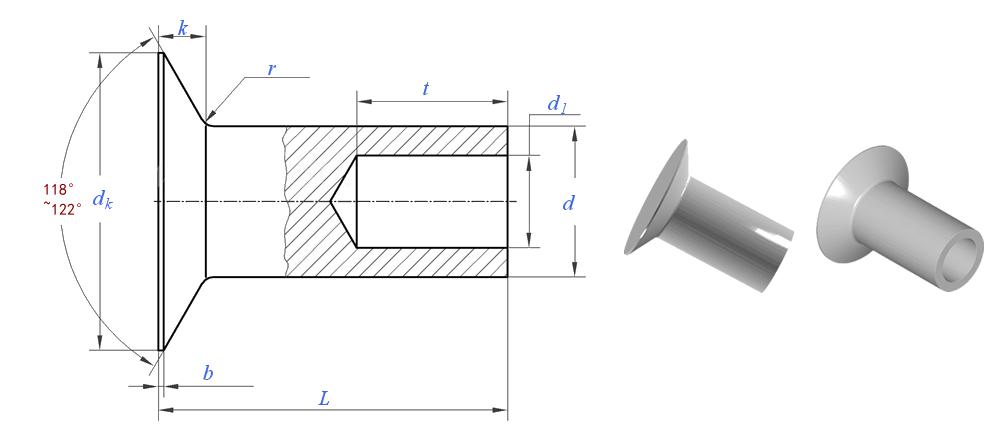
Head shape: Flat top with a tapered 90° or 120° conical bearing surface underneath
Head diameter: Approximately 1.4× to 1.6× the shank diameter (smaller than round or pan heads)
Head height: Very low – just 0.3× to 0.4× the shank diameter
Finished profile: Sits exactly flush with – or slightly below – the surface
The critical factor – Countersink angle:
Most standards (including DIN 302 and ISO 1051) specify a 90° countersink angle for general use. For softer materials like aluminum or plastics, 120° is sometimes preferred to reduce edge stress. Nuote Metals offers both angles – and custom angles on request.
Technical Specifications – Iron Countersunk Head Rivets
We manufacture to DIN 302 (countersunk head rivets, solid and semi-tubular) and ISO 1051, with full custom options.
Combined Dimensional & Mechanical Data
| Parameter | Value / Range | Test Standard / Tolerance |
|---|---|---|
| Shank Diameter (d) | 2 – 16 mm | ±0.1mm (≤10mm) |
| Head Diameter (dk) | 1.4×d to 1.6×d | ±0.2mm |
| Head Height (k) | 0.3×d to 0.4×d | ±0.15mm |
| Countersink Angle | 90° (standard) or 120° | ±2° |
| Length (L) | 4 – 50 mm (custom available) | ±0.5mm |
| Tensile Strength | 330 – 450 MPa | ASTM A31 |
| Yield Strength (Grade A) | ≥160 MPa | ASTM A31 |
| Shear Strength | 250 – 350 MPa | ASTM F606 |
| Hardness | 80 – 95 HRB | Rockwell B |
Countersunk vs. Round vs. Pan – A Clear Decision Guide
Rather than a table, here's the straightforward logic:
- Choose Countersunk when the surface must be completely flush – no protrusions allowed. This is critical for exterior vehicle panels, handrails, conveyor covers, and final assemblies where painting or powder coating follows riveting. The flat top also prevents debris buildup.
- Choose Round Head when the joint faces intense vibration and impact – the tall dome absorbs shock and provides maximum pull-out resistance.
- Choose Pan Head when working with thin or soft materials that need wide load distribution and a low (but not flush) profile.
For most finish-critical applications – architectural, transport, and consumer goods – the Iron Countersunk Head Rivet is the only logical choice. Nuote Metals can supply matching countersink tooling specifications to ensure perfect seating.
Solid vs. Semi-Tubular – Two Paths to a Flush Finish
Both body types are compatible with countersunk heads, but they suit different production scales.
| Feature | Solid Countersunk | Semi-Tubular Countersunk |
|---|---|---|
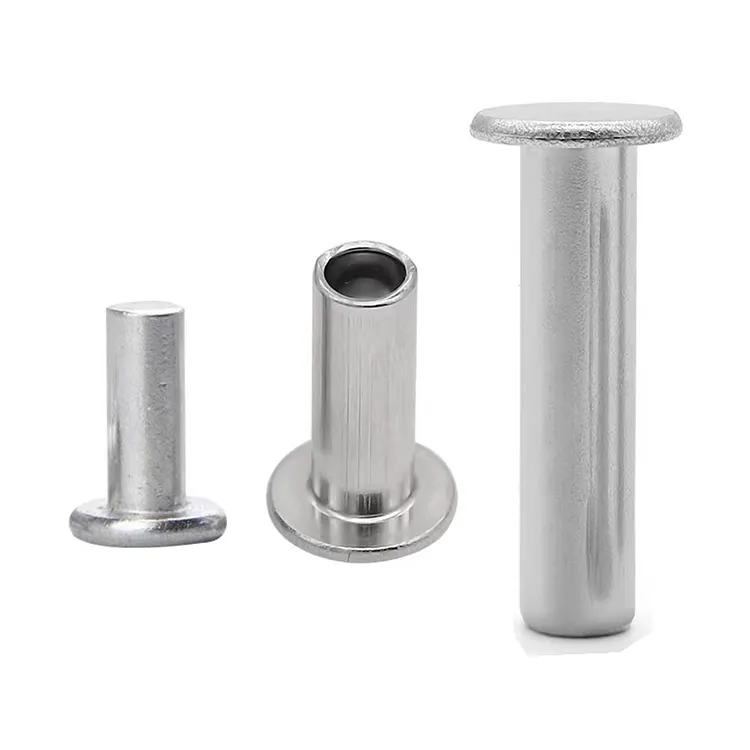
| Shank form | Fully solid through the head | Hollow tip (20–40% depth) |
| Required setting force | 100% (baseline) | 60–70% |
| Shear strength | 100% (maximum) | 85–90% |
| Best for | Thick plates, structural safety joints | Thin panels, automated mass production |
| Typical setting | Hydraulic press or impact riveting | Pneumatic riveting or roll clinching |
Practical advice: For automotive or appliance production lines, choose semi-tubular – it sets faster and requires less force. For bridge components or heavy equipment, choose solid for maximum strength.
Critical Installation Factors for Countersunk Rivets
Achieving a truly flush fit requires more precision than other head styles. Follow these rules for best results:
Countersink hole preparation: The countersink angle (90° or 120°) must match the rivet head exactly. A mismatch of just 5° will leave the head protruding or recessed below the surface, compromising both appearance and load transfer.
Depth control: The countersink depth must equal the head height (k). Too shallow – the head sits proud. Too deep – the head sinks below the surface, thinning the material edge.
Burr removal: Always deburr both sides of the hole before setting – burrs prevent the conical head from seating fully and cause eccentric loading.
Anvil selection: Use a flat anvil for setting countersunk rivets. A concave anvil will deform the head and ruin the flush finish.
Pro tip from Nuote Metals: We can supply countersink depth gauges and setting tool specifications tailored to your rivet order – saving you trial-and-error on the production floor.
Precision Engineering Support – Expertise Beyond Testing
At Nuote Metals, we know Iron countersunk head rivets performance depends on geometric consistency and installation compatibility – not just material strength. With over 20 years and 500+ million countersunk rivets delivered to automotive, railway, and architectural sectors, we anticipate real-world issues like angle mismatch, edge cracking, and off-center seating before they reach your line.
What sets us apart:
- Pre-production sampling: Sample batches come with detailed setting reports – anvil recommendations, force curves, and flush-fit validation data.
- SPC process control: We monitor head angle, concentricity, and height at every forming station – catching deviations under 0.05mm in real time.
- On-site technical support: For critical projects, our engineers assist with tooling setup and production-line calibration.
- Full traceability: Every batch includes dimensional reports, ASTM A31 material certificates, and optional third-party inspection.
We share process data openly – because clear communication builds trust. This application-focused approach, far beyond generic test lists, is the Nuote Metals difference.
Frequently Asked Questions About Iron Countersunk Head Rivets
Q1: What is the difference between a 90° and a 120° countersunk head rivet?
A: The angle refers to the tapered conical surface underneath the head. 90° is the international standard for most steel and metal applications (DIN 302, ISO 1051). It provides a snug fit in standard countersink tooling. 120° is typically used for softer materials like aluminum, plastic, or wood – the wider angle reduces edge pressure and lowers the risk of material splitting around the hole. At Nuote Metals, we stock both and can recommend the correct angle based on your material hardness and thickness. If you are uncertain, send us your material specs and we'll advise.
Q2: Can the rivet head crack during setting if I use the wrong countersink angle?
A: Absolutely – and that's a common field failure. If the countersink angle in your material is sharper or shallower than the rivet head, the head will not seat uniformly. During setting, the mismatched contact creates stress points that can cause the head edge to shear or crack, especially with harder grades of iron/steel. Always match the angles precisely. If your existing tooling uses a non-standard angle, Nuote Metals can manufacture custom-angle rivets to match – just provide your countersink cutter specification.
Q3: Are Iron countersunk head rivets weaker than round head rivets?
A: In terms of shear strength (side-to-side force), they are nearly identical because both rely on the shank diameter. However, in impact resistance and pull-out resistance, the round head is stronger because it has more material mass over the shank center. The countersunk head, being thinner, offers approximately 15–20% lower impact tolerance. This is why we recommend countersunk heads for finish-critical, low-shock environments (like architectural cladding or interior panels) and round heads for heavy-duty structural frames. Nuote Metals always asks about your operating environment to guide you toward the right head style.
Hot Tags: Iron Countersunk Head Rivets,Iron Rivets Made in China,Iron Rivets Manufacturer
Related Categories
Send Inquiry
Please feel free to fill your inquiry in the form below. We will reply you in 24 hours.



X
We use cookies to offer you a better browsing experience, analyze site traffic and personalize content. By using this site, you agree to our use of cookies.
Privacy Policy