Rivets
Products
- View as
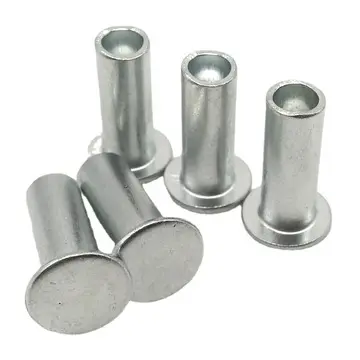
Steel Half Tubular Rivets
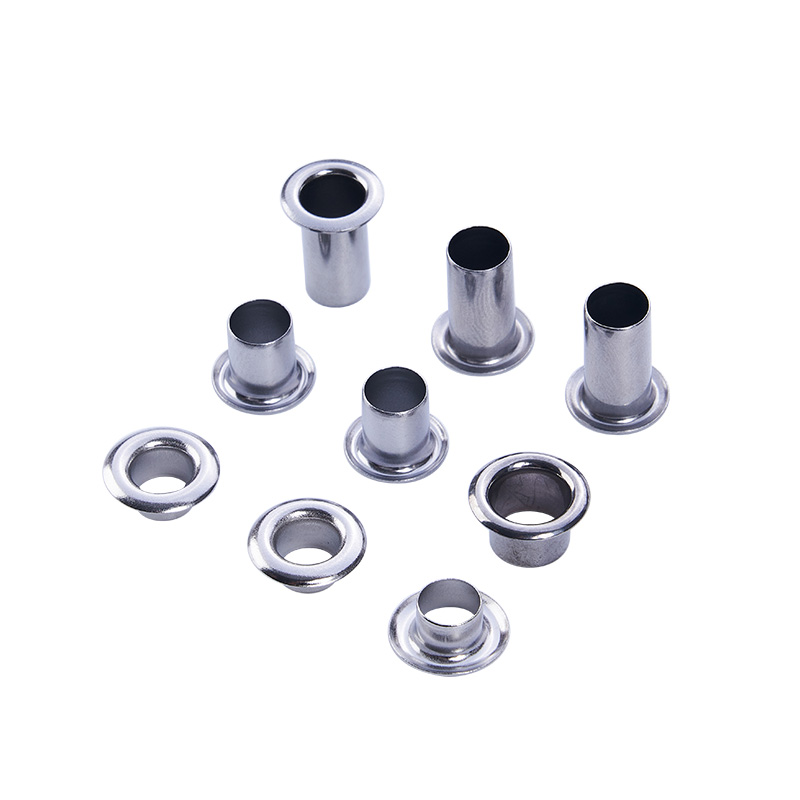
Steel half tubular rivets from Nuote Metals, a China factory, offer a cost-effective fastening solution for general manufacturing and construction. Made from high-strength carbon steel, these rivets provide excellent shear resistance for heavy-duty assemblies like scaffolding, agricultural equipment, and steel furniture. The half-tubular design flares smoothly under pressure, reducing installation force while maintaining a tight grip. Available with Custom diameters, lengths, and finishes—zinc-plated, plain, or black oxide. Unlike stainless steel, our steel rivets deliver comparable strength at a lower price point, ideal for high-volume orders. Solve budget constraints without sacrificing reliability. Trust our factory for precision, consistency, and on-time delivery for your Custom steel half tubular rivets.
View DetailsSend Inquiry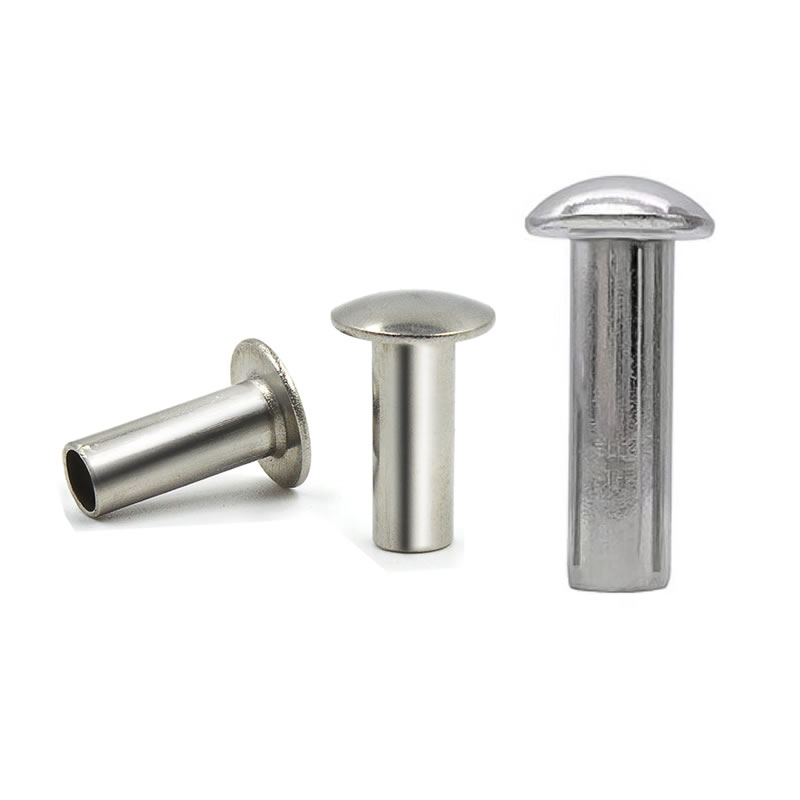
Round Head Semi Hollow Rivets
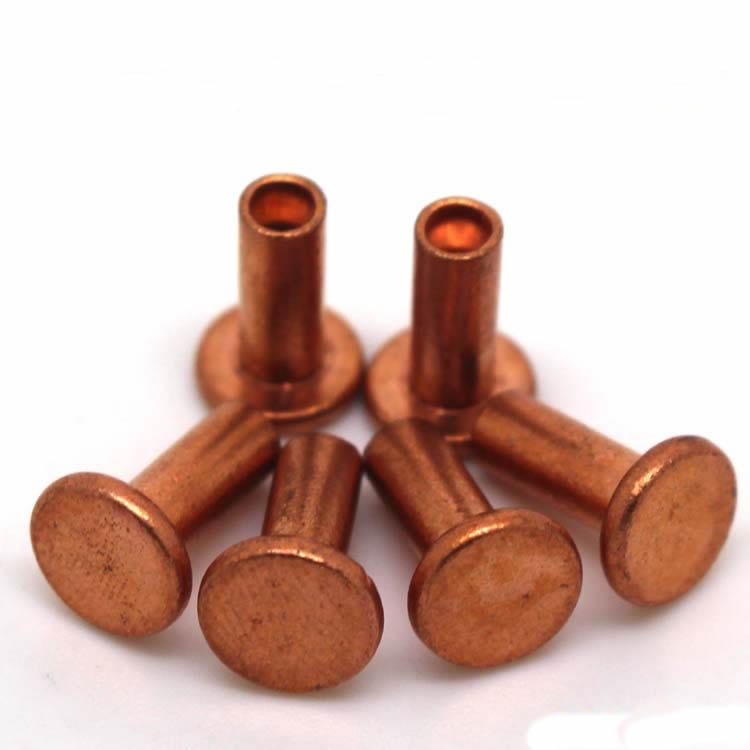
Custom round head semi hollow rivets – that’s what Nuote Metals, a China factory, excels at. With a classic dome for even load distribution and a semi-hollow shank that sets easily without excessive force, these rivets suit furniture, automotive interiors, and general hardware. Choose from steel, brass, or stainless steel in custom dimensions. Solve loose joints and material cracking with our precision-made rivets. Trust us for consistent quality, fast turnaround, and tailored solutions that match your assembly needs.
View DetailsSend Inquiry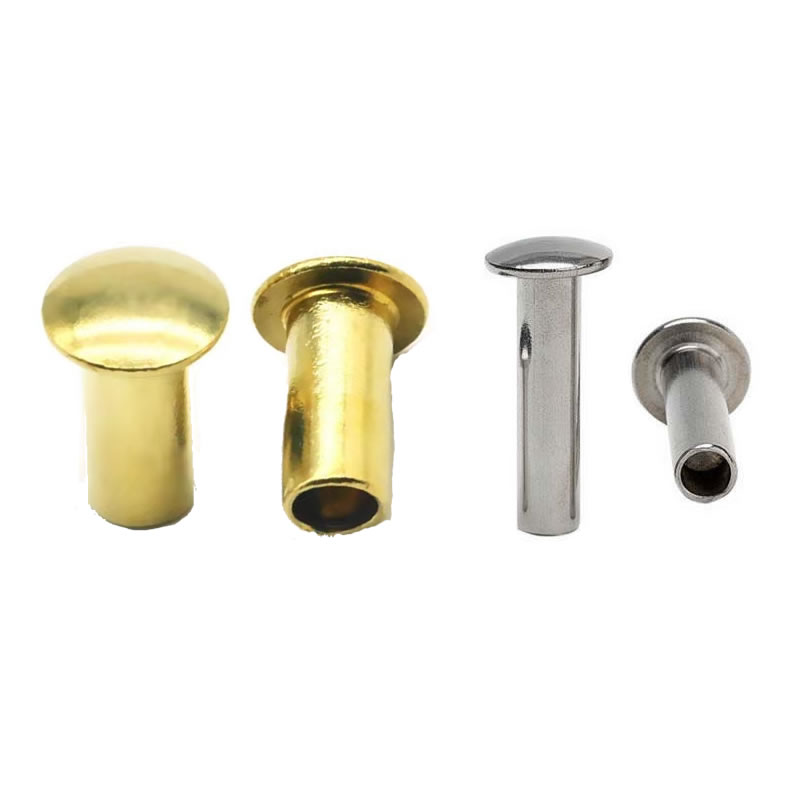
Pan Head Semi Hollow Rivets
For a moderately domed head that sits neatly above the surface, Custom pan head semi hollow rivets from our China factory, Nuote Metals, deliver both function and finish. The pan head provides good clamping force without the bulk of a full dome, while the semi-hollow body reduces driving effort and prevents substrate damage. Ideal for electrical enclosures, furniture hardware, and automotive trim. Available in steel, brass, or stainless steel. Get consistent flare and secure grip every time. Trust us for precision-made rivets that simplify your assembly process.
View DetailsSend Inquiry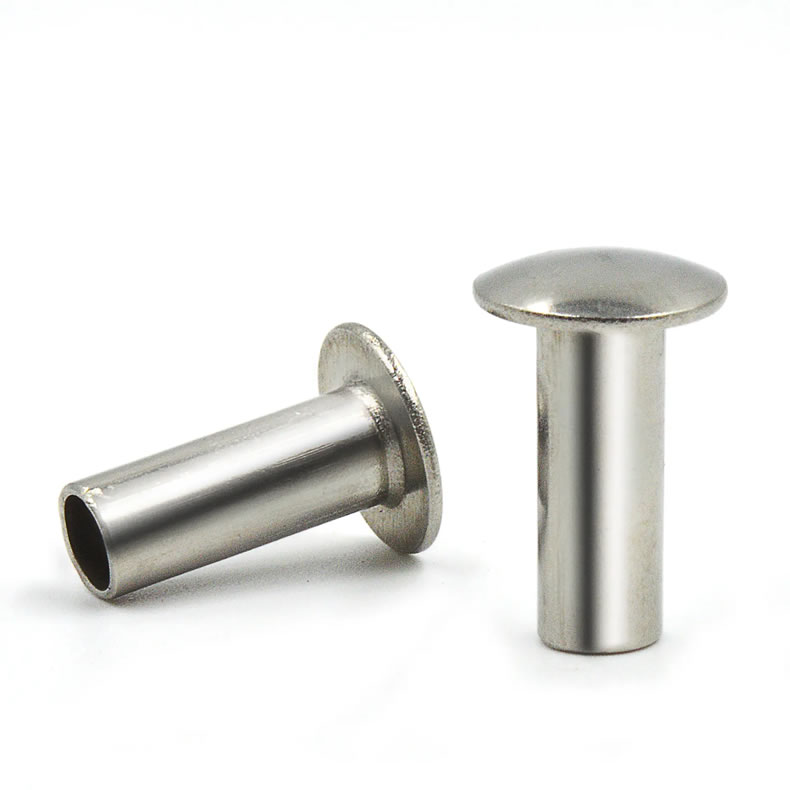
Stainless Steel Semi Hollow Rivets
Precision fastening for demanding applications starts with Custom stainless steel semi hollow rivets from Nuote Metals, a China factory. The semi-hollow design reduces installation force while the stainless body delivers excellent corrosion resistance and shear strength. Perfect for marine hardware, food equipment, and automotive assemblies where rust is not an option. Available in 304 and 316 grades. Eliminate weak joints and premature failure. Trust our factory for consistent quality, tight tolerances, and fast turnaround on custom orders.
View DetailsSend Inquiry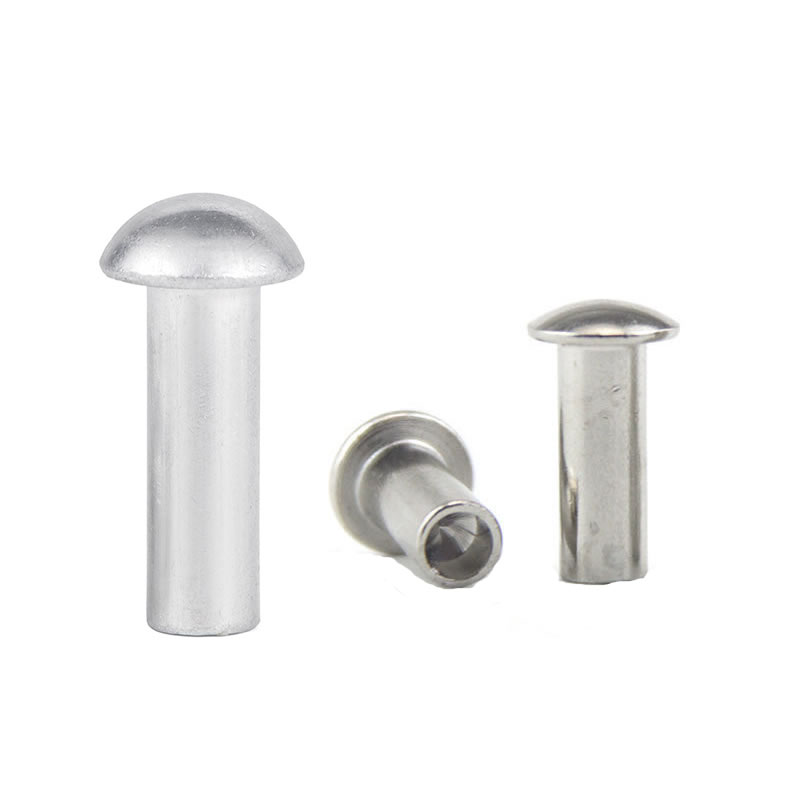
Mushroom Head Semi Hollow Rivets
When your project calls for a domed rivet that spreads load evenly, choose Custom mushroom head semi hollow rivets from our China factory, Nuote Metals. The broad head protects soft materials like leather and plastic from pull-through, while the semi-hollow body sets with less force. Ideal for luggage, tool handles, and automotive trim. Available in steel, brass, or stainless steel. Trust us for precision manufacturing that solves joint failure and surface cracking.
View DetailsSend Inquiry
Flat Head Semi Hollow Rivets
Need a flush fastening solution? Nuote Metals from China, a professional factory, offers Custom flat head semi hollow rivets. The flat head sits perfectly flush with material surfaces, ideal for electronics, nameplates, and automotive panels. The semi-hollow body reduces setting force while maintaining strong grip, preventing cracks in brittle materials. Available in brass, steel, and stainless steel. Solve surface protrusion and assembly damage with precision rivets. Trust us for consistent quality that enhances your product finish.
View DetailsSend InquiryWhat are the advantages of rivets over other fasteners?
1. Ease of Installation
Rivets are fast to install, and even fully automated for high-volume applications, resulting in a simple and efficient operation process.
2. Connection Reliability
The riveting process is standardized, with strict quality control, resulting in highly stable connections. Visual inspection allows for quick verification of connection quality.
3. Vibration and Impact Resistance
Rivets connect through deformation or interference fit, providing strong clamping force and excellent vibration resistance, capable of withstanding vibration and shock.
4. Low Cost
Rivets are easy to install and can be fully automated, saving significant labor costs.
What are the advantages and disadvantages of rivets made of different materials?
Aluminum Rivets
Advantages: Lightweight, reduces overall product weight, low cost, suitable for general civilian applications.
Disadvantages: Low tensile and shear strength, unsuitable for high-strength workpieces, prone to electrochemical corrosion when in contact with metals such as stainless steel.
Stainless Steel Rivets
Advantages: Strong corrosion resistance, high hardness, suitable for high-strength workpieces (such as marine equipment)
Disadvantages: Higher cost, typically more expensive than aluminum rivets of the same specification.
Brass and Copper Rivets
Advantages: Excellent conductivity (such as connecting electronic components), good corrosion resistance.
Disadvantages: Higher cost, more difficult to process.
Steel Rivets
Advantages: High hardness, high connection reliability, and wide applicability.
Disadvantages: Compared to other materials, iron rivets are more prone to rusting.
What are the main applications of rivets?
Rivets have a wide range of uses, from small items like a pair of scissors to large items like airplanes and ships, as well as in high-precision medical applications.
Industrial Manufacturing
Rivets are used in a wide variety of industrial fields, wherever there is a need to connect two or more materials.
Electronics
Rivets secure heat sinks and chips, providing both vibration damping and noise reduction, and are widely used in the cooling systems of electronic products such as computers and mobile phones.
Automotive
Rivets are widely used to connect components of automobile bodies and chassis, such as doors and hoods. Their lightweight and corrosion-resistant properties make them an indispensable joining method in automotive manufacturing.
Aerospace
In aircraft manufacturing, rivets are used to connect different fuselage components, such as wings and tailplanes. Millions of rivets create high-strength, corrosion-resistant joints. Aluminum and titanium alloy rivets are often used to connect components of corresponding materials, ensuring stability in extreme environments.
Rivets are used everywhere. The above examples only represent a small number of their applications. We see rivets everywhere in our daily lives, such as on scissors, folding beds, and strollers etc. Rivets can be customized to different sizes and materials depending on the application.
Nuote Metals has specialized in the rivet industry for over a decade. Our factory is located in Dongguan, a city known as the "World Factory," a city with a developed industry and convenient transportation. This allows us to respond quickly when acquiring raw materials and supporting surface treatments, meeting our customers' needs for quick access to samples and bulk orders. We produce 10 million rivets daily and have molds of various specifications, allowing us to produce rivets as small as 0.8mm and as large as 10mm. We welcome your inquiries and visits.



X
We use cookies to offer you a better browsing experience, analyze site traffic and personalize content. By using this site, you agree to our use of cookies.
Privacy Policy