Rivets
Products
- View as
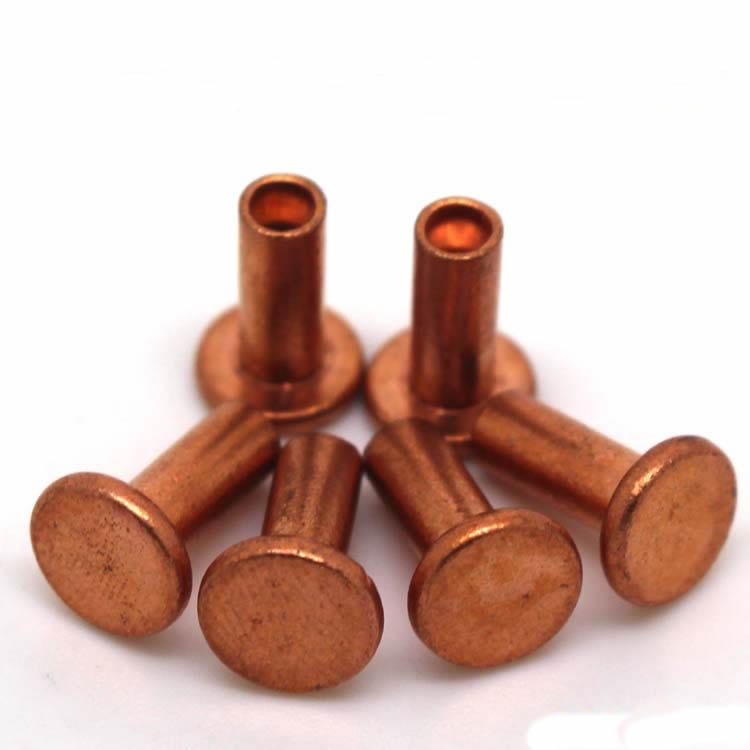
Truss Head Half Hollow Rivets
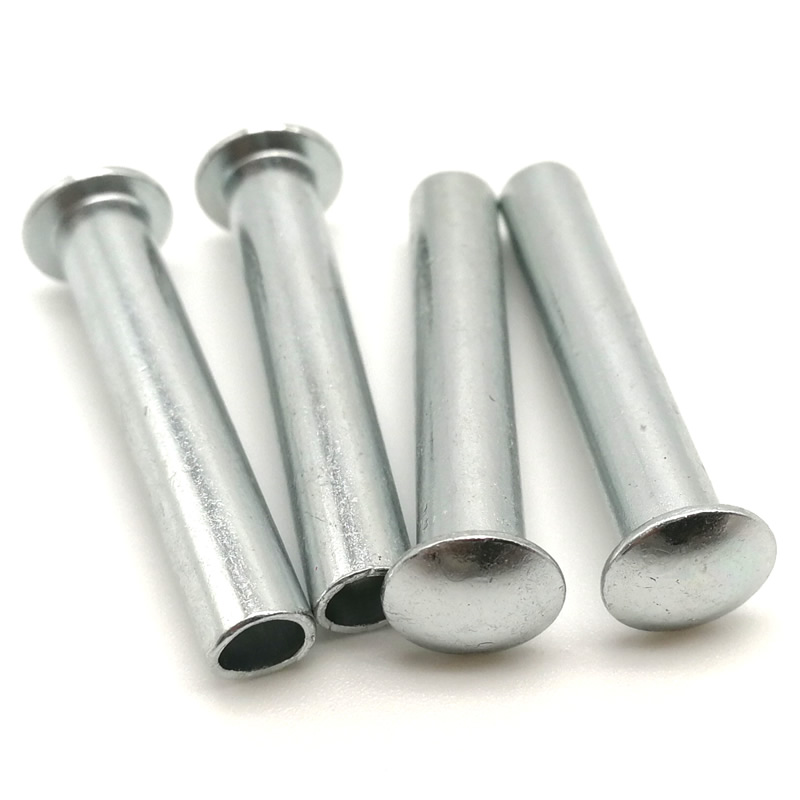
Truss head half hollow rivets are a kind of fastener with a rounded head on one end and a hollow structure on the other. The "semi-tubular" in the name refers to the hollow shank and solid head. This design allows the rivet to expand and secure into the joined materials during installation by squeezing the hollow portion. The rounded head provides a superior appearance and sufficient tensile strength. Nuote Metals is a rivet maker based in China, producing a wide array of rivets like solid, semi-tubular, and full-tubular types. And we offer a full selection of specs and ensure quick delivery.
View DetailsSend Inquiry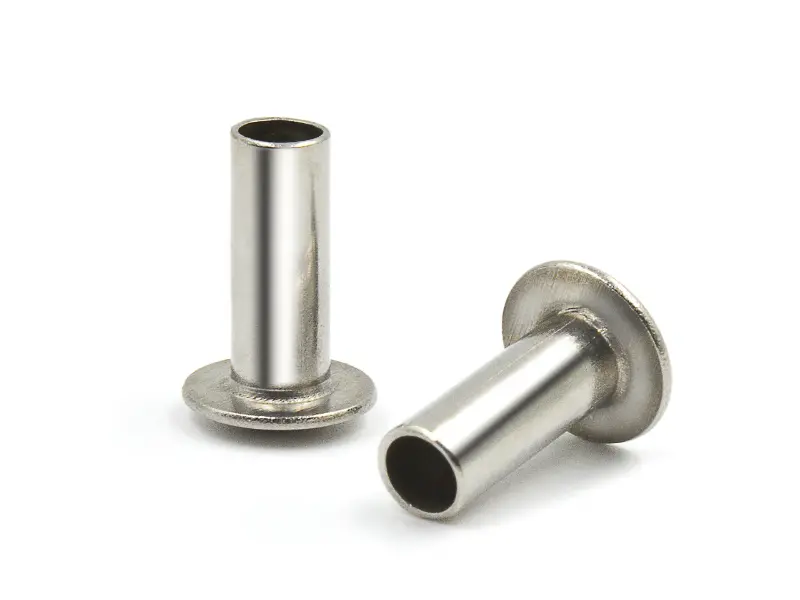
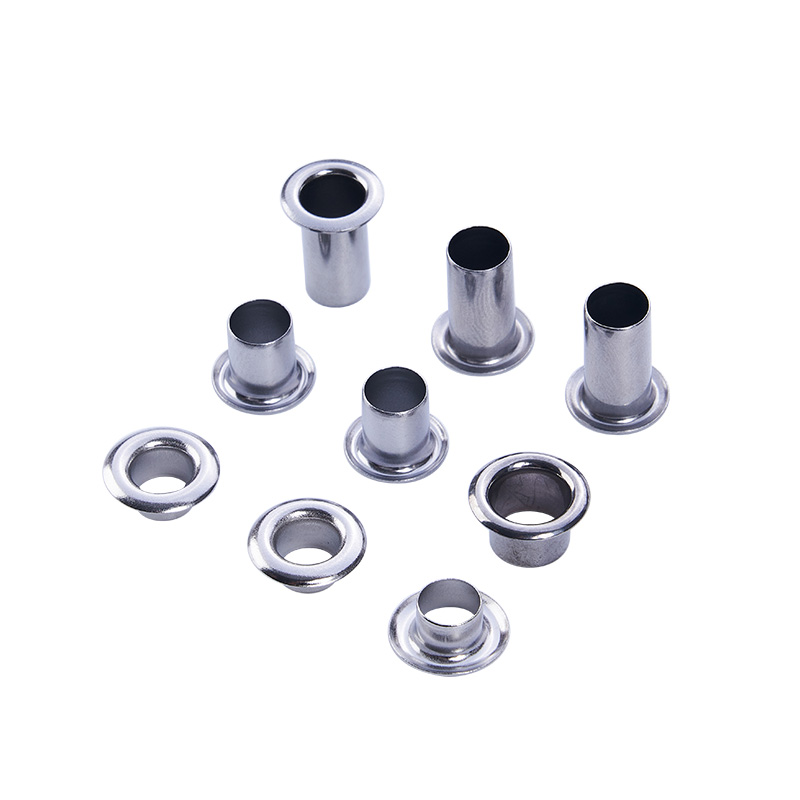
Stainless Steel Half Hollow Rivets
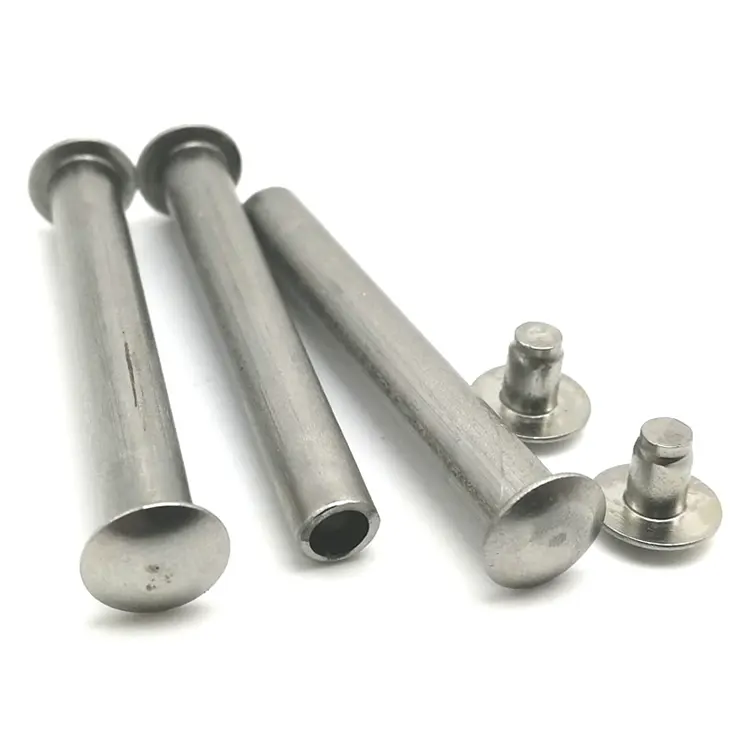
You can spot stainless steel half hollow rivets right away - they're not solid all the way through like regular rivets, but they're not completely hollow either. The head's solid, while the body's partially hollow. When you need to install them, just use a standard riveting machine with the right punch - it flares that hollow end into a tight, secure connection that won't let go. We normally make them from stainless steel grades like 304 or 316 - tough enough to handle daily wear and tear, plus they resist rust like champs. Honestly, these work just about anywhere you need them - indoor, outdoor, you name it. Nuote Metals specializes in the production of stainless steel 304 half hollow rivets and stainless steel 316L semi-hollow rivets. Welcome to contact us.
View DetailsSend Inquiry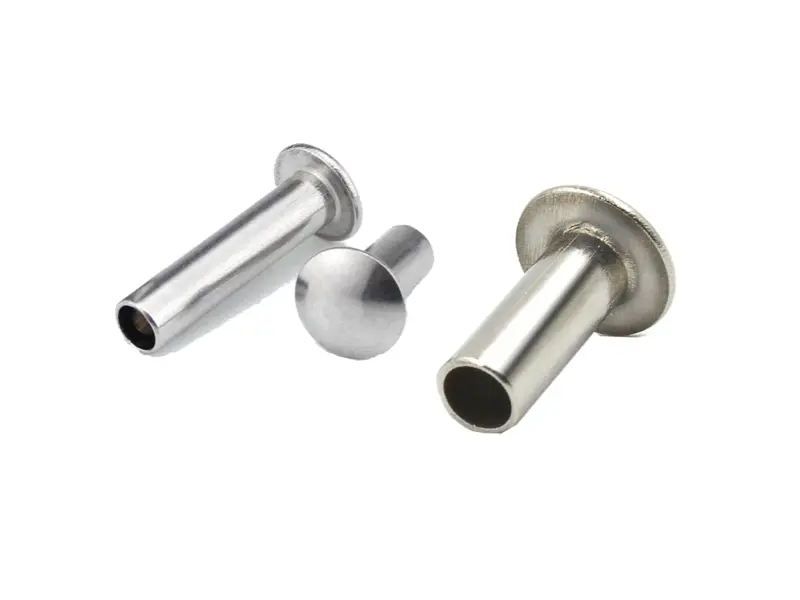
Pan Head Half Tubular Rivets
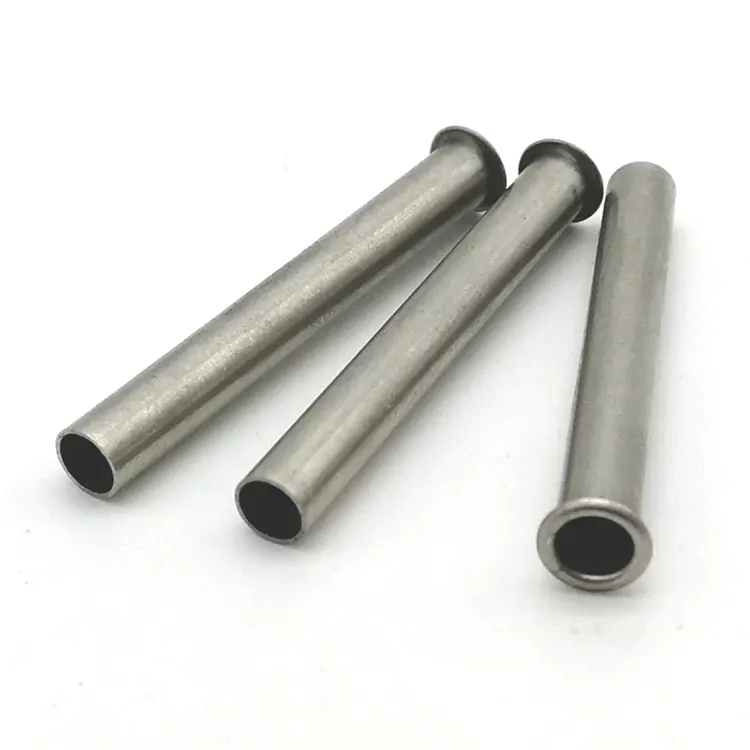
Nuote Metals offers pan head half tubular rivets in China, pan head half tubular rivets work as mechanical fasteners to join multiple parts together. Featuring a low-profile oval head, they provide wider surface contact and leave a nearly flush finish once installed. The body is semi-hollow—open on one end and closed or partly closed on the other—allowing it to deform during setting for a secure hold.This allows the rivet to be secured by deforming it during installation. Compared to other rivet types, the semi-hollow style is lighter, uses less material, and still offers decent strength for many applications.
View DetailsSend Inquiry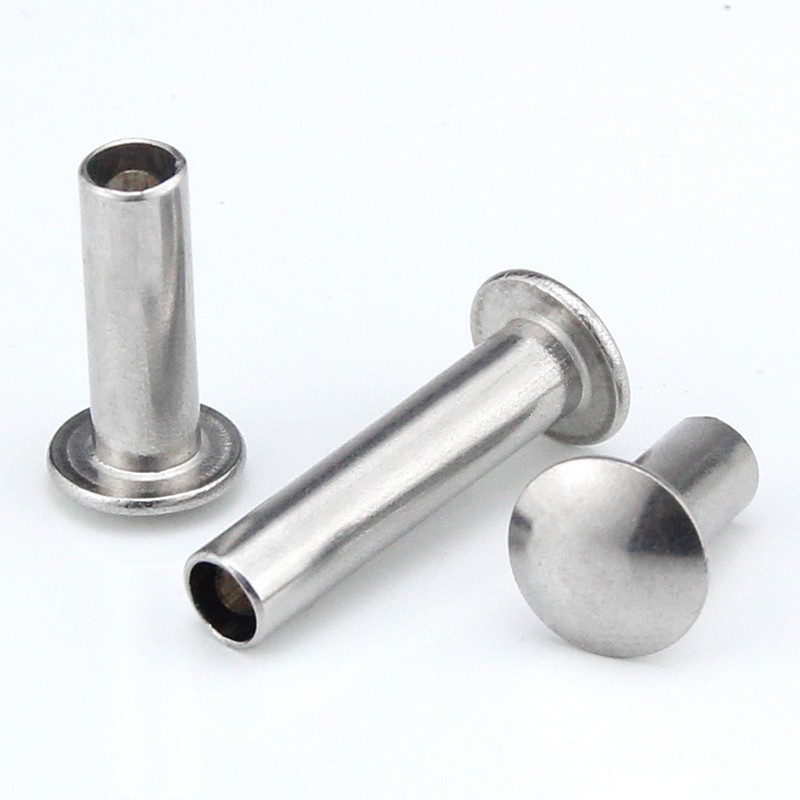
Steel Half Hollow Rivets
Steel half hollow rivets made from Nuote Metals are mechanical connectors with a hollow tail structure, secured by a snap-fit mechanism using a flanging at the tail. Its main body consists of a solid shank and a hollow tail. During installation, axial pressure is applied using specialized tools, causing the thin tail wall to plastically deform and fold outward, forming a snap-fit structure with a diameter larger than the hole diameter, achieving a non-removable mechanical lock.
View DetailsSend Inquiry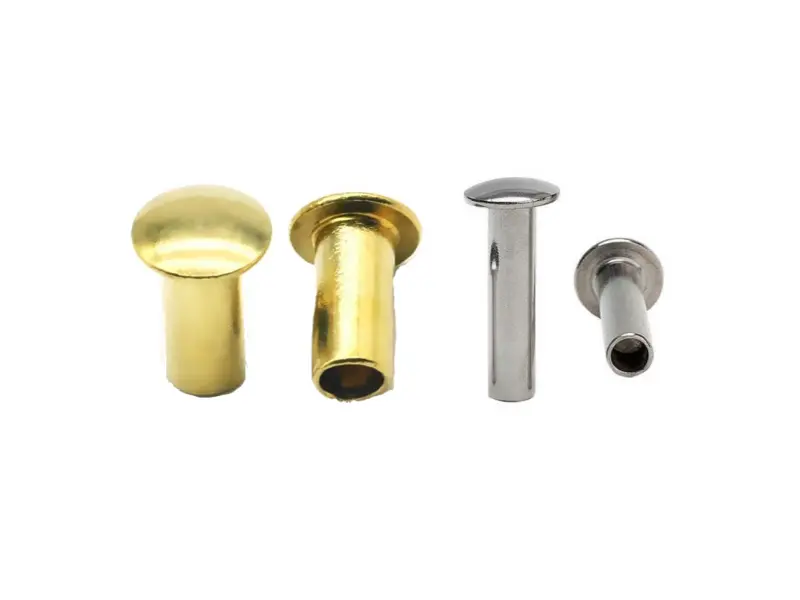
Round Head Half Hollow Rivets
As an efficient and practical fastener, round head half hollow rivets made from Nuote Metals in China have been widely used in various industries. Their semi-circular head design and semi-hollow structure give them unique characteristics and advantages. Nuote Metals is a professional manufacturer of round head half hollow rivets. Our rivets have a smooth, burr-free surface and are designed for smooth riveting without cracking.
View DetailsSend Inquiry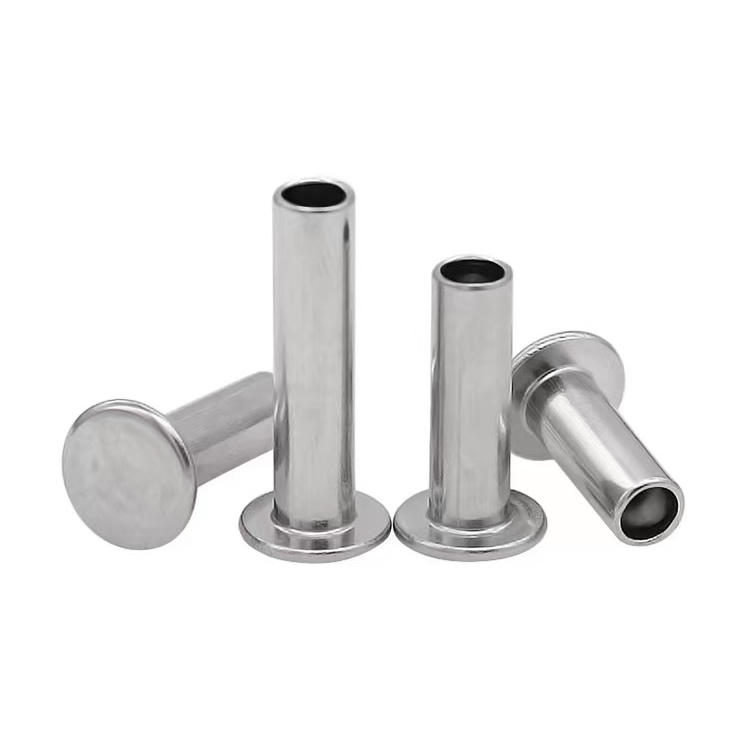
Iron Half Hollow Rivets
As the name suggests, iron half hollow rivets are constructed with a hollow center. Compared to solid rivets, they use a lot less material and are noticeably lighter, while still holding their strength and stiffness. Here at Nuote Metals, we focus on making half hollow rivets. We don't just make them from iron; we also work with other materials like brass, stainless steel, aluminum, and copper. Our rivets come in diameters from 0.8mm all the way up to 10mm, and we're happy to make custom sizes based on your specific drawings.
View DetailsSend InquiryWhat are the advantages of rivets over other fasteners?
1. Ease of Installation
Rivets are fast to install, and even fully automated for high-volume applications, resulting in a simple and efficient operation process.
2. Connection Reliability
The riveting process is standardized, with strict quality control, resulting in highly stable connections. Visual inspection allows for quick verification of connection quality.
3. Vibration and Impact Resistance
Rivets connect through deformation or interference fit, providing strong clamping force and excellent vibration resistance, capable of withstanding vibration and shock.
4. Low Cost
Rivets are easy to install and can be fully automated, saving significant labor costs.
What are the advantages and disadvantages of rivets made of different materials?
Aluminum Rivets
Advantages: Lightweight, reduces overall product weight, low cost, suitable for general civilian applications.
Disadvantages: Low tensile and shear strength, unsuitable for high-strength workpieces, prone to electrochemical corrosion when in contact with metals such as stainless steel.
Stainless Steel Rivets
Advantages: Strong corrosion resistance, high hardness, suitable for high-strength workpieces (such as marine equipment)
Disadvantages: Higher cost, typically more expensive than aluminum rivets of the same specification.
Brass and Copper Rivets
Advantages: Excellent conductivity (such as connecting electronic components), good corrosion resistance.
Disadvantages: Higher cost, more difficult to process.
Steel Rivets
Advantages: High hardness, high connection reliability, and wide applicability.
Disadvantages: Compared to other materials, iron rivets are more prone to rusting.
What are the main applications of rivets?
Rivets have a wide range of uses, from small items like a pair of scissors to large items like airplanes and ships, as well as in high-precision medical applications.
Industrial Manufacturing
Rivets are used in a wide variety of industrial fields, wherever there is a need to connect two or more materials.
Electronics
Rivets secure heat sinks and chips, providing both vibration damping and noise reduction, and are widely used in the cooling systems of electronic products such as computers and mobile phones.
Automotive
Rivets are widely used to connect components of automobile bodies and chassis, such as doors and hoods. Their lightweight and corrosion-resistant properties make them an indispensable joining method in automotive manufacturing.
Aerospace
In aircraft manufacturing, rivets are used to connect different fuselage components, such as wings and tailplanes. Millions of rivets create high-strength, corrosion-resistant joints. Aluminum and titanium alloy rivets are often used to connect components of corresponding materials, ensuring stability in extreme environments.
Rivets are used everywhere. The above examples only represent a small number of their applications. We see rivets everywhere in our daily lives, such as on scissors, folding beds, and strollers etc. Rivets can be customized to different sizes and materials depending on the application.
Nuote Metals has specialized in the rivet industry for over a decade. Our factory is located in Dongguan, a city known as the "World Factory," a city with a developed industry and convenient transportation. This allows us to respond quickly when acquiring raw materials and supporting surface treatments, meeting our customers' needs for quick access to samples and bulk orders. We produce 10 million rivets daily and have molds of various specifications, allowing us to produce rivets as small as 0.8mm and as large as 10mm. We welcome your inquiries and visits.



X
We use cookies to offer you a better browsing experience, analyze site traffic and personalize content. By using this site, you agree to our use of cookies.
Privacy Policy