
Products
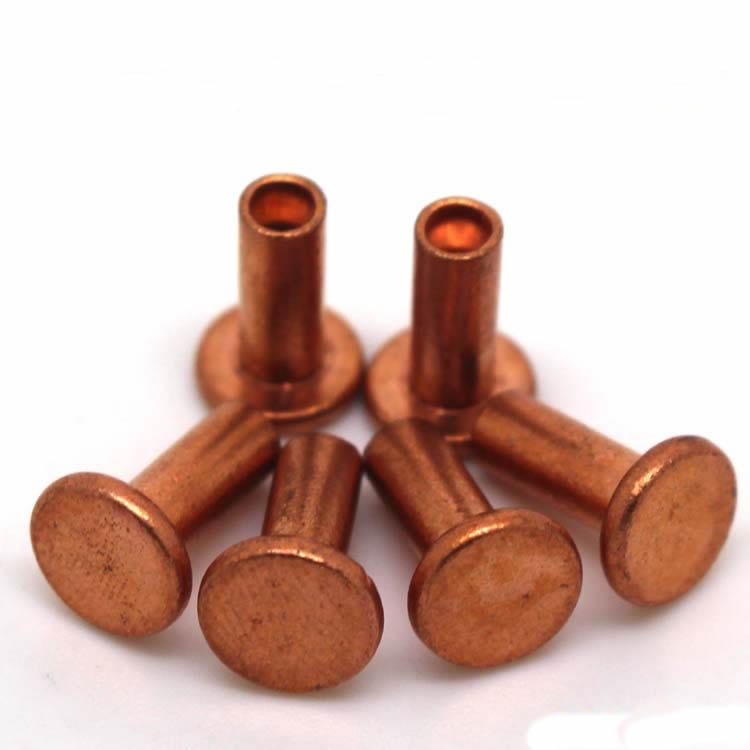
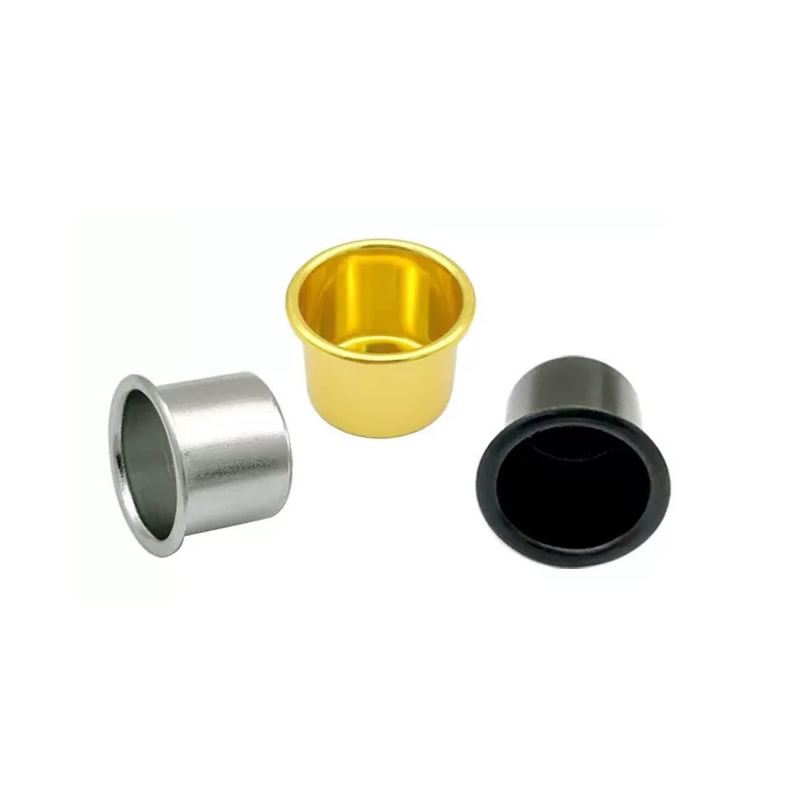
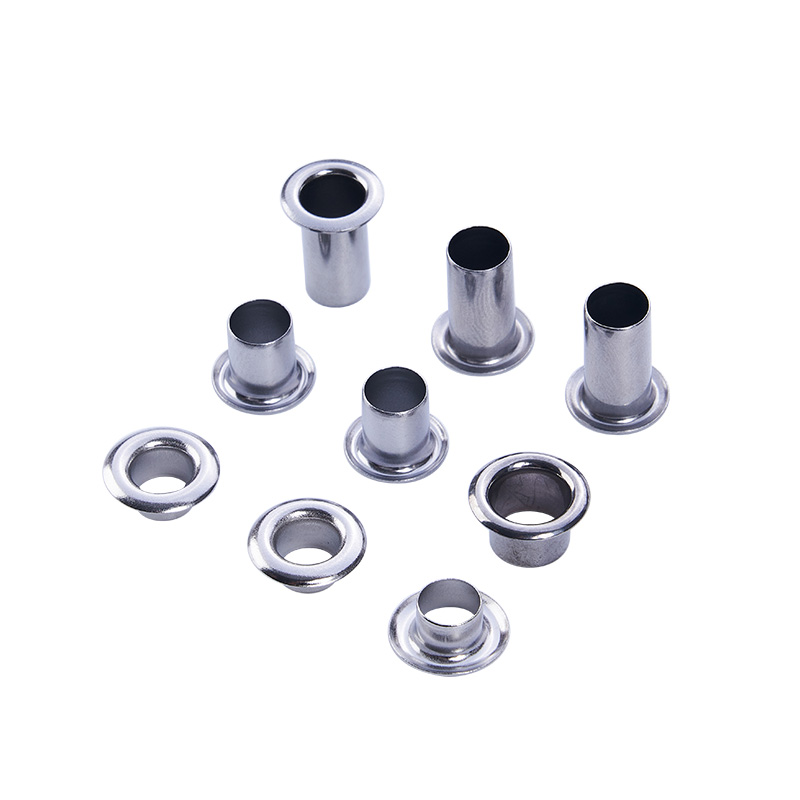
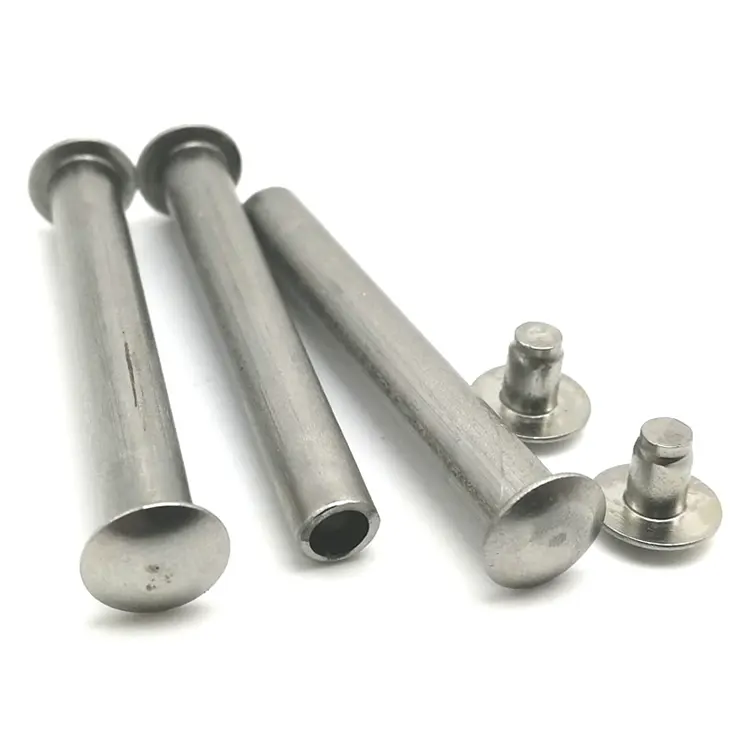
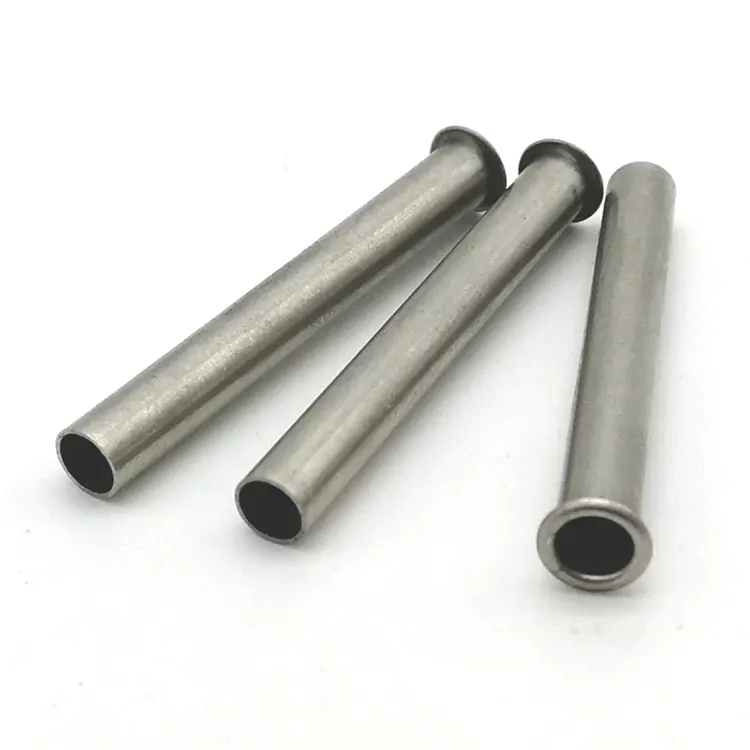

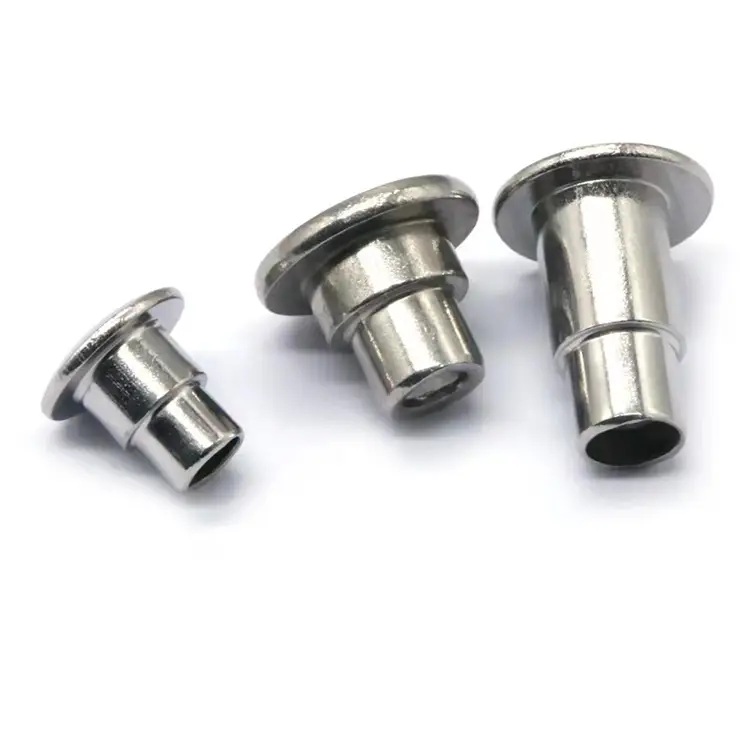
Semi Hollow Rivets
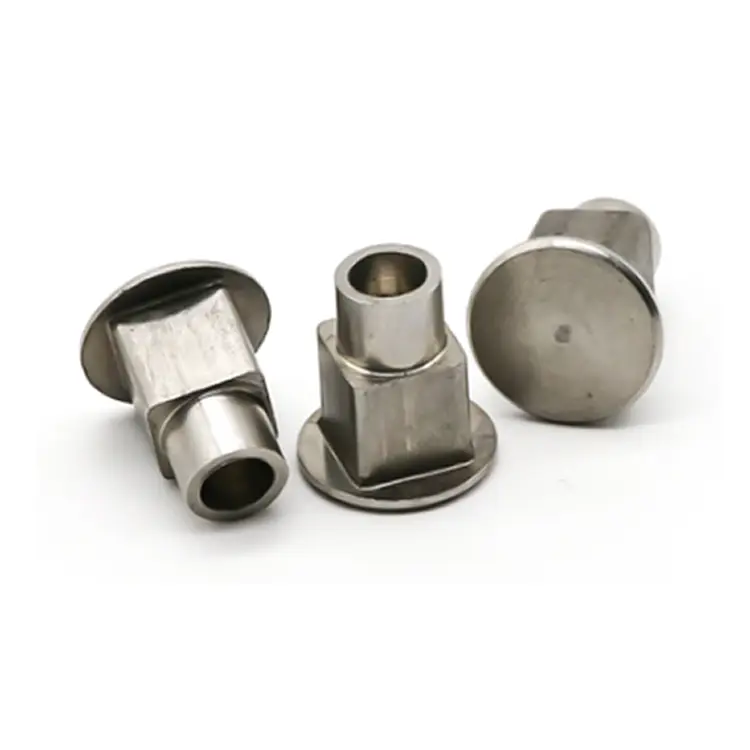
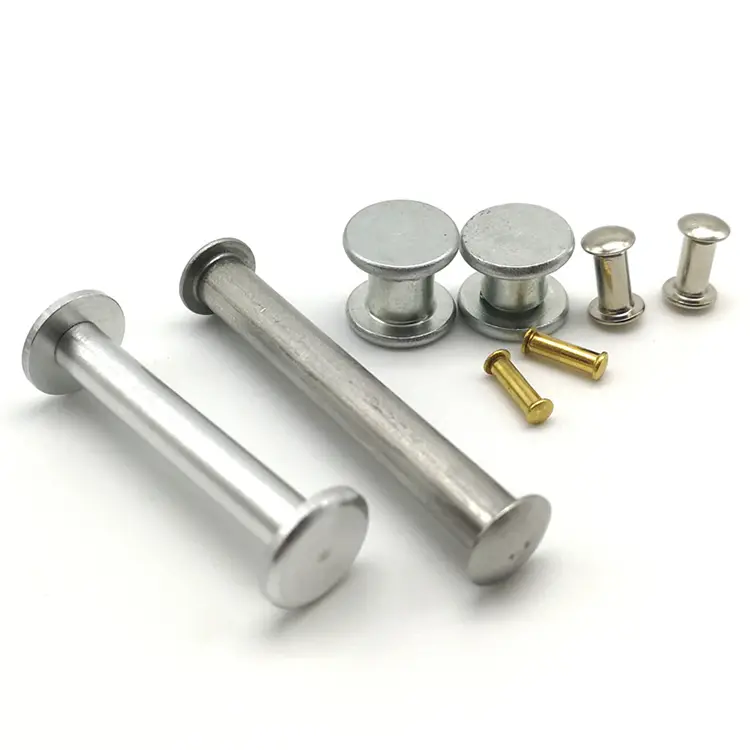
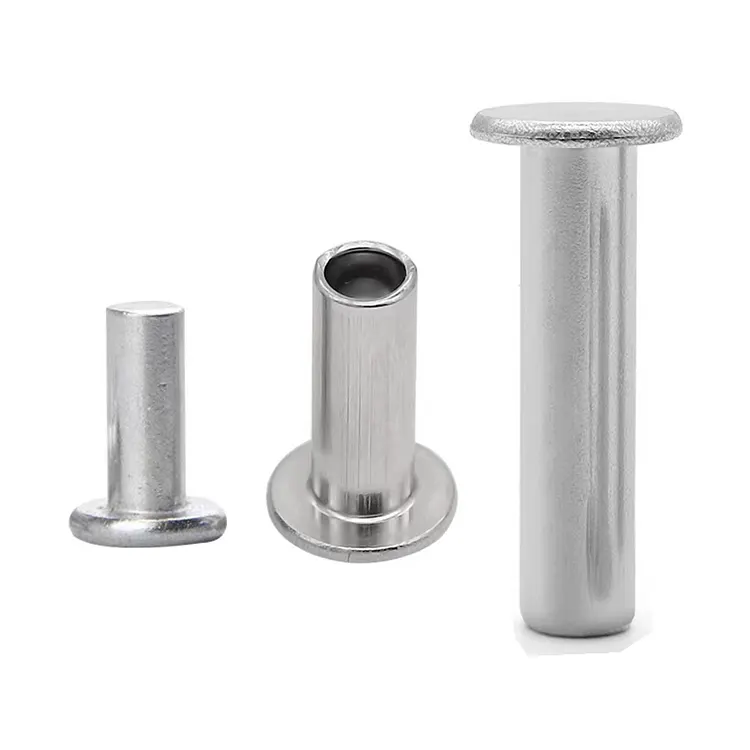
Nuote Metals is a professional rivet manufacturer located in Dongguan, China, an industrially developed city with convenient transportation and a comprehensive range of surface treatments. Semi hollow rivets are a commonly used fastener characterized by a hollow section at the shank. This design allows them to better adapt to deformation of the joined materials during the riveting process, thereby improving joint strength and reliability. Semi hollow rivets are widely used in the automotive, aviation, and shipbuilding manufacturing industries, as well as in the assembly of electronics and home appliances.
Send Inquiry
Product Description
You know that sinking feeling. The press comes down, the rivet sets—and you hear a crack. Or worse, you don't hear anything, but three months later, a field failure comes back. The part pulled through. The joint loosened. The customer is unhappy.
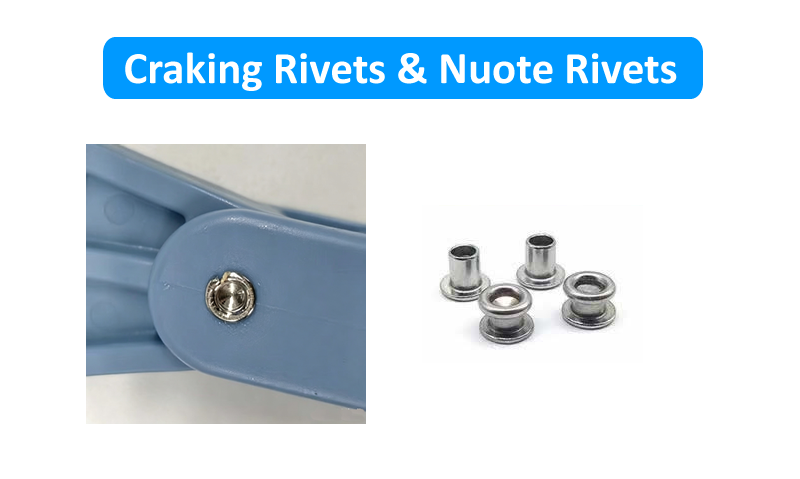
Here's the thing: most of the time, it's not your fault. You're using the right material. Your press is calibrated. The design looks solid on paper. So why do semi hollow rivets—sometimes called half tubular, semi-tubular, or hollow-end rivets—keep failing in production?
Let me walk you through what we've learned after making millions of them at Nuote Metals. Not from a catalog. From actual customers who came to us with the same problems you're facing.
The 70% Rule (And Why It Changes Everything)
A solid rivet needs about 3.5 tons of force to set a 5mm shank. A semi hollow rivet? About 1.0–1.2 tons. That's 70% less force.
What does that actually mean on your production line?
- Less stress on your tooling – Your press lasts longer, and you're not replacing dies as often.
- Less stress on your materials – If you're working with thin metals, plastics, or delicate assemblies, that 70% reduction is the difference between a clean joint and a cracked part.
- Faster cycles – Lighter presses cycle faster. Less time per rivet adds up fast when you're running 50,000 pieces.
But here's the catch: the cavity has to be right. Too shallow, and you're still fighting solid-rivet forces. Too deep, and the clinch is weak. At Nuote Metals, we keep cavity depth at 45–55% of the barrel length—the sweet spot where the hollow wall rolls cleanly without cracking.
The Most Common Question We Get: "Why Are My Rivets Cracking?"
We hear this at least twice a week. A customer calls, frustrated, because their rivets are splitting during setting. Here's what we've found:
Problem #1: The material is wrong for the application.
Stainless steel work-hardens fast. It's strong, but it's not forgiving. If you're setting stainless into a tight hole with high pressure, the metal work-hardens before it can roll—and it cracks. Switching to low-carbon steel or brass often solves the problem immediately. They're more ductile, and they don't fight back the same way.
Problem #2: The cavity depth is too deep.
If the cavity exceeds 55% of the barrel length, the remaining wall is too thin to support the rolling action. The metal folds instead of rolls. We measure cavity depth on every first article, and we can adjust it to 45–50% if that's what your application needs.
Problem #3: Setting force is too high.
You're using a semi hollow design, but you're setting it like it's solid. Solid rivets need force. These need finesse. If your press is set too high, the hollow wall cracks. We recommend reducing the force by 30% when you switch from solid to semi hollow—then adjust from there.
Problem #4: Barrel length is too short.
This one is surprisingly common. The barrel length should be 1.5–2.0mm longer than your total material stack thickness. If it's too short, the hollow section bottoms out before the clinch forms, and you get a weak joint. Send us your material stack, and we'll recommend the exact length.
A Real One: 250,000 Rivets, No Cracks
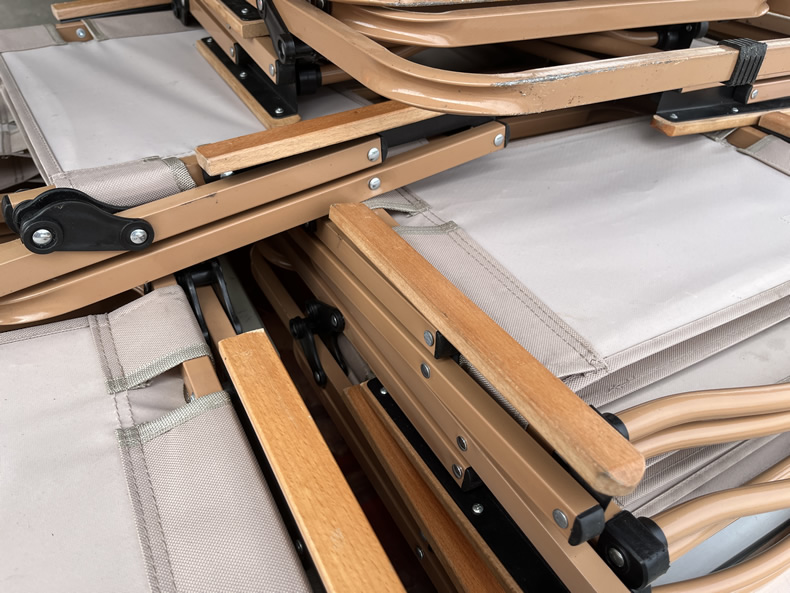
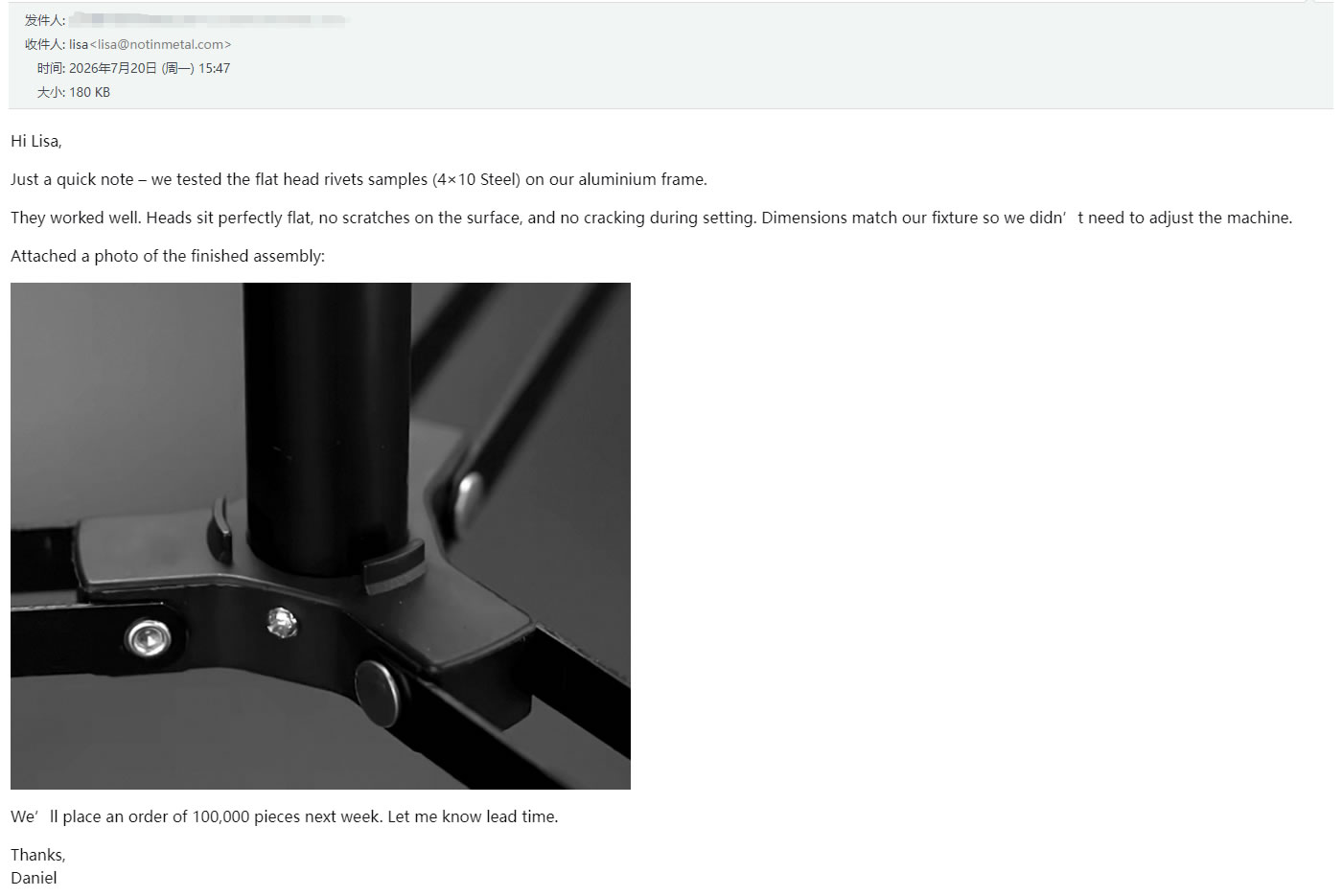
We worked with a furniture manufacturer last year. They were making folding chairs and using solid rivets for the scissor hinges. Reject rates were at 6–7%. The solid rivets were cracking the nylon bushings. They needed a solution that would let them keep their production speed without trashing parts.
We supplied zinc-plated steel semi hollow rivets—4.0mm shank, 7.0mm round head, 10.0mm barrel length. The cavity dropped their setting force from 3.5 tons to 1.0 ton. The cracks stopped. Completely.
They tested 1,000 pieces across 500 chairs, ran 50,000 adjustment cycles, and had zero failures. They now order 250,000 semi hollow rivets a year from Nuote Metals, and their reject rate is under 0.3%.
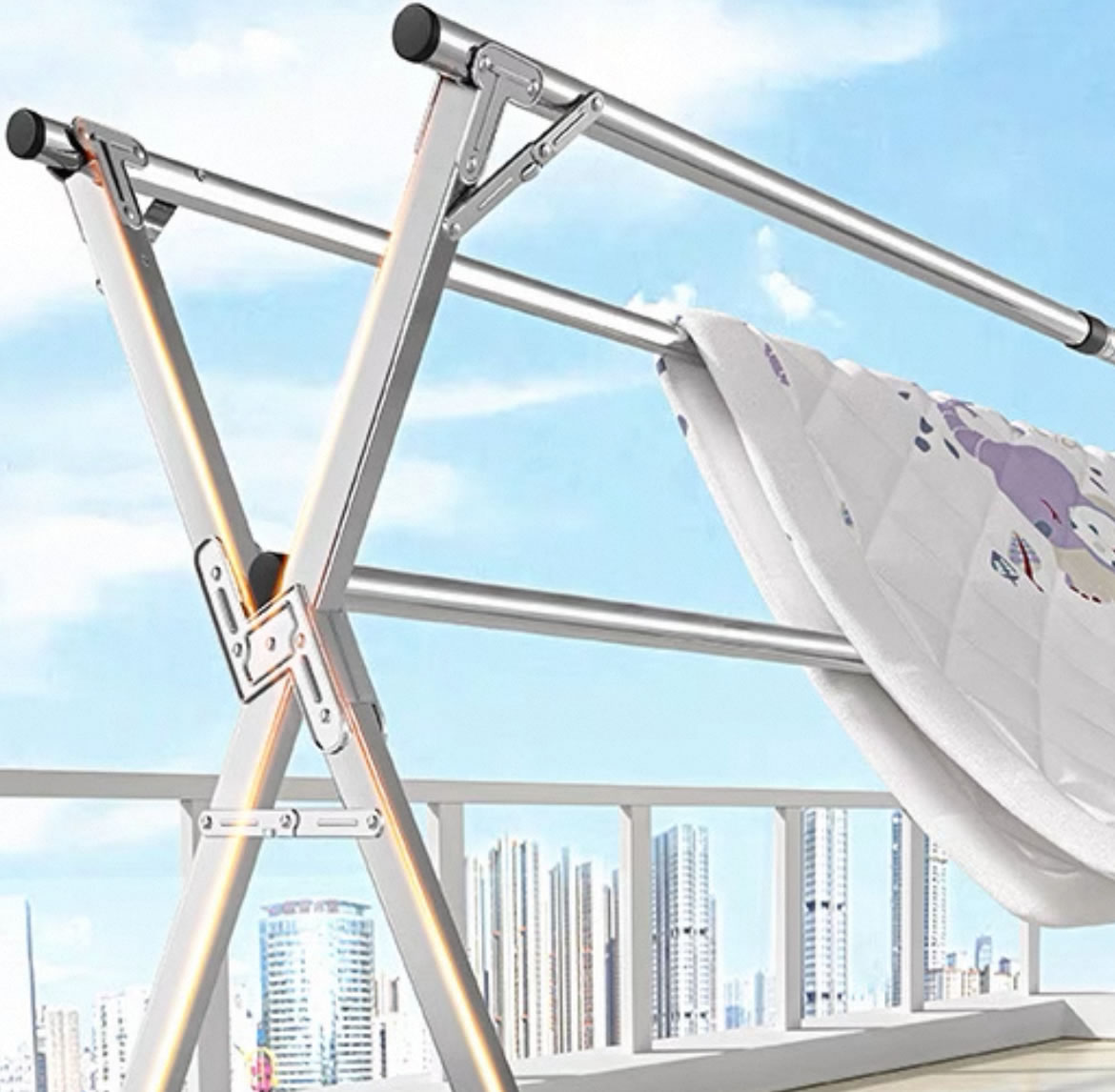
Another One: 300,000 Rivets for Aluminum Racks
An aluminum drying rack manufacturer had a different problem. Their solid aluminum rivets worked—but the assembly line was slow. High setting force meant careful press setup, and any misalignment distorted the thin tubing.
We gave them aluminum semi hollow rivets: 4.0mm shank, 7.0mm round head, 10.0mm barrel length. Plain finish. Nothing fancy.
The setting force dropped by 60%. The distortion disappeared. Assembly speed went up 35%. They tested 1,000 rivets across 500 racks, ran 10,000 folding cycles with a 15kg load, and had no loosening. Now they order 300,000 pieces a year from us.
What We Actually Make
Semi hollow rivets from Nuote Metals come in:
- Shank diameters: 1.5mm to 8.0mm
- Materials: Low-carbon steel, stainless steel (304/316), brass (C2680), copper (C11000), aluminum (5052/5056)
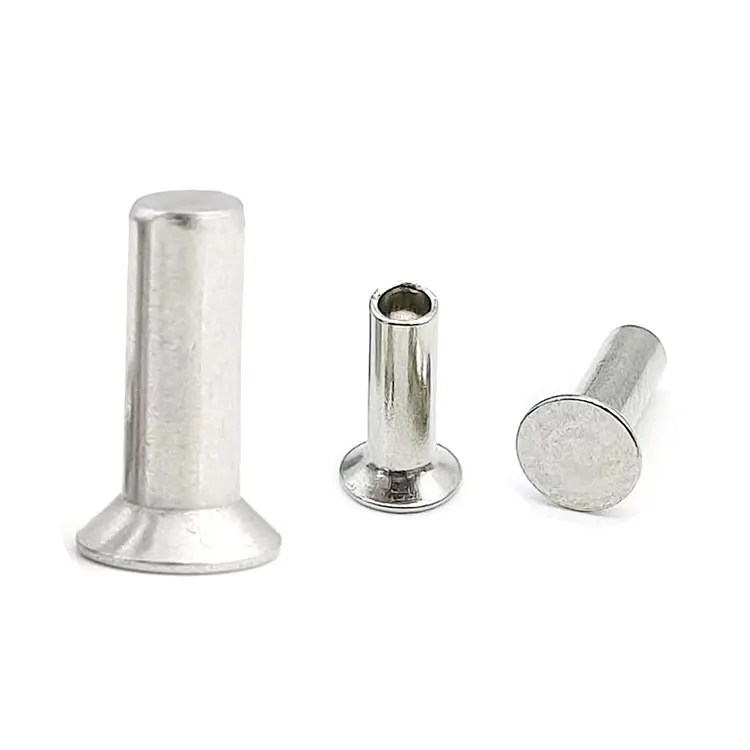
- Head styles: Round, flat, oval, truss, pan, universal, mushroom, countersunk
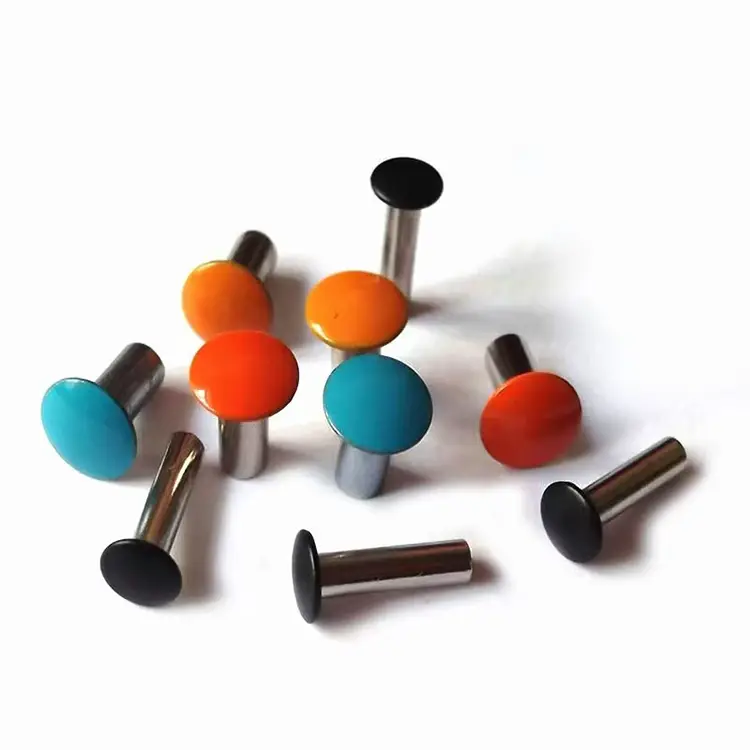
- Finishes: Zinc-plated, black oxide, passivated, lacquered, nickel-plated, antiqued, anodized, plain
All custom lengths. Nothing off the shelf. Because every application is different.
The Process: What We Check, and Why
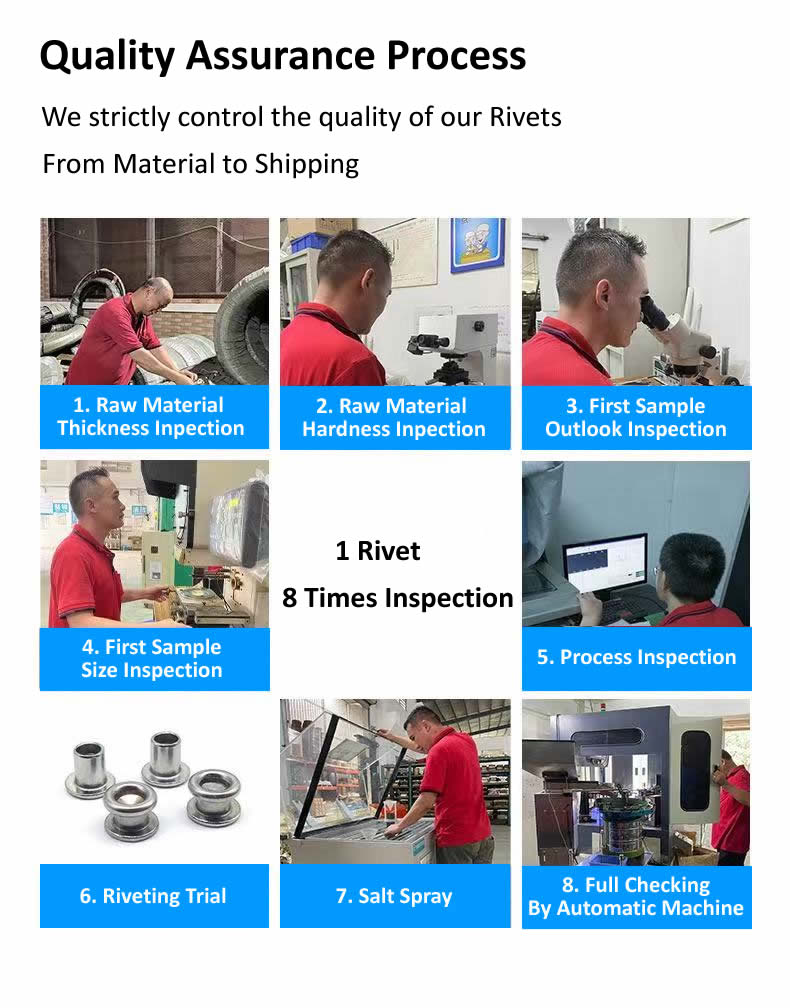
We don't batch-test randomly. Every batch goes through this:
- Incoming wire – Diameter and hardness checked before production. Spectrometer verifies material composition. If the coil is out of spec, we reject it before it hits the press.
- First article – 10 rivets measured on an optical comparator. Every dimension verified—shank, head, barrel length, cavity depth.
- In-process – 5 rivets every 500 pieces. Critical dimensions checked with digital calipers. Any drift stops the press.
- Setting test – Every 2,000 pieces, we set 3 into a sample of your actual material. We inspect the clinch for symmetry, tightness, and cracks.
- Final sorting – 100% optical inspection. AQL sample manually verified.
The tolerances we hold:
| What | Tolerance | Why It Matters |
|---|---|---|
| Shank diameter | ±0.05mm | Doesn't fit your hole? Nothing else matters. |
| Head diameter | ±0.15mm | The bearing surface is why you chose this head style. |
| Barrel length | ±0.15mm | Weak clinch or buckled barrel—both start here. |
| Cavity depth | 45–55% of barrel | Setting force too high or clinch too weak—this is the difference. |
| Hollow wall thickness | ±0.02mm | Uneven flaring. Weak clinch. We measure this. |
What You Get When You Order
When your rivets arrive, you get a complete record:
- Material certificate – Chemical composition and tensile properties from the original coil. Traceable to the heat number.
- Inspection sheet – Actual measurements of 10 rivets from your batch. Not "within tolerance"—the actual numbers.
- Finish certificate – Plating thickness verified by XRF (if applicable).
- Conformance document – Signed by our QA manager, with a unique batch number.
We keep copies for five years. You should keep yours too.
Three Questions We Actually Get
Q: "What's the difference between semi hollow and half tubular?"
A: Nothing. They're the same product. Two names for the same fastener—a rivet with a shallow cavity at the tail. Some industries use one term, some the other. We make both.
Q: "Can I use these outdoors?"
A: Yes, with the right finish. For outdoor applications, we recommend:
- Stainless steel (304 or 316) semi hollow rivets with passivated finish for permanent corrosion resistance
- Zinc-plated steel with yellow chromate for 96 hours of salt spray resistance
- Aluminum with anodized finish for lightweight outdoor assemblies
Q: "How do I pick the right barrel length?"
A: Barrel length = your material stack thickness + 1.5–2.0mm. If you're joining two 2mm sheets (total 4mm), choose a barrel length of 5.5–6.0mm. Too short, and the clinch is weak. Too long, and the barrel crumples. Send us your material stack, and we'll recommend the exact length.
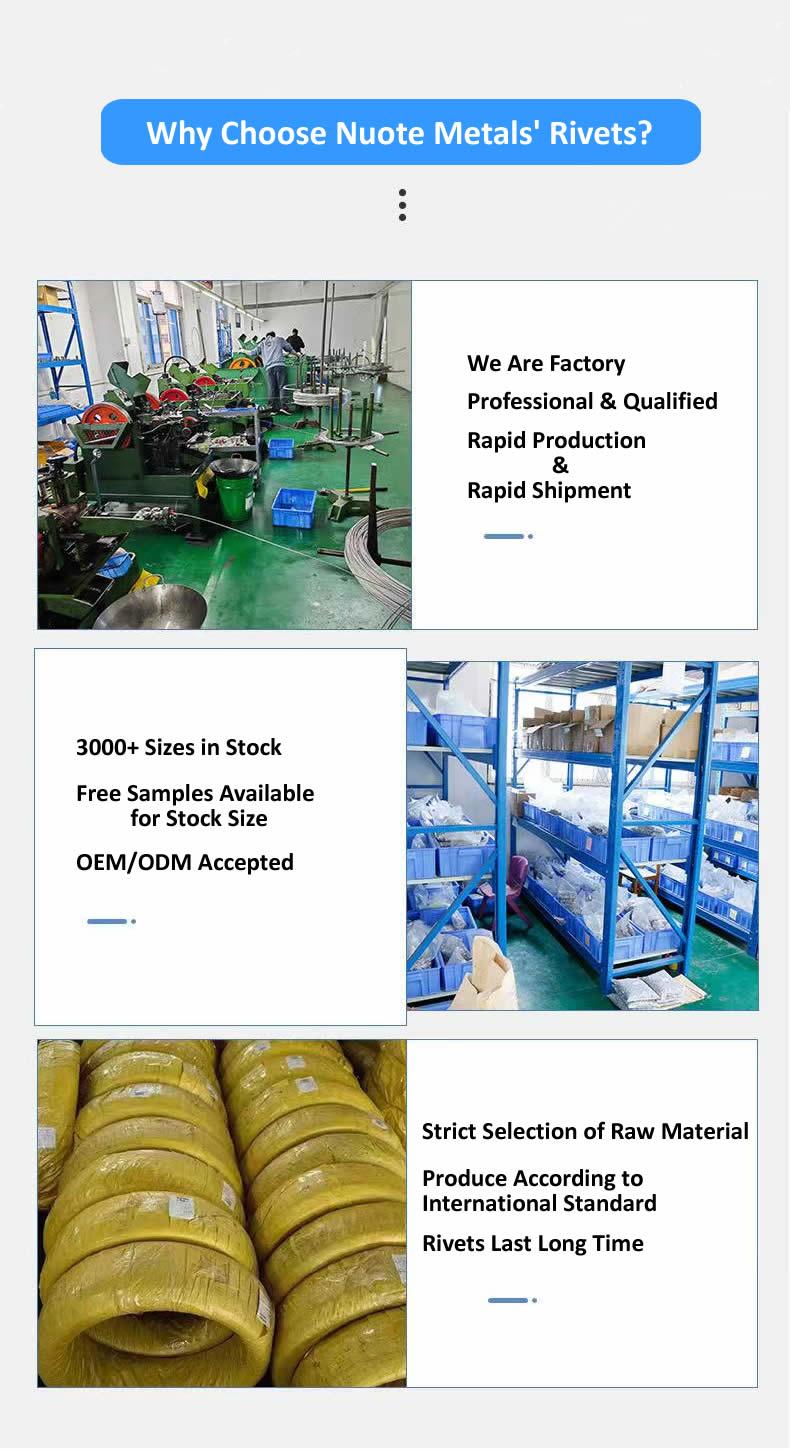
Nuote Metals – Dongguan, China. ISO 9001:2015 certified. Free samples available. Contact us with your specs—we'll respond within 24 hours with tooling cost (if any), piece price, and lead time.
Hot Tags: Semi Hollow Rivets Manufactuer,Semi-Hollow Rivets Supplier,Semi Hollow Rivets China
Related Categories
Send Inquiry
Please feel free to fill your inquiry in the form below. We will reply you in 24 hours.



X
We use cookies to offer you a better browsing experience, analyze site traffic and personalize content. By using this site, you agree to our use of cookies.
Privacy Policy