Special Rivets
Products
- View as

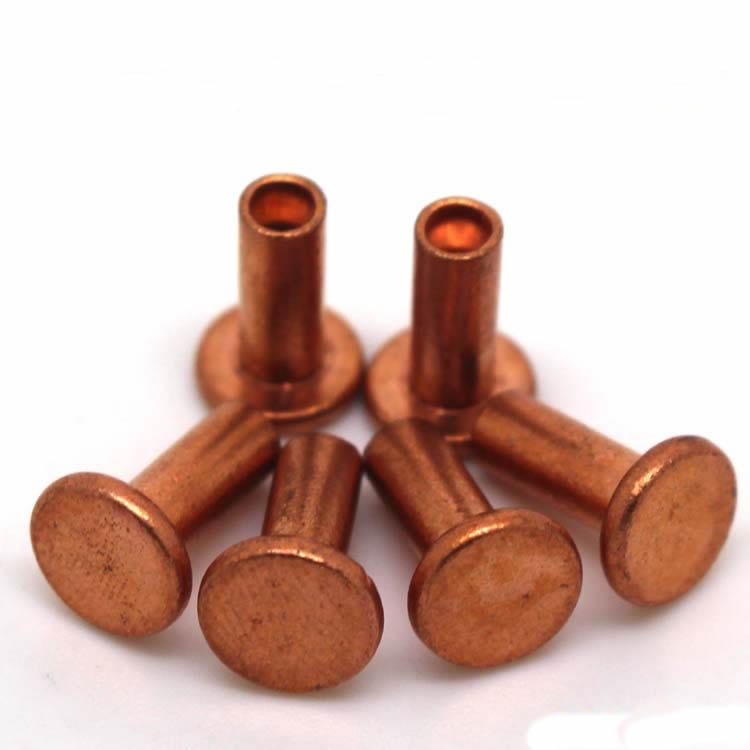
Round Head Rivets
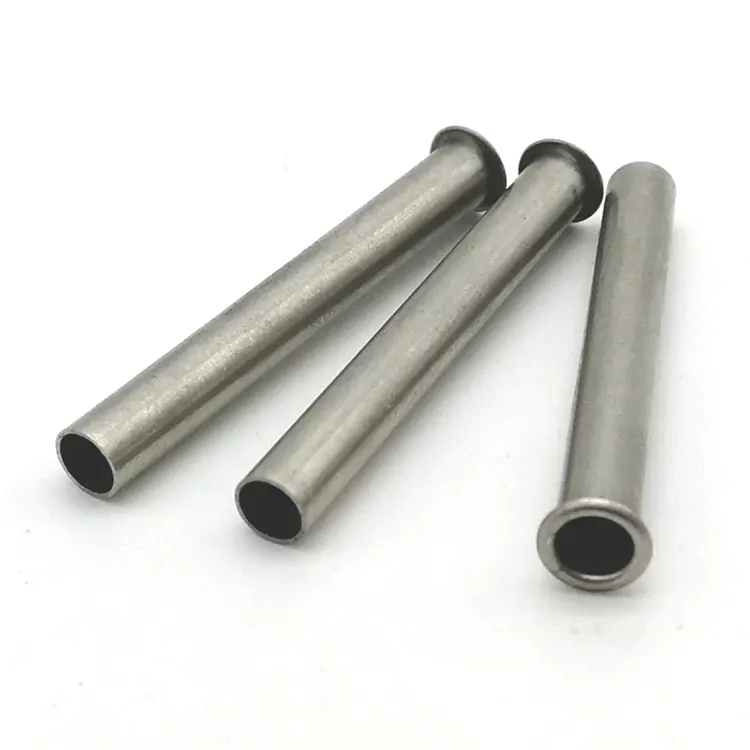
Nuote Metals manufactures round head rivets in solid, semi‑tubular, and full tubular designs – the most recognized and trusted rivet head style in industrial fastening. Available in 1.5–8.0mm shank diameters, five material families, and custom lengths. ISO‑certified quality, full traceability, and free samples available – contact us to get started.
View DetailsSend Inquiry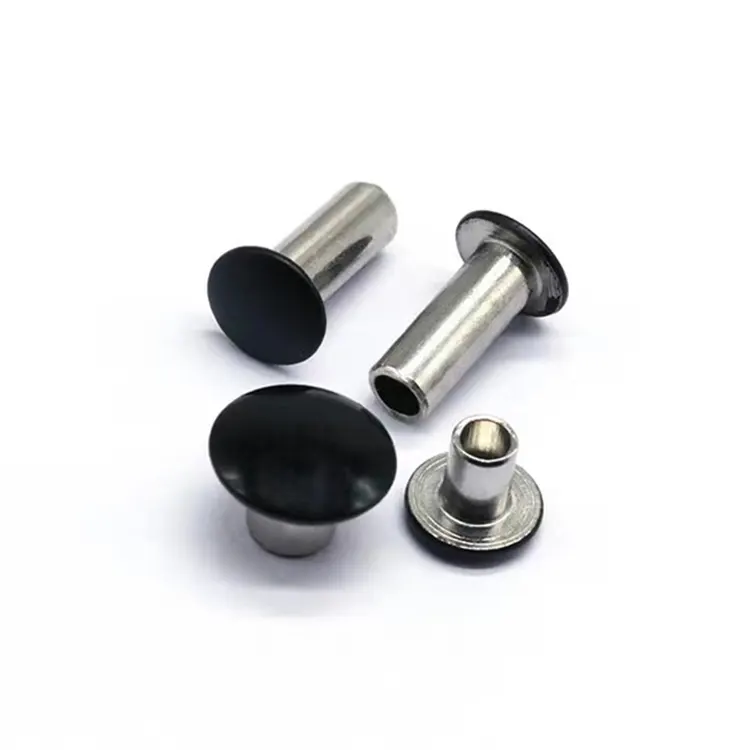
Powder Coated Rivets
Colored rivets, also known as powder coated rivets, are coated with powder coating on the rivet head through a high-temperature spray-painting process. The paint is evenly dried to ensure a non-fading finish. This type of rivet requires a high level of skill in baking varnish and precise color matching. After riveting, it creates a consistent and beautiful color, fully realizing its decorative effect.
View DetailsSend Inquiry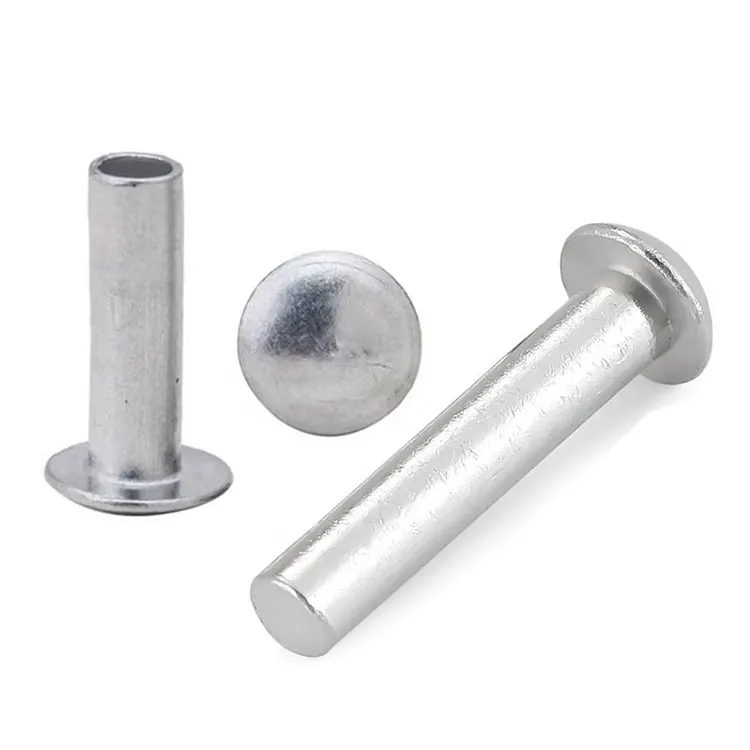
Pan Head Rivets
Nuote Metals manufactures pan head rivets in solid and semi‑tubular designs – featuring a medium‑height dome with a short straight sidewall that offers more bearing area than a round head and more head height than a flat head. Available in 1.5–8.0mm shank diameters, five material families, and custom lengths. ISO‑certified quality, full traceability, and free samples available – contact us to get started.
View DetailsSend Inquiry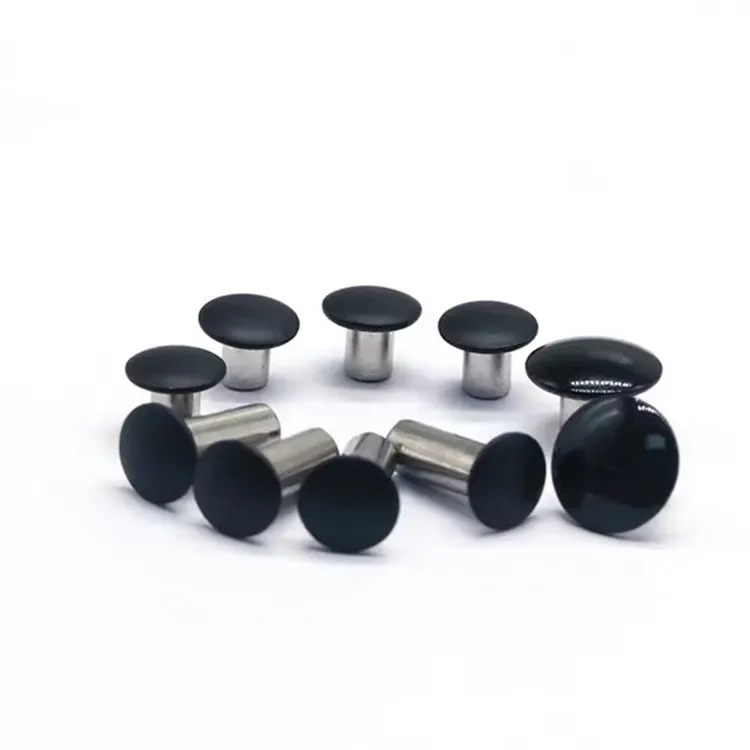
Painted Rivets
Painted rivets with a painted head are highly corrosion-resistant. The paint layer, typically 15-25 microns thick, effectively isolates them from moisture and chemicals. Salt spray tests show that painted rivets can resist rust for over 500 hours, three times longer than uncoated rivets. Nuote Metals are specializing these kinds of rivets, we are loated in Dongguan, China.
View DetailsSend Inquiry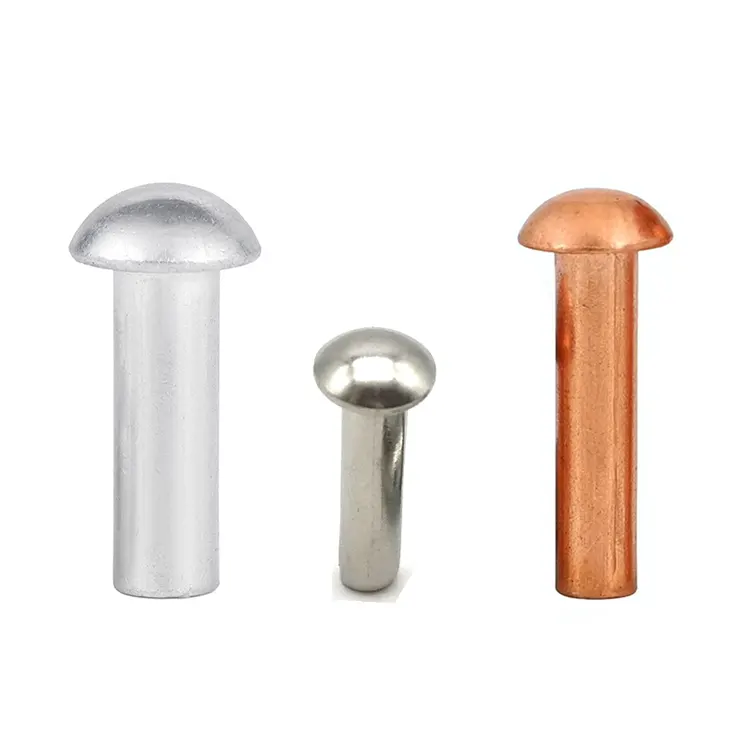
Mushroom Head Rivets
Nuote Metals is a China-based manufacturer of mushroom head rivets in solid and semi‑tubular designs – featuring a wide, gently radiused dome that distributes load evenly without cutting into soft materials. Available in 1.5–8.0mm shank diameters, five material families, and custom lengths. ISO‑certified quality, full traceability, and free samples available – contact us to get started.
View DetailsSend Inquiry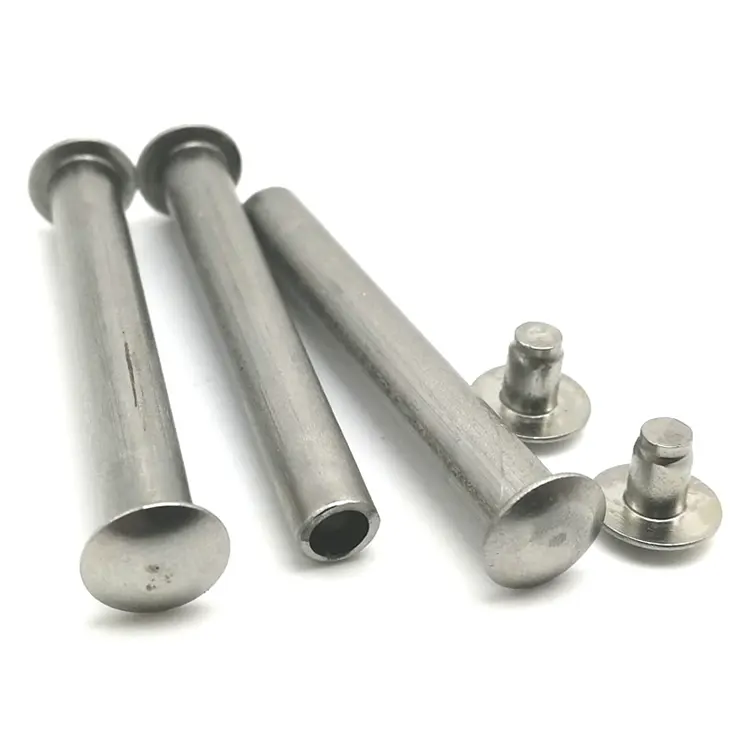
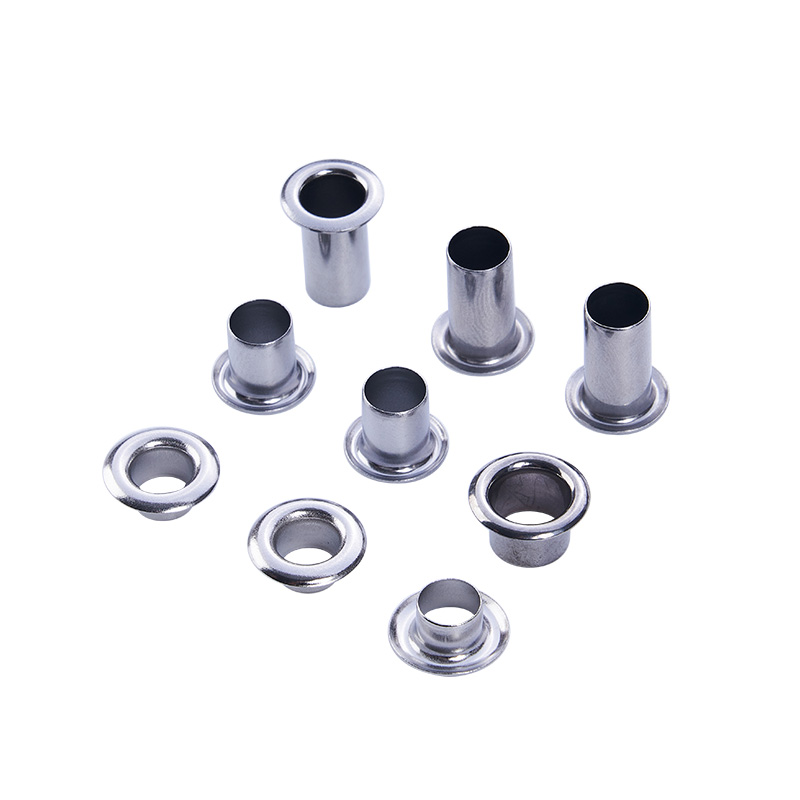
Male Female Rivets
Nuote Metals is a specialzied manufacturer of male female rivets in China, The advantages of male female rivets are simple installation and low cost. Compared to other connection methods, such as welding or adhesives, male female rivets do not require specialized skills or long curing times. However, their disadvantages are also significant: the connection strength is limited, making it unsuitable for high-intensity or high-vibration environments. After long-term use, they may become loose, requiring regular inspection.
View DetailsSend InquiryManufacturing process of special rivets
The manufacturing of Special rivets involves multiple links, mainly including:
1.Material selection: Select suitable metal or alloy materials according to the use environment.
2.Cold heading or hot heading: Use pressure processing to form the basic shape of the rivet into the metal blank.
3.Turning or Milling: Fine-process the details such as the head and stem of the rivet to ensure dimensional accuracy.
4.Surface treatment: Such as galvanizing, nickel plating, anodizing, etc. to improve corrosion resistance or aesthetics.
Advantages and limitations of special rivets
(1) Advantages: They can meet special needs, improve assembly efficiency and connection reliability, and are suitable for complex or high-demand application scenarios.
(2) Limitations: Since they are customized products, the production cost is high, the delivery cycle is relatively long, and customers are required to provide detailed technical parameters.
How to choose suitable special rivets?
(1) Clarify the needs: Determine the key parameters such as the rivet's operating environment, stress conditions, and corrosion resistance requirements.
(2) Material matching: Select the appropriate material based on actual needs to avoid over-design that leads to increased costs.
(3) Communicate with suppliers: Provide detailed technical drawings or samples to ensure that the Special rivets produced meet expectations.
What are the main applications of special rivets?
(1) Aerospace: Aircraft, rockets and other equipment have extremely high requirements for the weight, strength and high-temperature resistance of fasteners. Special rivets can be optimized according to specific needs.
(2) Automobile manufacturing: Certain special models or high-performance vehicles may require Special rivets to meet the needs of lightweight or high-strength connections.
(3) Electronic equipment: Precision instruments or small electronic equipment may require micro Special rivets to ensure the stability and compactness of the connection.
(4) Construction industry: Some special-structured buildings or decoration projects may use Special rivets to meet specific installation requirements.
Market status of special rivets
With the advancement of industrial technology, more and more industries have begun to use Special rivets to optimize product design. At present, Special rivet manufacturers are mainly concentrated in the Yangtze River Delta and Pearl River Delta regions in China, and can provide a variety of customized services. Due to the high unit price of Special rivets, its market size is relatively small, but the demand in the high-end manufacturing field continues to grow.
Future development trends
(1) Lightweight design: With the improvement of energy-saving and environmental protection requirements, Special rivets made of lightweight materials will be more popular.
(2) Intelligent production: Automated equipment and digital management will further improve the production efficiency and quality stability of Special rivets.
(3) Wider application: Emerging industries such as new energy and robotics may drive the growth of demand for Special rivets.
In summary, special rivets are highly customized fasteners that can meet special needs that standard rivets cannot meet. Although its production cost is relatively high, it plays an irreplaceable role in industries such as aerospace, automobiles, and electronics. In the future, with the advancement of manufacturing technology, the application scope of Special rivets is expected to further expand.



X
We use cookies to offer you a better browsing experience, analyze site traffic and personalize content. By using this site, you agree to our use of cookies.
Privacy Policy