
Products
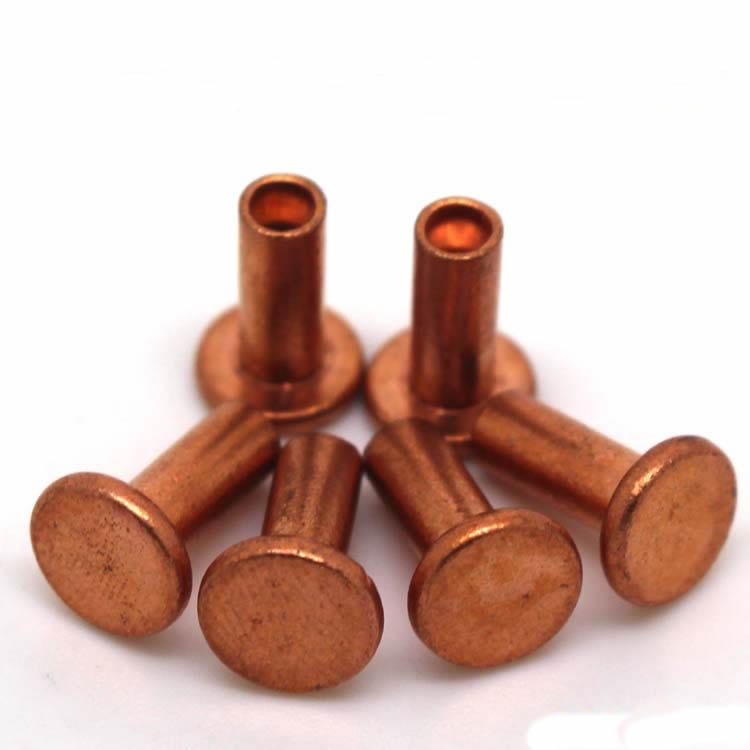
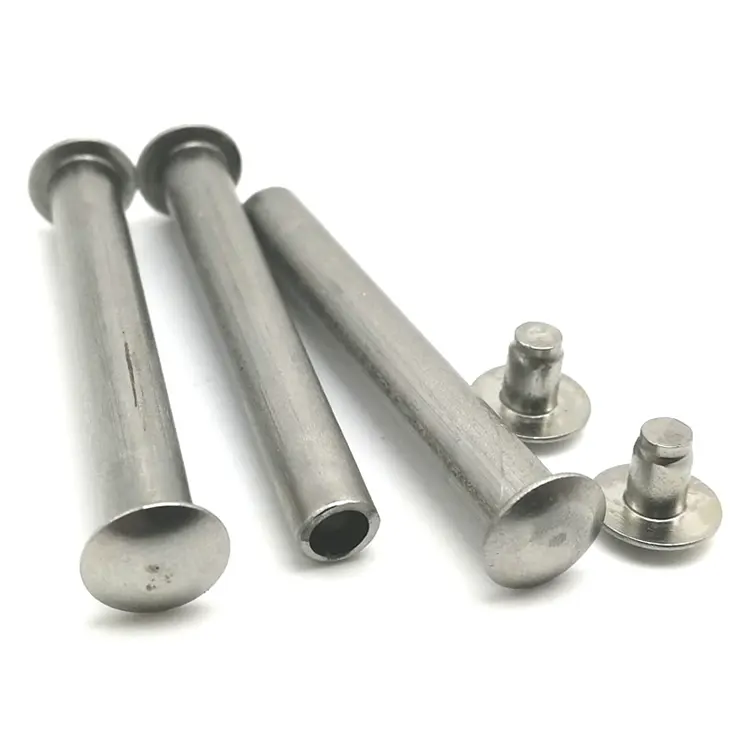
Truss Head Rivets
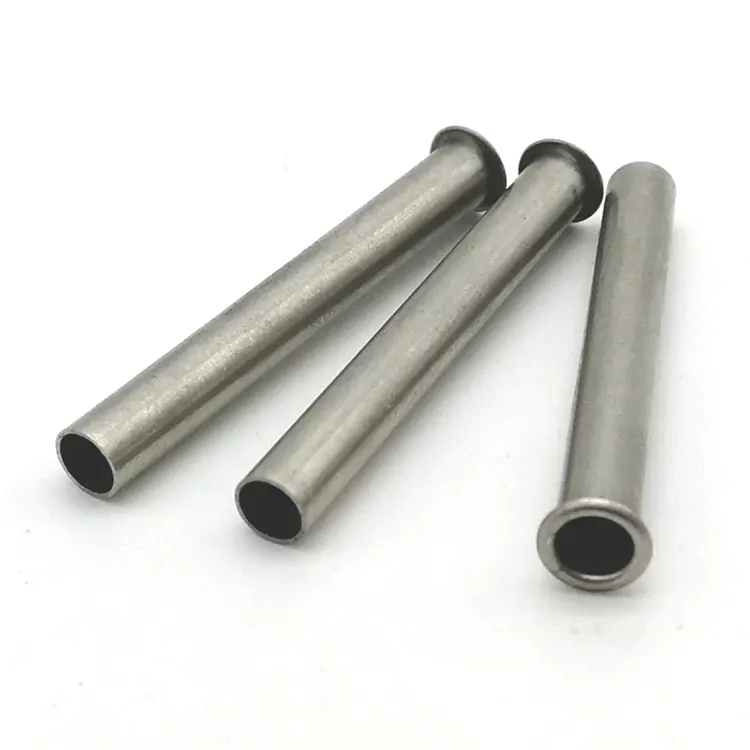
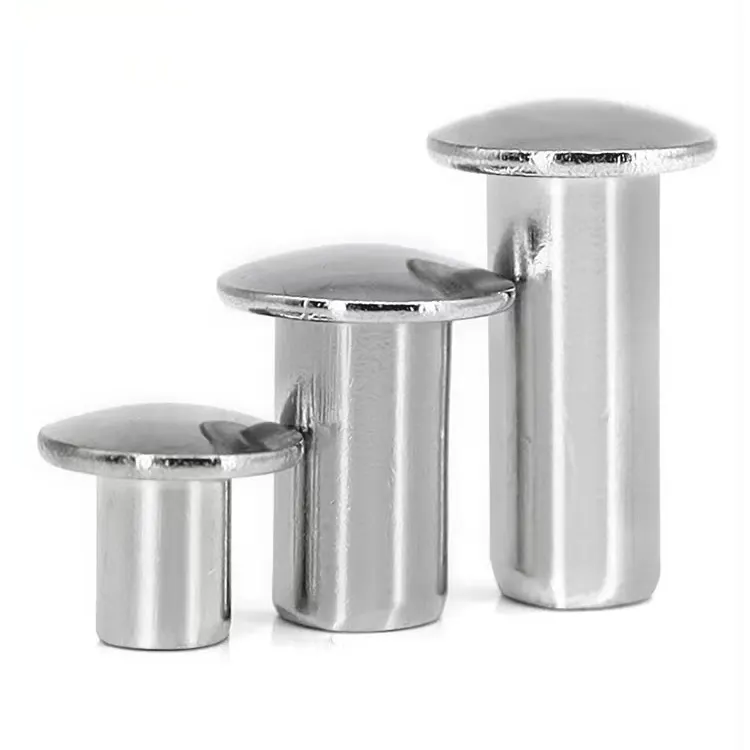
Nuote Metals manufactures truss head rivets in solid and semi‑tubular designs – featuring the widest head diameter of any standard rivet head style for maximum bearing surface. Available in 1.5–8.0mm shank diameters, five material families, and custom lengths. ISO‑certified quality, full traceability, and free samples available – contact us to get started.
Send Inquiry
Product Description
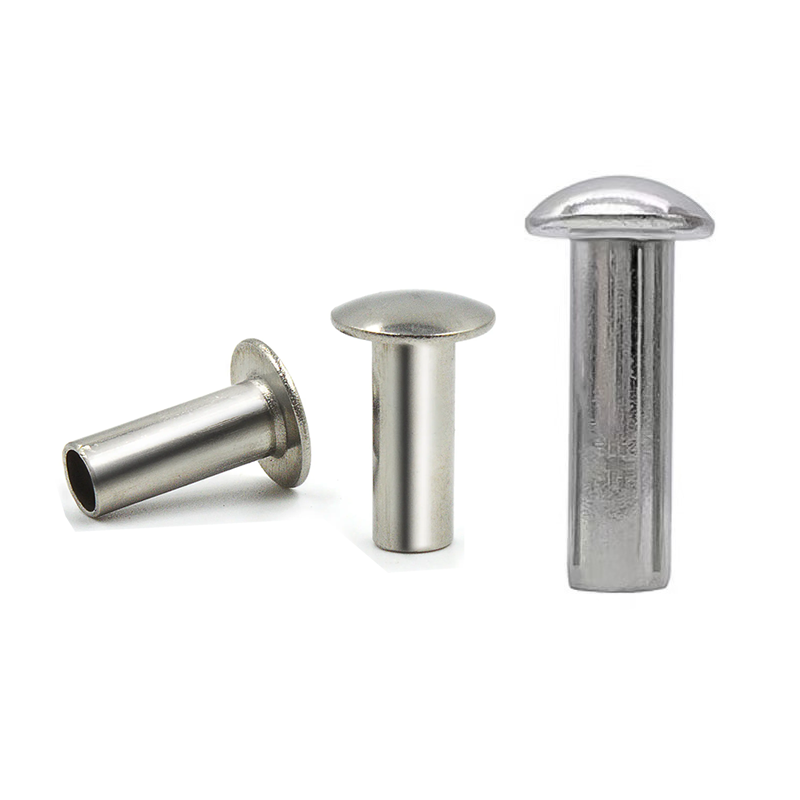
Truss head rivets are what you specify when a round head or flat head is not wide enough. The truss head has a head diameter 2.2–2.8 times the shank diameter – significantly wider than round head (1.6–1.8×) and flat head (2.0–2.5×). This extra width creates a larger bearing surface, distributing clamping force over a wider area. The result: the rivet stays in place without pulling through soft or brittle materials.
When you are joining plastic, thin sheet metal, softwood, or composite materials, the wide truss head is the difference between a joint that lasts and a joint that fails.
Truss vs. Round – Why Width Matters
| Feature | Truss Head Rivet | Round Head Rivet |
|---|---|---|
| Head diameter / shank ratio | 2.2 – 2.8 : 1 | 1.6 – 1.8 : 1 |
| Head height | Low (25–30% of head dia) | Tall (45–50% of head dia) |
| Bearing area | Largest of any standard head | Moderate |
| Best for | Soft materials, oversized holes, thin sheet, plastic, composites | General purpose, metal‑to‑metal, high‑shear |
| Pull‑through resistance | Excellent | Moderate |
| Appearance | Wide, low dome, industrial | Classic dome, prominent |
What We Make – Two Designs, Five Materials
Truss head rivets are available in solid and semi‑tubular designs. Full tubular is not available for this head style due to the geometry of the wide, shallow dome.
| Feature | Solid | Semi‑Tubular |
|---|---|---|
| Tail design | Fully solid | Partially hollow (45–55% of length) |
| Setting force | 100% | 25–30% of solid |
| Shear strength | Maximum (100%) | 80–90% of solid |
| Best for | Structural, load‑bearing, high‑load | High‑volume, thin materials, plastic assemblies |
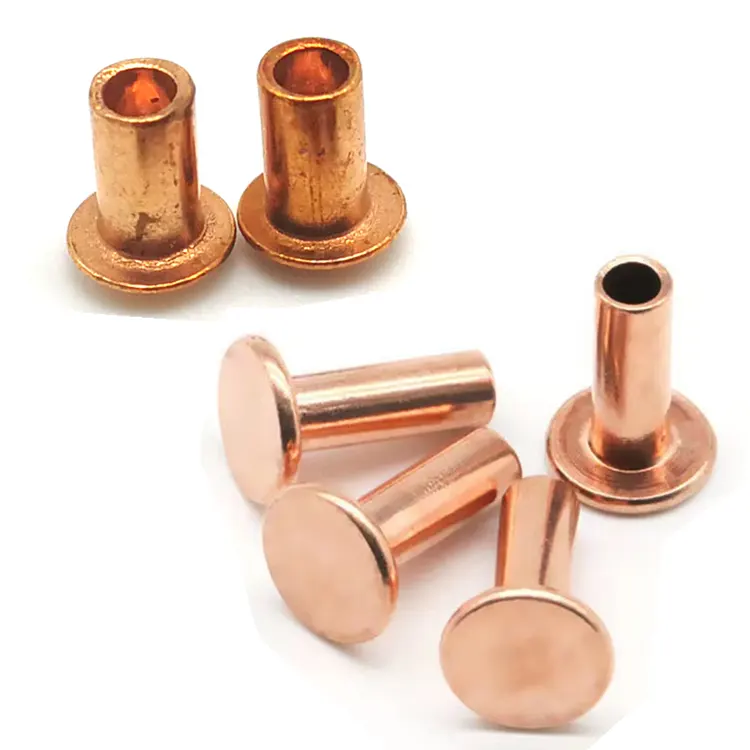
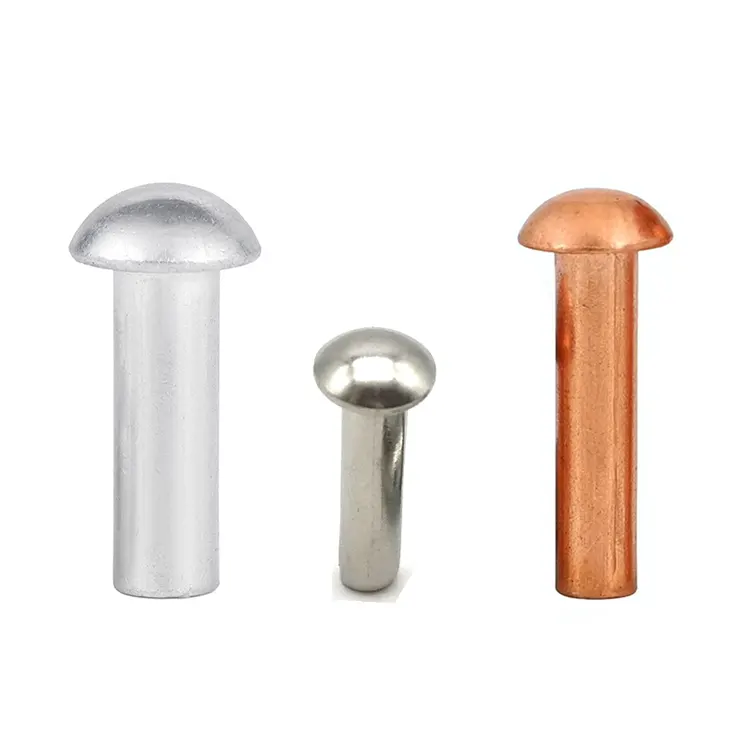
Materials available: Low‑carbon steel, stainless steel (304/316), brass (C2680), copper (C11000), aluminum (5052/5056)
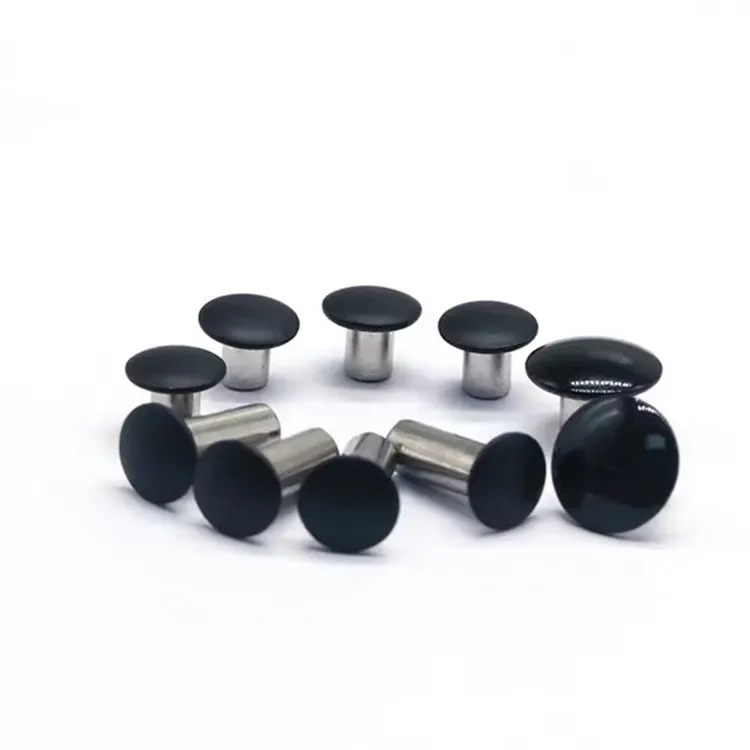
Finishes: Zinc‑plated, black oxide, passivated, lacquered, nickel‑plated, antiqued, anodized, plain – depending on material.
Real Application – Folding Chair Seat Support
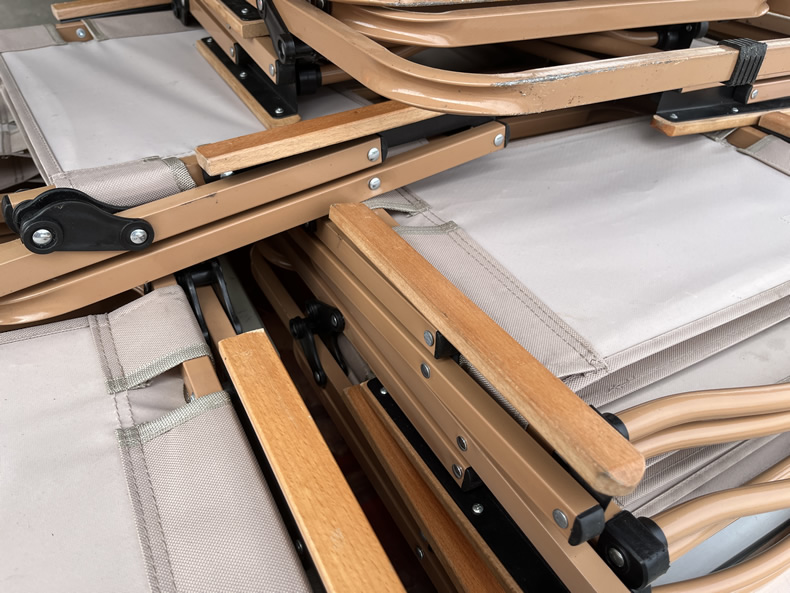
A furniture maker was producing folding chairs with a polypropylene seat shell attached to a steel frame. The original design used round head rivets at four attachment points. After a few months of use, the rivet heads were pulling through the plastic – the narrow bearing surface could not handle the load when people sat down.
The manufacturer tried using washers under the round heads. It worked, but added assembly time and parts cost. They needed a fastener that could do both jobs – wide bearing and fast setting.
Nuote Metals supplied zinc‑plated steel truss head semi‑tubular rivets – 4.0mm shank, 10.5mm truss head, 10.0mm barrel length. The wide truss head replaced both the round head and the washer in one component. The semi‑tubular cavity kept setting force low, preventing cracks in the polypropylene. The zinc plating provided rust protection for the steel frame connection.
The customer ran 1,000 chairs through their assembly line. The truss head rivets set cleanly, held tight, and eliminated the need for separate washers. No pull‑through. No cracks. No extra assembly steps.
Standard Options – Custom to Your Specification
Truss head rivets are manufactured to your exact requirements. Because the head diameter is significantly wider than other head styles, we produce each order to match your specific material thickness and hole size.
What we need from you:
- Shank diameter – 1.5mm to 8.0mm
- Head diameter – matched to your bearing surface requirement
- Overall length – or your total material stack thickness
- Material – steel, stainless, brass, copper, or aluminum
- Design – solid or semi‑tubular
- Finish – zinc, passivated, lacquered, nickel, anodized, etc.
We recommend: If you are not sure about the head diameter, send us a sample of your material (a scrap piece is fine). We will test the optimal head size on your actual material and recommend the right specification.
No tooling charge for standard truss head dimensions. Samples available for testing.
The Truss Head Difference – Wide Bearing Without the Bulk
The truss head is the widest standard head style available – and it stays low. The wide, shallow dome provides maximum bearing surface while keeping head height relatively low (25–30% of head diameter).
What this means for your assembly:
- Less pull‑through – The wide head distributes load over a larger area, reducing stress on soft materials. For plastic, composites, and thin sheet metal, this is critical.
- Less material damage – The shallow dome and smooth edge prevent cutting or gouging into the surrounding material.
- No washer needed – The truss head acts as a built‑in washer, eliminating the need for separate hardware.
How we make it consistent:
- Controlled forming – The wide, shallow dome is harder to form than a round head. Our multi‑stage heading process ensures the metal flows evenly without wrinkling.
- Precision dies – The truss profile is cut to a specific crown radius and edge angle. Every rivet gets the same profile.
- Concentricity check – The head must be centred on the shank within ±0.10mm. Off‑centre heads reduce bearing effectiveness.
Quality Control – How We Keep Wide Heads Consistent
Truss heads are harder to get right than round heads. The wide, shallow dome creates more opportunity for wrinkling, uneven thickness, and off‑centre forming. We treat every truss head batch with extra attention.
What we check:
- Shank diameter – ±0.05mm. If it does not fit your hole, nothing else matters.
- Head diameter – ±0.20mm. The bearing surface is the whole reason you chose truss head. We measure every batch.
- Head height – ±0.15mm. Too tall, and it may not clear adjacent components. Too flat, and it looks wrong.
- Head flatness – The underside of the head must sit flush against your material. No gaps.
- Cavity depth – 45–55% of barrel length. Too shallow, setting force is high. Too deep, clinch is weak.
- Concentricity – The head must be centred on the shank within ±0.10mm. Off‑centre heads reduce bearing effectiveness.
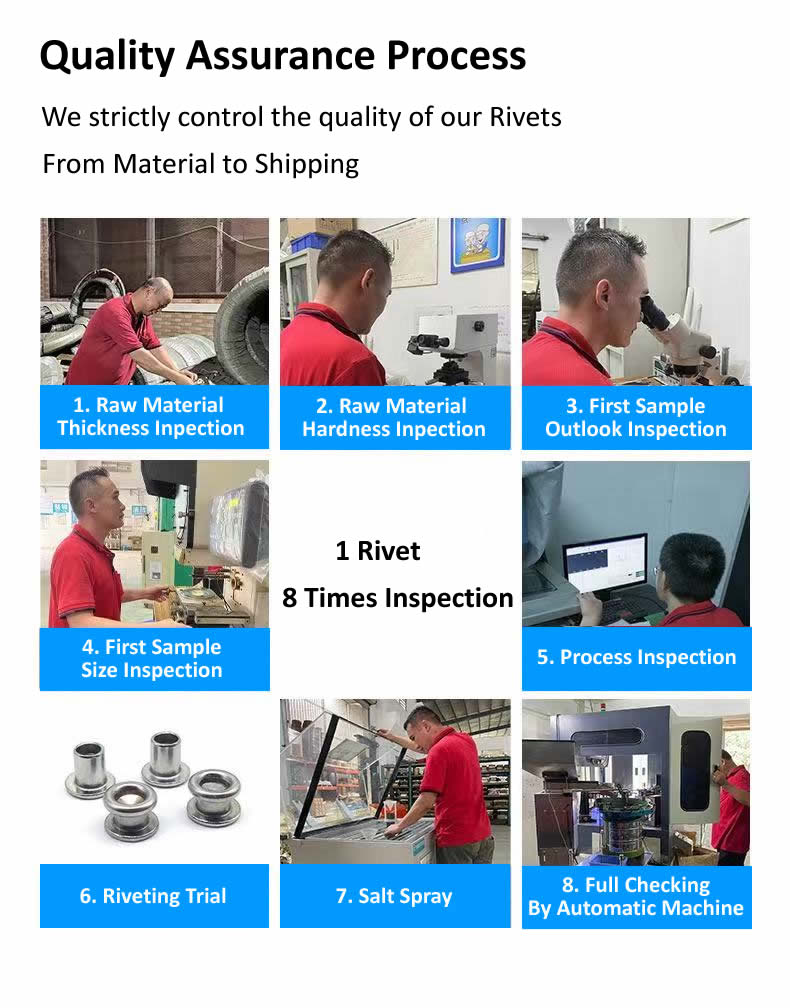
Our inspection process:
- Incoming wire – Diameter and hardness checked before production starts.
- First article – 10 rivets measured on optical comparator. Every dimension verified.
- In‑process – 5 rivets every 500 pieces. Any drift stops the press.
- Setting test – Every 2,000 pieces, set into sample material. Clinch inspected for symmetry and tightness.
- Final sorting – 100% optical inspection. AQL sample manually verified.
What You Actually Receive – A Complete Record of What We Made
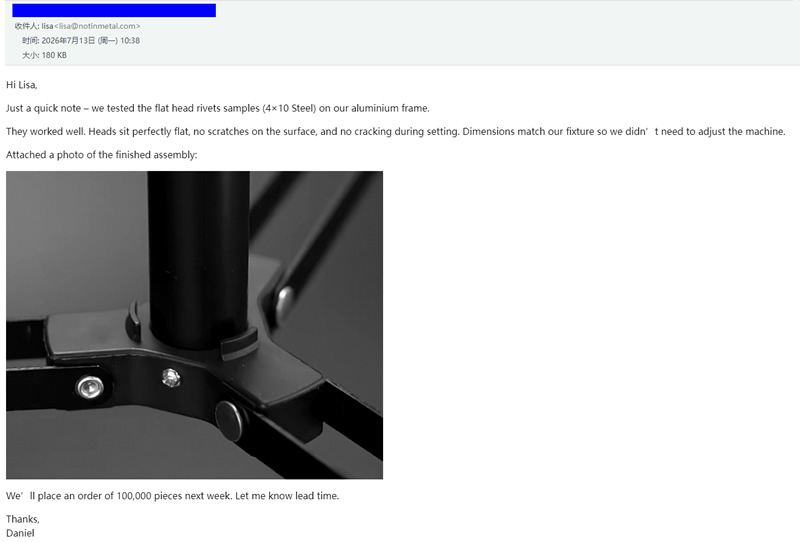
We do not just ship rivets. We ship a record of exactly what was produced and how it was verified.
The package includes:
- Material certificate – Chemical composition and tensile strength of the coil used
- Inspection sheet – Actual measurements of 10 rivets from the batch (the actual numbers, not just "within tolerance")
- Finish certificate – Plating thickness verified by XRF (if applicable)
- Conformance document – Signed by our QA manager, batch‑traceable
Why this matters: If a field failure ever occurs, you have the records to trace it back to the exact coil of material. We keep copies for five years.
Certified to: ISO 9001:2015, RoHS, REACH

Where Truss Head Rivets Are Used
- Plastic assemblies – Furniture, storage containers, equipment housings
- Thin sheet metal – HVAC ductwork, electrical enclosures, automotive panels
- Composites – Fibreglass panels, laminated materials, sandwich structures
- Softwood – Furniture, pallets, crates, outdoor structures
- Oversized holes – When hole tolerances are loose and a wider head is needed to cover them
- Canvas and heavy fabric – Tarpaulins, awnings, tents, banners
- RV and trailer assemblies – Panels, interior trim, exterior attachments
Three Questions We Answer Often
Q1: When should I choose a truss head rivet over a round head or flat head?
A: Choose truss head when you need the widest possible bearing surface to prevent pull‑through in soft or brittle materials. The truss head diameter is 2.2–2.8 times the shank diameter – significantly wider than round head (1.6–1.8×) and flat head (2.0–2.5×). Choose round head when you need maximum head strength and impact resistance. Choose flat head when you need low clearance. For the folding chair case above, truss head was the right choice because the wide bearing surface eliminated pull‑through without requiring any design change.
Q2: Can truss head rivets be used in plastic without cracking?
A: Yes – and this is one of their primary applications. The wide bearing surface distributes setting force over a larger area, reducing stress on brittle materials. For best results, we recommend:
- Choose semi‑tubular design to reduce setting force by 70%
- Select a barrel length 1.5–2.0mm longer than your material stack
- Use a press (not a hammer) for controlled, consistent force
- Test on a sample piece before committing to full production
For the folding chair case, the customer used semi‑tubular truss head rivets with a controlled press setting – no cracks, no pull‑through.
Q3:What materials are available for truss head rivets?
A: We manufacture them in five material families:
- Low‑carbon steel – Strongest, most cost‑effective, zinc or nickel plated
- Stainless steel (304/316) – Permanent corrosion resistance, passivated as standard
- Brass (C2680) – Conductivity, non‑magnetic, decorative
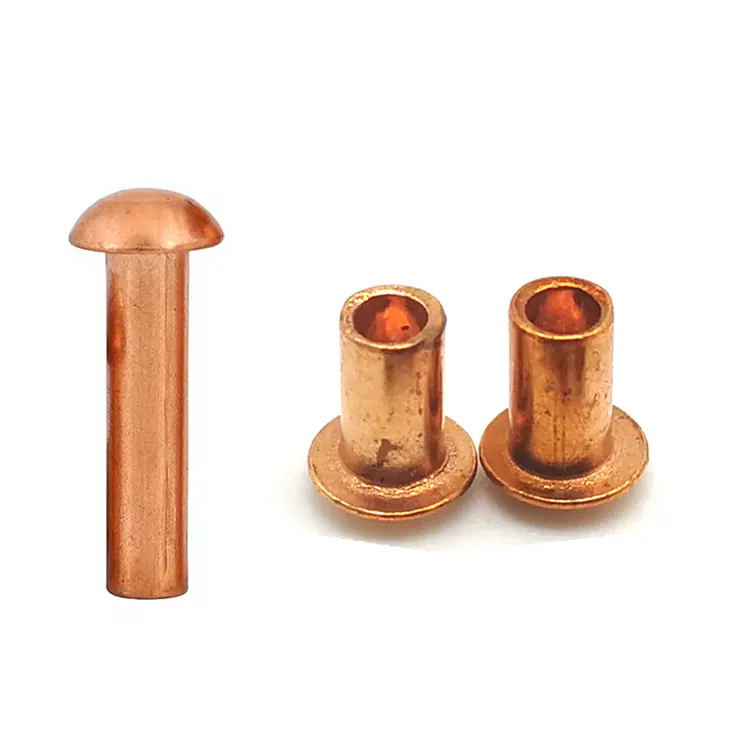
- Copper (C11000) – Highest electrical/thermal conductivity
- Aluminum (5052/5056) – Lightest, non‑magnetic
We stock all five materials in common shank diameters. The wide bearing surface of the truss head is particularly effective for aluminum rivets in lightweight assemblies.
Hot Tags: Truss Head Rivets China,Truss Head Rivets Manufacturer,Truss Head Rivets Spplier
Related Categories
Send Inquiry
Please feel free to fill your inquiry in the form below. We will reply you in 24 hours.



X
We use cookies to offer you a better browsing experience, analyze site traffic and personalize content. By using this site, you agree to our use of cookies.
Privacy Policy