
Products
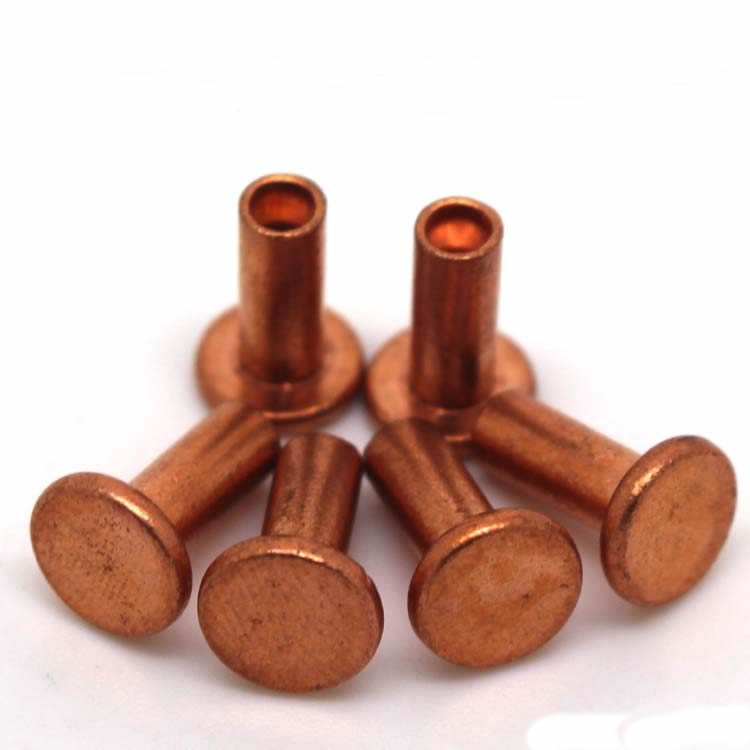
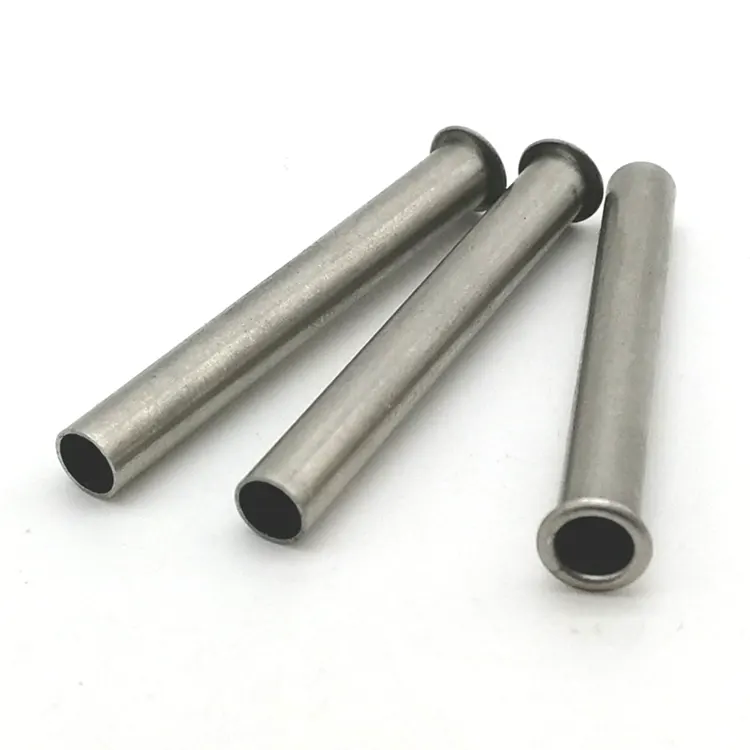
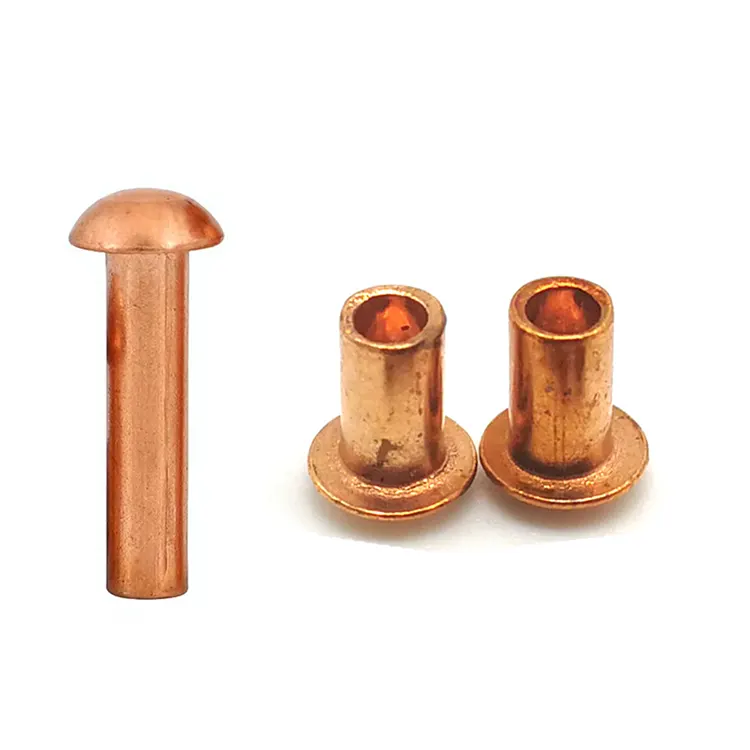
Copper Pan Head Rivets
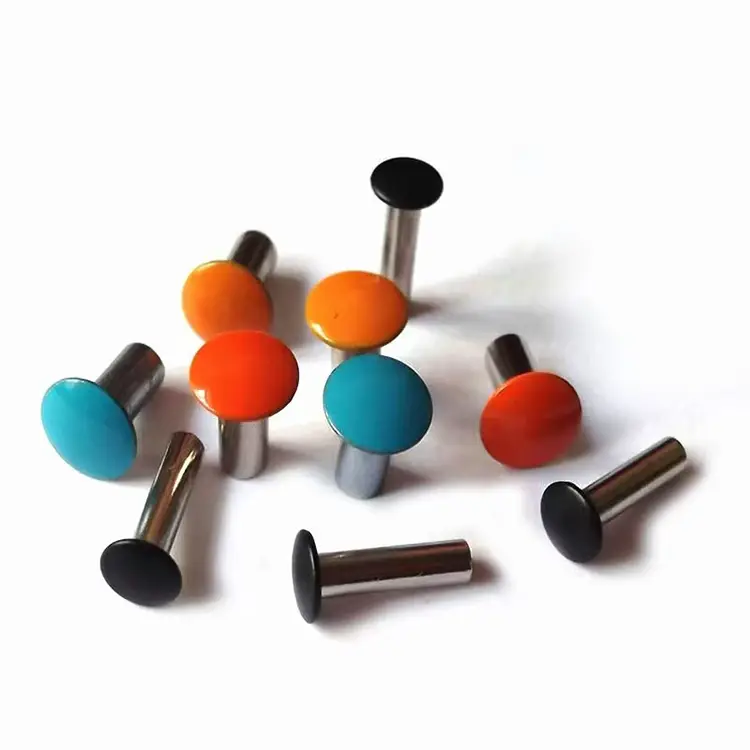
Copper pan head rivets are high-purity and offer excellent conductivity, making them suitable for applications requiring high conductivity. Nuote Metals specializes in the production of copper pan head rivets. We use high-copper grades, such as C1100, but we can also produce custom grades. Our copper rivets undergo a special surface treatment to resist oxidation and withstand a 48-hour salt spray test.
Send Inquiry
Product Description
Copper Pan Head Rivets – Wide Contact Area Without the Height of a Round Head
Thin copper sheets are unforgiving. Apply too much point load, and the material dimples. Use a head that's too small, and the hole elongates under vibration. Use a head that's too tall, and it snags wiring or refuses to sit flush in a tight enclosure.
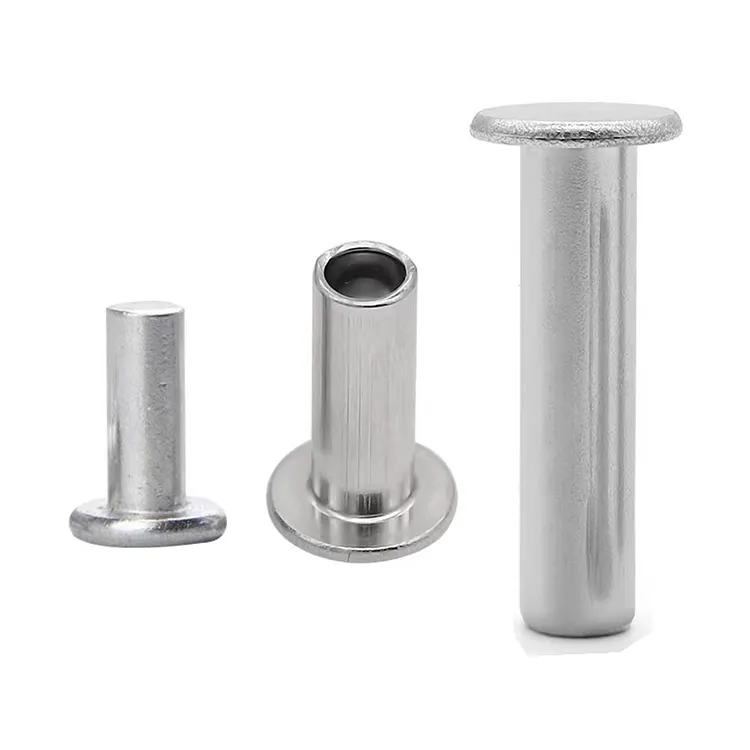
Copper Pan Head Rivets from Nuote Metals solve this three-way problem. The pan head is wider than a round head (1.8×–2.0× the shank diameter) but lower in height (0.5×–0.6×). That geometry spreads clamping force over a broader ring of copper, reducing stress at the hole edge while keeping a low profile for dense assemblies.
This is not a general-purpose rivet. It is a fastener shaped specifically for soft, thin, and conductive materials.
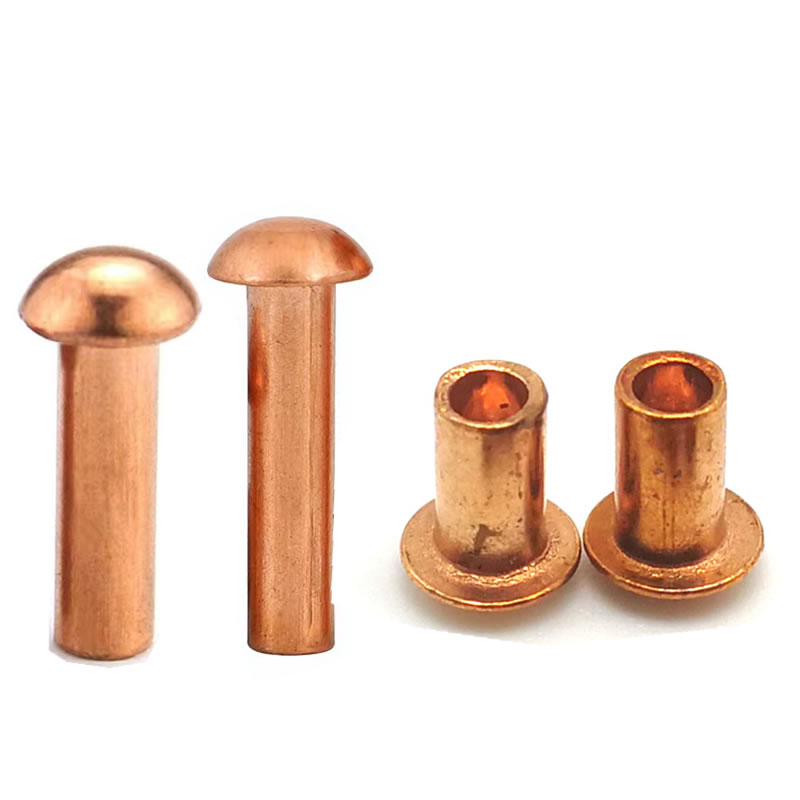
Why Pan Head Geometry Works Better on Thin Copper
Copper's low yield strength (70–100 MPa) means it deforms easily. A standard round head concentrates force directly under the dome, which can compress thin sheet down to 0.5mm. A flat head has a smaller bearing area, so the same force creates higher pressure at the hole edge.
The pan head changes the distribution:
| Head Style | Head Diameter | Bearing Area (relative) | Risk of Dimpling in 1mm Copper |
|---|---|---|---|
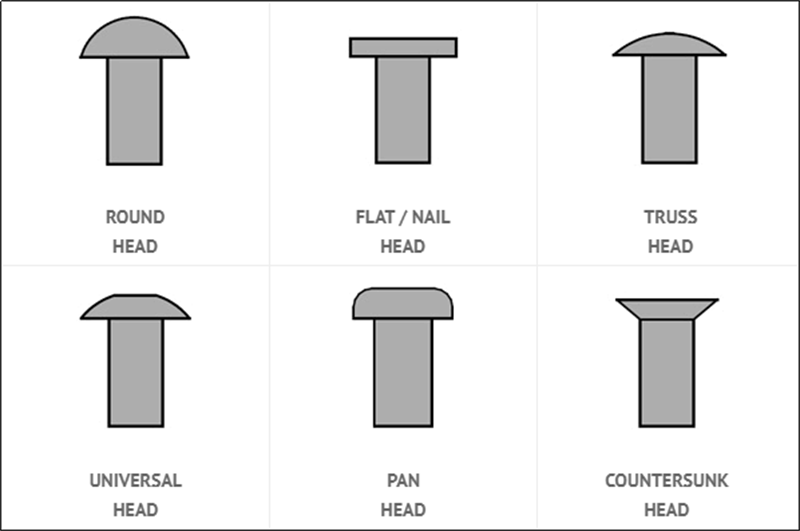
| Flat Head | 1.5×d | Baseline | High – small contact ring |
| Round Head | 1.6×d | +15% | Moderate – force concentrated under dome |
| Pan Head | 1.8×–2.0×d | +50–70% | Low – force spread over wide ring |
For a 4mm rivet in 1mm copper sheet, a pan head contacts roughly 60% more surface area than a flat head. That difference is often enough to eliminate dimpling entirely—without adding a separate washer.
Technical Specifications
Manufactured to DIN 603 and ISO 1051 dimensions. Custom head diameters available for thin-gauge applications.
| Parameter | Value / Range | Test Standard / Tolerance |
|---|---|---|
| Shank Diameter (d) | 1.5 – 10 mm | ±0.05mm (≤6mm) |
| Head Diameter (dk) | 1.8×d to 2.0×d | ±0.15mm |
| Head Height (k) | 0.5×d to 0.6×d | ±0.1mm |
| Length (L) | 3 – 40 mm | ±0.3mm |
| Tensile Strength | 220 – 280 MPa | ASTM B152 |
| Shear Strength | 180 – 220 MPa | ASTM F606 |
| Conductivity | ≥58 MS/m (C11000), ≥59 MS/m (C10200) | ASTM B193 |
| Purity | ≥99.7% (C11000), ≥99.99% (C10200) | ASTM E53 |
| Standards | DIN 603, ISO 1051 | Custom per drawing |
Material grades:
C11000 (ETP): 99.9% copper, 0.04% oxygen. General electrical, decorative, and thin-sheet use.
C10200 (OFHC): 99.99% copper, oxygen-free. Critical electronics and cryogenic applications.
When to Choose Pan Head Over Flat or Round – For Copper Only
This is not a generic head comparison. It is specific to copper's softness and conductivity.
Choose Pan Head when fastening copper sheets under 2mm thick, when you need a low profile but cannot tolerate dimpling, or when the joint requires moderate vibration resistance without the height of a round head.
Choose Flat Head when the surface must be nearly flush and the copper is thick enough (≥2mm) to resist deformation without a wide bearing ring.
Choose Round Head when the joint faces constant vibration or impact – motors, generators, marine engines – and the higher dome is acceptable.
A common mistake: Using a flat head on 0.8mm copper because it looks low-profile. The small bearing area often dimples the sheet, loosening the joint over time. The pan head costs the same but prevents that failure.
Solid or Semi-Tubular? A Copper-Specific Answer
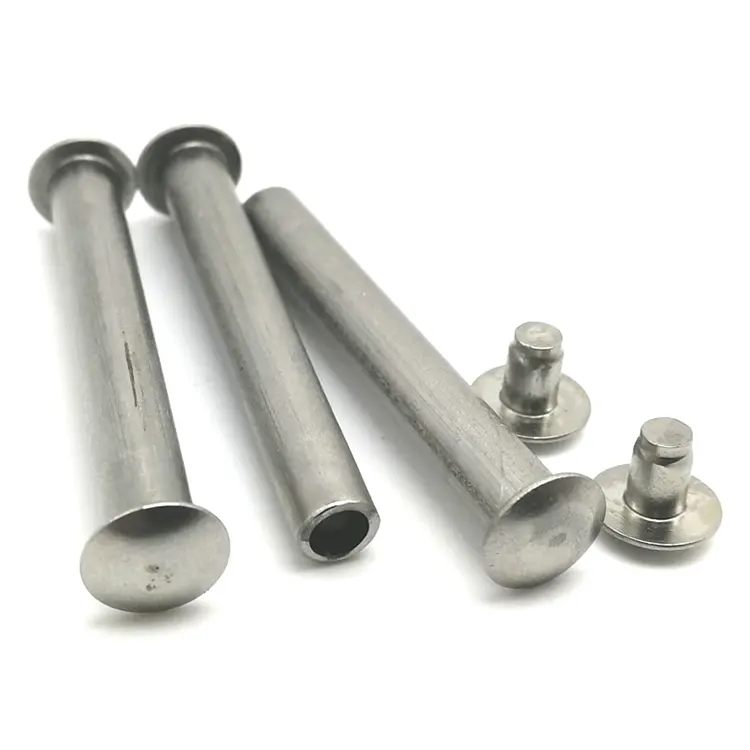
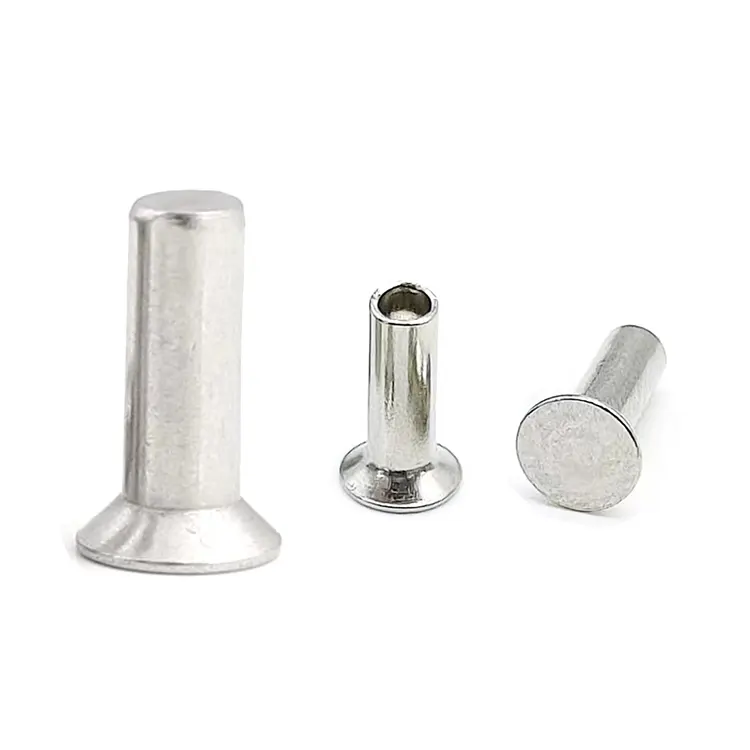
For thin copper sheets, the setting force matters as much as the head shape. Semi-tubular pan head rivets require 50–60% less force than solid, which directly reduces the risk of sheet deformation during installation.
- Semi-tubular is the better choice for copper sheets under 1.5mm, delicate electronic enclosures, and high-volume automated lines. The rolled tip clinches gently without compressing the copper.
- Solid is preferred for thicker copper plates (≥2mm), load-bearing joints, or where maximum shear strength is required.
Nuote Metals can supply either configuration with the same pan head geometry. For most thin-copper applications, we recommend semi-tubular.
How Nuote Metals Supports Thin-Copper Assembly
Pan head copper rivets fail for two reasons: cracking during head forming, or dimpling during installation. We address both before your order ships.
Tooling designed for copper flow:
Pan heads have a wide, shallow dome. In copper, that shape is prone to cracking at the head-shank junction if the fillet radius is too sharp. Our dies use a minimum radius of 0.5×d and are polished to remove micro-scratches. We also run multi-stage forming—three to five strokes—to let the copper flow gradually instead of forcing it in one hit.
Pre-production sampling for thin sheets:
Send us your copper thickness and expected setting method. We will produce a small batch and test it on your actual sheet material—not a standard coupon. You receive a setting report with recommended force, anvil type, and photos of the installed head. This eliminates trial-and-error on your line.
Optical inspection at 10x:
Every batch is checked for head diameter, height, and concentricity. A 0.05mm variation in head height is visible on a polished copper surface—we reject it before it reaches you.
In-house finishing:
Tinned, silver-plated, nickel-plated, polished, or lacquered. For thin copper decorative panels, we can match your surface finish to minimize visual contrast.
Traceability:
ASTM B152 certificates and conductivity reports accompany every shipment. We share inspection data openly—because pan head performance depends on geometry you cannot see with the naked eye.
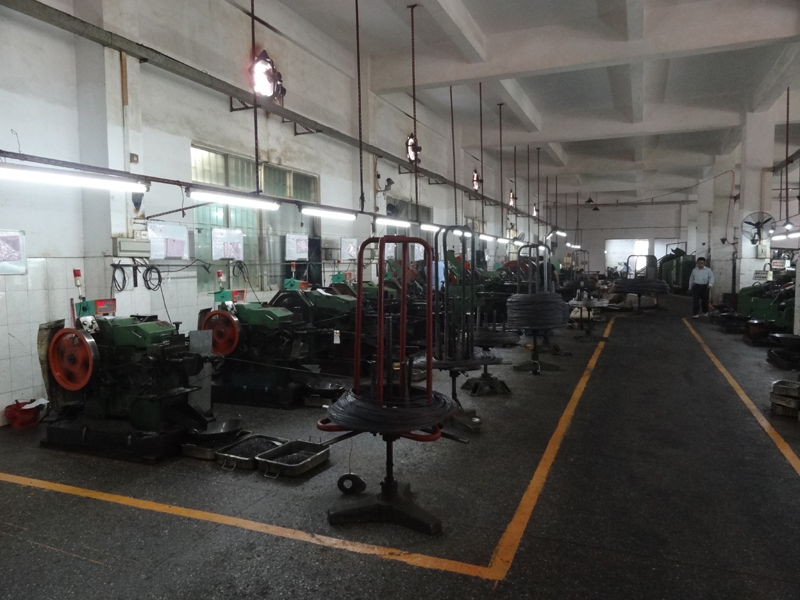
This application-level support is why electronics, HVAC, and architectural customers choose Nuote Metals for copper pan head rivets.
FAQ
Q1: Can Copper Pan Head Rivets be used on copper sheets thinner than 1mm without causing dimpling?
A: Yes—provided you use the right setting force and a semi-tubular body. The pan head's wide bearing area spreads clamping pressure over a larger ring, reducing stress on the thin sheet. For copper under 1mm, we recommend: (a) semi-tubular rivets to lower setting force by 50–60%, (b) a flat anvil that matches or exceeds the head diameter, and (c) controlled force—never use steel-rivet settings. At Nuote Metals, we can supply a pre-production sample batch and test it on your exact copper thickness before you commit to a full order.
Q2: Will Copper Pan Head Rivets oxidize or tarnish in outdoor architectural applications?
A: Copper naturally forms a patina when exposed to air and moisture—first brown, then green over years. This patina is protective and does not weaken the rivet. If you want to maintain a bright copper finish, choose lacquered pan head rivets. If you prefer the aged patina look, choose natural or polished without lacquer. For coastal or high-pollution environments, the patina forms faster but remains stable. Nuote Metals supplies both lacquered and natural finishes; we can also provide tinned or nickel-plated options if you want a silver-toned contrast against copper panels.
Q3: Are Copper Pan Head Rivets suitable for electrical grounding in electronic enclosures?
A: Yes, for stationary enclosures. Copper pan head rivets offer the same high conductivity as other copper head styles (≥58 MS/m for C11000). The wide head provides a stable contact area for grounding straps or PCB mounts. However, for enclosures that experience vibration—like vehicle-mounted electronics or industrial control cabinets near motors—we recommend round head copper rivets instead. The deeper dome resists vibration loosening better. For static enclosures, pan head is an excellent choice: low profile, wide contact, and compatible with tinned or silver-plated finishes to prevent oxide buildup at the ground interface.
Hot Tags: Copper Pan Head Rivets,China Pan Head Rivets,Copper Pan Head Rivets Manufacturer
Related Categories
Send Inquiry
Please feel free to fill your inquiry in the form below. We will reply you in 24 hours.



X
We use cookies to offer you a better browsing experience, analyze site traffic and personalize content. By using this site, you agree to our use of cookies.
Privacy Policy