
Products
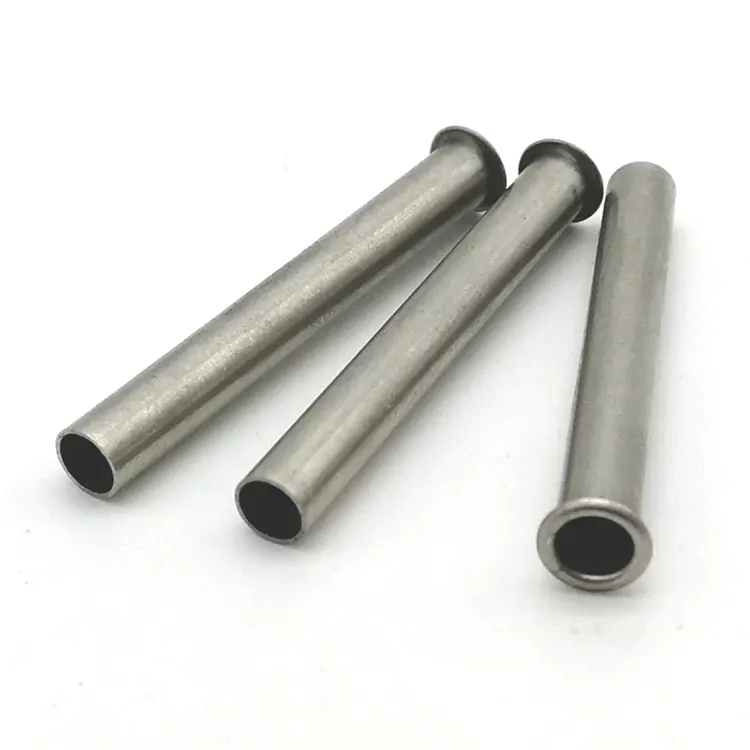
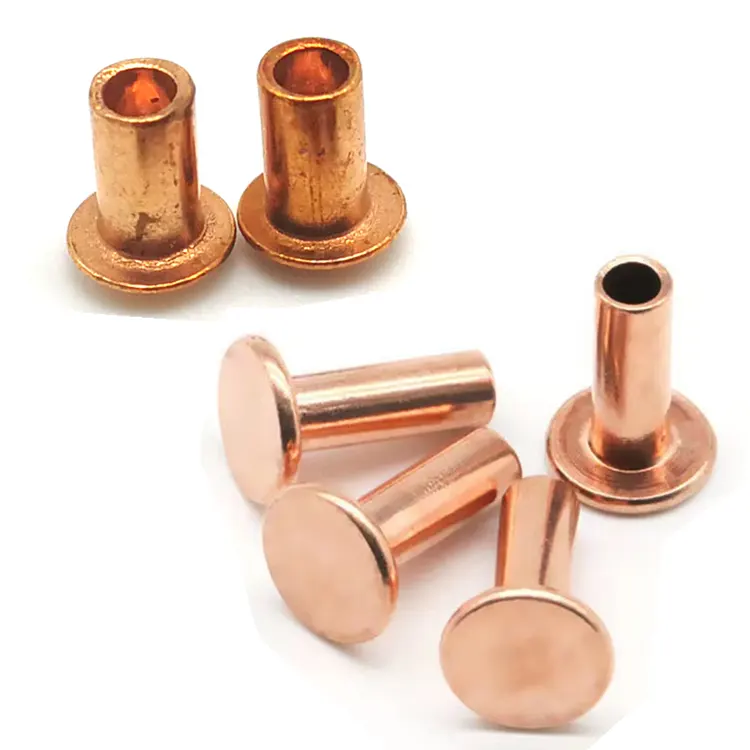
Copper Rivets
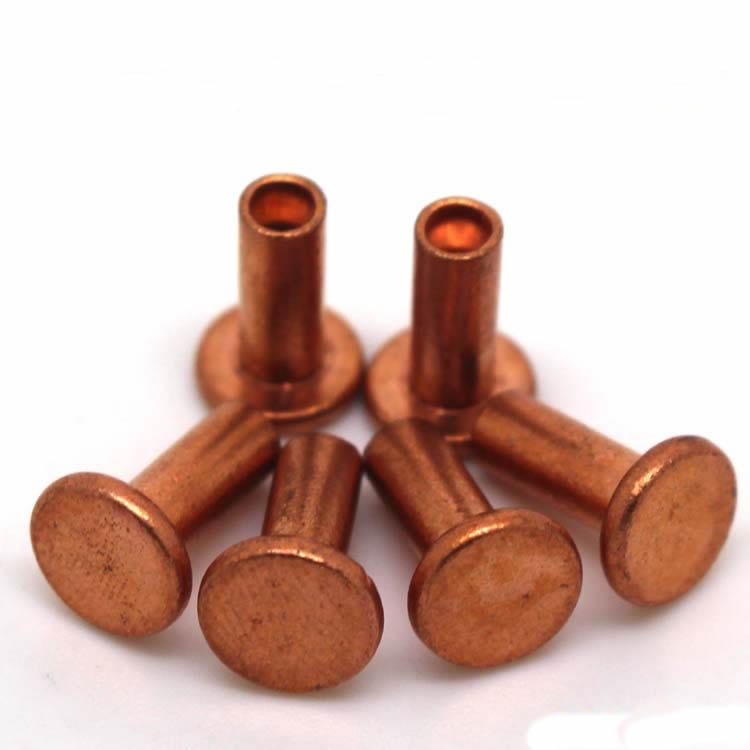
Nuote Metals is a professional rivet manufacturer located in Dongguan, China. The copper rivets we manufactured are made from C1100 copper. Copper rivets are a commonly used fastener. Copper has excellent thermal conductivity, making them widely used in electrical and heat dissipation applications. Furthermore, copper rivets offer excellent machinability and plasticity, allowing them to be produced in a variety of shapes and sizes.
Send Inquiry
Product Description
Copper rivets are not the strongest rivets. They are not the cheapest rivets. So why do engineers, craftsmen, and specifiers keep choosing them? For four reasons that no other material can match: 100% IACS electrical conductivity, 401 W/m·K thermal conductivity, natural antimicrobial properties, and a living patina that actually protects the metal rather than degrading it.
When the joint must carry current, move heat, resist bacteria, or survive outdoors for decades without rusting, copper is not a compromise – it is the answer.
Copper vs. Everything Else – The Numbers That Matter
Most rivet materials are chosen for strength or cost. Copper is chosen for what it does.
| Property | Copper (C11000) | Brass (C26000) | Aluminum (5052) | Stainless (304) |
|---|---|---|---|---|
| Electrical conductivity (% IACS) | 100% | ~28% | ~61% | <3% |
| Thermal conductivity (W/m·K) | 401 | ~120 | ~140 | ~16 |
| Corrosion resistance | Excellent (patina) | Good | Good | Excellent |
| Antimicrobial | Yes | Yes (limited) | No | No |
| Strength (MPa) | 220–250 | 315–390 | 220–280 | 620–750 |
| Magnetic | No | No | No | Slightly |
What this means in practice:
- Conductivity – Copper carries current better than any other common fastener metal. For grounding, busbars, and electrical connections, nothing else comes close.
- Thermal management – Copper moves heat away from joints, making it ideal for heat sinks, electronics, and equipment that runs hot.
- Living finish – Copper does not rust. It forms a protective patina that actually extends its life outdoors.
- Antimicrobial – Copper resists bacteria, mold, and fungi – a property that matters in food equipment, medical devices, and public spaces.
What We Make – Three Designs, One Material
| Feature | Copper Solid Rivet | Copper Semi‑Tubular Rivet | Copper Full Tubular Rivet |
|---|---|---|---|
| Tail design | Fully solid | Partially hollow (45–55% of length) | Fully hollow (tube‑style) |
| Setting force | 100% | 25–30% of solid | 15–20% of solid |
| Shear strength | Maximum (100%) | 80–90% of solid | 60–70% of solid |
| Installation speed | Slower, requires heavy equipment | Fast, suitable for automated assembly | Fastest, lowest force required |
| Best for | Structural, load‑bearing, high‑current | High‑volume production, leather, thin materials | Lightweight assemblies, soft materials, pivots |
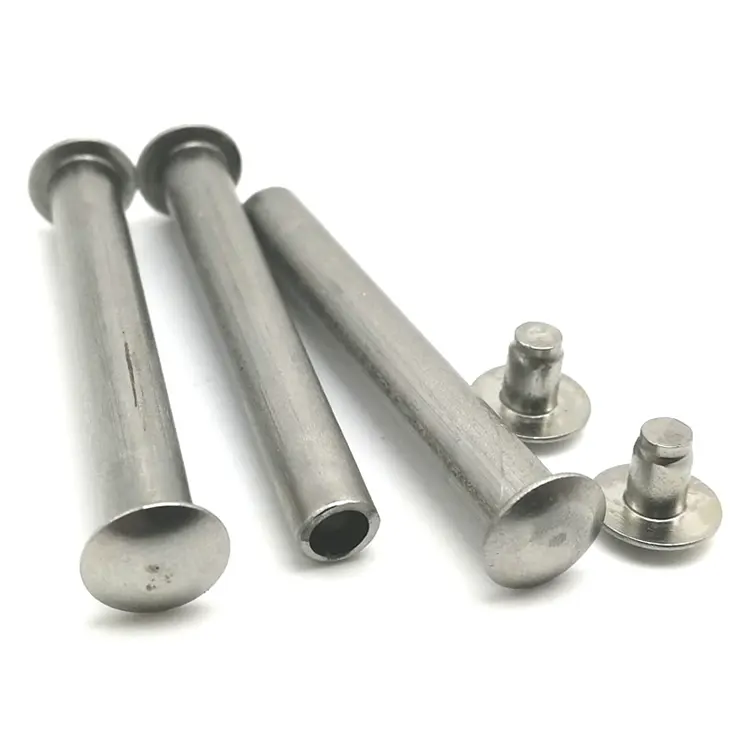
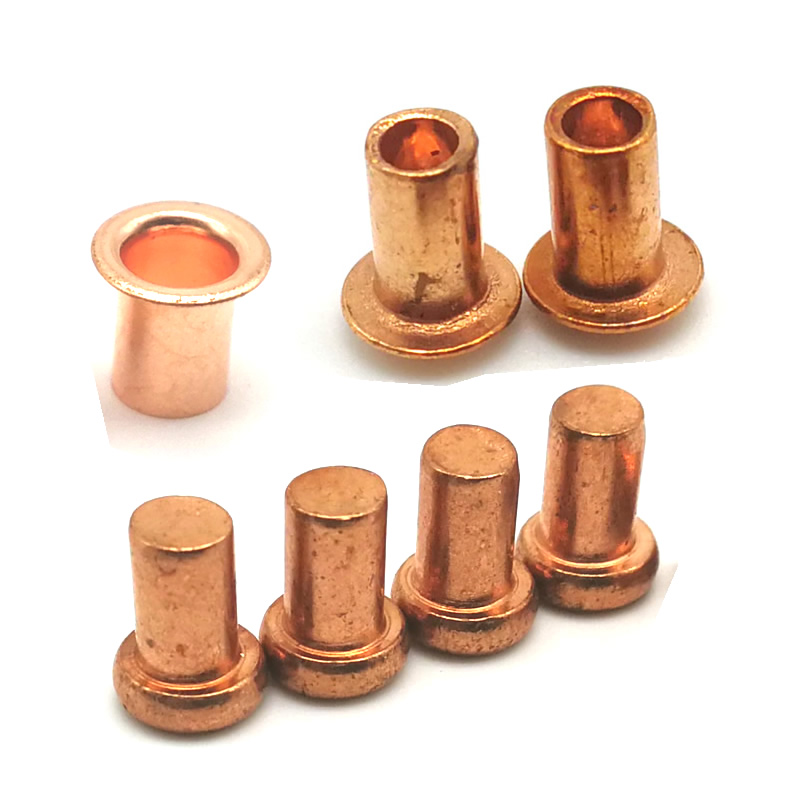
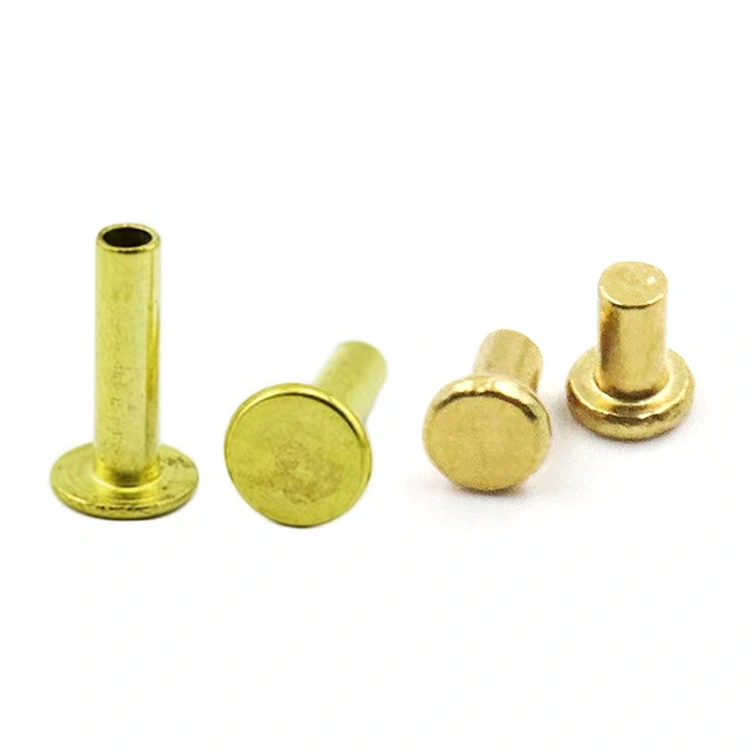
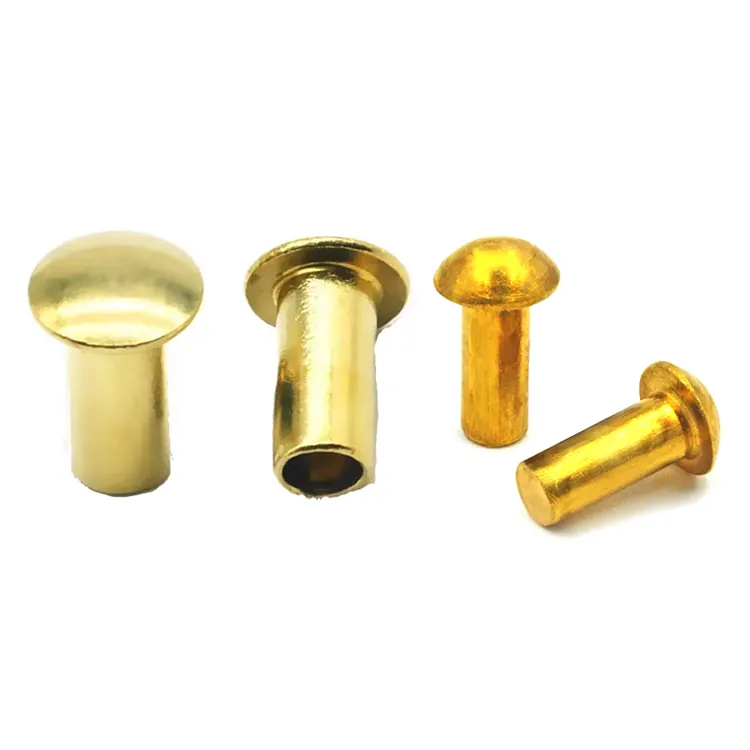
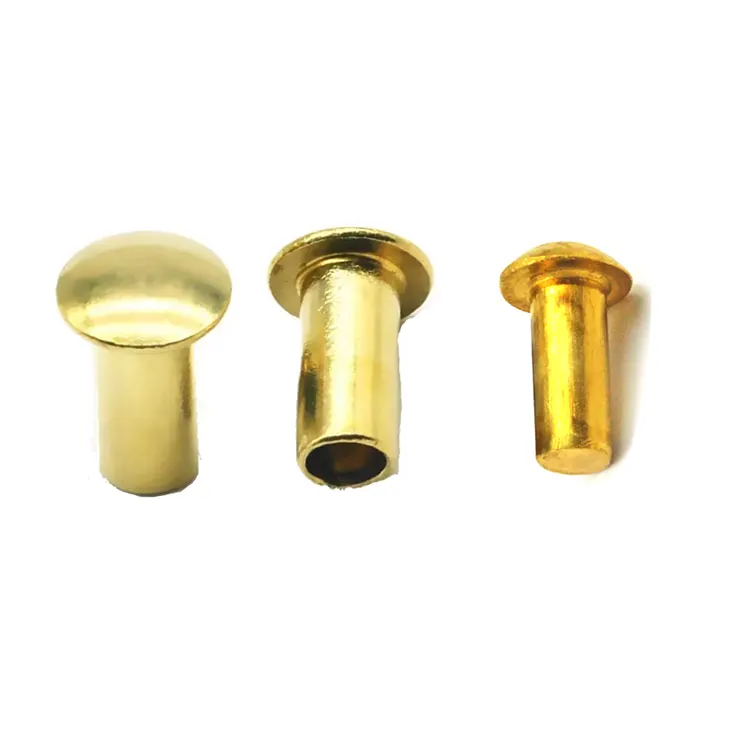
- Solid copper rivets – Maximum strength for structural joints, copper roofing, and heavy electrical connections.
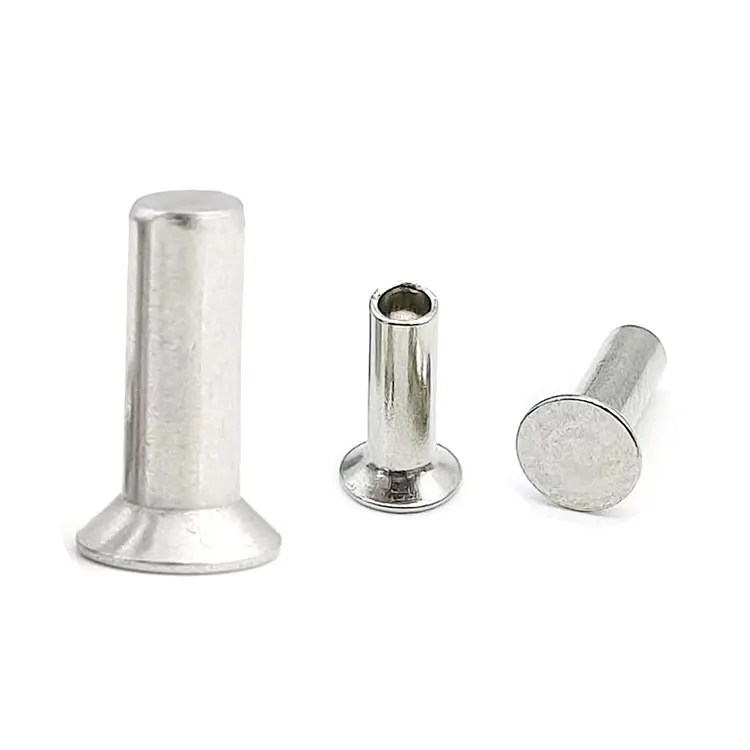
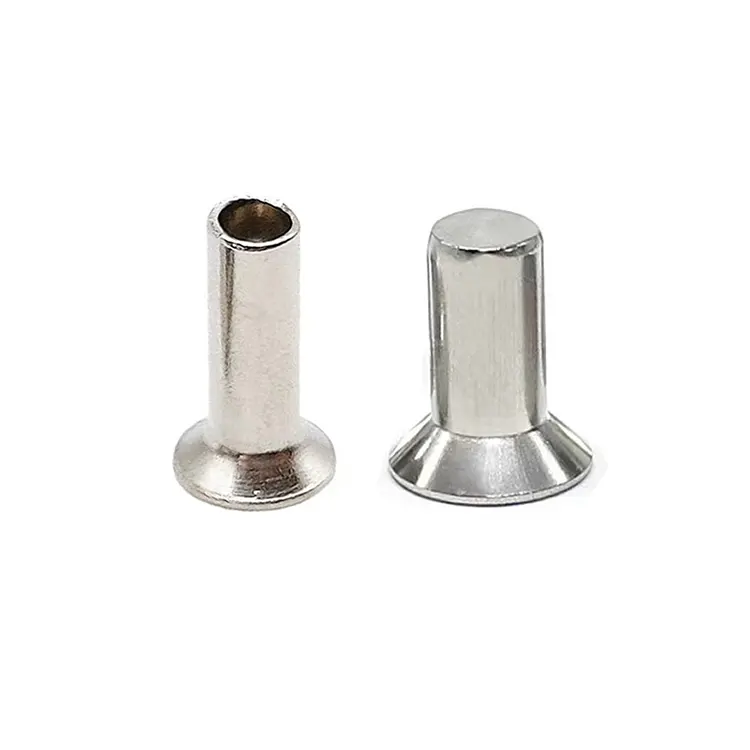
- Semi‑tubular copper rivets – The most popular choice. Lower setting force, faster installation, and 80–90% of solid strength. Ideal for leather goods, canvas, and general assembly.
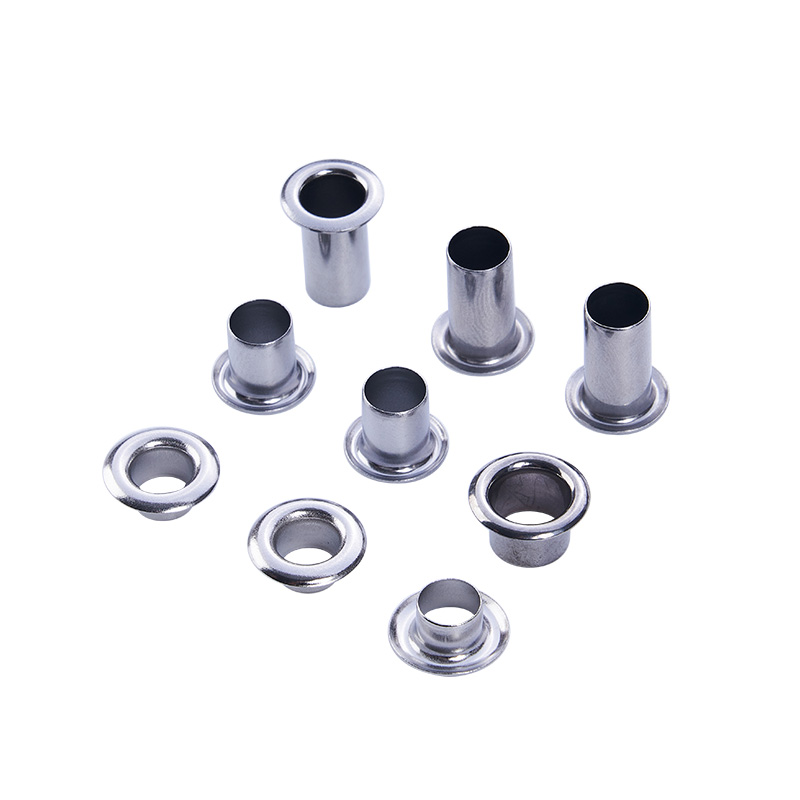
- Full tubular copper rivets – Lightest option. Use as bushings, pivots, or in soft materials where minimal setting force is required.
Real Application – 480,000 Copper Rivets to Brazil
This is one of many applications for them. We include it to show real production use, not to suggest limitation.
A Brazilian industrial distributor ordered 480,000 C11000 copper rivets for electrical grounding panels and marine equipment. The requirements were demanding: electrical conductivity exceeding 101% IACS, salt spray resistance of 72+ hours, and full third‑party test reports before contract signing.
The buyer visited our Dongguan factory in 2024, reviewed our quality system, and placed a repeat order after testing the first sample batch. We supplied a mix of round head and countersunk head rivets, 2mm to 12mm diameters, with mill test reports and dimensional inspection sheets for every batch.
The rivets are now used in grounding panels and marine equipment across Brazil. After one year of field use, zero conductivity failures, zero corrosion issues. The customer has since placed additional orders totalling over 1.2 million pieces.
Standard Options – Sizes, Head Styles, Finishes
Material: C11000 pure copper (Cu ≥99.9%)
Shank diameters: 2 – 12mm
Design: Solid, semi‑tubular, or full tubular
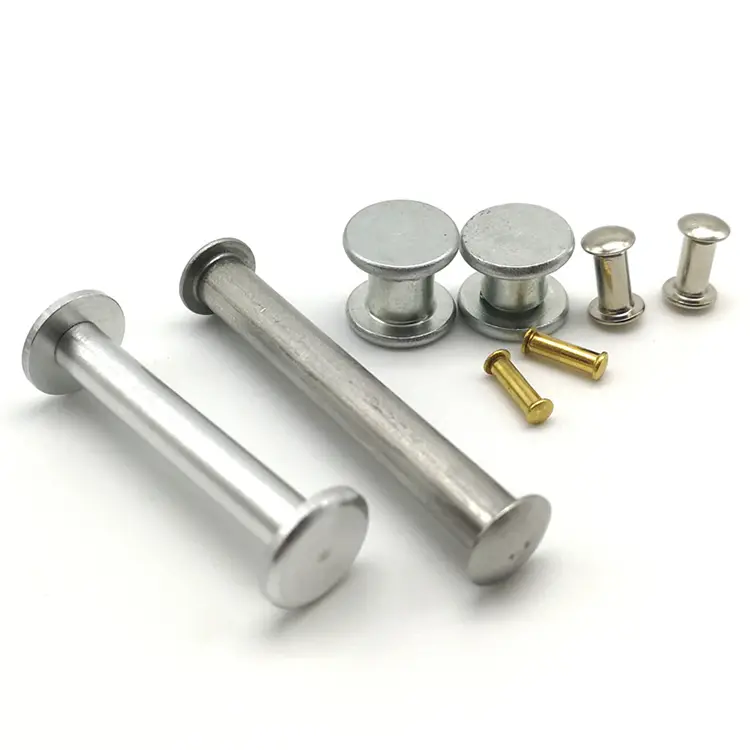
Head styles: Round, flat, oval, truss, countersunk
Finishes: Plain (as‑headed), tumbled (bright), antiqued (dark patina)
Lengths: Custom to your material stack thickness
| Shank (mm) | Head Styles | Typical Head Dia (mm) | Grip Range (mm) |
|---|---|---|---|
| 2.0 – 3.0 | Round / Flat / Oval | 3.5 – 5.5 | 1.0 – 3.0 |
| 3.5 – 4.0 | Round / Flat / Oval / Truss | 5.5 – 7.2 | 2.0 – 5.0 |
| 4.5 – 5.0 | Round / Flat / Oval / Truss / Countersunk | 7.0 – 9.0 | 2.5 – 6.5 |
| 5.5 – 6.0 | Round / Flat / Oval / Truss / Countersunk | 9.0 – 10.8 | 3.0 – 8.0 |
| 6.5 – 8.0 | Round / Flat / Oval / Truss / Countersunk | 10.5 – 14.5 | 4.0 – 10.0 |
| 9.0 – 12.0 | Round / Flat / Countersunk | 14.0 – 20.0 | 5.0 – 12.0 |
Tolerances: Shank ±0.05mm, head ±0.15mm, length ±0.15mm. Custom dimensions available. No tooling charge for standard sizes.
The Copper Challenge – Why Not Every Factory Gets It Right
Copper is not steel. It is not brass. It behaves differently in the heading machine – and if you do not understand that, your rivets will look wrong, set wrong, or fail in the field.
Here is what we have learned from making copper rivets for over a decade:
Copper is soft – and that is both the advantage and the challenge. It flows easily under the die, which means we can form complex head shapes without stressing the tooling. But that softness also means copper marks incredibly easily. A tiny scratch or bit of grit on the die will imprint on every single rivet head.
Our solution: We polish our copper heading dies to a mirror finish and clean them constantly. Every die is inspected before each production run.
Force control is critical. Too much pressure, and the copper deforms in ways you do not want. Too little, and the head is not fully formed. We run our copper jobs on presses with precise force monitoring and adjust settings for each batch.
Cavity depth must be precise. For semi‑tubular copper rivets, getting the cavity depth exactly right is critical – too deep and the clinch is weak, too shallow and it will not set properly.
The finish matters. Copper looks dull after heading. We tumble every batch to bring out the warm, shiny finish that customers expect.
The result: our rivets that look right, set right, and perform right – batch after batch.
Quality Checks – What We Verify, Why It Matters
| Check | Tolerance | Risk If Missed |
|---|---|---|
| Shank diameter | ±0.05mm | Rivet doesn't fit your hole |
| Head diameter | ±0.15mm | Pull‑through or uneven bearing |
| Overall length | ±0.15mm | Weak clinch or buckled barrel |
| Cavity depth (semi‑tubular) | 45–55% of barrel | Setting force too high or clinch weak |
| Cavity depth (full tubular) | 75–90% of barrel | Uneven flaring |
| Surface finish | Pass/fail | Scratches, tool marks, or dull appearance |
| Conductivity (batch sample) | ≥100% IACS | Electrical performance failure |
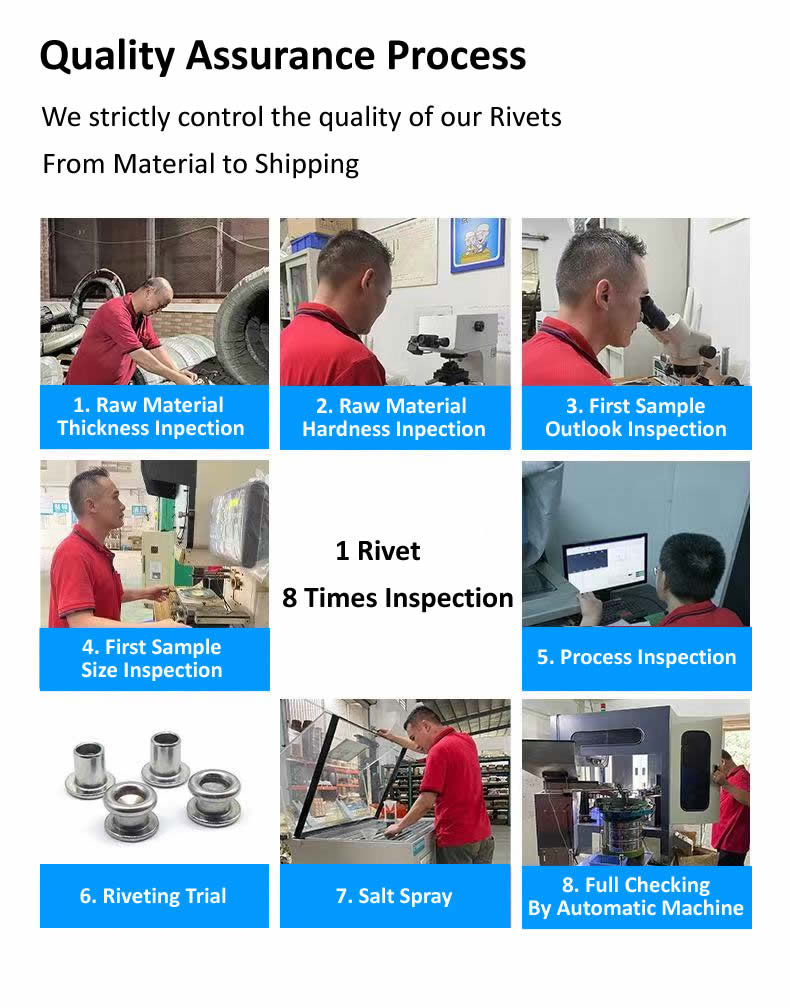
Our process: incoming wire check (spectrometer verifies C11000 composition) → first article inspection (10 pieces, every dimension verified) → in‑process checks (5 pieces every 500) → setting test (every 2,000 pieces) → surface finish inspection → 100% optical sorting → AQL manual sample.
Every shipment includes: mill test certificate, dimensional inspection report, and Certificate of Conformance.
Where They Are Used
- Electrical grounding – Grounding panels, busbar connections, EMI shielding
- Marine and shipbuilding – Deck hardware, hull connections, boat fittings
- Roofing and construction – Copper roofing, exterior walls, flashings
- Leather goods – Belts, bags, saddlery, vintage‑style leatherwork
- Food and brewery equipment – Hygienic connections, antimicrobial surfaces
- Heat management – Heat sinks, thermal management assemblies
- Decorative and heritage – Restorations, classic boats, period‑correct hardware
Built for the Toughest Environments – And the Most Demanding Specs
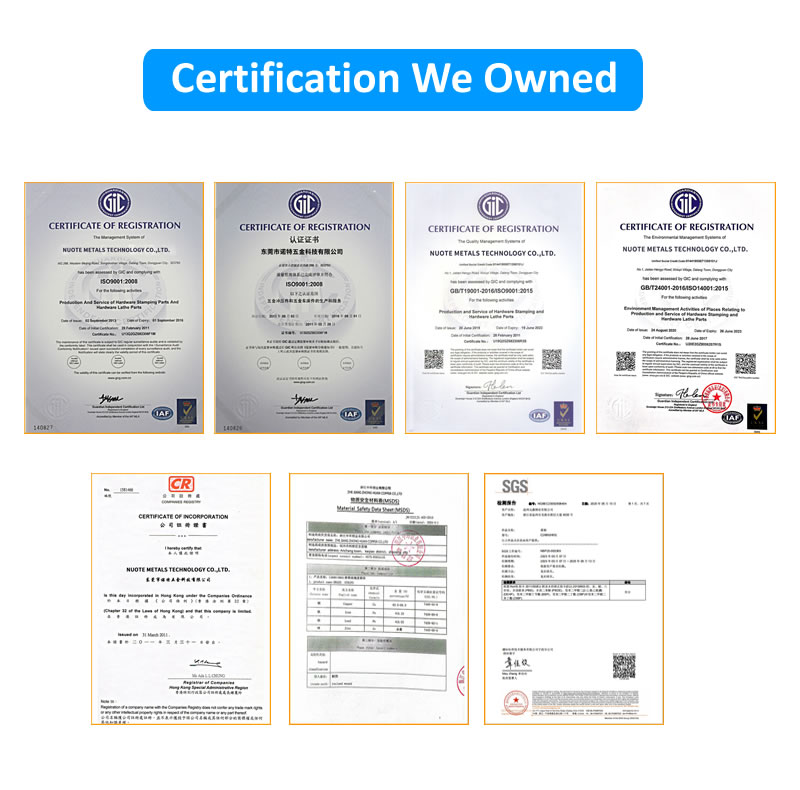
Every shipment includes:
- Mill test certificate – Chemical composition (Cu ≥99.9%)
- Dimensional inspection report – Actual measured values
- Conductivity test report – IACS verification (if requested)
- Certificate of Conformance – Signed, batch‑traceable
Certified to: ISO 9001:2015, RoHS, REACH
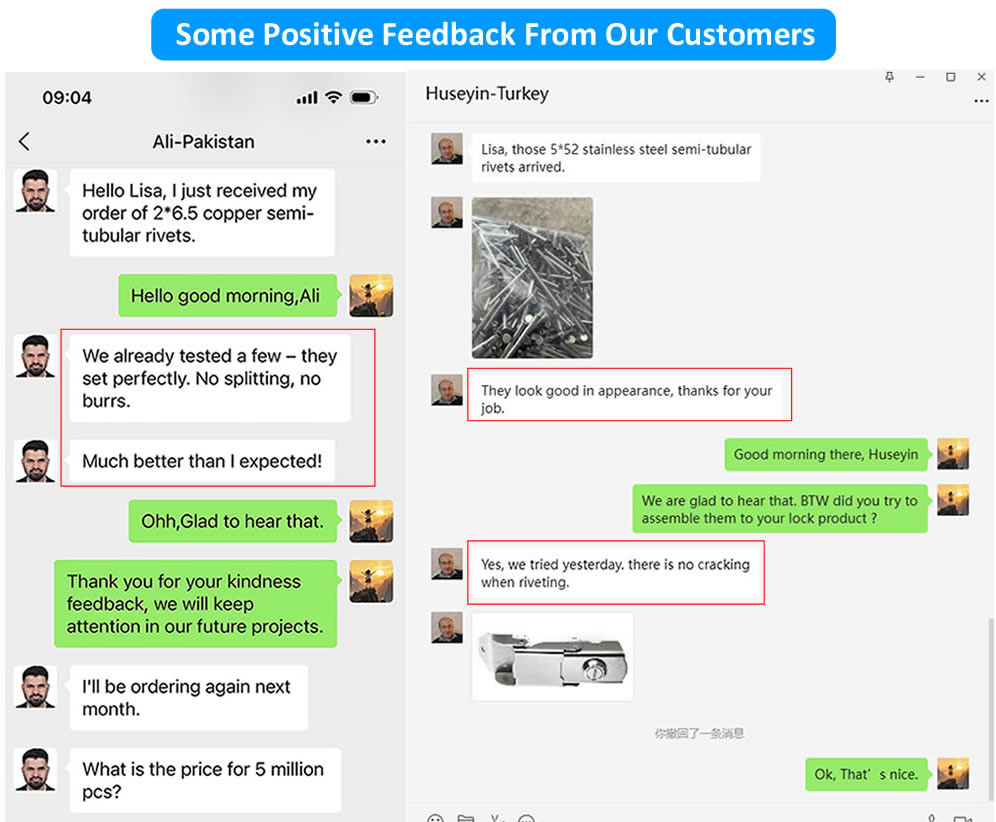
What Our Customers Say – Real Feedback
Three Questions We Answer Often
Q1: Why choose copper over brass for rivets?
A: Copper offers 100% IACS conductivity versus brass at ~28%. If your rivet must carry current, copper is the right choice. Brass is harder and offers better wear resistance for mechanical applications – but for electrical, thermal, or antimicrobial requirements, copper wins every time.
Q2: Do copper rivets corrode? Why do they change colour?
A: Copper does not rust – it forms a protective patina over time. This patina actually protects the underlying metal, extending its life in outdoor environments. The colour change from bright red to dark brown or green is cosmetic and does not affect mechanical or electrical performance. If you need to maintain a bright finish, specify tumbled or lacquered copper rivets.
Q3: Which design or rivets should I choose – solid, semi‑tubular, or full tubular?
A: Semi‑tubular rivet is the default choice for most applications – 80–90% of solid rivet strength at 25–30% of the setting force. Choose solid rivet for structural, high‑current, or load‑bearing assemblies where maximum strength is required. Choose full tubular rivets for soft materials, lightweight assemblies, or applications where the rivet must act as a bushing or pivot.
Hot Tags: Copper Rivets,Copper Rivets Supplier,China Copper Rivets Manufacturer
Related Categories
Send Inquiry
Please feel free to fill your inquiry in the form below. We will reply you in 24 hours.



X
We use cookies to offer you a better browsing experience, analyze site traffic and personalize content. By using this site, you agree to our use of cookies.
Privacy Policy