
Products
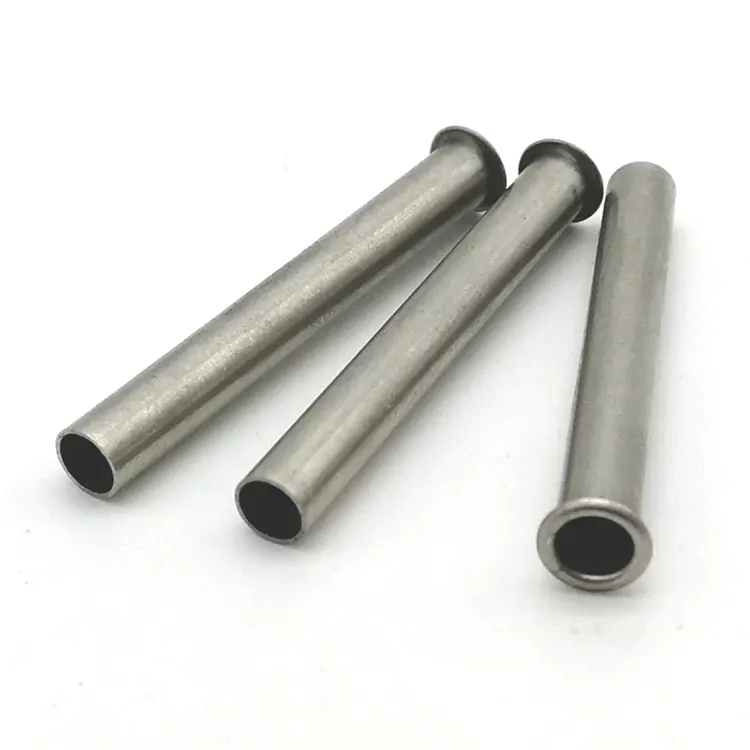
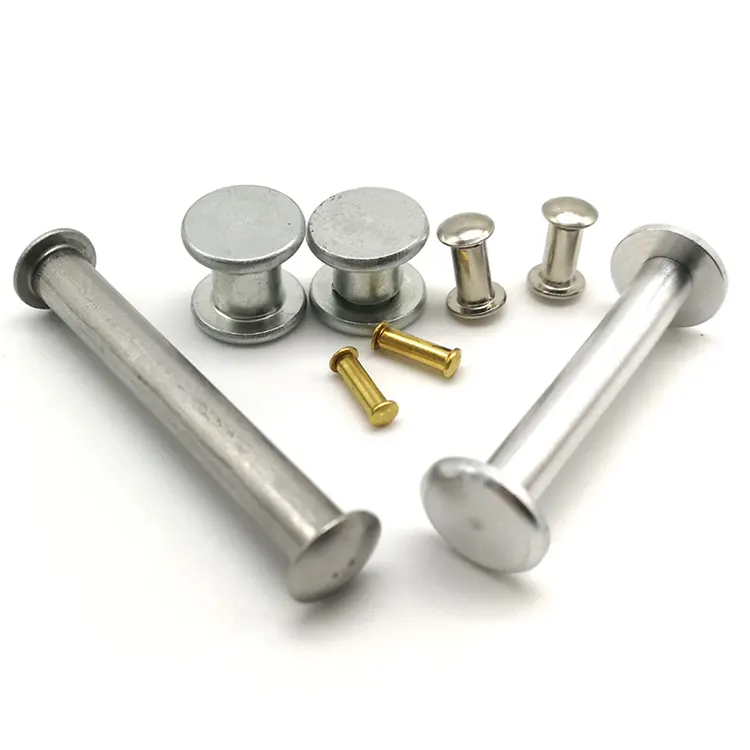
Two Piece Rivets
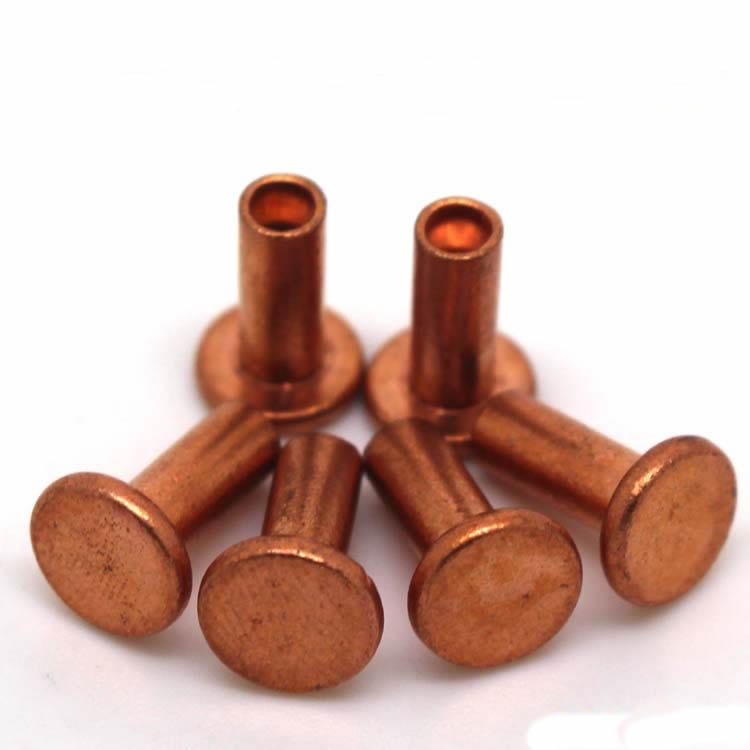
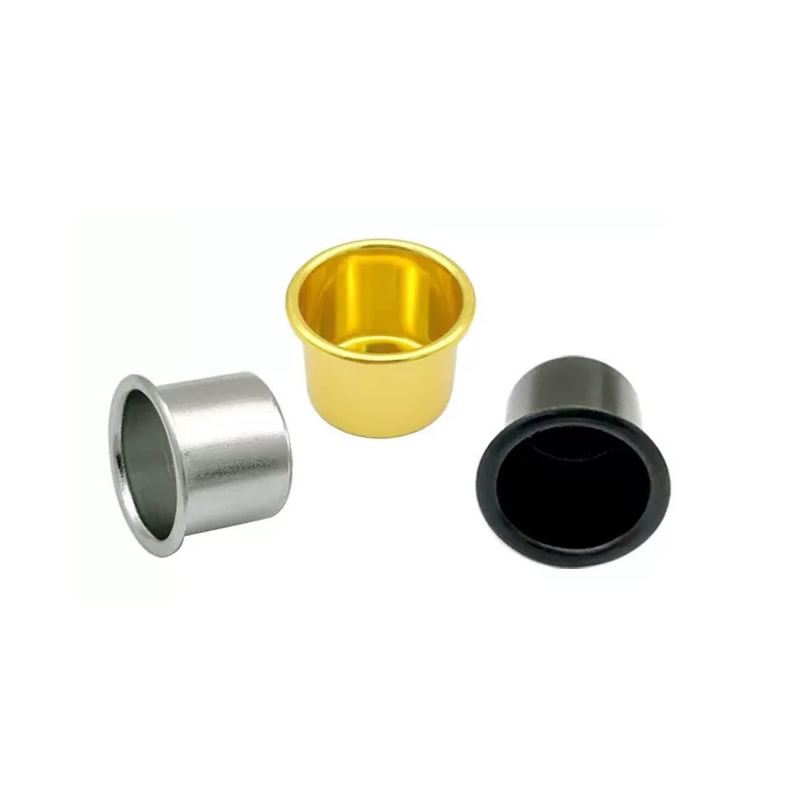
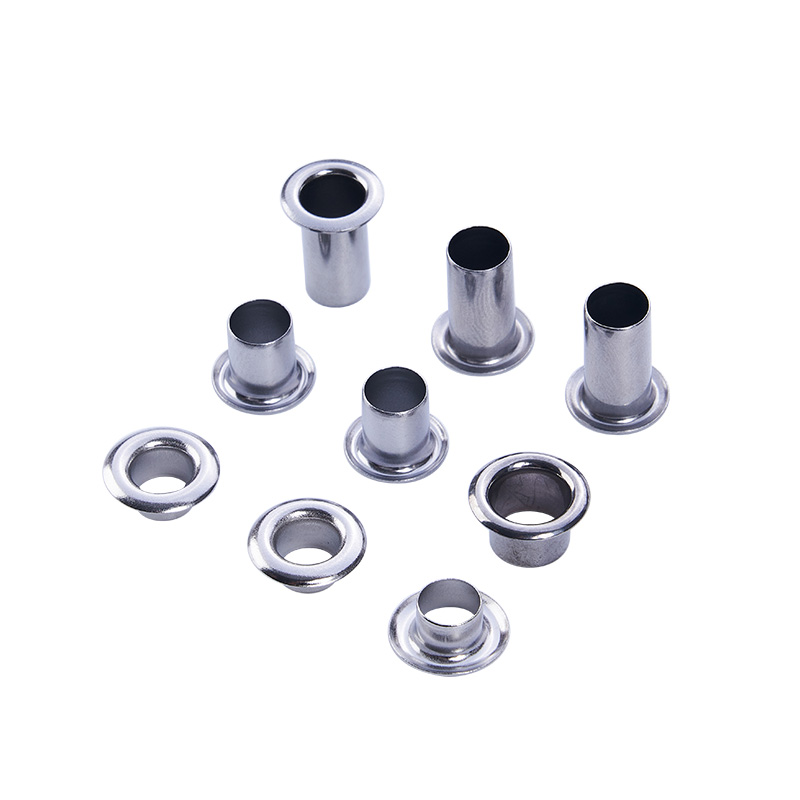
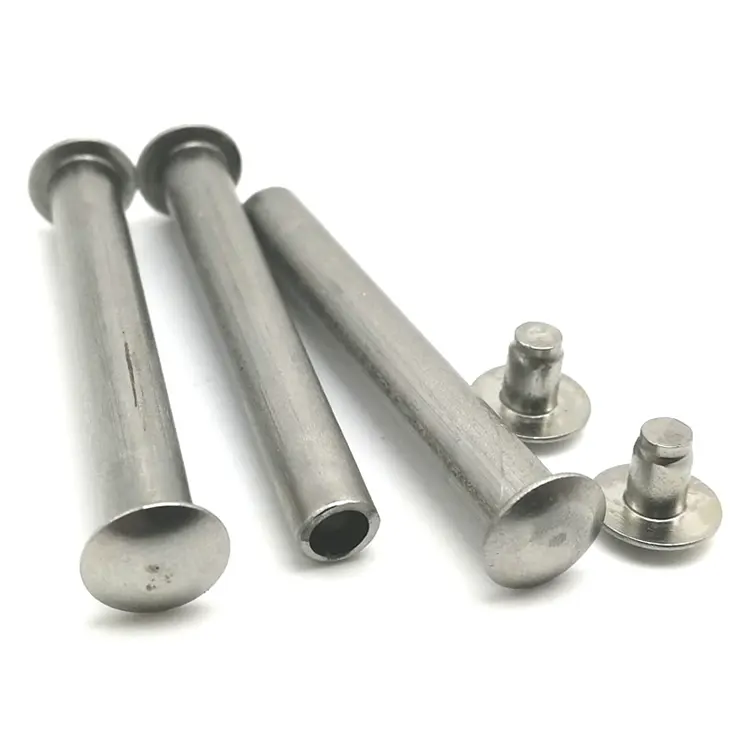
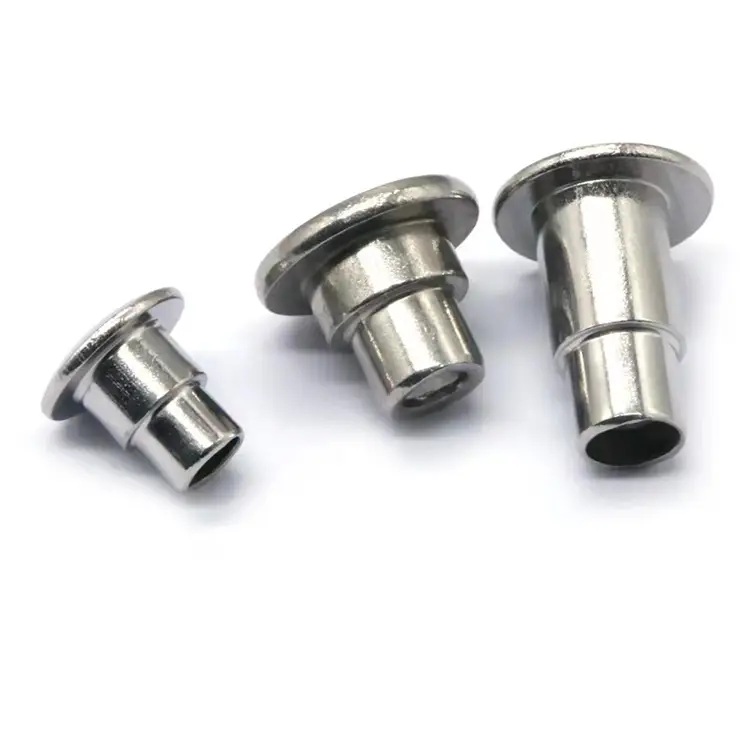
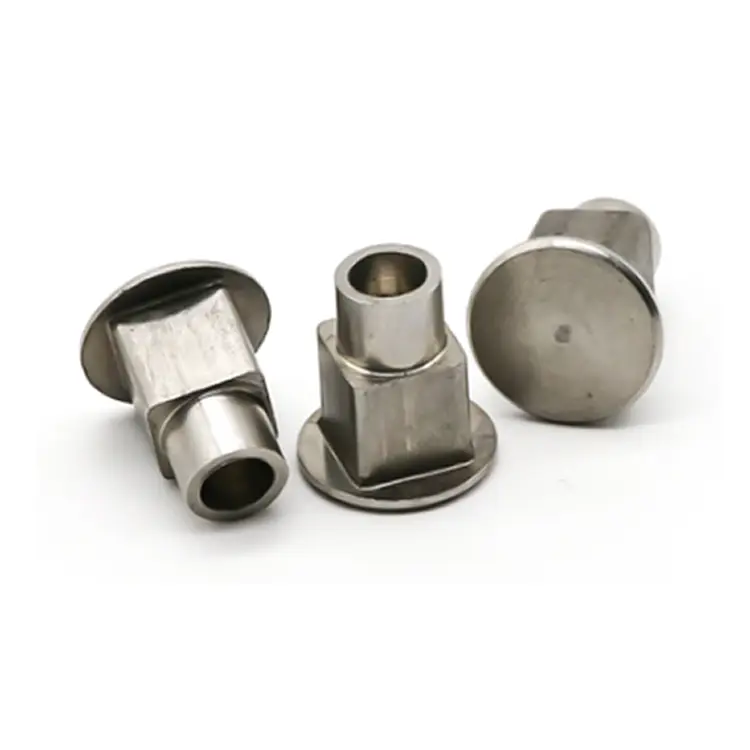
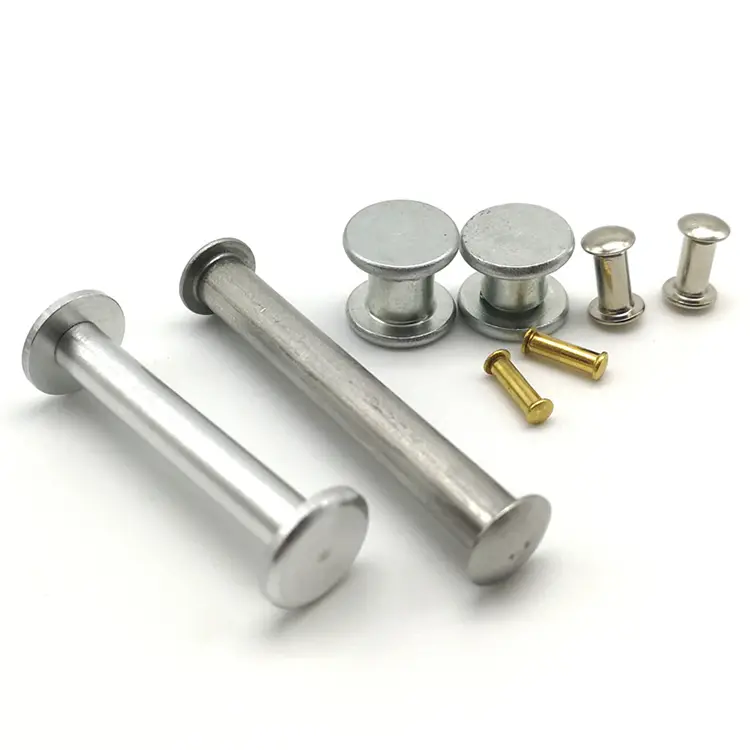
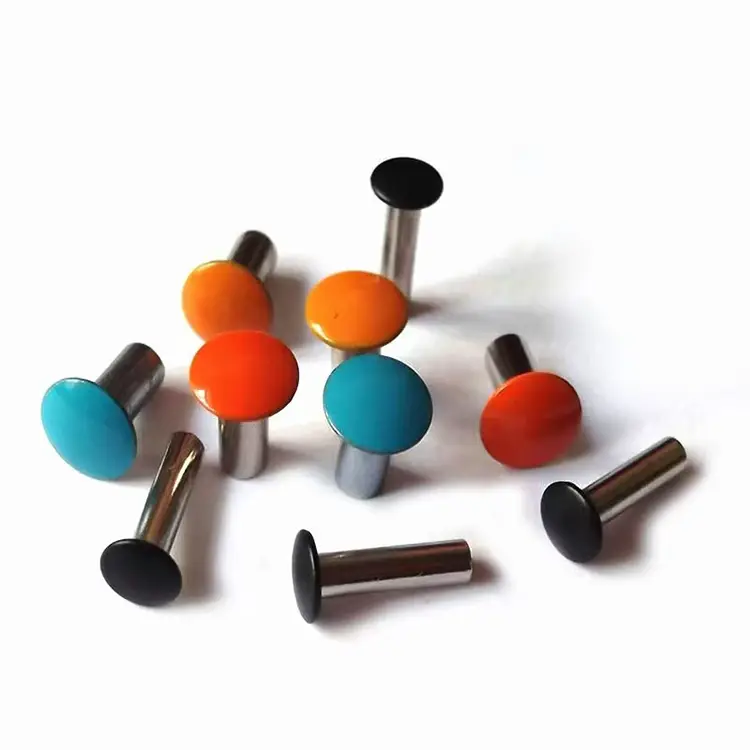
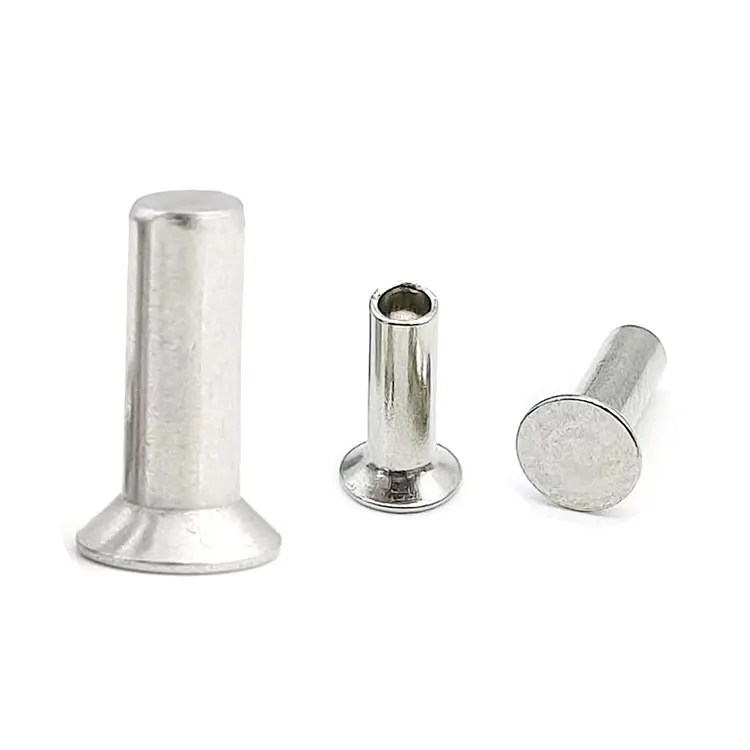
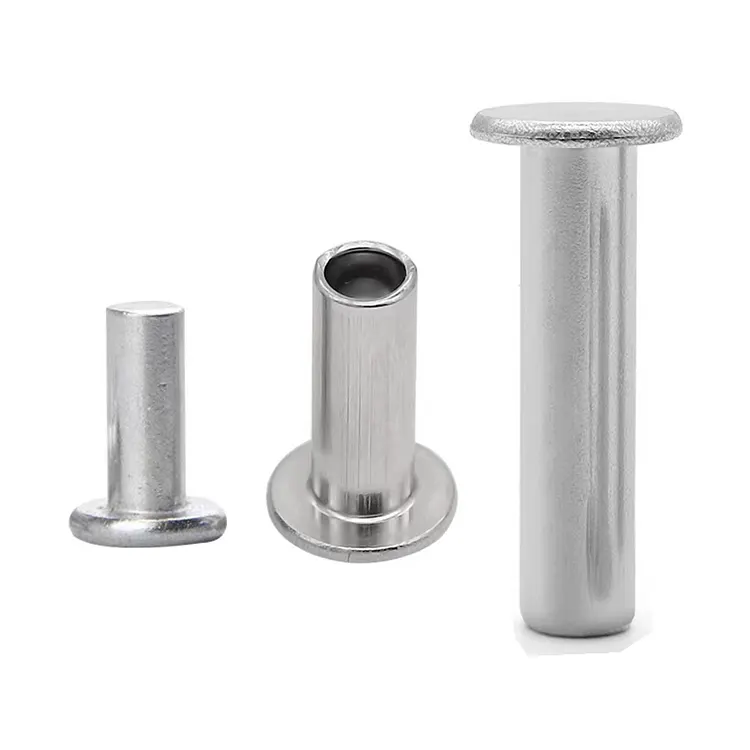
Two piece rivets typically consists of two parts: a female rivet and male rivet. The female rivet has an inner hole at one end and a fixed end at the other. The male rivet, like a solid step rivet, fits into the inner hole of the female rivet. To use, first secure the female rivet to an object, then insert the male rivet into the female rivet and hammer it into place, thus joining the two objects. This design simplifies installation while providing reliable connection strength. Nuote Metals has 10 years working experience of these kind of two piece rivets, welcome to send us your drawing.
Send Inquiry
Product Description
We manufacture the same fastener under multiple names – two piece rivets, male and female, mating, opposed, post-and-cap. Different industries use different terms. The product is the same.
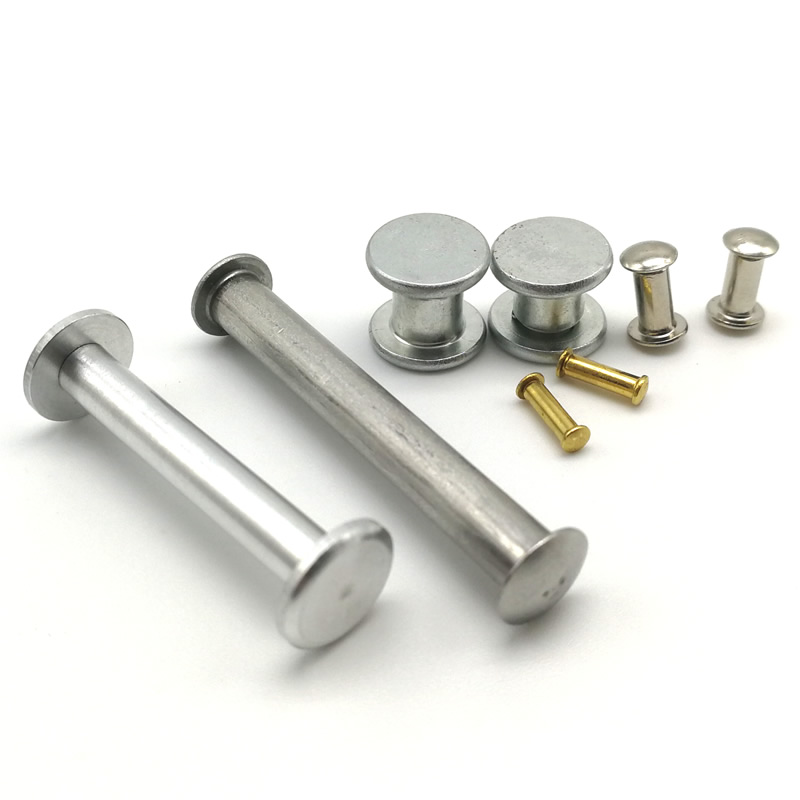
Two Components, One Joint – The Difference
| Feature | Two Piece Rivet | Standard Solid Rivet |
|---|---|---|
| Components | Solid rivet + semi‑hollow rivet | Single piece |
| Finish on back side | Clean head | Exposed clinch |
| Installation | From both sides simultaneously | From one side only |
| Best for | Visible joints, displays, leather, furniture | Hidden structural joints |
Materials and Finishes
| Material | Best For |
|---|---|
| Carbon steel (zinc‑plated) | Industrial, high‑load, cost‑sensitive |
| Stainless steel (304/316) | Outdoor, marine, coastal |
| Brass (C2680) | Leather goods, decorative hardware |
| Aluminum | Lightweight, non‑magnetic |
Finishes: Zinc‑plated, nickel‑plated, passivated, antique, plain.
One Real Application – Retail Display Shelving
A retail display manufacturer needed to assemble metal brackets to powder‑coated shelves. The brackets were visible from both sides – customers saw the front, staff saw the back when restocking. Standard rivets left an ugly clinch on the back. Screws loosened with repeated handling.
We supplied zinc‑plated steel two piece rivets – 4.0mm shank, 8.0mm round head, 12.0mm overall length. The solid male went through from the front; the semi‑hollow female slid over from the back. A single press stroke set both heads simultaneously. Clean, domed finish on both sides.
The customer tested 500 rivets across 100 shelves. After months of daily handling, no loosening. They now order our rivets in batches of 150,000 pieces annually.
How We Make Them – Two Parts, One Perfect Fit
Two piece rivets require two separate manufacturing lines – one for the male solid rivet, one for the female semi‑hollow rivet.
Male – Cold‑headed from wire. Cut to length. Head formed. Solid shank.
Female – Cold‑headed from wire. Head formed. Shallow cavity pierced at the tail.
The critical factor: fit. The male shank and the female cavity must match perfectly. Too tight, the female will not slide on. Too loose, the upset will not fill the cavity.
We produce both components in matched batches and package them together. Before packaging, we perform frequent test fits – randomly sampling and assembling pairs to check for smooth fit and a clean, secure upset.
Sample lead time: 5–7 days standard; custom tooling: 15–20 days.
Eight Questions We Ask Before We Ship
1. Is the wire the right diameter? – Laser micrometer ±0.02mm.
2. Is the material correct? – Spectrometer verification.
3. Do they look right? – Visual inspection for cracks, burrs, defects.
4. Are the dimensions correct? – Optical comparator verification of male shank, female cavity, heads, length.
5. Are we staying on dimension? – 5 male and 5 female rivets every 500 pieces.
6. Do they fit and set correctly? – Test fit into your actual material every 2,000 pieces.
7. Is the corrosion protection adequate? – Salt spray tests when required.
8. Are there any rejects? – 100% optical sorting. AQL sample manually verified.
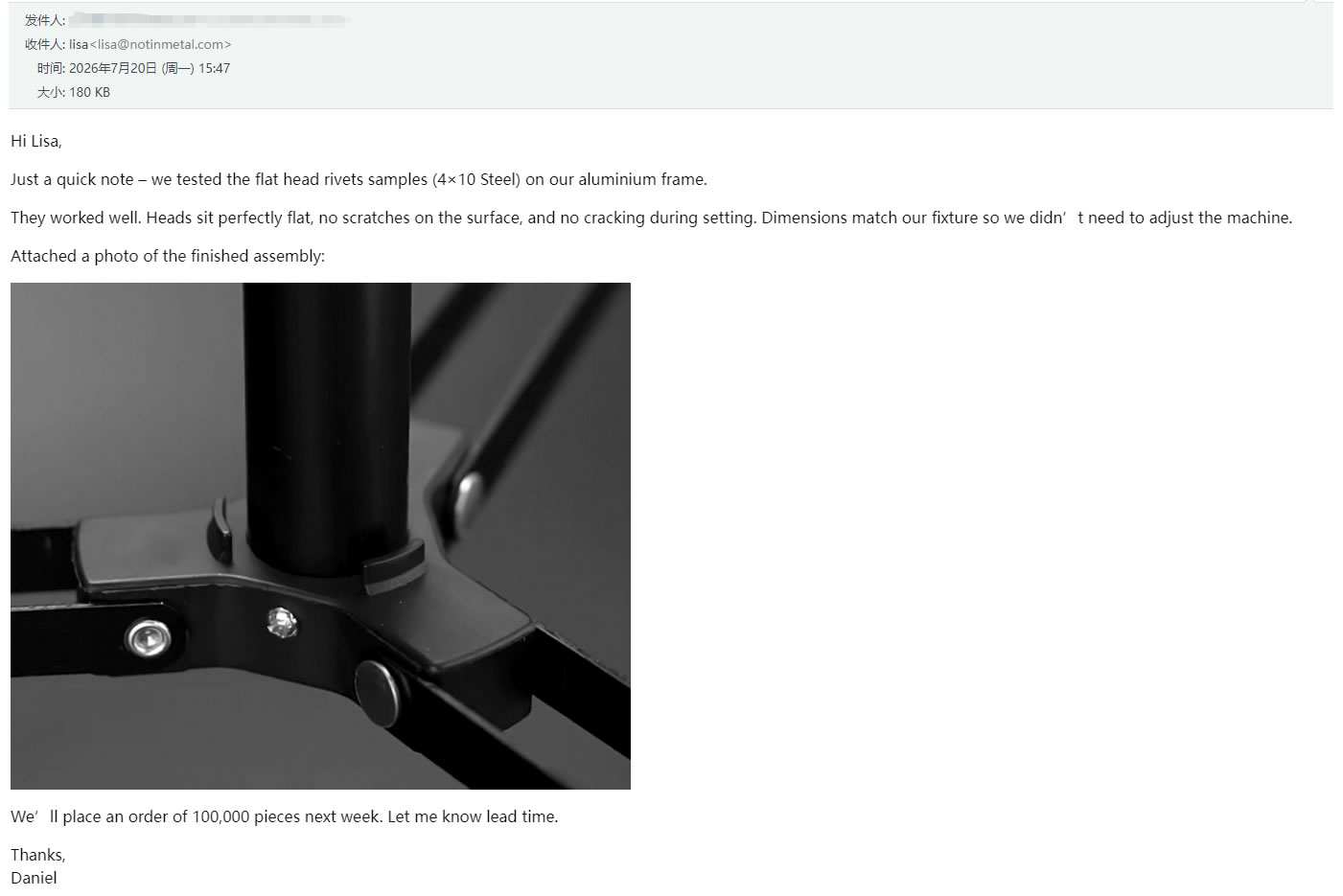
What Our Customers Say – Real Feedback
Three Questions We Answer Often
Q: "Can I get samples before ordering production quantities?"
A: Yes – samples are free for standard specifications. You only pay shipping. For custom sizes, contact our sales team for sample cost and lead time.
Q: "Can two piece rivets be installed with a hand tool, or do I need a press?"
A: Both work. For low volumes (under 100 pieces), a hand‑operated rivet squeezer or a hammer with a setting tool works fine. For production volumes, we recommend an arbor press or pneumatic press – consistent force, faster cycles, less operator fatigue. If you are not sure which tool suits your application, send us a sample of your assembly. We will recommend the right installation method and can even supply matched setting tools.
Q: "What is the difference between two piece rivets and blind rivets?"
A: Two piece rivets require access to both sides of the assembly. Blind rivets (pop rivets) can be installed from one side only. The trade‑off is appearance – two piece rivets give you a clean head on both surfaces; blind rivets always have an exposed breakstem on one side. If you have access to both sides and appearance matters, two piece rivets are the better choice. If you only have one‑side access, we offer blind rivets in our product line.
Hot Tags: Two Piece Rivets,Male and Female Rivets,China Two Piece Rivets
Related Categories
Send Inquiry
Please feel free to fill your inquiry in the form below. We will reply you in 24 hours.



X
We use cookies to offer you a better browsing experience, analyze site traffic and personalize content. By using this site, you agree to our use of cookies.
Privacy Policy