
Products
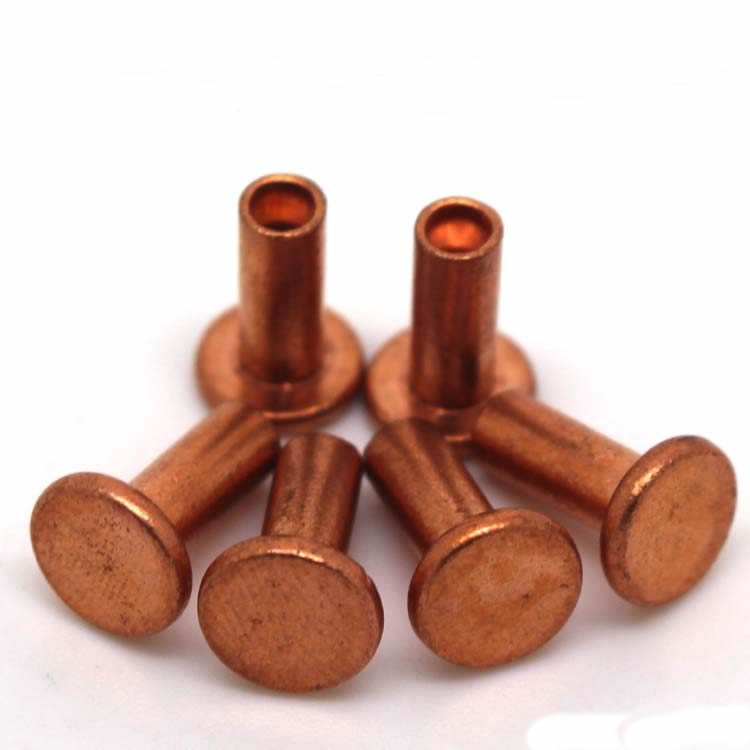
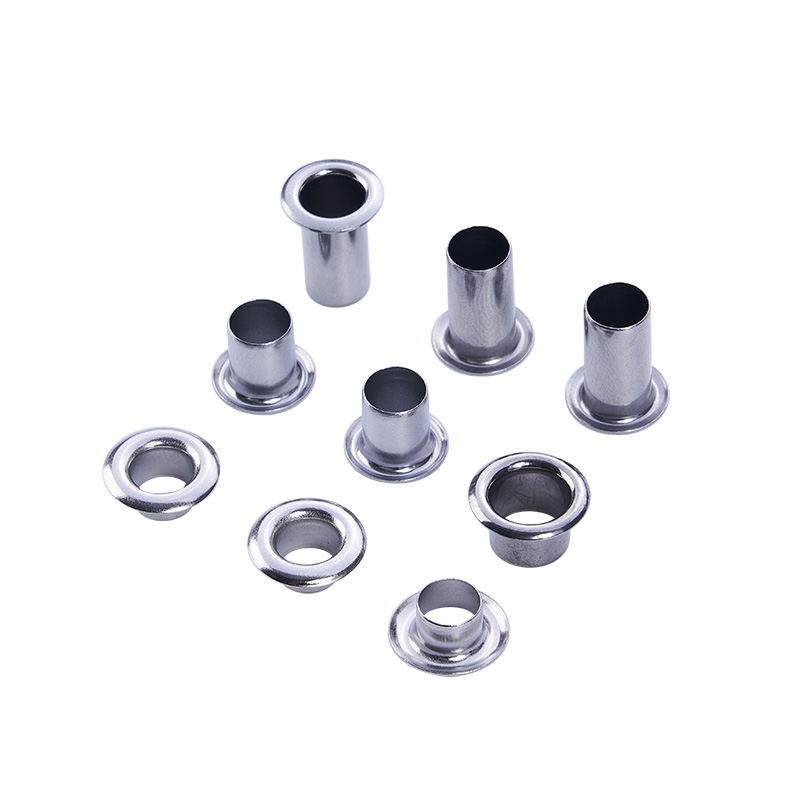
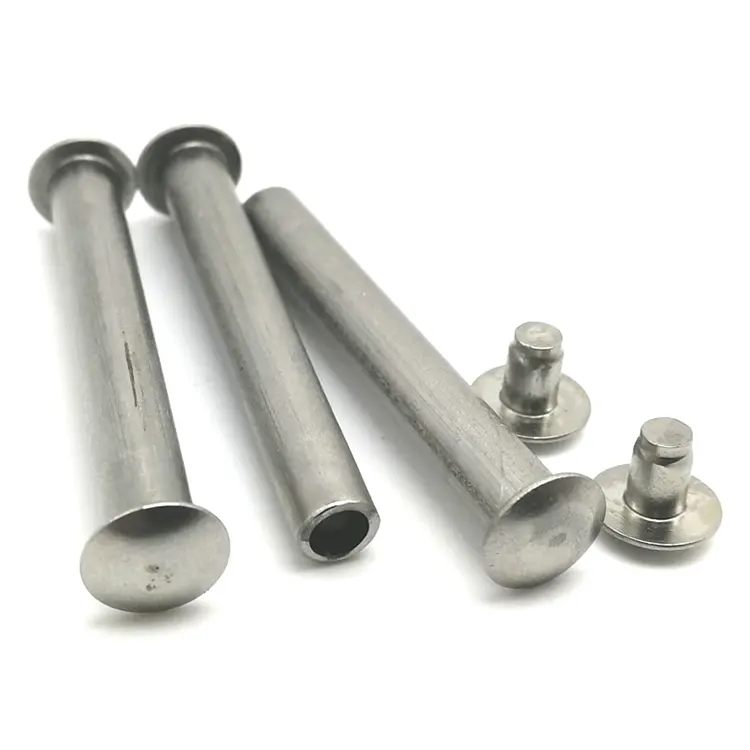
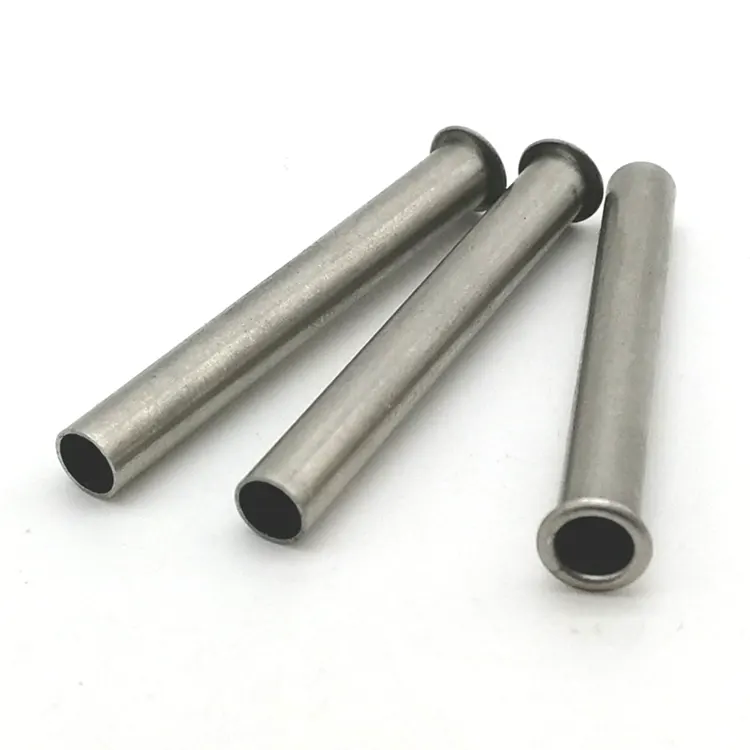
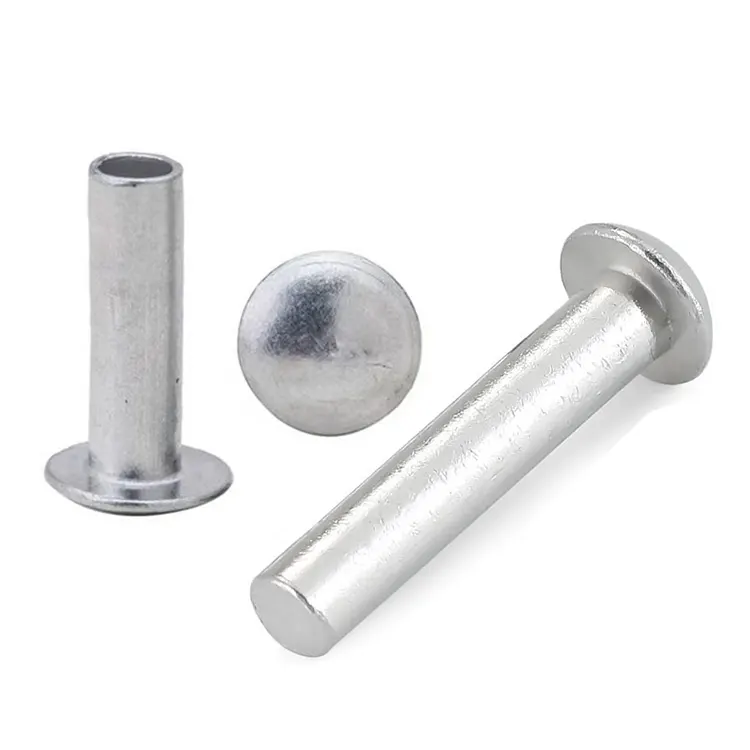
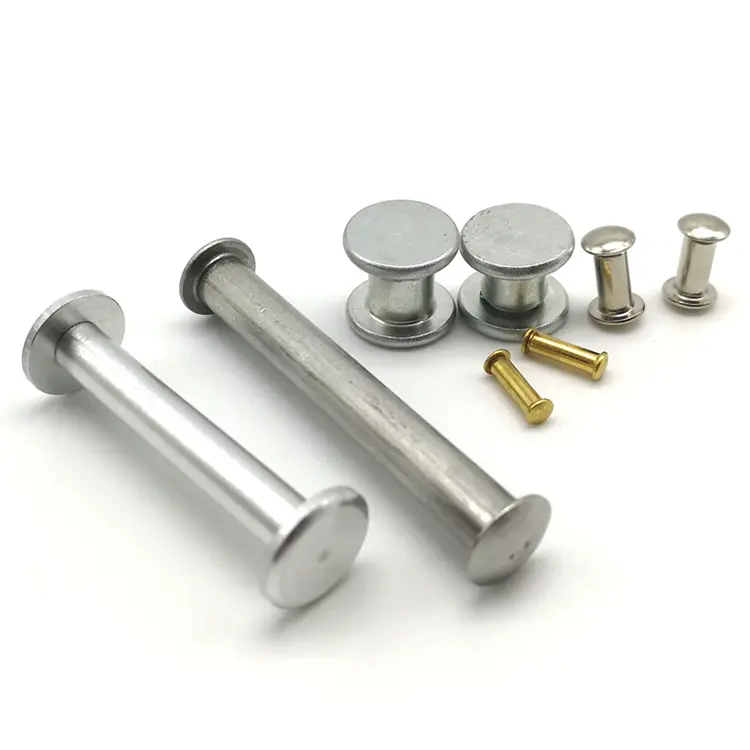
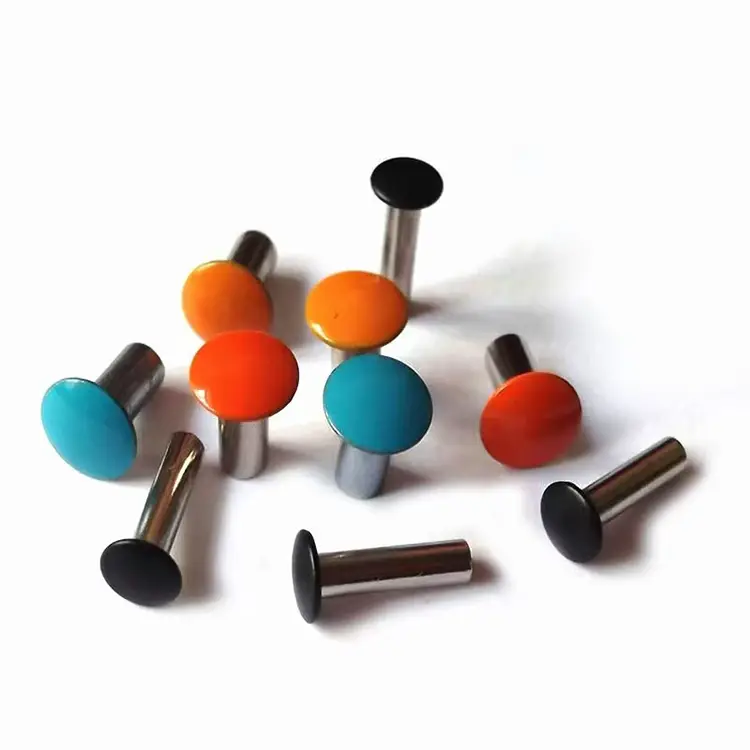
Aluminum Round Head Rivets
Aluminum round head rivets are widely used in various fields due to their lightweight, high strength, corrosion resistance, and excellent connection properties. Nuote Metals is a Chinese manufacturer specializing in the production of aluminum round head rivets. Our rivets are exported worldwide, and we welcome customers to visit us for inquiries.
Send Inquiry
Product Description
When Your Joint Moves, Weight Still Matters
Some joints are static. They sit in a panel, never vibrate, never flex—and a flat head rivet works perfectly. But put that same joint on an aircraft interior panel, an automotive bracket, or a portable generator housing, and the rules change. Vibration loosens fasteners. Impact cracks heads. And every extra gram of steel multiplies across hundreds of rivets.
Aluminum Round Head Rivets from Nuote Metals are engineered for this exact scenario: dynamic joints where weight is critical but reliability cannot be compromised. The domed head absorbs shock and resists vibration loosening. The aluminum body cuts weight by 65% compared to steel. And the natural oxide layer means no plating is needed for indoor service.
This is not a general-purpose aluminum rivet. It is a fastener shaped for movement.
The Engineering Problem – Vibration Kills Standard Rivets
When a joint vibrates, the clamping force that holds it together slowly decreases. The rivet shank elongates, the head loosens, and the joint fails—often without visible warning. Flat head rivets are especially vulnerable because they have less material mass over the shank and no geometric feature to resist loosening.
Round head geometry changes the physics:
- Dome acts as a shock absorber – impact energy spreads across the curved surface instead of concentrating at the head-shank junction.
- 25–30% more material mass over the shank compared to flat head – higher pull-out resistance.
- Mechanical interlock – when properly set, the domed shop head creates a lock that resists vibration loosening.
- Lower stress concentration – the curved profile avoids the sharp corners where cracks initiate.
Field data: In vibration tests (10–2000 Hz, 10g), our aluminum round head rivets maintain clamping force 2.5× longer than flat head equivalents of the same alloy and diameter.
Technical Specifications
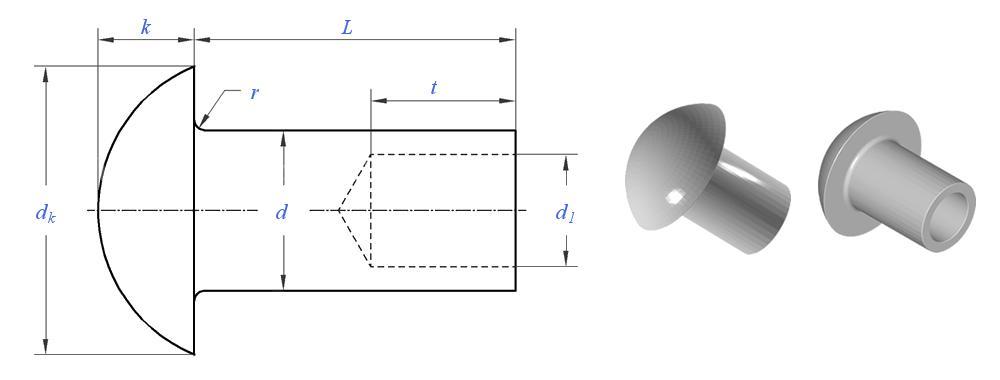
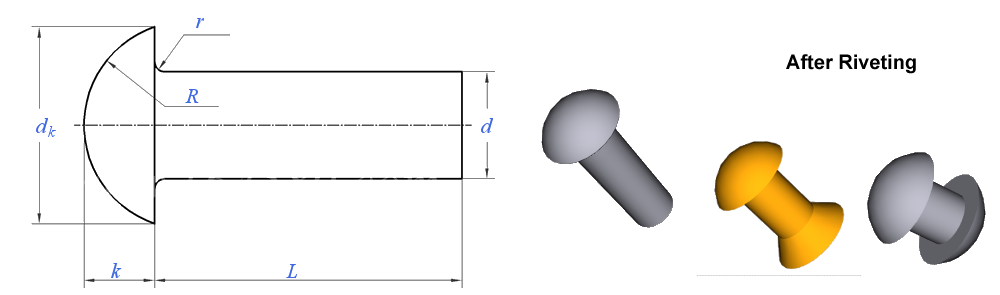
Manufactured to DIN 660 and DIN 124 equivalents. Custom sizes available.
| Parameter | Value / Range | Test Standard / Tolerance |
|---|---|---|
| Shank Diameter (d) | 1.5 – 12 mm | ±0.05mm (≤6mm) |
| Head Diameter (dk) | 1.6×d to 1.8×d | ±0.15mm |
| Head Height (k) | 0.6×d to 0.7×d | ±0.1mm |
| Length (L) | 3 – 50 mm | ±0.3mm |
| Tensile Strength | 110 – 310 MPa (alloy dependent) | ASTM B316 |
| Shear Strength | 70 – 190 MPa | ASTM F606 |
| Vibration Resistance | 2.5× longer than flat head | Internal vibration test |
| Density | 2.7 g/cm³ | – |
| Standards | DIN 660, DIN 124, ISO 1051 | Custom per drawing |
Alloys for dynamic joints:
5052: Best corrosion resistance and fatigue life. Ideal for marine and outdoor vibrating equipment.
6061-T6: Highest strength (310 MPa). Best for structural brackets and automotive.
1100: Most ductile. Best for applications requiring maximum formability.
Aluminum Round Head vs. Aluminum Flat Head vs. Steel Round Head
This is not a generic material comparison. It is specific to dynamic, weight-sensitive joints.
Aluminum Round Head Rivets: Best for vibrating assemblies where weight matters – aircraft interiors, automotive brackets, portable equipment. Dome absorbs shock; aluminum cuts weight by 65%.
Aluminum Flat Head Rivets: Best for static, low-profile assemblies – electronics enclosures, signage, HVAC panels. Lower profile but lower vibration resistance.
Steel Round Head Rivets: Best for maximum strength and shock resistance where weight is not a concern – heavy machinery, rail components, structural steel.
The deciding factor: If the joint moves and you care about weight, choose aluminum round head. If it moves but weight is irrelevant, choose steel. If it doesn't move, choose flat head.
Solid vs. Semi-Tubular – A Vibration-Specific Choice
For vibrating joints, the choice between solid and semi-tubular affects long-term reliability.
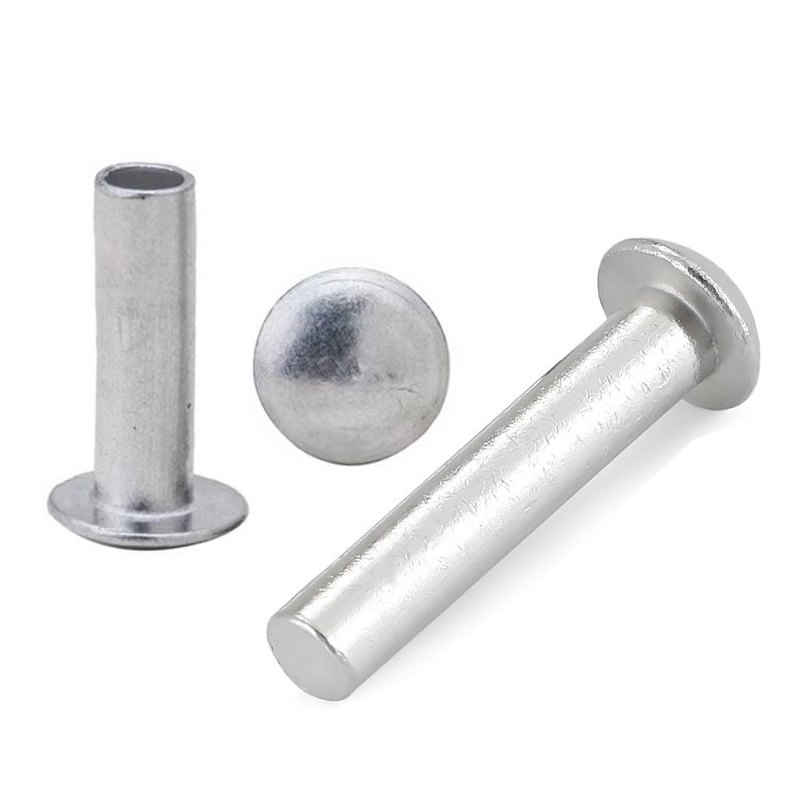
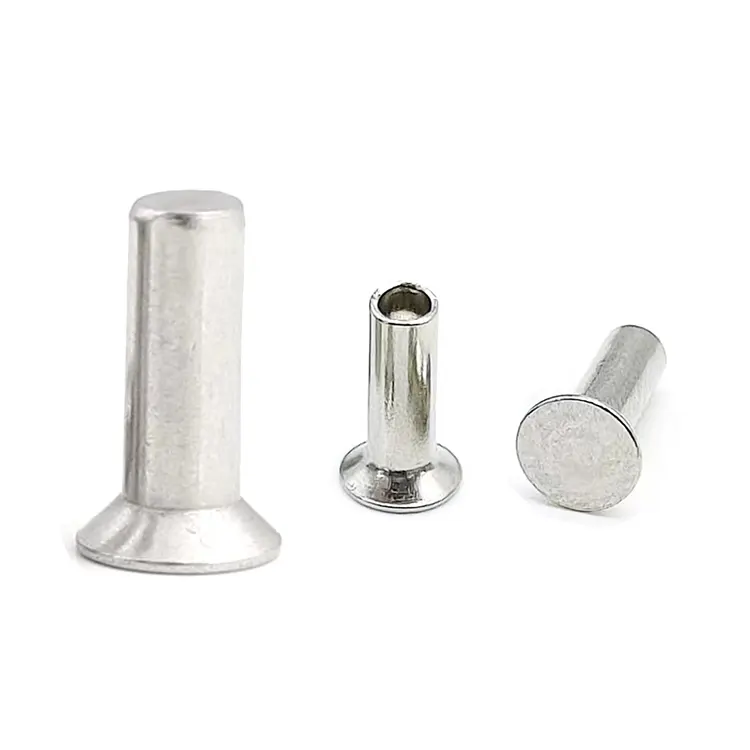
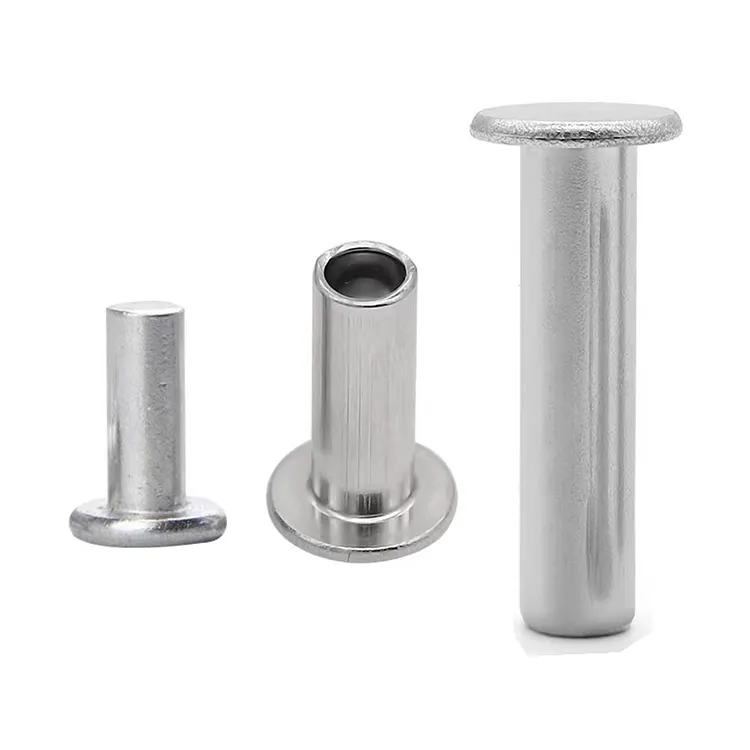
Solid aluminum rivets create a full, strong shop head that resists loosening better under constant vibration. The fully filled shank provides maximum pull-out resistance and a more consistent mechanical interlock. They are the better choice for critical dynamic joints—automotive brackets, aircraft interior fittings, and equipment mounts.
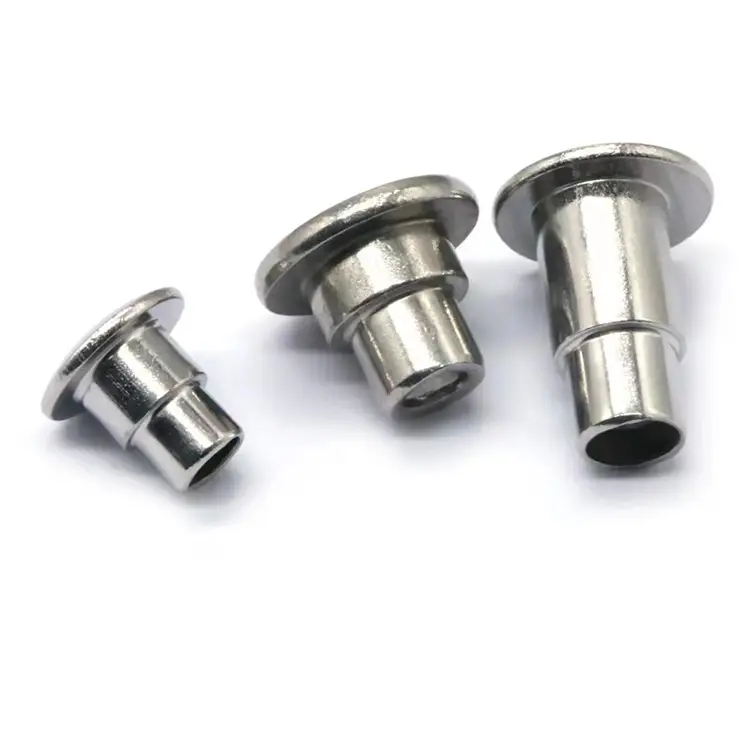
Semi-Tubular aluminum rivets set with 50–60% less force and are faster on production lines. However, the rolled tip creates a slightly thinner shop head, which offers somewhat less resistance to long-term vibration loosening. They are suitable for lighter-duty dynamic applications—portable electronics, lightweight enclosures, and low-stress brackets.
Our recommendation: For any joint that experiences constant vibration or periodic shock, choose solid. The small extra cost is justified by significantly longer joint life. For light-duty or high-volume assemblies where vibration is mild, semi-tubular is acceptable.
Galvanic Corrosion – The Hidden Risk in Dynamic Aluminum Joints
Vibration and moisture together accelerate galvanic corrosion. When aluminum contacts steel, copper, or brass in a wet or humid environment, the aluminum becomes the anode and corrodes—often at the joint interface where it is hardest to detect. Vibration makes it worse by repeatedly exposing fresh aluminum to the electrolyte.
How to prevent galvanic corrosion in dynamic aluminum joints:
- Isolate with a barrier – use a nylon washer, isolation tape, or anodized finish between aluminum and dissimilar metals.
- Choose the right finish – anodized or chromate conversion coating reduces galvanic potential. For outdoor or marine use, anodized 5052 is the best choice.
- Avoid direct copper contact – copper is especially aggressive toward aluminum in wet environments. If you must join aluminum to copper, use a bimetallic transition washer.
- Seal the joint – a bead of sealant around the rivet head prevents moisture ingress.
Nuote Metals can supply anodized or chromate-finished aluminum rivets and advise on the best isolation method for your specific material combination.
How Nuote Metals Engineers Rivets for Dynamic Loads
Aluminum is softer than steel and work-hardens differently. Forming a round head that survives vibration requires more than standard tooling.
Tooling designed for aluminum flow:
Round heads in aluminum are prone to cracking at the head-shank junction if the fillet radius is too sharp. We use a minimum radius of 0.5×d and polish our dies to remove micro-scratches. Multi-stage progressive forming—three to four strokes—lets the aluminum flow gradually without work-hardening.
Vibration testing we perform:
Every batch is tested for:
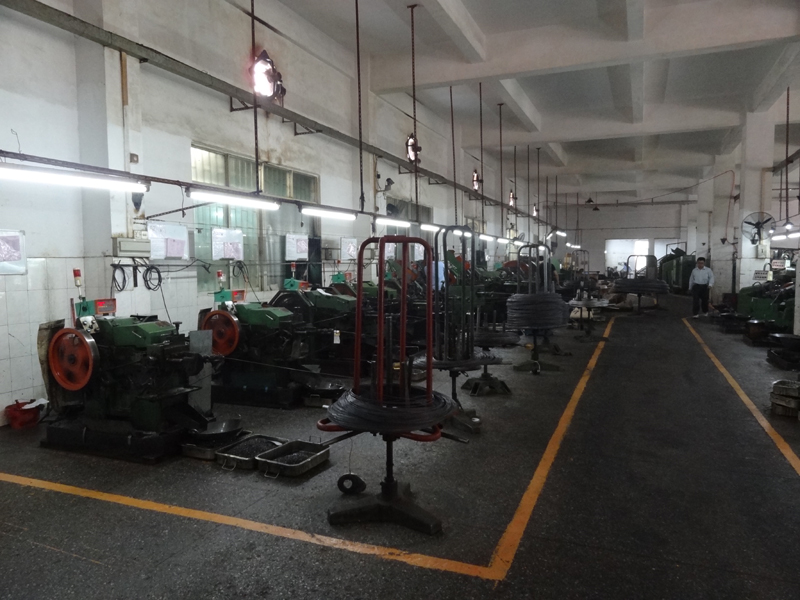
Vibration fatigue: 10–2000 Hz sweep for 8 hours, measuring clamp load retention.
Drop-weight impact: 2kg weight from 300mm, checking for head deformation or cracking.
Head-shank fillet inspection: 20x magnification to verify radius integrity.
Why this matters: An aluminum round head rivet that cracks under vibration fails the entire assembly. Our process control ensures that every rivet absorbs shock rather than transferring it to the joint.
This application-specific engineering is why aerospace, automotive, and portable equipment manufacturers choose Nuote Metals for aluminum round head rivets.
Frequently Asked Questions
Q1: Can Aluminum Round Head Rivets be used in aerospace interiors?
A: Yes—and they are a common choice for non-structural interior components. Aircraft interiors require fasteners that are lightweight, non-magnetic, and resistant to vibration. Our 6061-T6 rivets offer tensile strength up to 310 MPa, which is sufficient for seat frames, overhead bin brackets, and panel attachments. For critical structural joints, aerospace specifications typically call for specific alloys and certifications beyond standard commercial grades—Nuote Metals can supply material certificates and test reports, but we recommend confirming with your engineering authority whether our standard grades meet your airworthiness requirements.
Q2: In a vibrating assembly, should I choose aluminum round head or aluminum flat head rivets?
A: Choose round head for vibrating assemblies. The domed head has more material mass over the shank, which increases pull-out resistance by 25–30% compared to flat head. More importantly, the dome shape absorbs shock and impact energy instead of transferring it to the joint. In vibration tests, round head rivets maintain clamping force significantly longer. Flat head rivets are better for static, low-profile applications where snagging is a concern. If your assembly moves, vibrates, or experiences periodic shock, Nuote Metals recommends aluminum round head rivets—and for maximum vibration resistance, choose solid over semi-tubular.
Q3: How do I prevent galvanic corrosion when using aluminum rivets with steel or copper parts?
A: Galvanic corrosion occurs when aluminum contacts a more noble metal (steel, copper, brass) in the presence of an electrolyte like water. Vibration makes it worse by repeatedly exposing fresh aluminum. To prevent it: (1) Use a barrier layer—a nylon washer, isolation tape, or protective coating. (2) Choose anodized or chromate conversion finishes. (3) Avoid direct aluminum-to-copper connections outdoors unless isolated. For indoor, dry environments, direct contact is usually acceptable. Nuote Metals can supply anodized aluminum round head rivets and advise on the best isolation method for your specific material combination and environment.
Hot Tags: Aluminum Round Head Rivets,China Aluminium Rivets Suppler,Aluminium Rivets Manufacturer
Related Categories
Send Inquiry
Please feel free to fill your inquiry in the form below. We will reply you in 24 hours.



X
We use cookies to offer you a better browsing experience, analyze site traffic and personalize content. By using this site, you agree to our use of cookies.
Privacy Policy