
Products
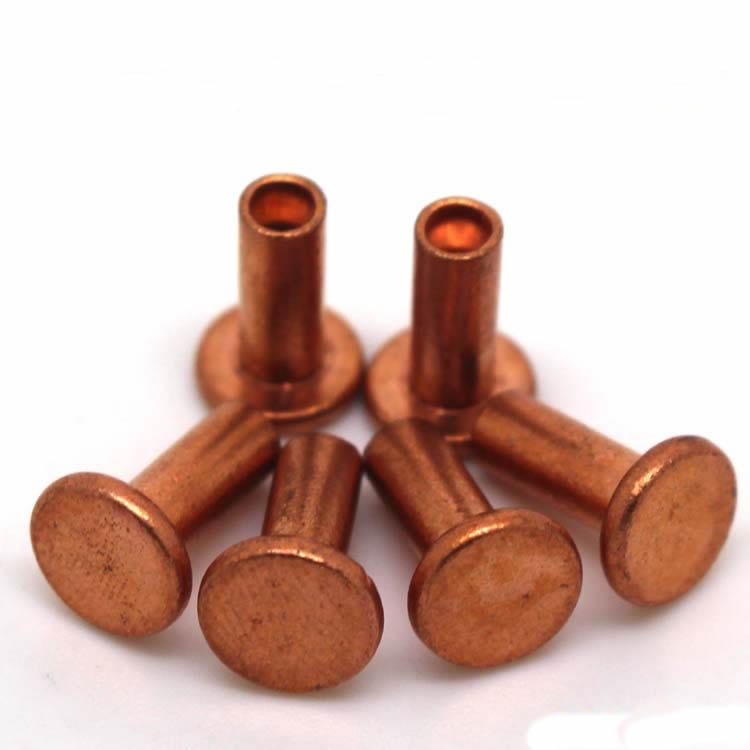
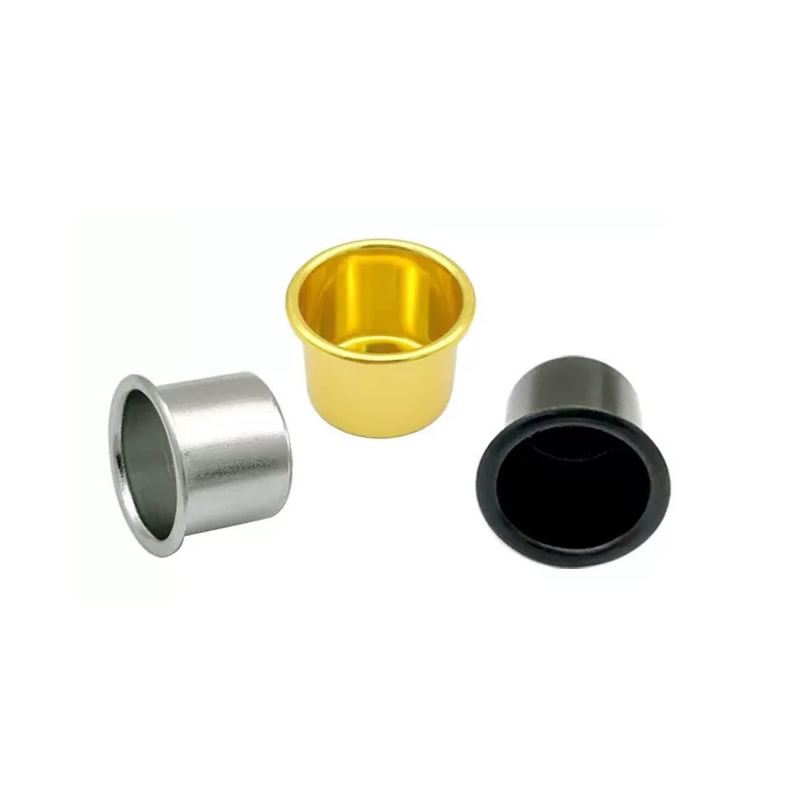
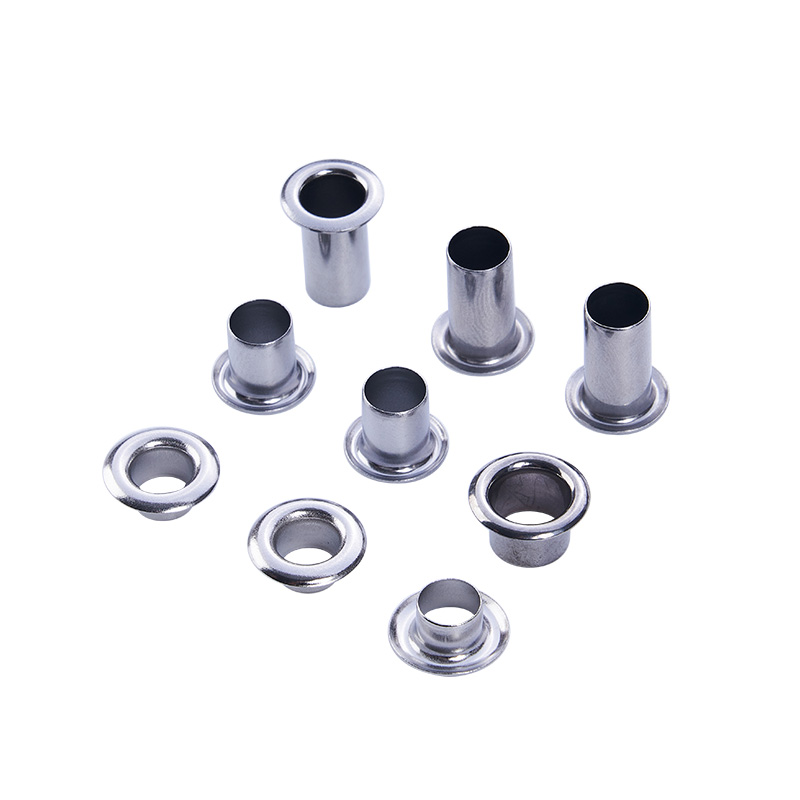
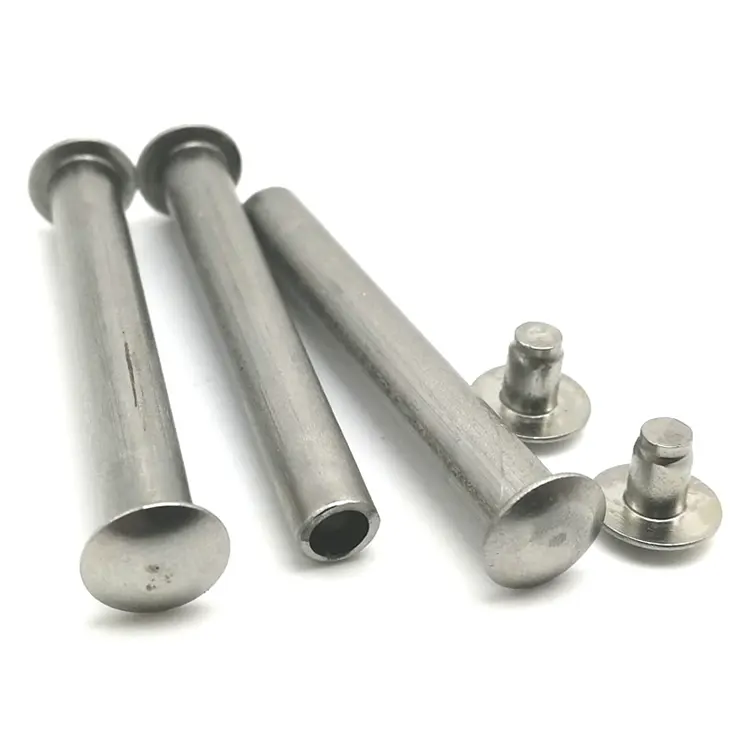
Eyelet Rivets
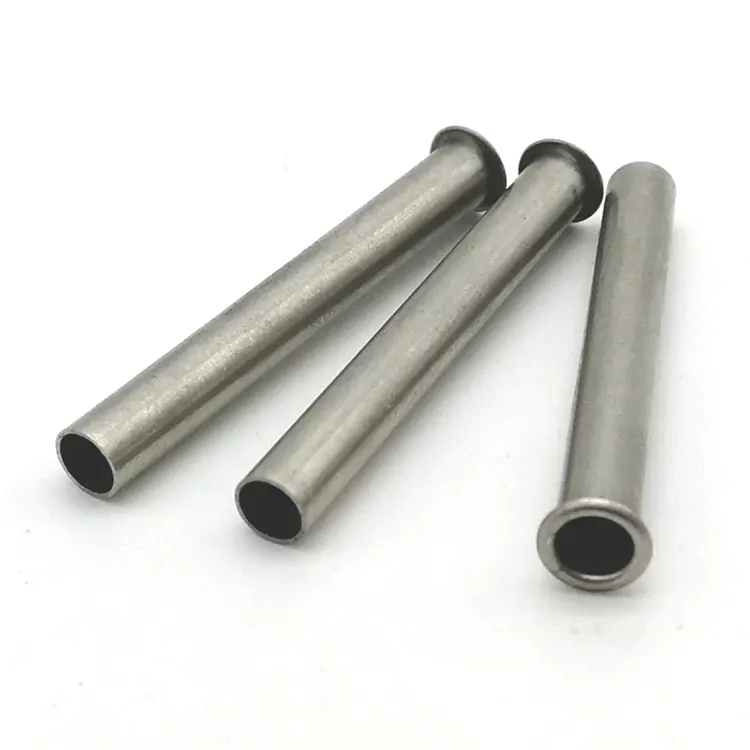
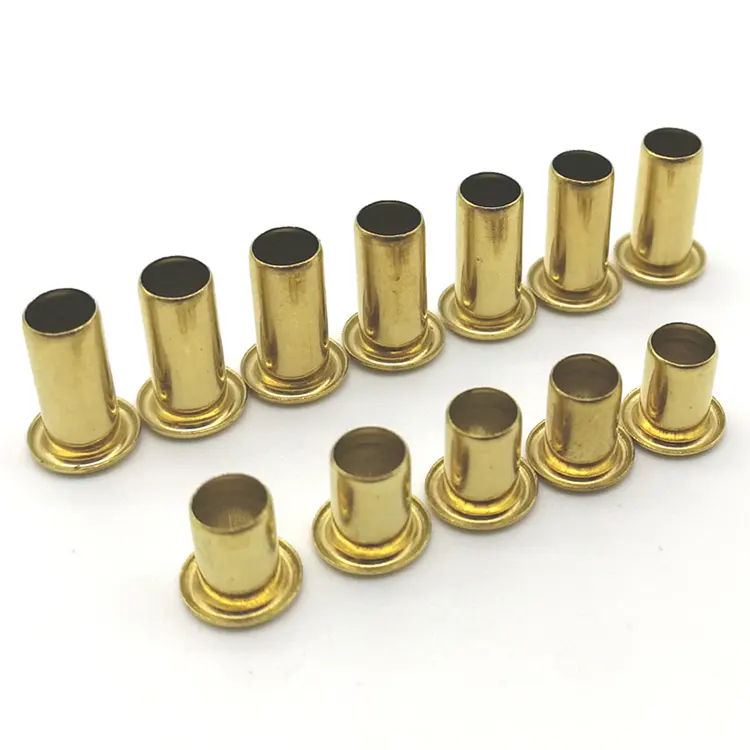
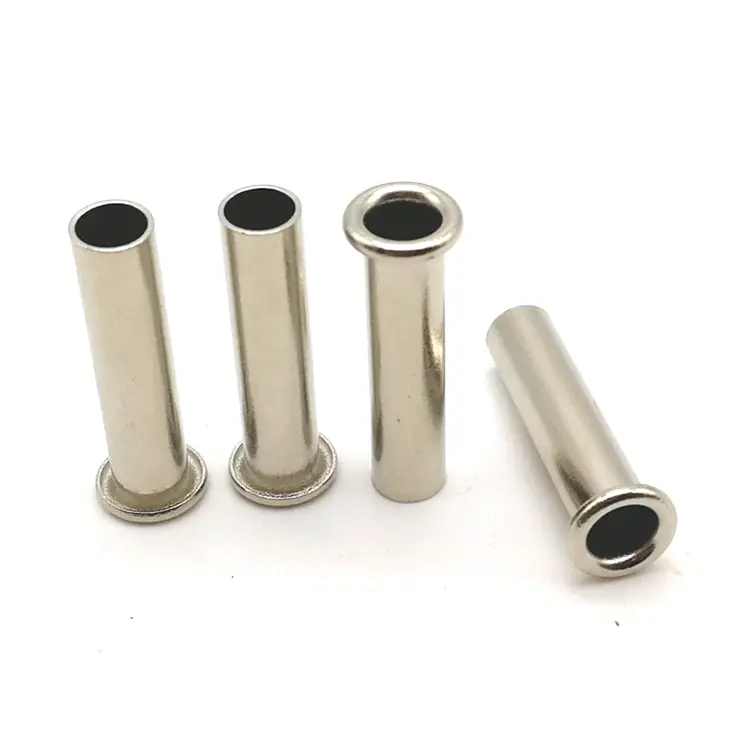
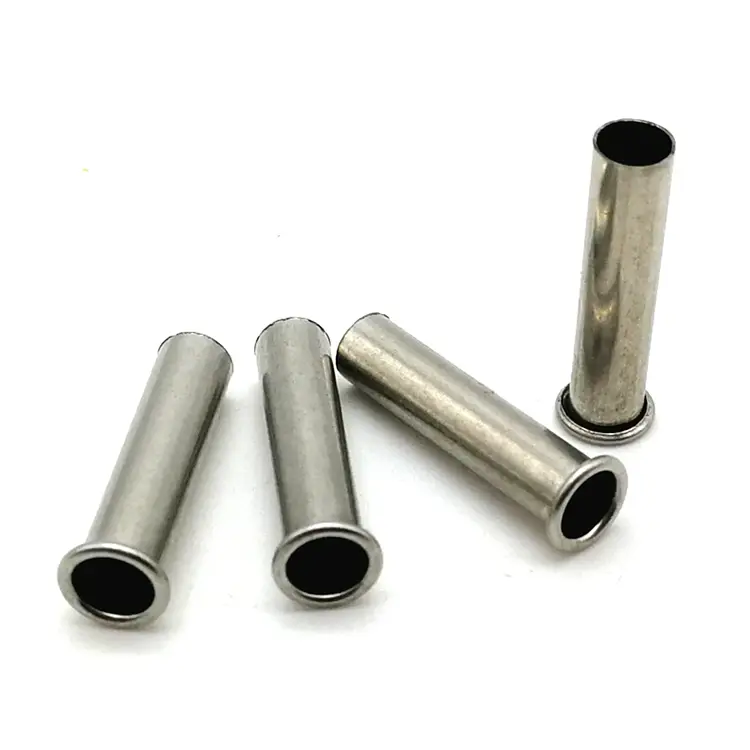
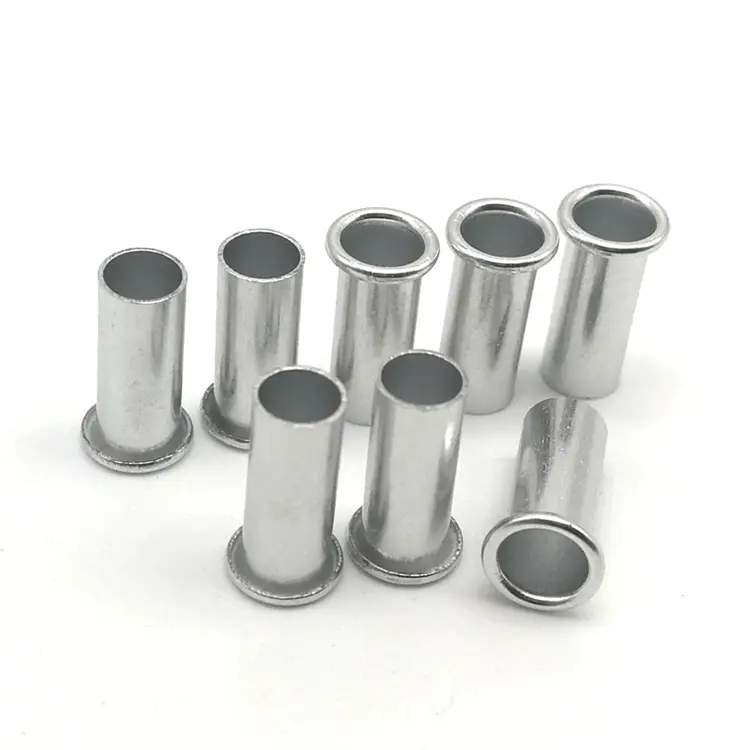
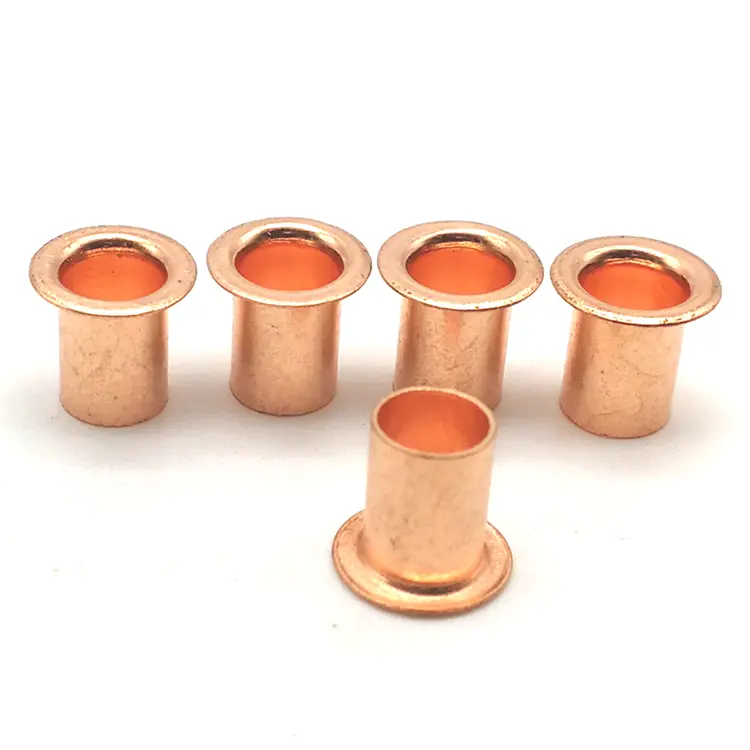
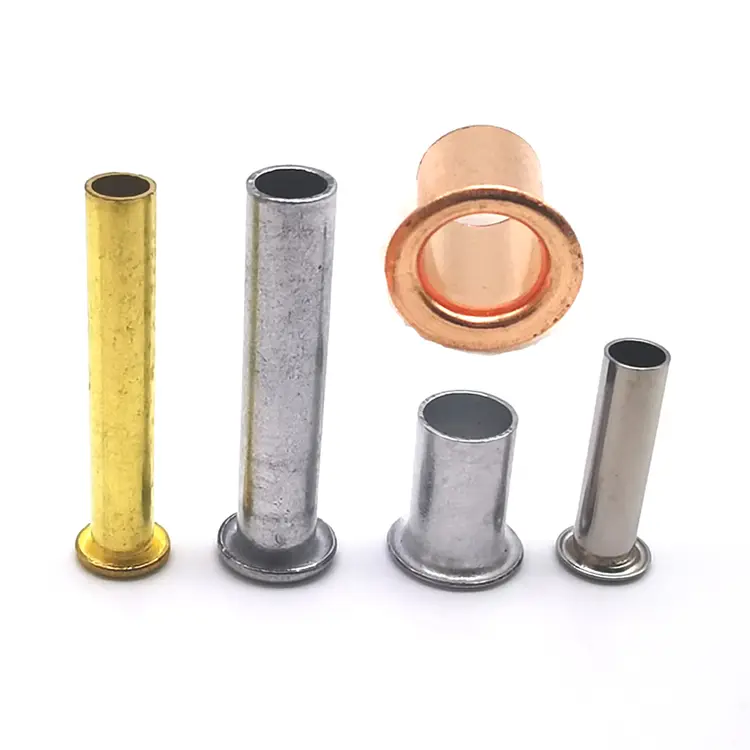
Nuote Metals supplies eyelet rivets – hollow, open-bore fasteners that join materials permanently while allowing cords, laces, wires, or chains to pass through. Also commonly called hollow rivets. Available in 0.8–10mm shank diameters, five materials, and multiple finishes.
Send Inquiry
Product Description
Eyelet rivets – also commonly called hollow rivets – are the fastener that does two jobs at once. They join materials together permanently, like a rivet. And they stay hollow and open, like an eyelet – allowing laces, cords, wires, or chains to pass through.
Same product. Two names. Different customers call it different things. We make the same reliable fastener regardless of what you call it.
If your application needs a fastener that holds materials together and lets something pass through, they are what you are looking for.
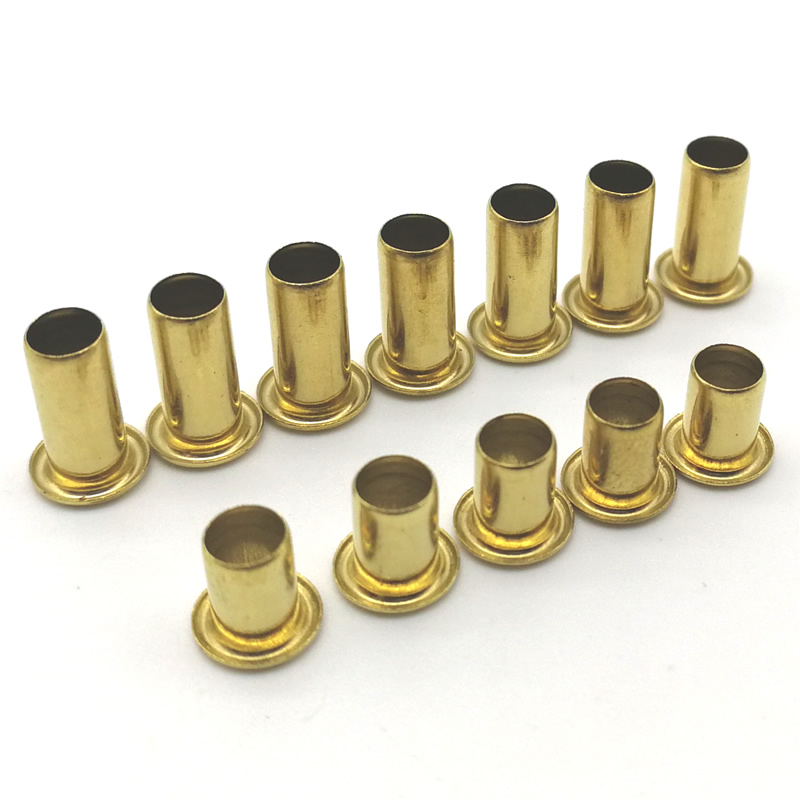
Eyelet Rivet vs. Solid Rivet – The Difference That Matters
| Feature | Eyelet Rivet / Hollow Rivet | Solid Rivet |
|---|---|---|
| Through-hole | Open all the way through | Solid – no passage |
| Purpose | Join materials + allow passage of cord/wire | Join materials only |
| Setting force | Low (15–20% of solid) | High (100%) |
| Best for | Lacing, wiring, pass-through applications | Structural, load-bearing, maximum strength |
Eyelet Rivet vs. Grommet – Another Common Confusion
They are sometimes confused with grommets. The difference:
| Feature | Eyelet Rivet / Hollow Rivet | Grommet |
|---|---|---|
| Pieces | Single-piece | Two-piece (ring + washer) |
| Permanence | Permanent | Can be removable |
| Best for | Permanent attachments with pass-through | Reinforcing holes for cables, ropes |
One Real Application – Leather Bag Strap Attachment
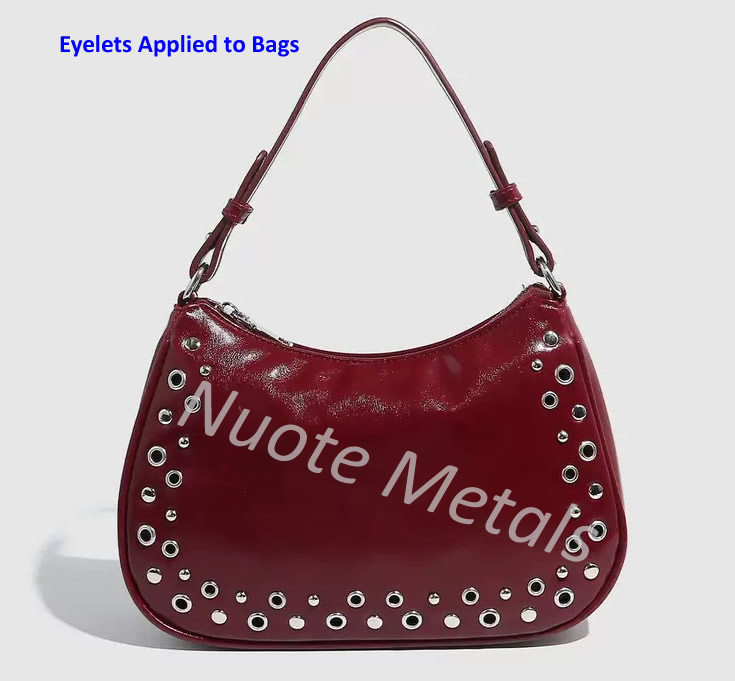
A manufacturer of premium leather bags needed a fastener for adjustable shoulder strap attachment points. The strap needed to pass through the fastener – a solid rivet would block the strap, and a standard eyelet would not provide the structural hold required for a load-bearing attachment. The customer needed the holding power of a rivet with the open passage of an eyelet.
We supplied brass eyelet rivets – 5.0mm shank, 9.0mm round head, 8.0mm barrel length, antique finish. The eyelet rivet joined the leather layers securely while leaving an open bore for the strap to pass through. The antique finish matched the bag's vintage hardware. The customer tested 500 rivets across 250 bags. After 10,000 load cycles, zero failures. They now order our rivets (which they call hollow rivets) in batches of 150,000 pieces annually.
Materials & Finishes – Five Options
| Material | Key Advantage | Best For |
|---|---|---|
| Carbon steel (zinc/nickel-plated) | Lowest cost, good strength | Industrial, high-volume |
| Stainless steel (304/316, passivated) | Permanent corrosion resistance | Outdoor, marine, food |
| Brass (C2680) | Conductivity, decorative, non-magnetic | Leather goods, bags, vintage hardware |
| Copper (C11000) | 100% IACS conductivity, antimicrobial | Electrical, thermal |
| Aluminum (1100/5052/5056) | Lightest weight, non-magnetic | Drones, portable equipment |
Head styles: Round, flat, countersunk.
Finishes: Zinc-plated, nickel-plated, tin-plated, silver-plated, lacquered, antique, passivated, anodized.
How We Make Them
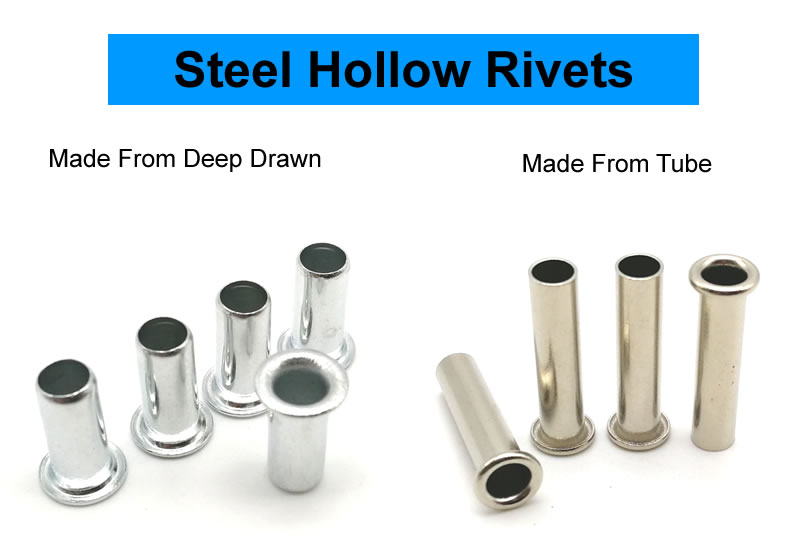
Eyelet rivets are manufactured through two routes, depending on your requirements:
Route 1: Tube-cutting + heading – We start with metal tube stock, cut it to length, and form the head on one end. The hollow bore remains open all the way through.
Route 2: Deep-drawing from sheet – We start with sheet metal and progressively draw it into a seamless, one-piece tube with a flange on one end.
Which route is right for you? Tube-cutting is faster for larger diameters and thicker walls. Deep-drawing is better for thin walls, tight tolerances, and seamless construction. We recommend the optimal method based on your drawing – at no charge.
Sample lead time: 5–7 days standard; custom tooling: 15–20 days.
How We Make Sure Every Eyelet Rivet Works in Your Assembly
Before any batch of rivets leaves our factory, we verify it on your material – not just on a gauge.
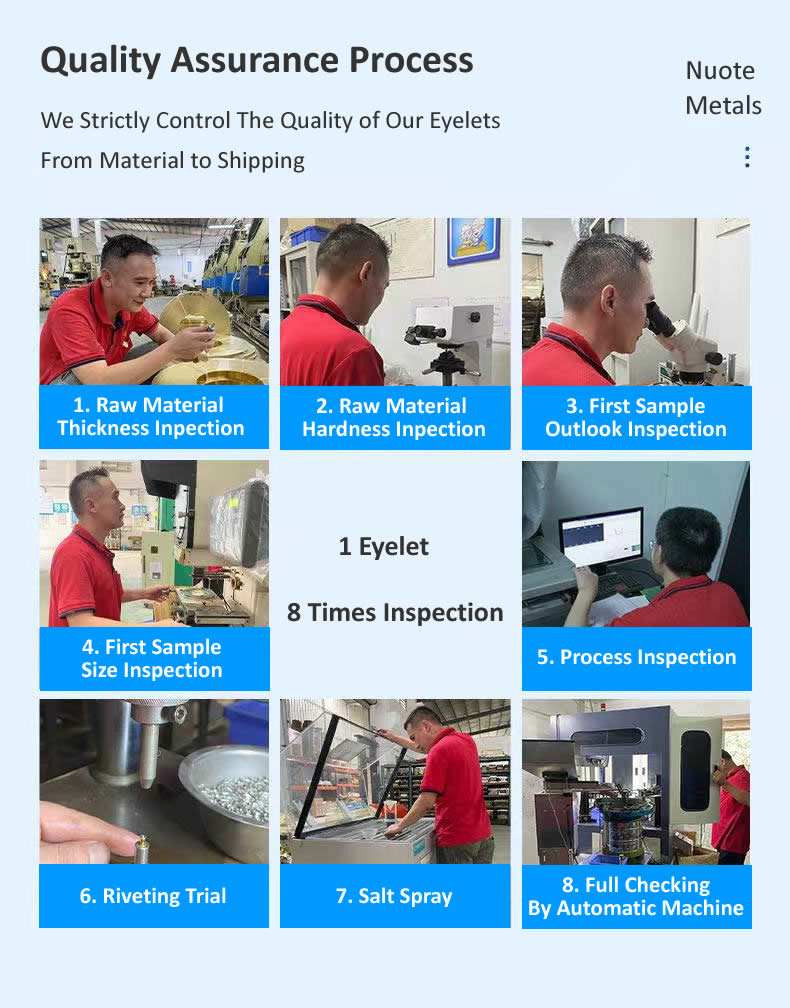
Step 1 – Material verification – Incoming tube or sheet stock is checked for dimensions, wall thickness, and composition. Spectrometer confirms material grade. Out‑of‑spec material does not enter production.
Step 2 – Dimensional check – The first 10 rivets from each tooling setup are measured on an optical comparator. Inner diameter, outer flange, barrel length, and bore openness must match your drawing.
Step 3 – Setting test on your material – Every 2,000 pieces, we set 3 rivets into a sample of your actual material. We check:
- The clinch is tight and symmetrical
- The bore remains open and unobstructed
- No cracks or distortion
Step 4 – Final sorting – Every rivet passes through an optical sorting machine. Rejects are automatically ejected. A random AQL sample is manually verified.
We keep inspection records for five years. If a field issue ever occurs, we can trace the batch and pull the full file.
What Our Customers Say – Real Feedback
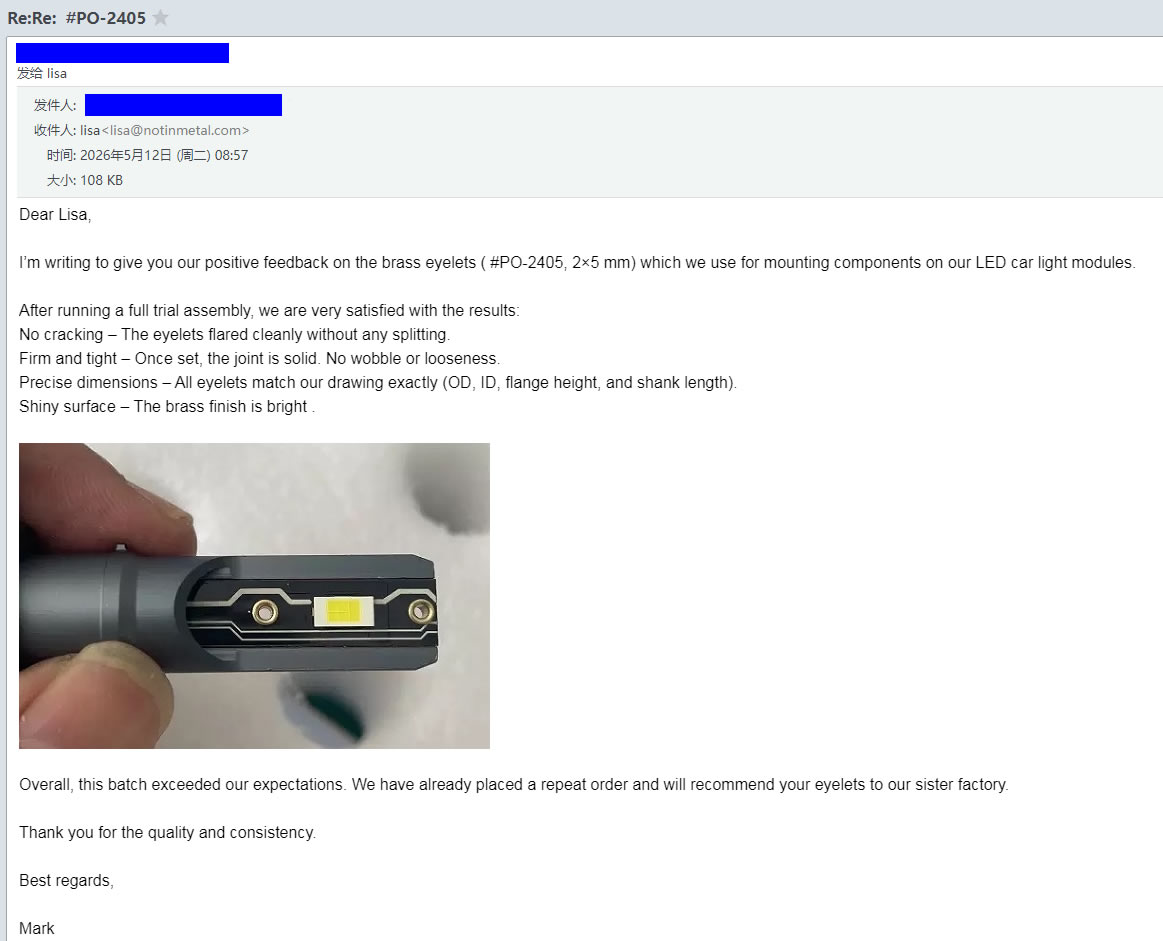
We let our customers speak for us. The images above show real feedback from manufacturers who have used our eyelet rivets in their production lines – from leather goods makers to outdoor gear brands to electrical equipment builders.
They come back to us for the same reasons:
Consistent quality – Every batch meets their dimensional and performance requirements
Reliable delivery – Samples ship in 5–7 days, production on schedule
Responsive support – We answer technical questions and solve problems quickly
Three Questions We Answer Often
Q: "Are eyelet rivets and hollow rivets the same thing?"
A: Yes – they are the same product. Some customers call them eyelet rivets, others call them hollow rivets. Different names, same reliable fastener. We manufacture the same product under both names so you can find us regardless of which term you use.
Q: "What is the maximum cord or wire diameter that can pass through an eyelet rivet?"
A: The pass-through capacity depends on the inner diameter (ID) of the eyelet rivet. As a rule, we recommend the cord/wire diameter be at least 0.5mm smaller than the ID to allow smooth passage without friction or snagging. For example, a 5.0mm ID eyelet rivet can accommodate cords or wires up to 4.5mm diameter. If you need a specific pass-through size, we can match the ID to your requirement – we manufacture custom sizes from 0.8mm to 10mm shank diameter.
Q: "Do I need special setting tools for them, or can I use my existing rivet tooling?"
A: It depends on what you are currently using. If your existing tooling is for semi‑tubular or solid rivets, you will likely need new tools – the setting profile is different because eyelet rivets require the barrel to roll outward evenly without collapsing the bore. If your existing tooling is for hollow rivets, it may work, but we recommend checking the match.
The key requirement is that the setting punch should not contact the inside edge of the bore – it should push the barrel outward from the outside. A concave anvil is recommended to support the head and prevent distortion.
We can supply matched setting tools for our eyelet rivets – punches and anvils designed specifically for your rivet dimensions. Tooling lead time is typically 5–7 days, and we can include it with your sample order so you can test the fit before production.
Hot Tags: Eyelet Rivets Supplier, Industrial Eyelet Rivets, Custom Eyelet Rivets
Related Categories
Send Inquiry
Please feel free to fill your inquiry in the form below. We will reply you in 24 hours.



X
We use cookies to offer you a better browsing experience, analyze site traffic and personalize content. By using this site, you agree to our use of cookies.
Privacy Policy