
Products
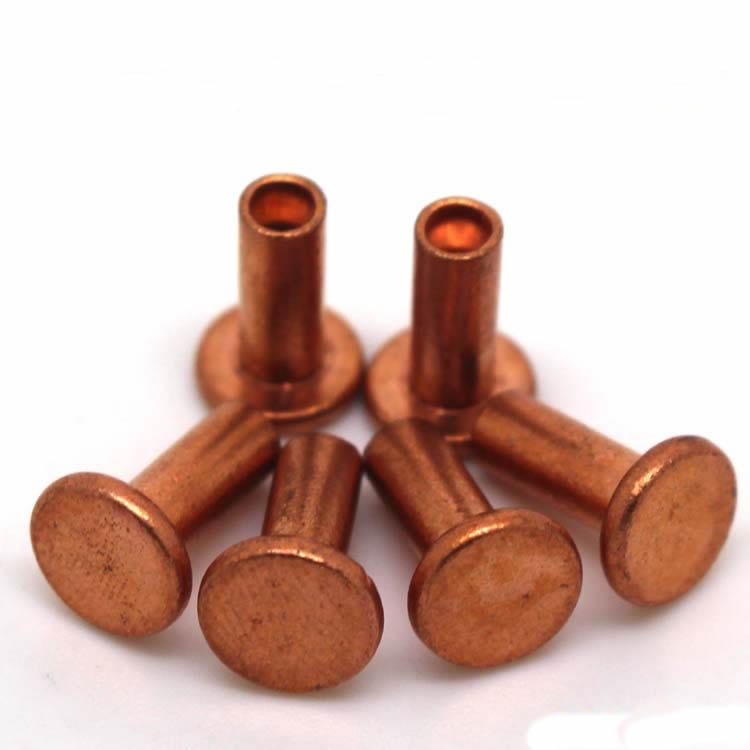
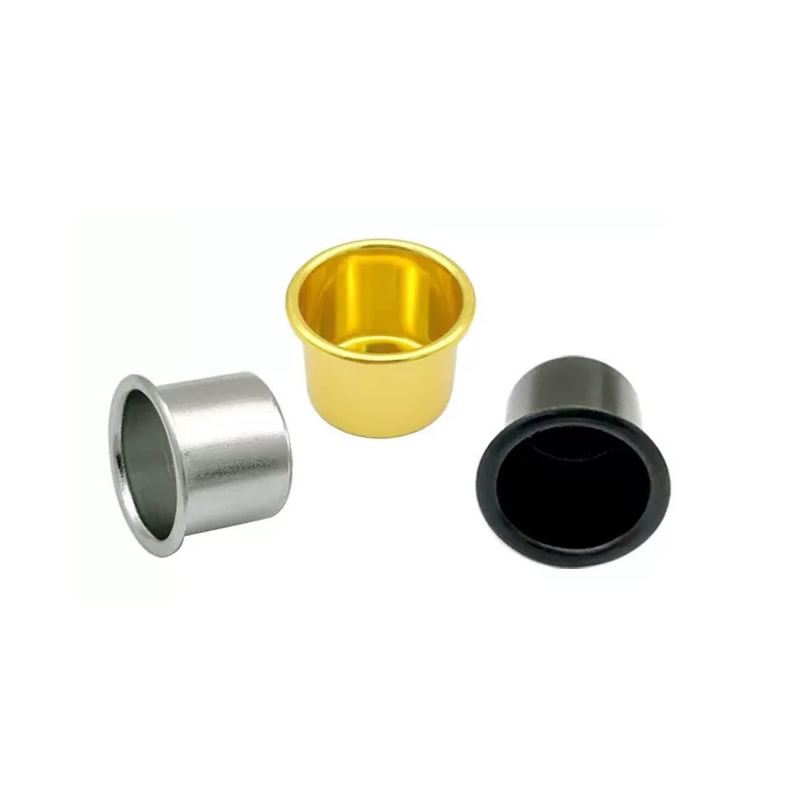
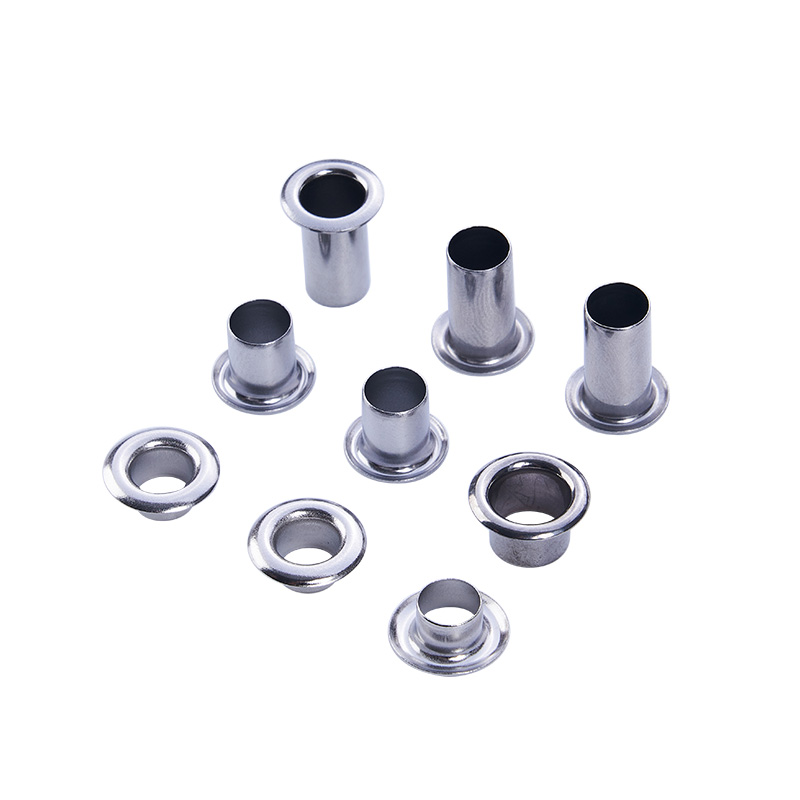
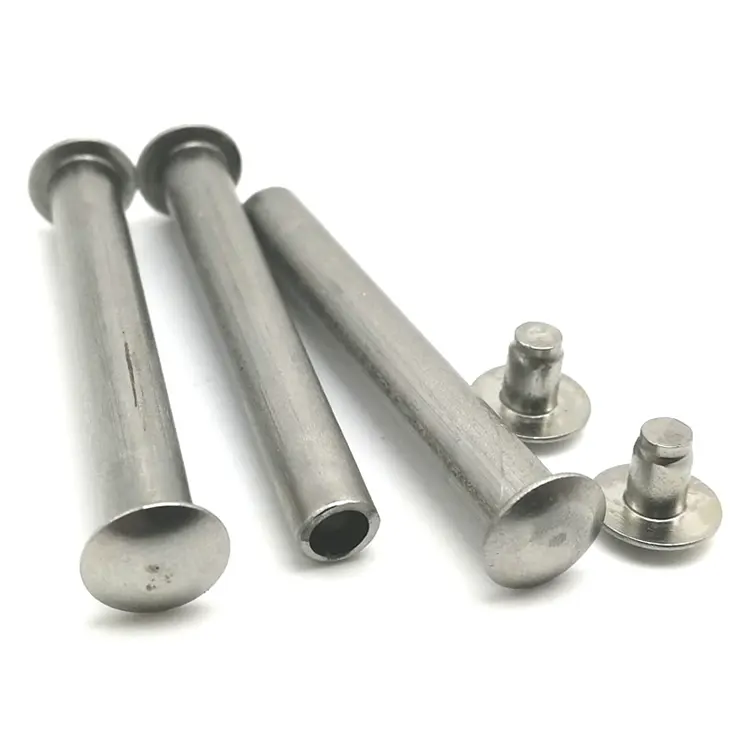
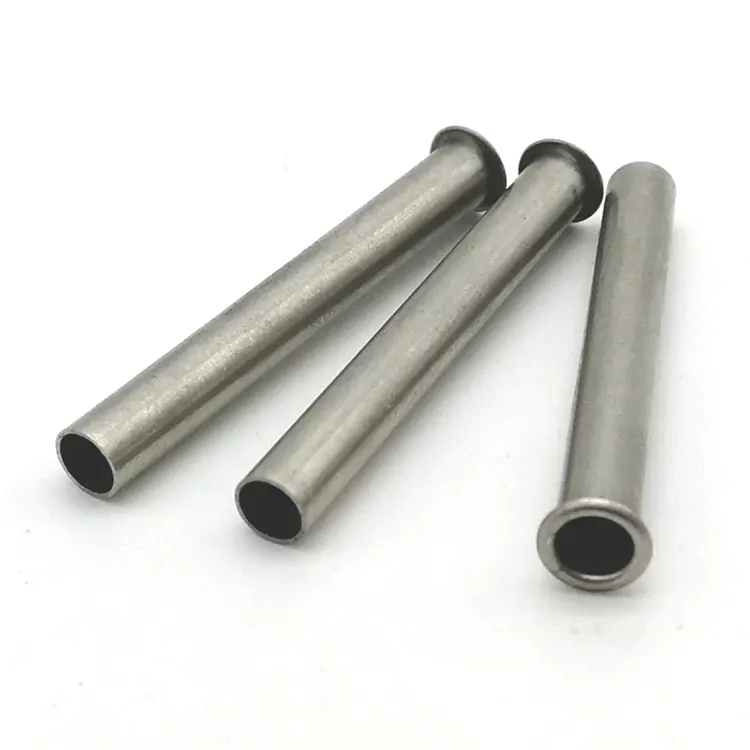
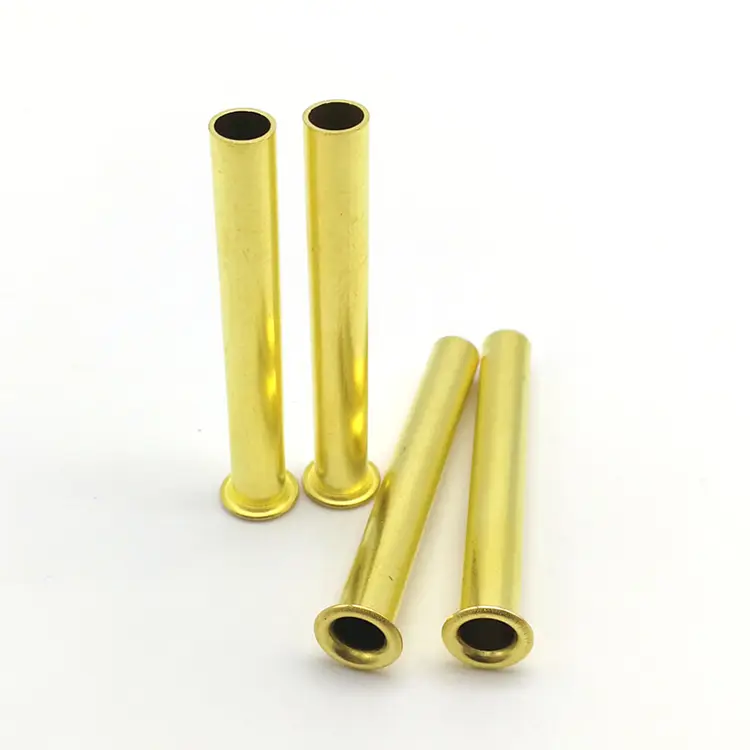
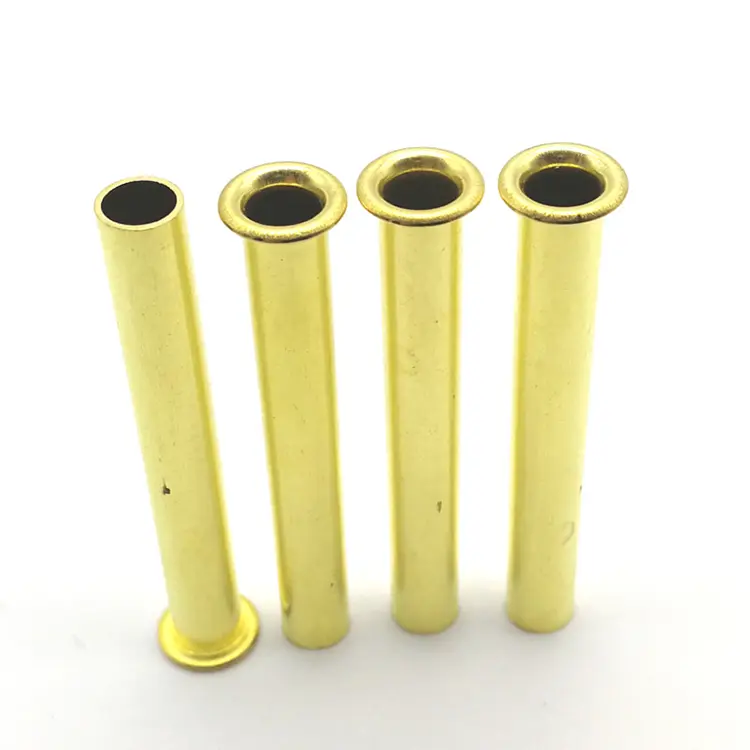
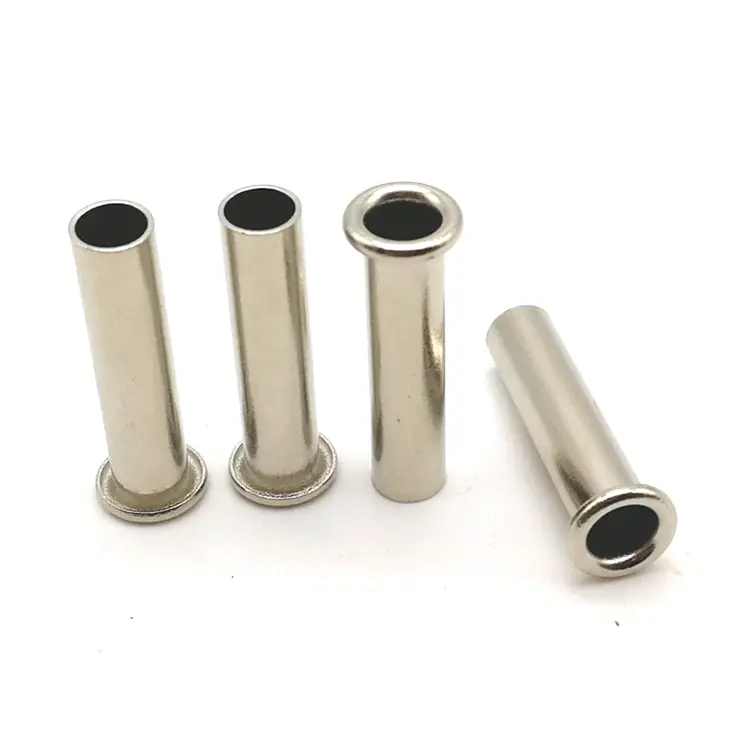
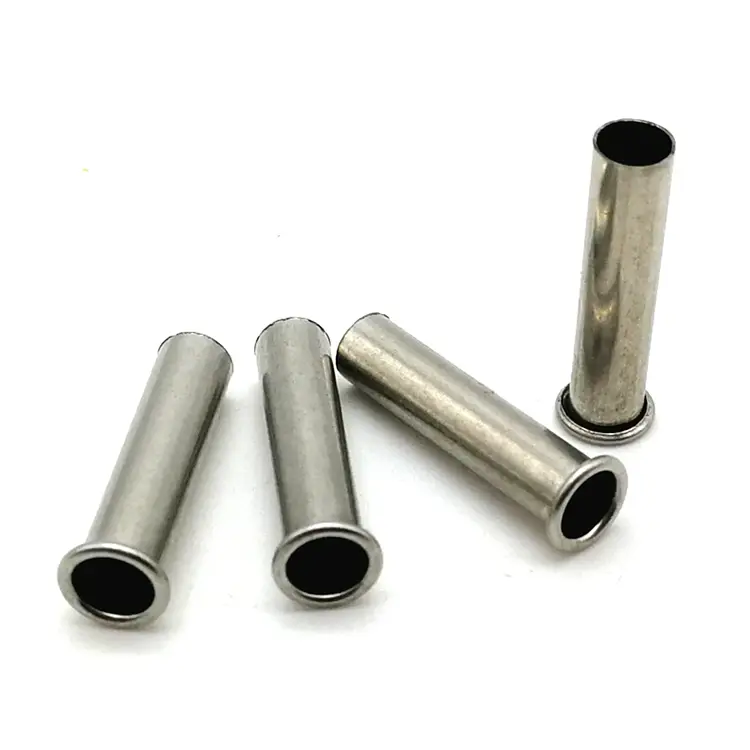
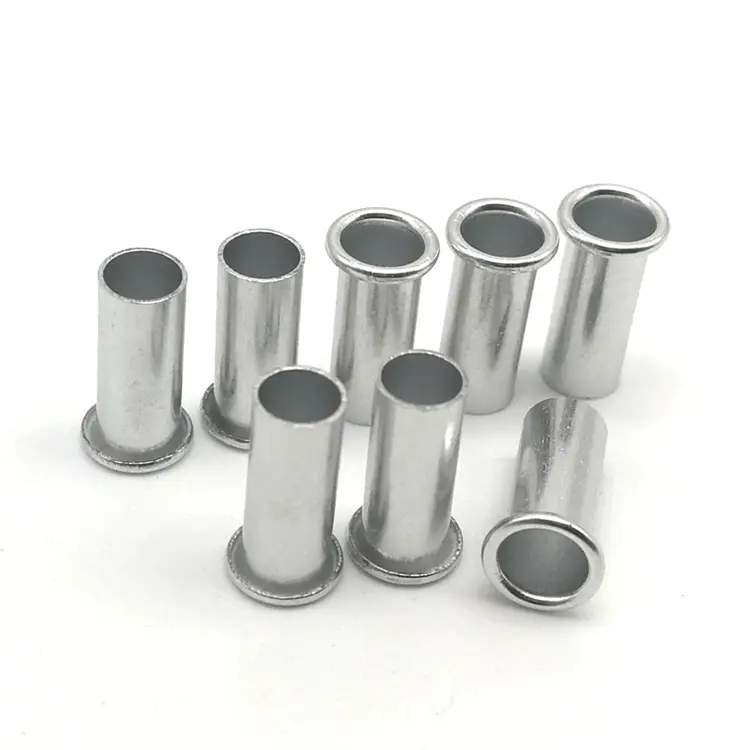
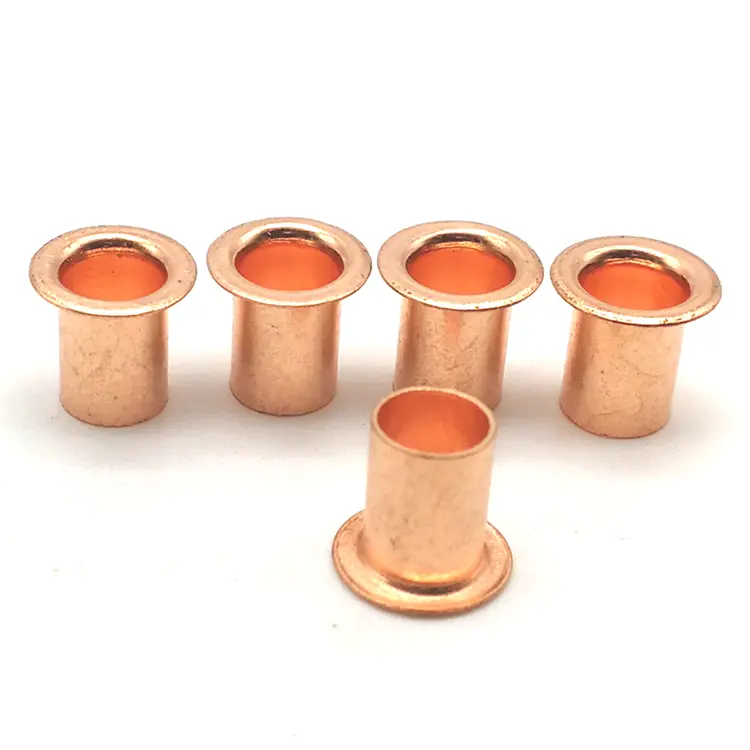
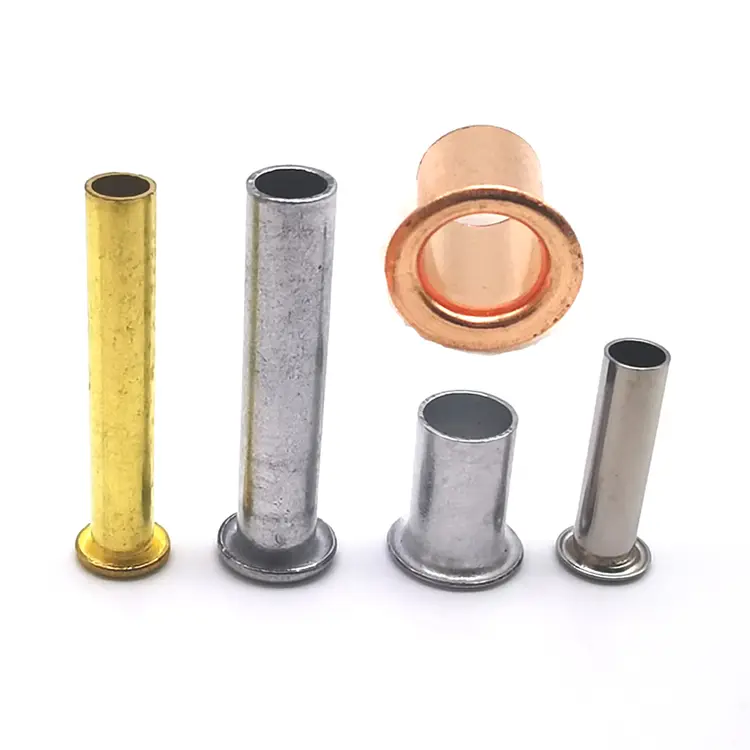
Long Tubular Rivets
Nuote Metals is a 10 year+ working experience of Long Tubular Rivets manufacturer in China, the rivets can be tailor-made with different sizes and shapes, new samples can be ready in 7-10 working days if we have the right size of material in stock.
Send Inquiry
Product Description
What Are Long Tubular Rivets?
Long tubular rivets are fully hollow fasteners manufactured by cutting lengths from metal tube stock and forming a head on one end. The “long” designation refers to the extended barrel length – typically exceeding 4–5 times the shaft diameter, with lengths available up to 100mm or more.
Unlike standard tubular rivets (which typically have lengths up to 20–30mm), long tubular rivets are designed for:
- Thick material stacks – Joining multiple layers of material where a standard rivet cannot reach
- Wiring pass‑through – Running electrical wires or cables through the hollow bore
- Lacing applications – Allowing cords, ropes, or straps to pass through the fastener
- Spacer/bushing functions – Maintaining a fixed distance between components
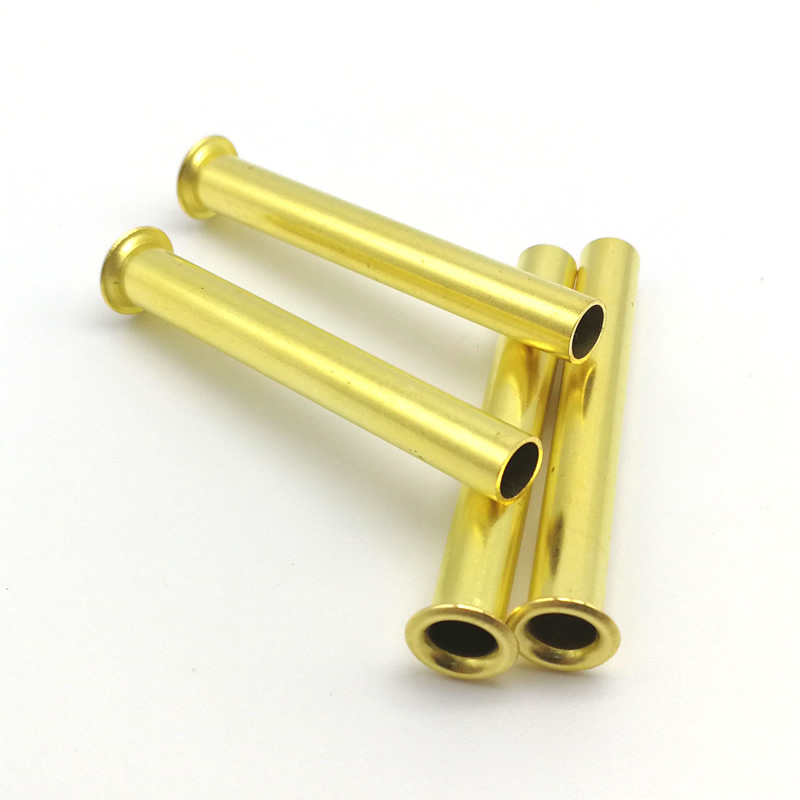
Long vs. Standard Tubular Rivets – Where the Extra Length Matters
| Feature | Long Tubular Rivet | Standard Tubular Rivet |
|---|---|---|
| Barrel length | Extended (up to 100mm) | Standard (typically 2–30mm) |
| Material stack capacity | Thick assemblies (5mm–90mm) | Thin to moderate (1–25mm) |
| Through‑hole | Open all the way through | Open all the way through |
| Setting force | 15–20% of solid rivet | 15–20% of solid rivet |
| Best for | Thick materials, wiring, lacing, spacers | General purpose, thin materials |
| Head styles | Round, flat, countersunk | Round, flat, countersunk |
Manufacturing Process – Cut Tube + Form Head
Long tubular rivets are manufactured by the same tube‑cutting and heading process as standard tubular rivets – but with the extended lengths, precision becomes even more critical.
1. Tube Stock Procurement – Certified tube stock from approved mills – carbon steel, stainless steel, brass, copper, or aluminum. Each batch comes with a mill test certificate and heat number.
2. Incoming Inspection – Tube stock checked for outside diameter (±0.02mm), wall thickness, and material composition. Spectrometer confirms material grade.
3. Tube Cutting – The tube is cut to precise blank length. For long rivets (up to 100mm), straightness and end‑squareness are critical.
4. Heading – The cut tube blank is placed into a heading press. A carbide die forms the head (round, flat, or countersunk) on one end. Polished dies prevent surface marks.
5. Trimming – Flash around the head edge is removed.
6. Tumbling – Micro‑burrs are eliminated.
7. Plating or Coating – Applied as required.
8. Final Inspection – 100% optical sorting. AQL sample manually verified.
Sample lead time: 5–7 days standard; custom tooling: 15–20 days.
Materials and Finishes for Long Tubular Rivets
| Material | Key Characteristics | Best For |
|---|---|---|
| Carbon steel (zinc‑plated) | High strength, cost‑effective | Industrial, high‑volume, cost‑sensitive |
| Stainless steel (304/316) | Permanent corrosion resistance | Outdoor, marine, food equipment |
| Brass (C2680) | Decorative, conductive, non‑magnetic | Leather goods, visible hardware, electronics |
| Copper (C11000) | Highest conductivity, antimicrobial | Electrical, thermal applications |
| Aluminum (5052/5056) | Lightweight, non‑magnetic | Drones, portable equipment, aerospace |
Standard finishes: Zinc‑plated, nickel‑plated, passivated, lacquered, antique, plain.
One Real Application – Automotive Wiring Harness Pass‑Through
A manufacturer of automotive wiring harnesses needed a fastener to route bundles of wires through a thick bulkhead panel. The panel consisted of multiple layers – sheet metal, sound deadening material, and plastic trim – totalling 18mm in thickness. The customer needed a hollow fastener that would:
- Pass wires through the thick panel cleanly
- Protect the wires from sharp metal edges
- Provide a permanent, vibration‑resistant connection
- Not require additional grommets or bushings
We supplied zinc‑plated steel long tubular rivets – 5.0mm shaft, 9.0mm round head, 22.0mm barrel length, yellow zinc finish. The extended barrel passed through the full 18mm material stack with room to flare cleanly on the back side. The hollow bore allowed wiring to pass through the panel without chafing. The round head provided a clean, finished appearance on the visible side. The customer tested 1,000 rivets across 500 vehicles. After 10,000 vibration cycles, zero loosening, zero wire damage. They now order long tubular rivets in batches of 200,000 pieces annually.
How to Specify a Long Tubular Rivet
When specifying a long tubular rivet, the critical dimension is the barrel length. This is calculated from your total material stack thickness plus the extra length needed for flaring.
The general rule: Barrel length = Total material stack thickness + 2.0–2.5mm (for clean flaring without crumpling).
For example, if your material stack is 18mm thick, select a barrel length of 20–20.5mm. For longer stacks, the extra flaring length may need to increase slightly to accommodate the longer tube.
What we need from you:
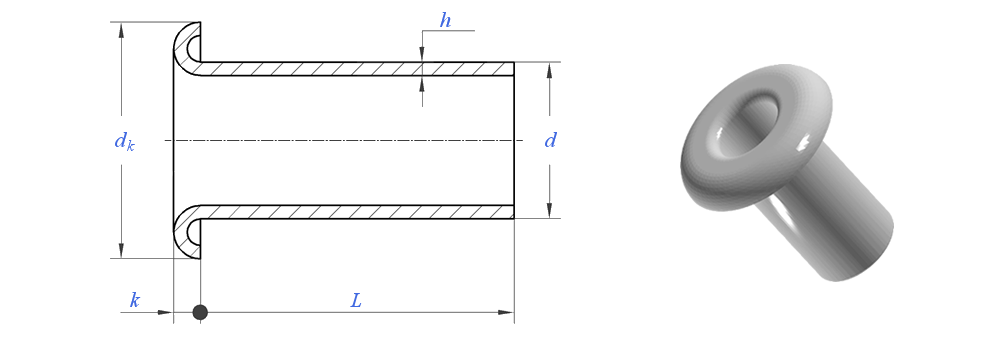
- Shaft diameter – 1.0mm to 10.0mm
- Barrel length – we calculate from your material stack thickness
- Total length – from head top to tail end
- Head style – round, flat, or countersunk
- Material – carbon steel, stainless steel, brass, copper, or aluminum
- Finish – zinc, passivated, nickel, lacquered, antique, etc.
One Rivet, Eight Checks – How We Ensure Quality
Every batch of long tubular rivets passes through eight quality gates:
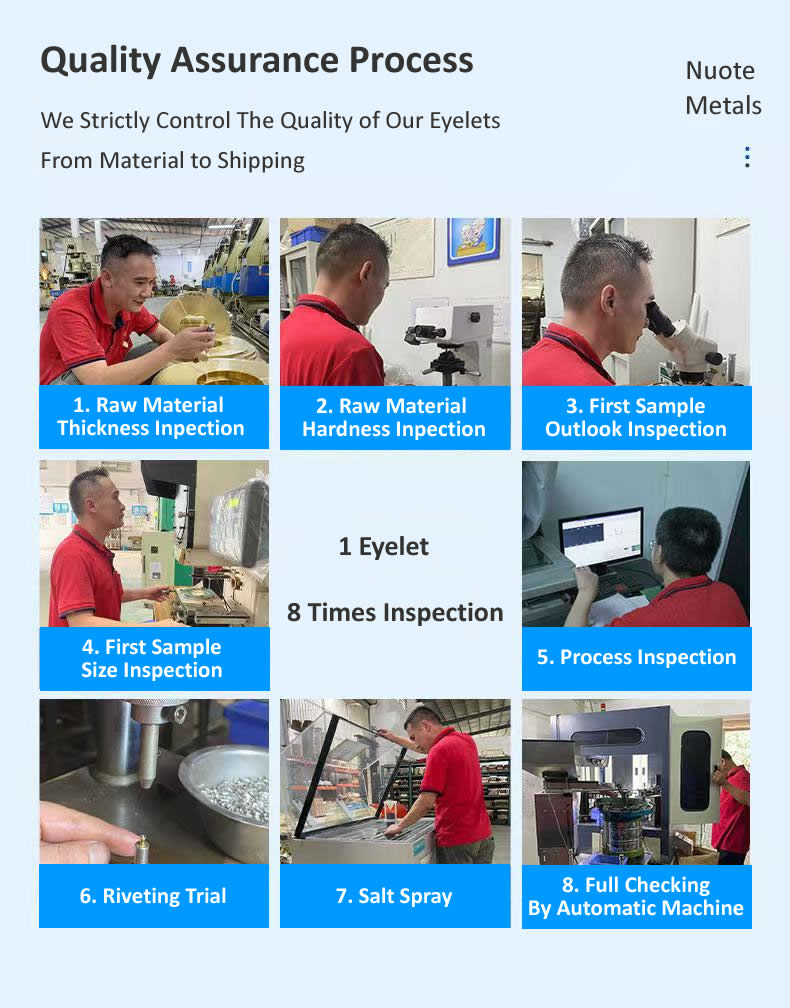
Raw material diameter check – Tube stock measured with laser micrometer (±0.02mm). Any coil outside range is rejected.
Raw material composition check – Spectrometer verification of material grade.
First article appearance check – First 10 rivets inspected under magnification for cracks, burrs, defects.
First article dimensional check – Inner diameter, outer diameter, head diameter, head height, and total length verified on optical comparator.
In‑process checks – 5 rivets every 500 pieces. Any drift stops the press.
Test setting (trial flaring) – Every 2,000 pieces, set 3 rivets into sample material. Clinch inspected for symmetry and cracks.
Salt spray test (if required) – ASTM B117 testing. Certificate issued with batch.
Final outgoing inspection – 100% optical sorting. AQL sample manually verified. Full documentation issued.
Working with Customers Worldwide

We supply long tubular rivets to manufacturers across North America, Europe, and Asia. Our customers build:
- Automotive wiring harnesses – Bulkhead pass‑throughs, cable management
- Industrial equipment – Thick panel assemblies, structural connections
- Furniture – Heavy‑duty frame joints, thick material stacks
- Electronics enclosures – Wiring pass‑throughs, cable routing
- Marine hardware – Corrosion‑resistant thick‑panel fastening
- HVAC systems – Ductwork connections, thick insulation panels
We partner with both small assembly shops and large OEMs – from rapid prototyping to high‑volume production runs. Our strength is flexibility: custom sizes, quick samples, and consistent quality at any volume.
Three Questions We Answer Often
Q: "Can I get samples before ordering production quantities?"
A: Yes – we offer samples for all our products. For standard existing specifications, samples are provided free of charge – you only pay the shipping cost. For custom sizes or custom tooling, sample availability and lead time depend on the specific requirements. Please contact our sales team with your drawing or specification, and they will advise on sample cost and delivery timeline.
Q: "What is the maximum barrel length you can produce for long tubular rivets?"
A: We can produce long tubular rivets with barrel lengths up to 100mm, depending on the diameter and wall thickness. For lengths exceeding 100mm, we recommend consulting our engineering team – longer rivets may require special handling and are subject to feasibility review based on your specific material and application requirements. The practical maximum is often determined by the tube stock availability and the heading press capacity.
Q: "Do long tubular rivets require special setting tools compared to standard tubular rivets?"
A: Generally, no – the same setting tools can be used as long as the tool is compatible with the shaft diameter. However, for very long rivets (over 50mm barrel length), we recommend using a guided setting punch to prevent the barrel from buckling during flaring. The extra length makes the tube more susceptible to bending if the force is not applied squarely. We can supply matched setting tools designed specifically for your long tubular rivet dimensions – punches and anvils that ensure clean, straight flaring without bending. Tooling lead time is typically 5–7 days, and we can include it with your sample order.
Hot Tags: Long Tubular Rivets Manufacturer, Tubular Rivets Supplier, Long Rivets Wholesale
Related Categories
Send Inquiry
Please feel free to fill your inquiry in the form below. We will reply you in 24 hours.



X
We use cookies to offer you a better browsing experience, analyze site traffic and personalize content. By using this site, you agree to our use of cookies.
Privacy Policy