Special Rivets
Products
- View as

Brass Rivets
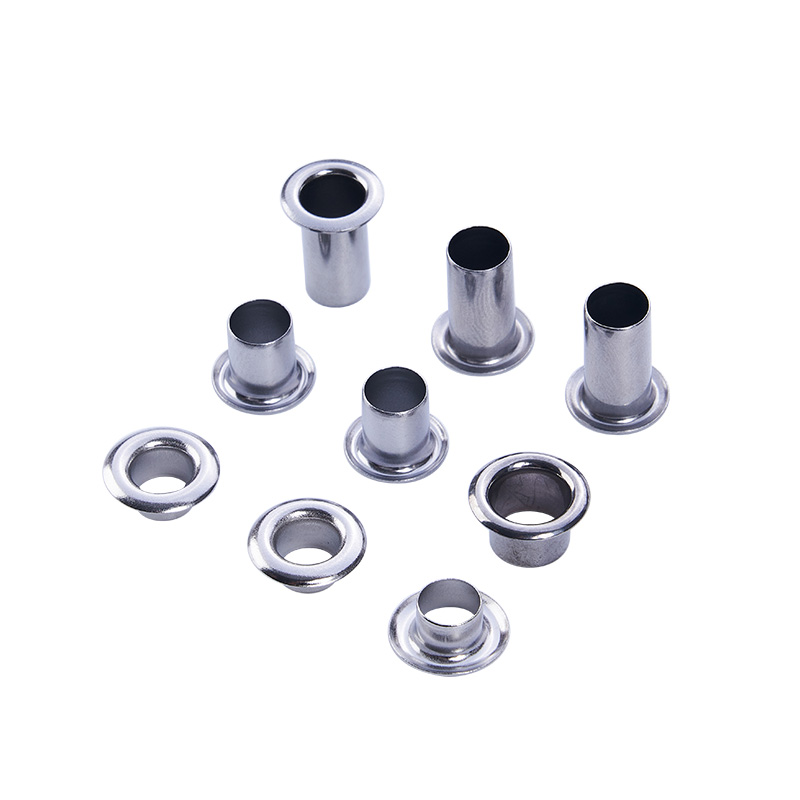
Nuote Metals manufactures brass rivets in three designs – solid, semi‑tubular, and full tubular – combining the classic advantages of brass with reliable production‑line performance. Available in 1.5–8.0mm shank diameters, with lacquered, nickel‑plated, or antique finishes. ISO 9001:2015 certified. Free samples available. Contact us for a quote.
View DetailsSend Inquiry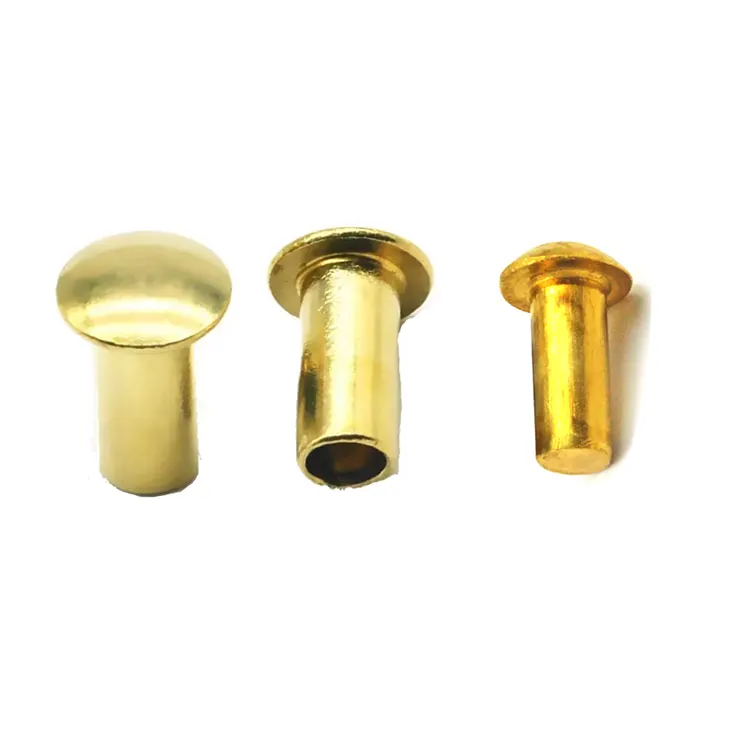
Brass Pan Head Rivets
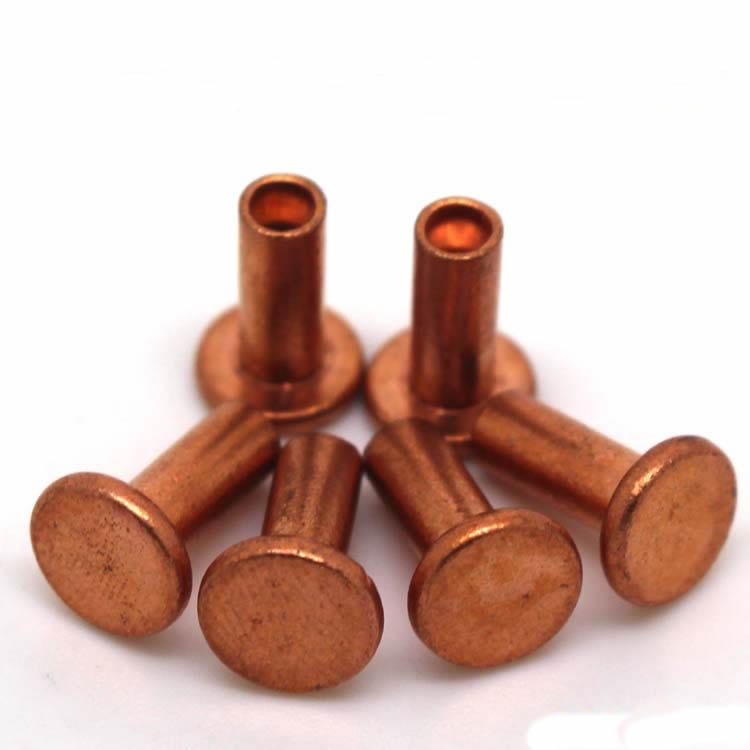
Nuote Metals specializes in the production of brass pan head rivets. Our rivets are made of H65 brass, which has a high brass content, is soft and easily formed, and is less likely to crack during the riveting process. Brass pan head rivets consist of a head and a shank, with the shank being hollow for approximately half its length. During installation, the rivet is inserted into a pre-drilled hole. Using a specialized riveting machine and punch, the end of the shank expands and forms the head on the other side, creating a clamping connection. This process relies on plastic deformation of the metal, eliminating the need for welding or adhesives, making it simple and efficient.
View DetailsSend Inquiry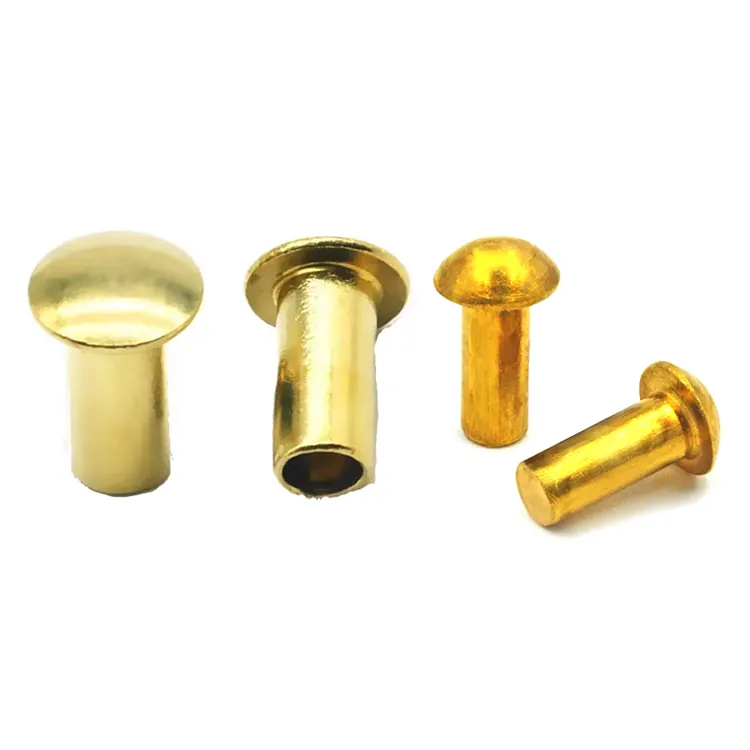
Brass Mushroom Head Rivets
Brass mushroom head rivets consist of a head and a body. The head is round and slightly flattened, resembling a mushroom cap. The body is semi-hollow, meaning it has a hole in the center but doesn't go completely through. These are called brass semi-hollow mushroom head rivets. Some rivets have a solid body, called brass solid mushroom head rivets. During installation, a specialized tool is used to insert the body into the pre-drilled hole. Pressure is applied to deform the body, causing it to expand and grip the material, creating a secure connection. Nuote Metals specializes in producing these brass mushroom head rivets.
View DetailsSend Inquiry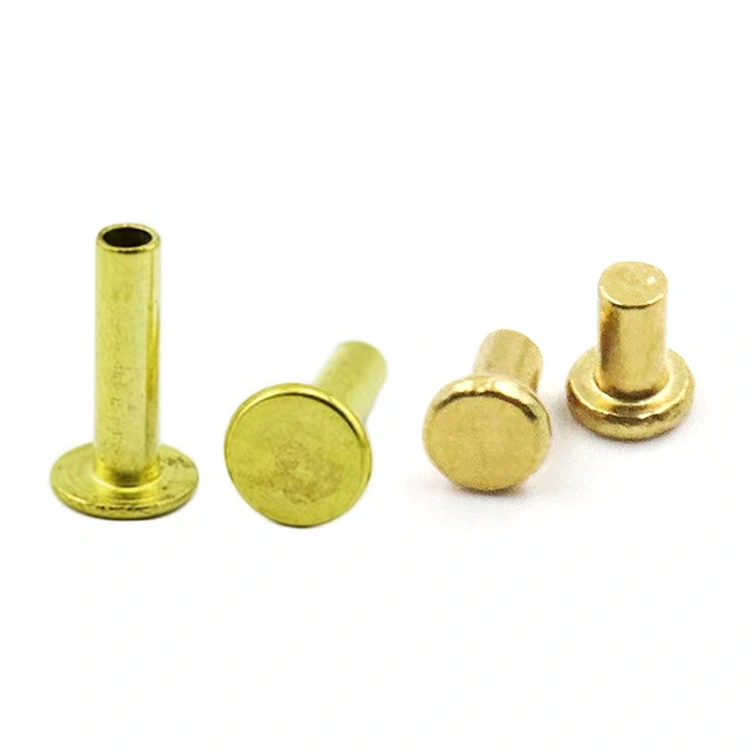
Brass Flat Head Rivets
Brass flat head rivets are metal rods with a cap on one end. They achieve riveting through deformation or interference fit and are a common fastener. The flat head design reduces surface protrusions, making it suitable for applications requiring high flatness. The corrosion resistance of brass ensures connection stability even in humid and corrosive environments. Nuote Metals specializes in the production of brass flat head rivets. We have thousands of molds and can produce a variety of rivet specifications. We also support custom designs and samples.
View DetailsSend Inquiry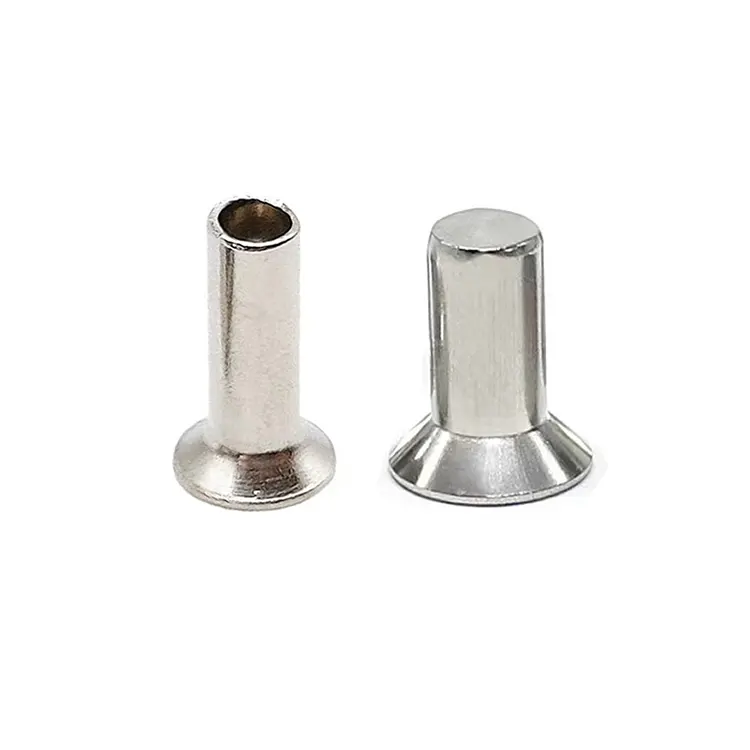
Brass Countersunk Head Rivets
Brass countersunk head rivets primarily consist of a head and a shank. The countersunk head allows for flush installation with the workpiece surface, eliminating protrusions that could affect appearance or function. The semi-hollow shank deforms during the riveting process, achieving a connection. This design not only improves installation efficiency but also enhances connection reliability. Nuote Metals specializes in the manufacture of brass countersunk head rivets, boasting high precision and a smooth, scratch-free surface. We welcome friends from all over the world to visit our company and collaborate with us.
View DetailsSend Inquiry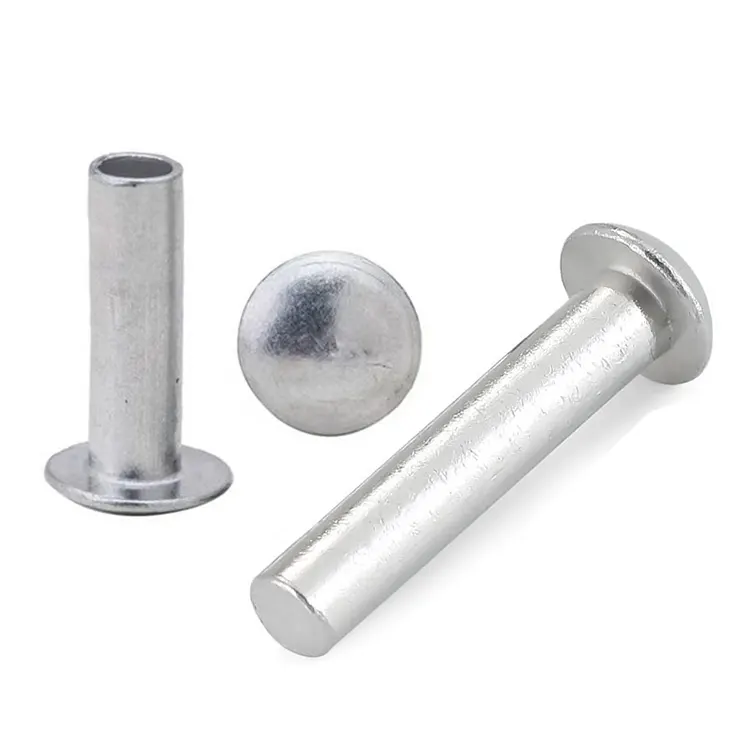
Aluminum Round Head Rivets
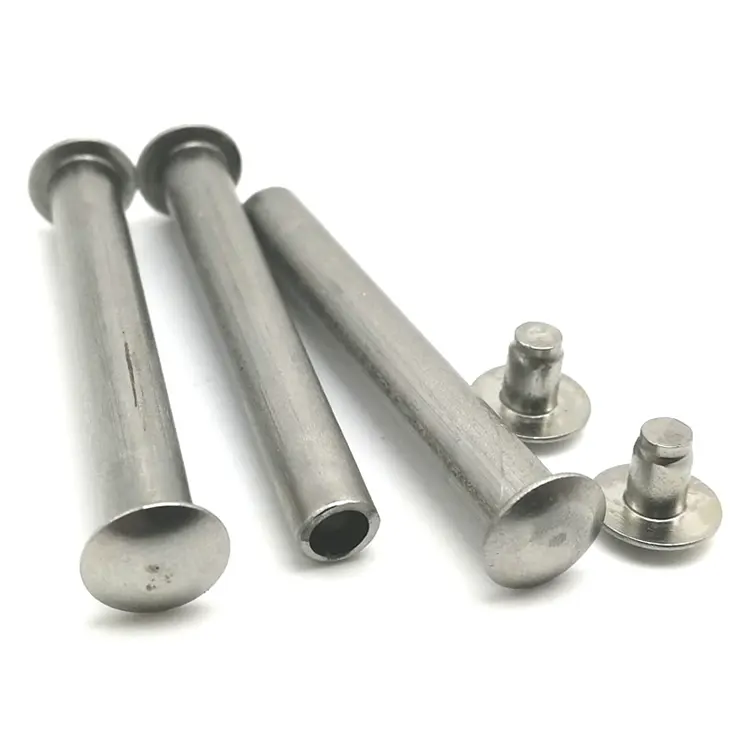
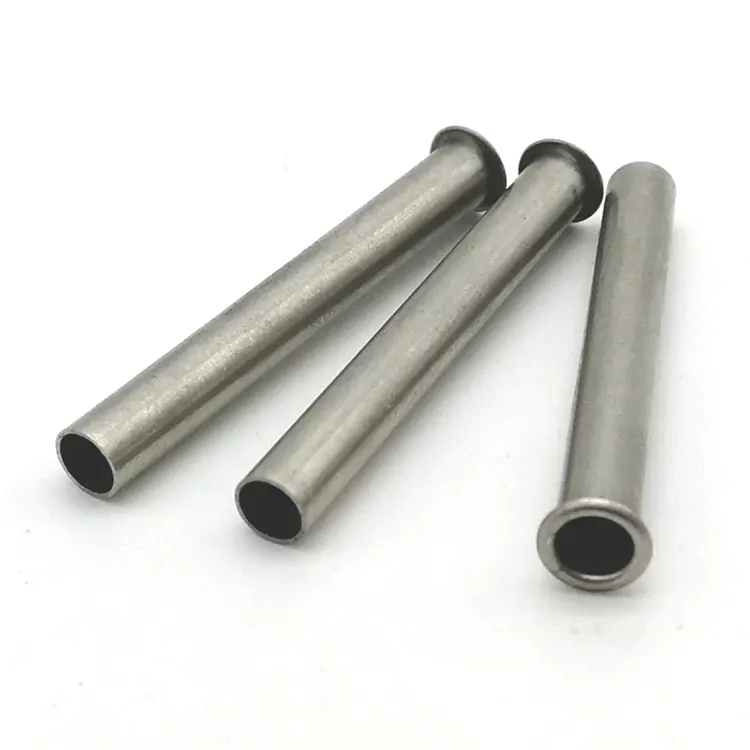
Aluminum round head rivets are widely used in various fields due to their lightweight, high strength, corrosion resistance, and excellent connection properties. Nuote Metals is a Chinese manufacturer specializing in the production of aluminum round head rivets. Our rivets are exported worldwide, and we welcome customers to visit us for inquiries.
View DetailsSend InquiryManufacturing process of special rivets
The manufacturing of Special rivets involves multiple links, mainly including:
1.Material selection: Select suitable metal or alloy materials according to the use environment.
2.Cold heading or hot heading: Use pressure processing to form the basic shape of the rivet into the metal blank.
3.Turning or Milling: Fine-process the details such as the head and stem of the rivet to ensure dimensional accuracy.
4.Surface treatment: Such as galvanizing, nickel plating, anodizing, etc. to improve corrosion resistance or aesthetics.
Advantages and limitations of special rivets
(1) Advantages: They can meet special needs, improve assembly efficiency and connection reliability, and are suitable for complex or high-demand application scenarios.
(2) Limitations: Since they are customized products, the production cost is high, the delivery cycle is relatively long, and customers are required to provide detailed technical parameters.
How to choose suitable special rivets?
(1) Clarify the needs: Determine the key parameters such as the rivet's operating environment, stress conditions, and corrosion resistance requirements.
(2) Material matching: Select the appropriate material based on actual needs to avoid over-design that leads to increased costs.
(3) Communicate with suppliers: Provide detailed technical drawings or samples to ensure that the Special rivets produced meet expectations.
What are the main applications of special rivets?
(1) Aerospace: Aircraft, rockets and other equipment have extremely high requirements for the weight, strength and high-temperature resistance of fasteners. Special rivets can be optimized according to specific needs.
(2) Automobile manufacturing: Certain special models or high-performance vehicles may require Special rivets to meet the needs of lightweight or high-strength connections.
(3) Electronic equipment: Precision instruments or small electronic equipment may require micro Special rivets to ensure the stability and compactness of the connection.
(4) Construction industry: Some special-structured buildings or decoration projects may use Special rivets to meet specific installation requirements.
Market status of special rivets
With the advancement of industrial technology, more and more industries have begun to use Special rivets to optimize product design. At present, Special rivet manufacturers are mainly concentrated in the Yangtze River Delta and Pearl River Delta regions in China, and can provide a variety of customized services. Due to the high unit price of Special rivets, its market size is relatively small, but the demand in the high-end manufacturing field continues to grow.
Future development trends
(1) Lightweight design: With the improvement of energy-saving and environmental protection requirements, Special rivets made of lightweight materials will be more popular.
(2) Intelligent production: Automated equipment and digital management will further improve the production efficiency and quality stability of Special rivets.
(3) Wider application: Emerging industries such as new energy and robotics may drive the growth of demand for Special rivets.
In summary, special rivets are highly customized fasteners that can meet special needs that standard rivets cannot meet. Although its production cost is relatively high, it plays an irreplaceable role in industries such as aerospace, automobiles, and electronics. In the future, with the advancement of manufacturing technology, the application scope of Special rivets is expected to further expand.



X
We use cookies to offer you a better browsing experience, analyze site traffic and personalize content. By using this site, you agree to our use of cookies.
Privacy Policy