
Products
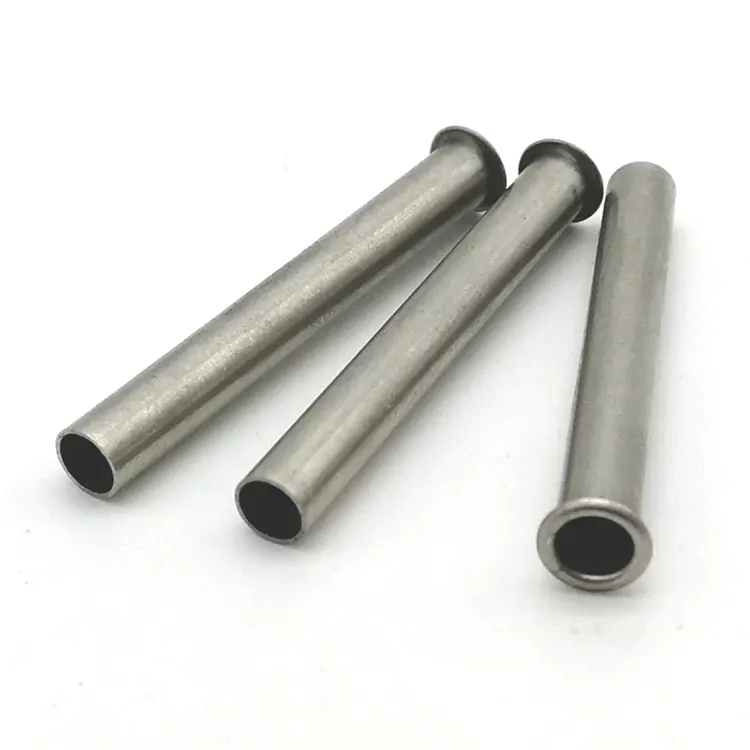
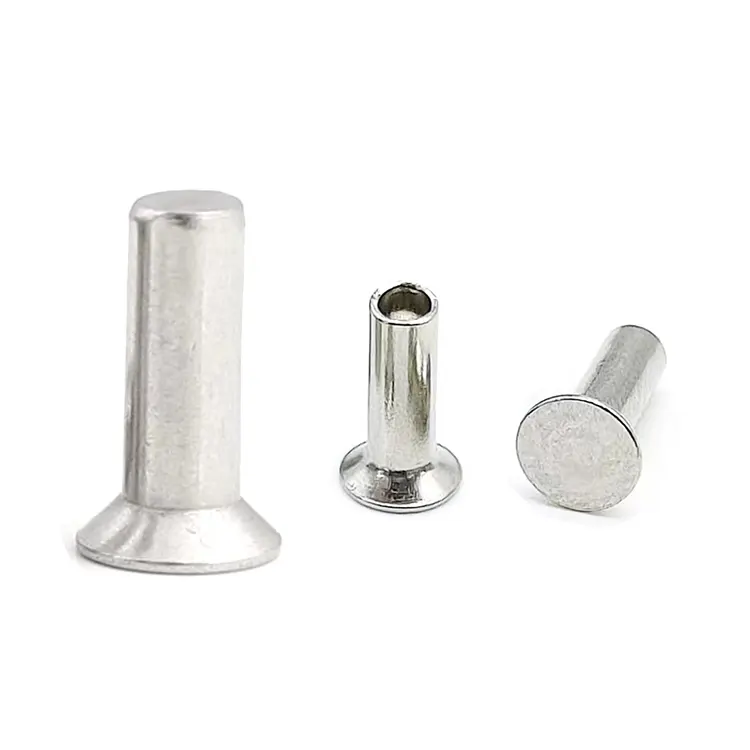
Steel Countersunk Head Rivets
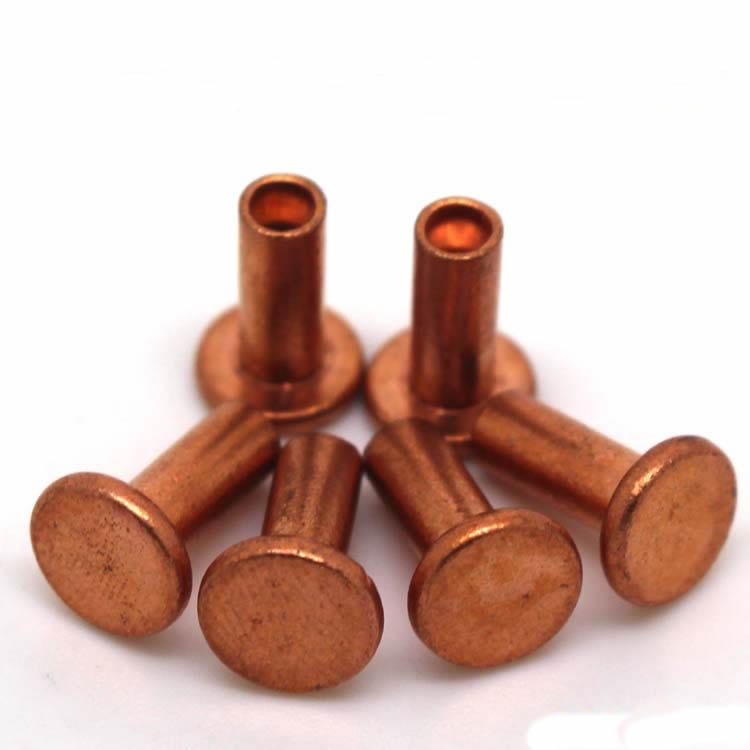
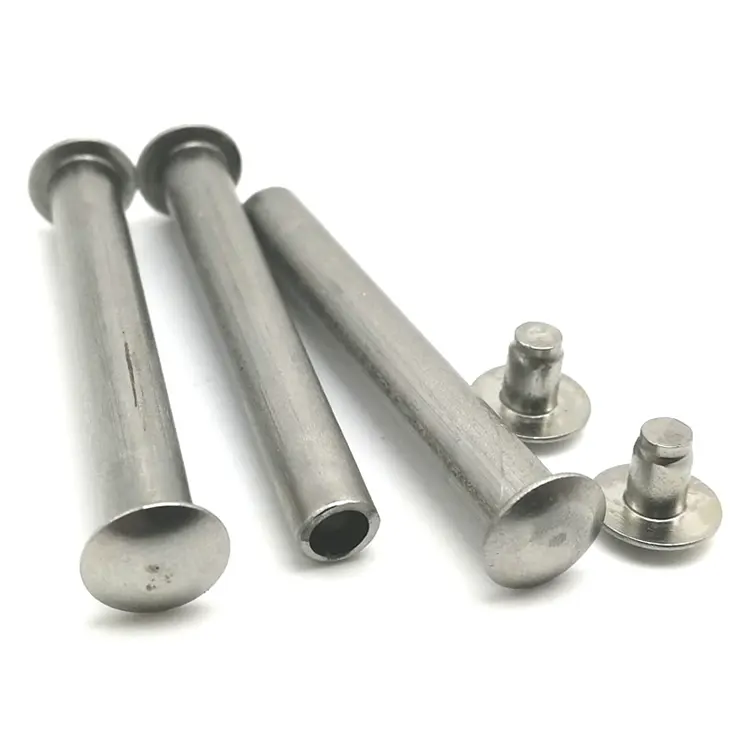
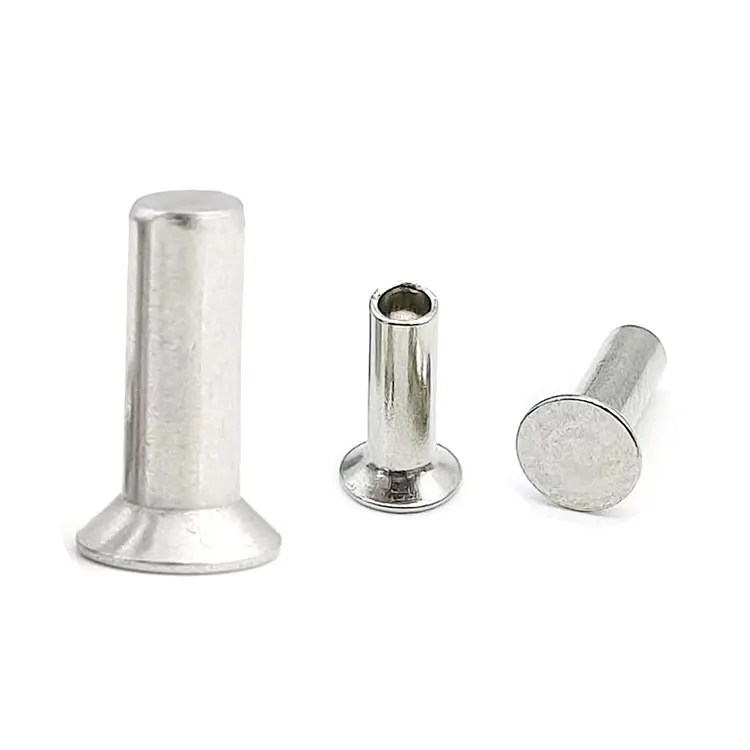
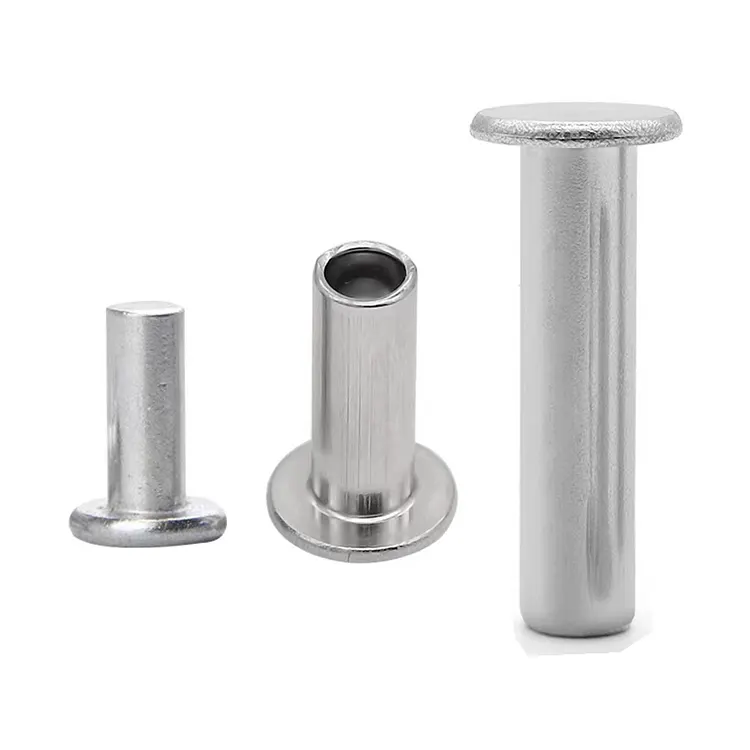
Steel countersunk head rivets are a commonly used fastener used to connect two or more workpieces. They are secured to the workpieces by hammering or mechanical force, creating a secure connection. Nuote Metals is a specialist in the production of steel countersunk head rivets, located in Dongguan, China, a city with a thriving industry. Our rivets feature a smooth, burr-free surface, flawless plating, and crack-free joints. We welcome inquiries and orders.
Send Inquiry
Product Description
Countersunk head rivets serve one purpose: they vanish. Other head styles sit above the surface. They snag. They scrape. They catch on mating parts, clothing, and hands. Countersunk heads do none of that. The tapered profile seats into a pre‑drilled countersink and sits flush with the material surface. No protrusion. No snag points. Just a smooth, uninterrupted finish.
Steel countersunk head rivets take this flush‑finish design and add the strength and cost‑effectiveness of low‑carbon steel. They are used in automotive body panels, HVAC equipment, railway assemblies, and anywhere a flush finish is required.
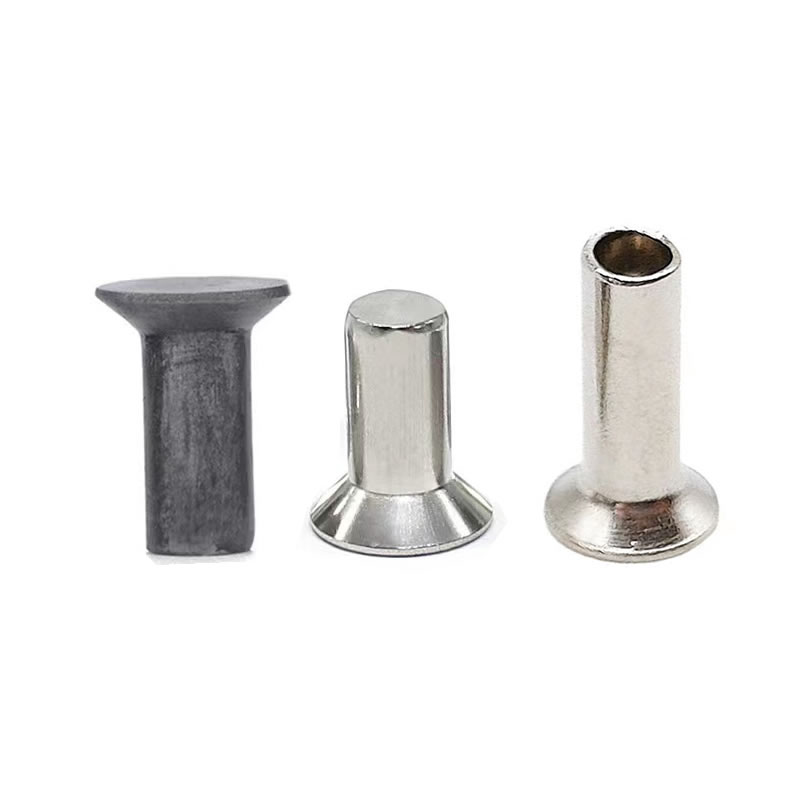
Made from low‑carbon steel and manufactured to DIN 661 specifications, these rivets are available in both solid and semi‑tubular designs so you can choose the version that matches your strength requirements and production speed.
Countersunk vs. Flat Head – The Flush‑Finish Difference with Material and Finish Options
| Feature | Steel Countersunk Head Rivet | Steel Flat Head Rivet |
|---|---|---|
| Head profile | Tapered (90° or 120°) | Flat, straight sides |
| Hole preparation | Straight hole + countersink taper | Straight hole only |
| Head protrusion | Zero – sits flush or below | 0.8–1.2mm |
| Best for | Flush surfaces, mating parts, aerodynamics | Low‑profile, clearance‑limited |
| DIN standard | DIN 661 (1–8mm) | Varies |
Choose countersunk head when: The joint must be completely smooth. The rivet is on a sliding surface or mating part. A protruding head would interfere with assembly.
Material and Finish Options
Material: Low‑carbon steel (1008 / Q195 / SPCC). Tensile strength: 400–500 MPa.
Available finishes:
| Finish | Appearance | Corrosion Protection | Best For |
|---|---|---|---|
| Plain (uncoated) | Raw steel | None | Indoor, dry environments |
| Zinc‑plated (clear) | Silver | 48 hrs salt spray | Indoor general use |
| Zinc‑plated (yellow) | Gold tint | 96 hrs salt spray | Sheltered outdoor |
| Nickel‑plated | Bright silver | 96 hrs salt spray | Consumer products, visible hardware |
| Black oxide | Matte black | 24 hrs salt spray | Anti‑glare, industrial |
If your application is continuously wet or in a coastal environment, we recommend switching to stainless steel countersunk head rivets. For everything else, steel with the right finish works.
DIN 661 Compliance – Precision You Can Rely On
We manufacture steel countersunk head rivets in accordance with DIN 661, the German standard for countersunk head rivets with nominal diameters from 1mm to 8mm. This standard specifies dimensional and technical requirements, ensuring interchangeability, consistent head geometry, and traceable quality.
If your project requires compliance with DIN 661, we can supply rivets that meet the standard exactly. If you need custom dimensions beyond the standard range, we can accommodate those as well.
Solid vs. Semi‑Tubular – Which Design Do You Need?
| Feature | Steel Countersunk Head Solid Rivet | Steel Countersunk Head Semi‑Tubular Rivet |
|---|---|---|
| Tail design | Fully solid | Partially hollow (45–55% of length) |
| Setting force | 100% | 25–30% of solid |
| Shear strength | Maximum (100%) | 80–90% of solid |
| Installation speed | Slower, heavy press | Fast, automated |
| Best for | Structural, maximum strength, high‑load | High‑volume, thin materials, fast assembly |
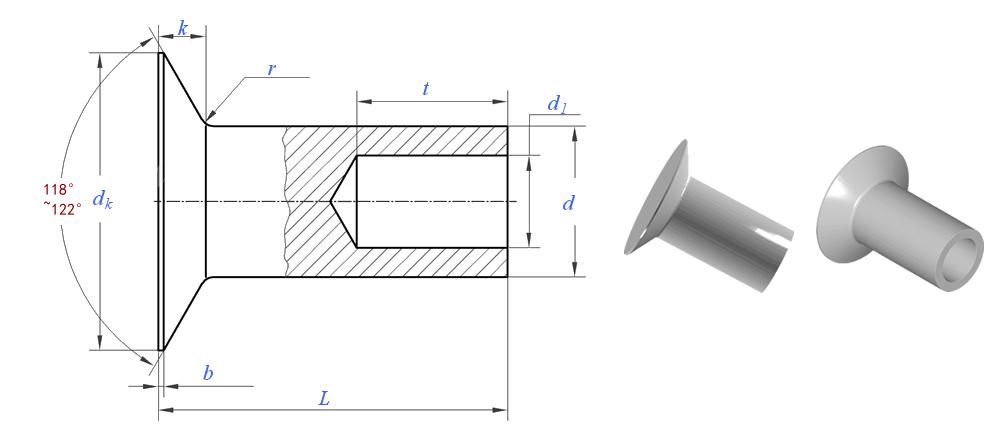
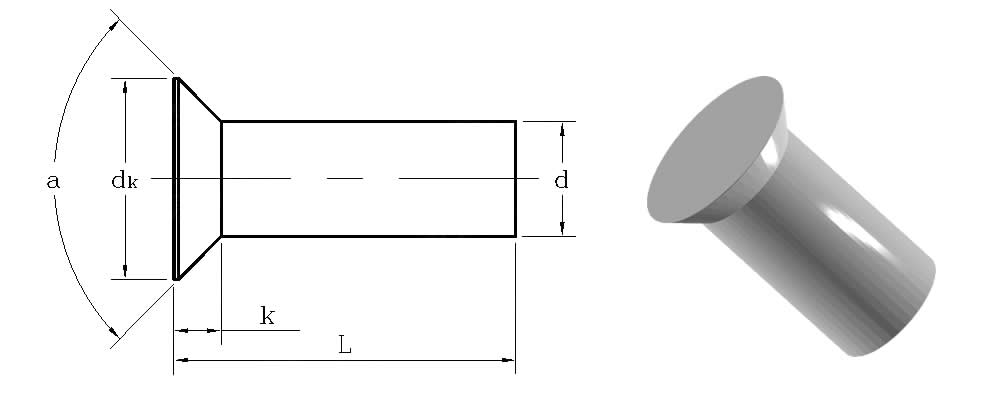
Choose solid for structural joints where maximum strength is required. Choose semi‑tubular for high‑volume production, thin materials, and faster assembly lines.
One Real Application – Automotive Interior Trim Panel
A manufacturer of automotive interior trim panels needed to attach fabric‑covered panels to door frames. The panels were visible to passengers – any protruding fastener would be unacceptable. Solid countersunk rivets provided the flush finish but required high setting force that cracked the thin panel material. Countersinking was already part of their process – they needed the right rivet.
We supplied zinc‑plated steel countersunk head semi‑tubular rivets – 4.0mm shank, 8.0mm head diameter, 90° angle, 10.0mm barrel length. The semi‑tubular cavity reduced setting force from 3.5 tons to 1.0 ton – eliminating cracks in the panel material. The 90° countersunk head sat flush with the surface, matching the interior trim's clean appearance. The zinc plating provided corrosion protection for long‑term durability.
The customer tested 1,000 rivets across 500 door panels. After 100,000 vibration cycles, zero loosening, zero cracks. They now order steel countersunk head rivets in batches of 250,000 pieces annually.
About Nuote Metals – Who We Are and What We Make
We are a Dongguan‑based fastener manufacturer with over a decade of experience in cold heading. Our facility runs 45 cold‑heading machines capable of producing rivets from 0.8mm to 10mm in diameter, in both solid and semi‑tubular designs.
Our product lines include:
- Rivets – solid, semi‑tubular, full tubular, and special rivets in carbon steel, stainless steel, brass, copper, and aluminum
- Eyelets – produced on dedicated deep‑drawing equipment
- Stamping parts – high‑speed stamping for precision metal components
- CNC turning parts – precision components with tolerances down to ±0.005mm
What we hold:
- Tolerances – ±0.05mm on standard rivet dimensions
- Stock – over 3,000 different sizes, from 0.8mm to 10mm shank diameter
- Lead time – 3–5 days for stocked sizes; 15–25 days for custom orders
- Quality – 100% inspected before shipment
- Certification – ISO 9001:2015
We ship to manufacturers across North America, Europe, Asia, and beyond.
Why Customers Choose Us – Real Feedback and Industry Recognition
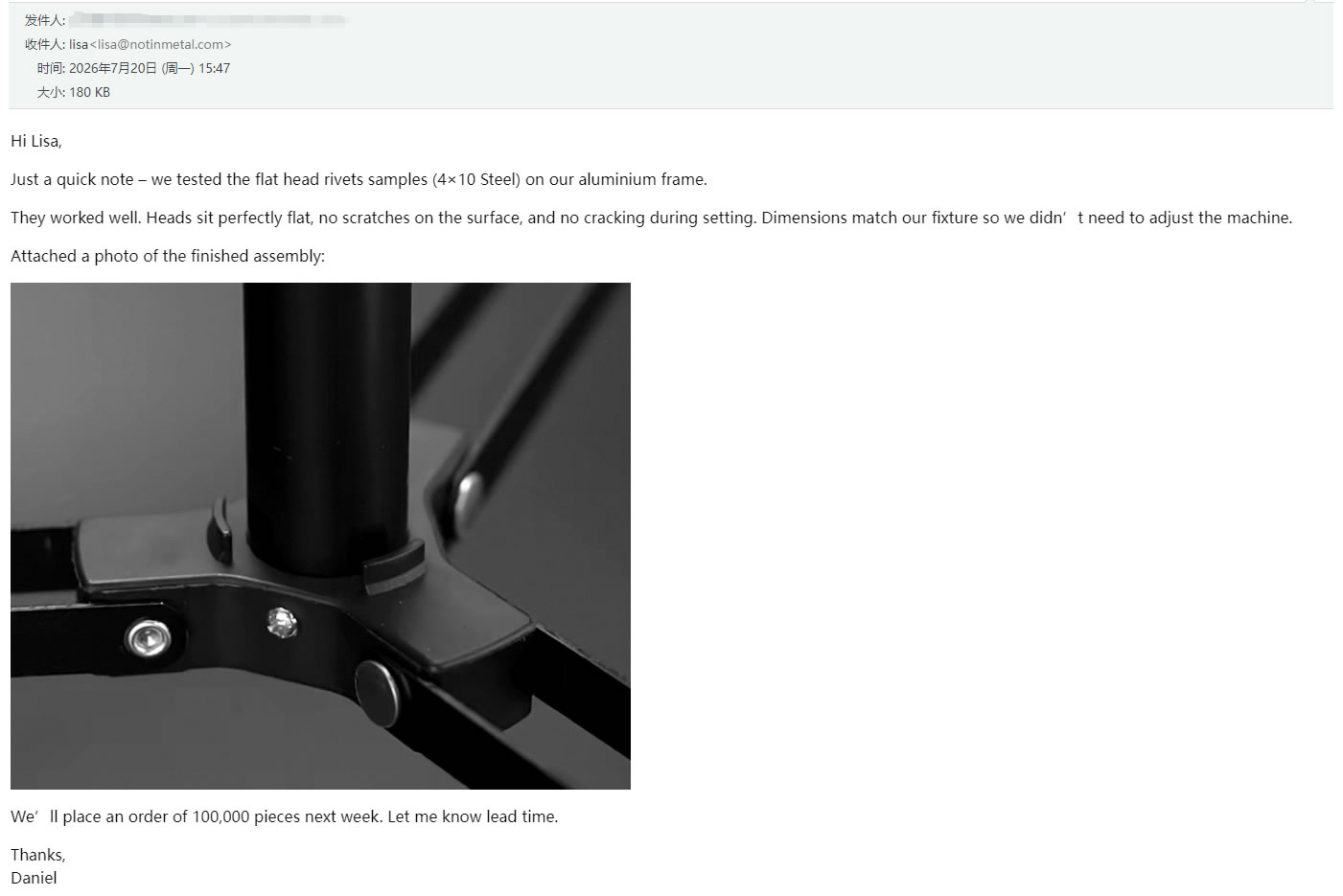
Manufacturers who use our steel countersunk head rivets come back to us for consistent quality and reliable delivery. Here is what they tell us:
"We have been using their countersunk rivets for two years. The head angles are consistent – no proud heads, no recessed heads." – Automotive interior supplier
"The semi‑tubular design cut our assembly time by 40% and eliminated cracks in our thin panels." – Electronics enclosure manufacturer
"Their documentation is complete – material certs, dimensional reports, everything we need." – HVAC equipment builder
What gives them confidence:
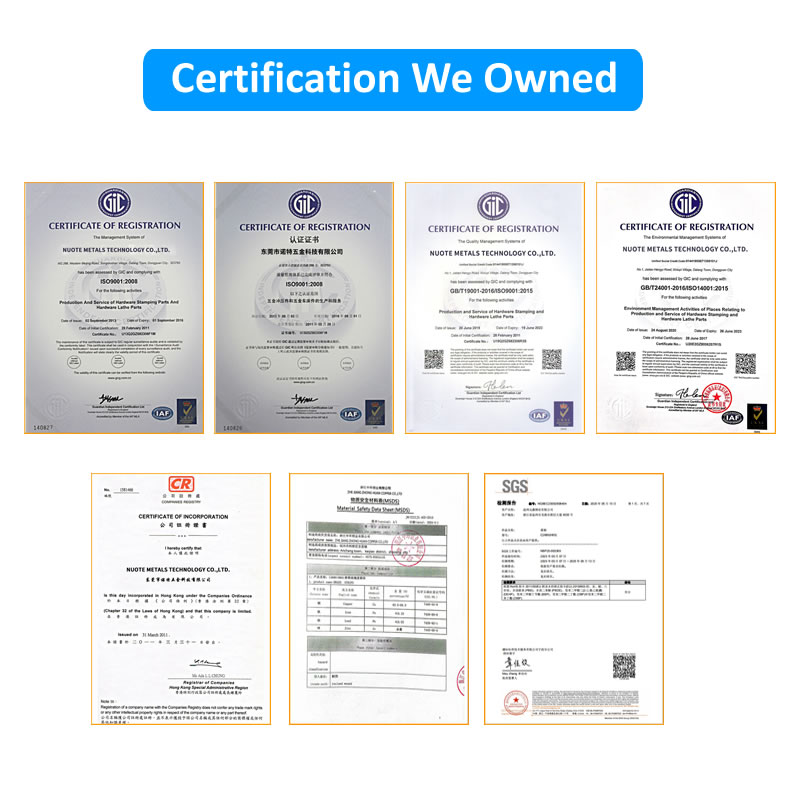
Industry certifications – We are ISO 9001:2015 certified. We maintain RoHS and REACH compliance for all materials.
Third‑party verification – Our SGS test reports are available per batch on request.
Factory transparency – We welcome customer visits and audits. Our factory and inspection lab are open to clients.
We check every batch – Our in‑house inspection lab is equipped with laser micrometers, optical comparators, 2.5D image measuring systems, Rockwell hardness testers, spectrometers, salt spray chambers, and XRF thickness gauges. All equipment is calibrated annually.
We trace everything – Every coil of steel wire comes with a mill test certificate and heat number. We can trace every batch back to the original melt.
We deliver what we promise – Samples in 5–7 days. Production on schedule. Full documentation with every shipment.
Three Questions We Answer Often
Q: "What is the difference between 90° and 120° countersunk head angles – which one should I choose?"
A: The head angle must match your countersink tool. 90° is the most common standard for general industrial applications – furniture, electronics, automotive, and HVAC – and is compatible with the majority of standard countersink bits. 120° is used for thicker materials and heavy‑duty assemblies. A rivet with the wrong angle will either sit proud (too shallow) or sit too deep (too steep). If you are unsure, 90° is the safest choice. Send us a sample of your countersink tool or a pre‑countersunk hole, and we will verify the match before production.
Q: "What is the maximum shear strength of a steel countersunk head rivet – and does the countersunk head weaken it?"
A: A solid 5mm steel countersunk head rivet has a single shear strength of approximately 11,000–13,000 N. Semi‑tubular designs retain 80–90% of these values. The countersunk head does not weaken the rivet – the shear strength is determined by the shank diameter and material, not the head shape. However, the countersink itself removes material from the workpiece, so for very thin materials (under 1.0mm), we recommend flat head rivets instead to avoid weakening the surrounding material. For most structural applications, countersunk head rivets provide more than enough strength while delivering the flush finish you need.
Q: "How does a countersunk head rivet compare to a flat head rivet for automotive interior applications?"
A: A countersunk head sits flush with the surface and requires a pre‑drilled tapered hole. A flat head sits 0.8–1.2mm above the surface and requires only a straight hole. Choose countersunk when you need zero protrusion – for mating parts, sliding surfaces, or visible panels. Choose flat head when you need a low profile but want to avoid the extra cost and step of countersinking. For automotive interior trim panels where passengers see and touch the surface, countersunk is the right choice – it delivers a flush finish that looks professional and does not snag on clothing.
Hot Tags: Steel Countersunk Head Rivets,China Steel Rivets,Steel Rivets Manufacturer
Related Categories
Send Inquiry
Please feel free to fill your inquiry in the form below. We will reply you in 24 hours.



X
We use cookies to offer you a better browsing experience, analyze site traffic and personalize content. By using this site, you agree to our use of cookies.
Privacy Policy