
Products
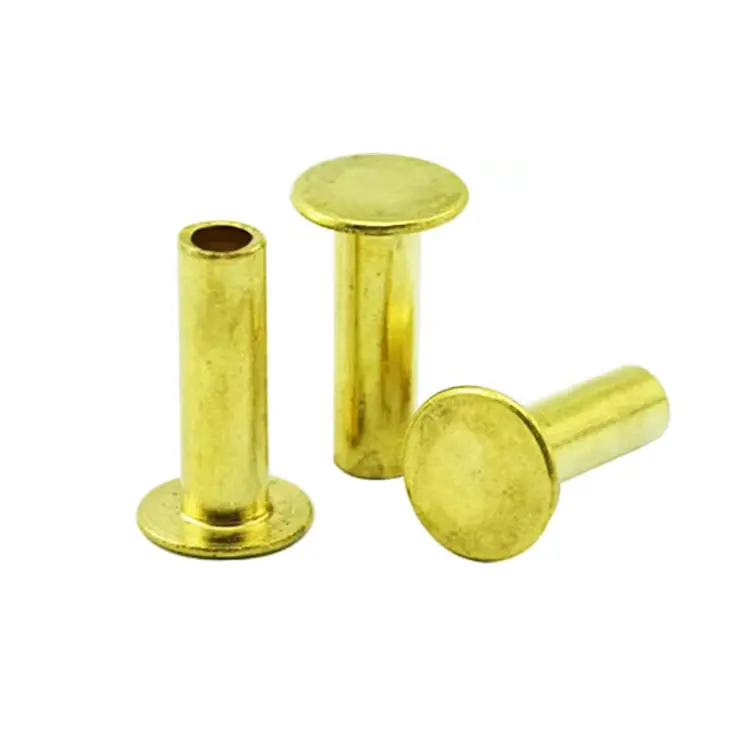
Brass Half Tubular Rivets
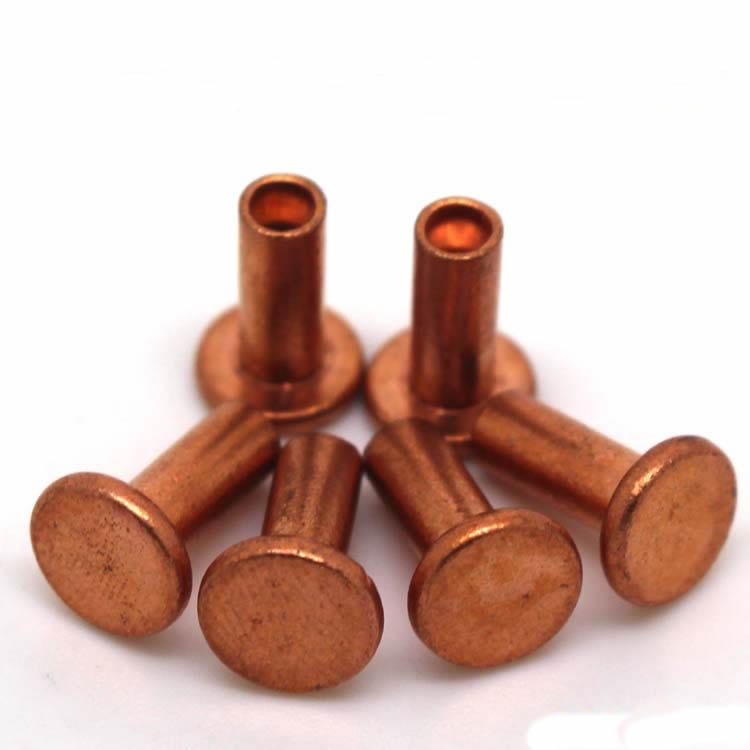
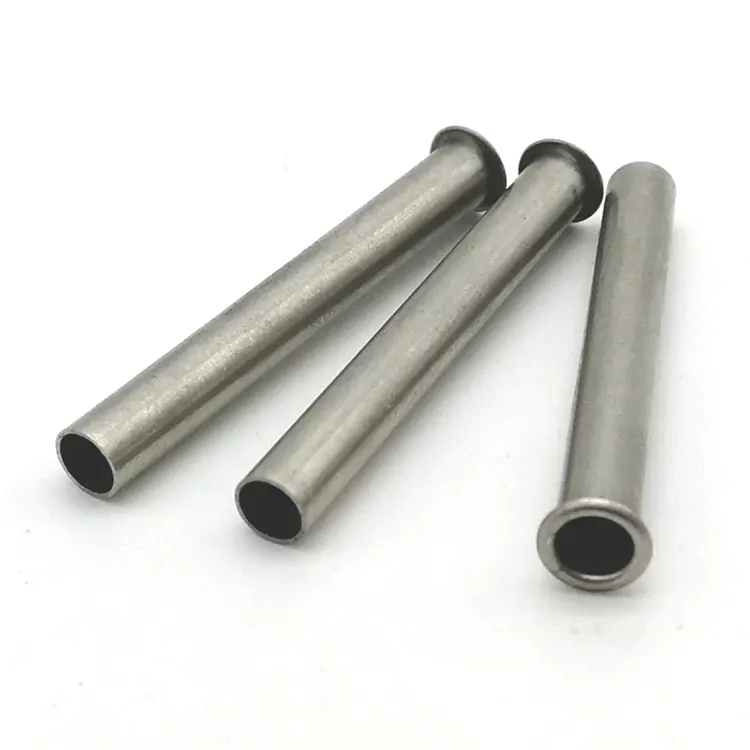
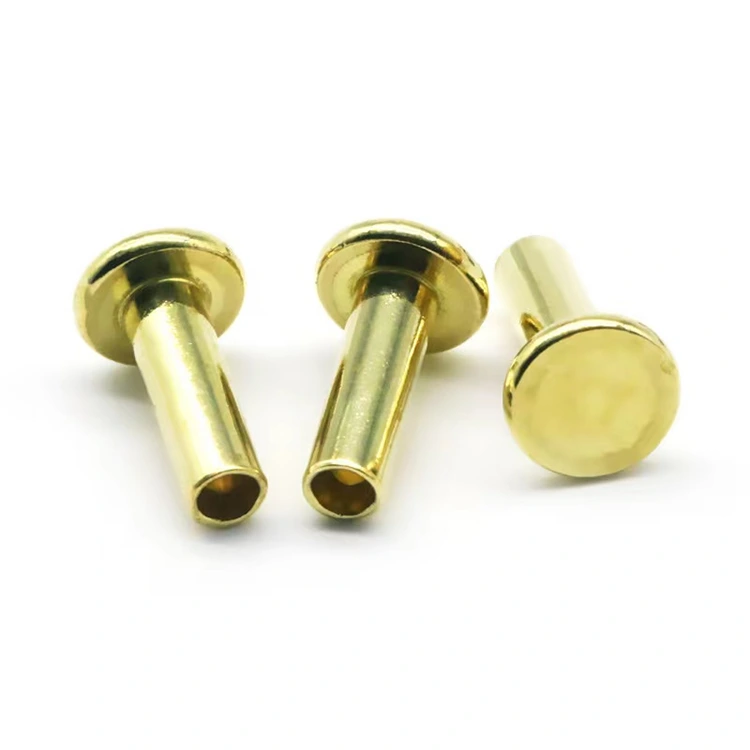
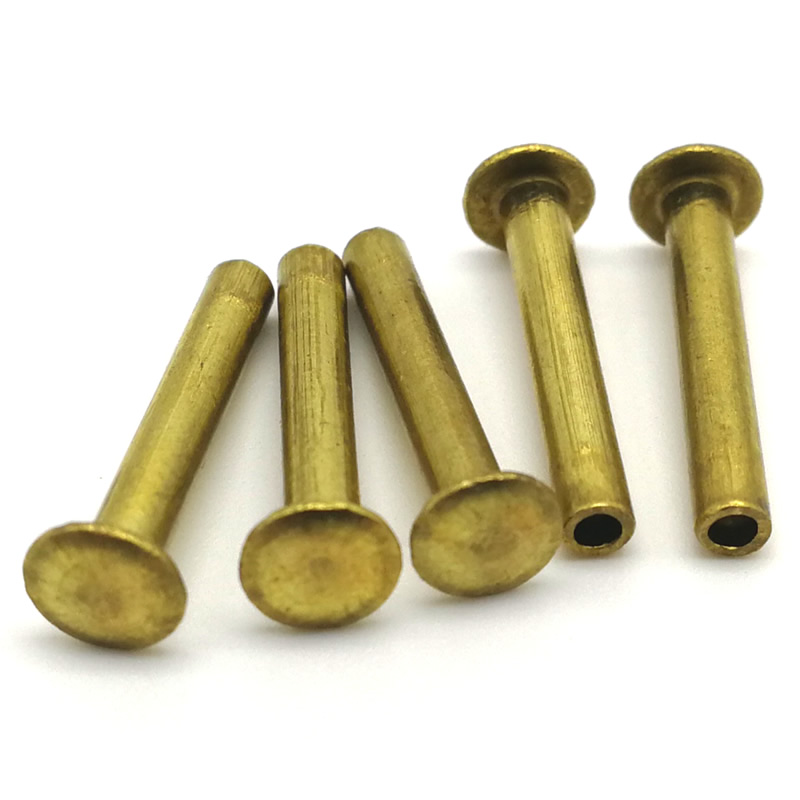
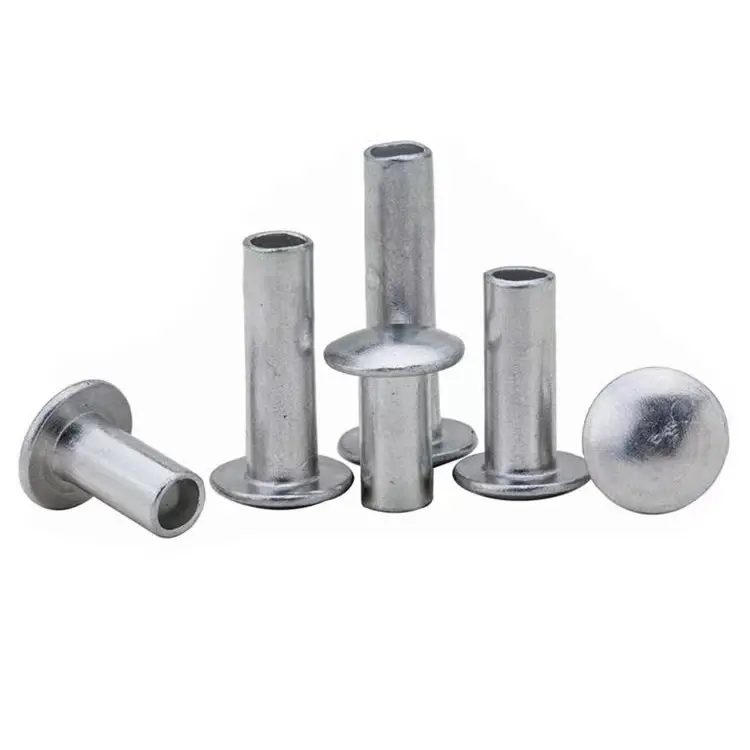
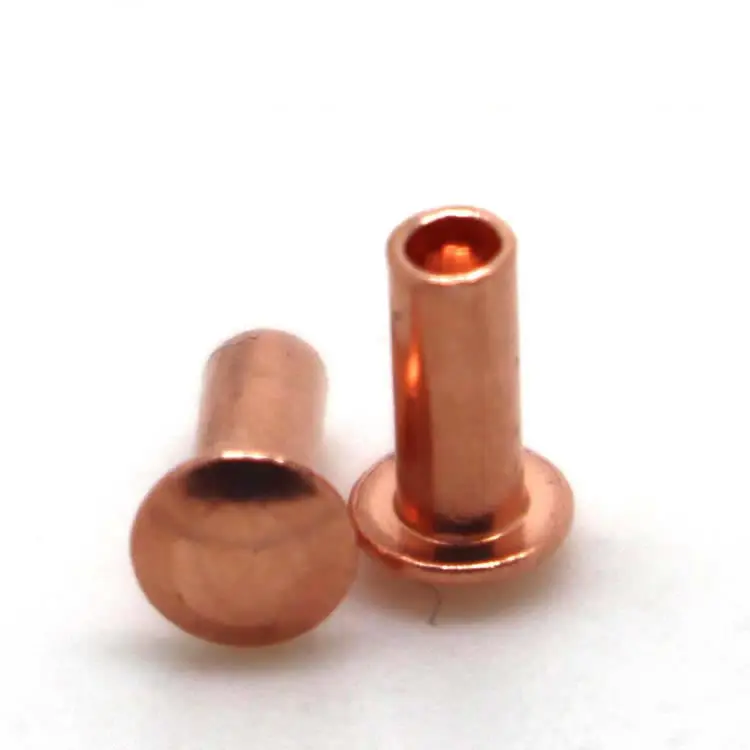
Nuote Metals supplies brass half tubular rivets – fasteners with a shallow cavity at the tail that reduces setting force by up to 70% compared to solid rivets. Also commonly called semi‑tubular rivets, half hollow rivets, or hollow‑end rivets. Made from C2680 brass, available in 0.8–8.0mm shank diameters, six head styles, and multiple finishes.
Send Inquiry
Product Description
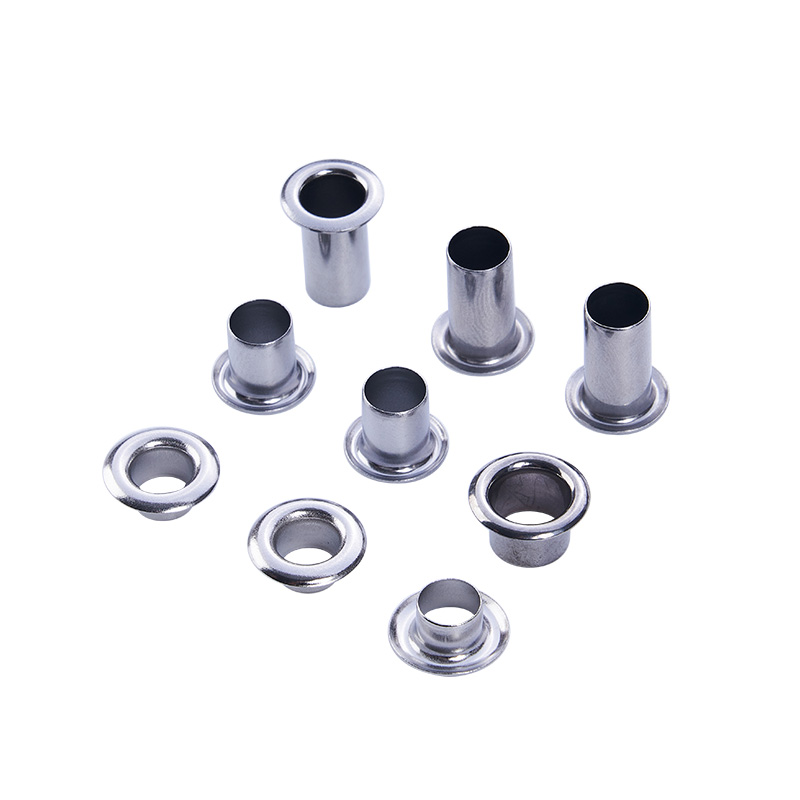
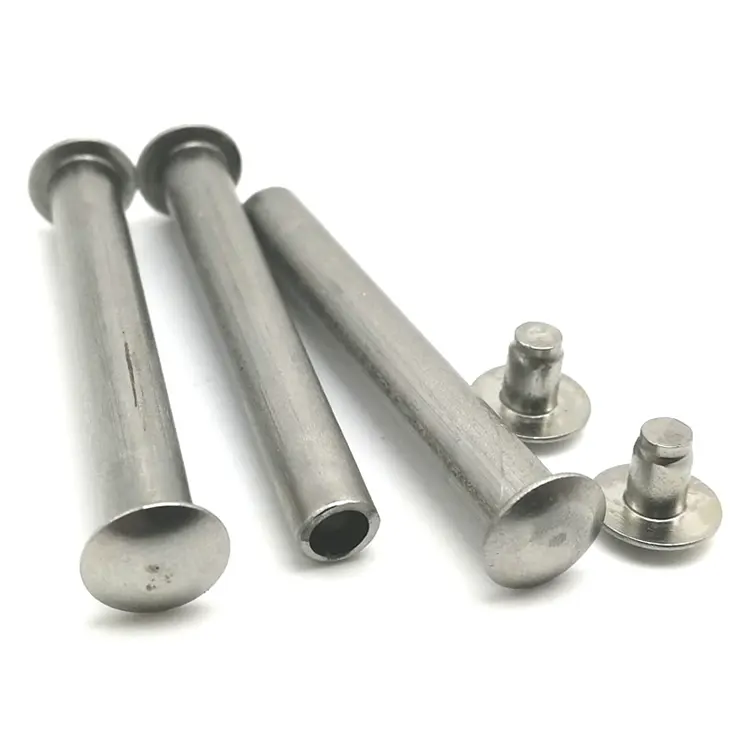
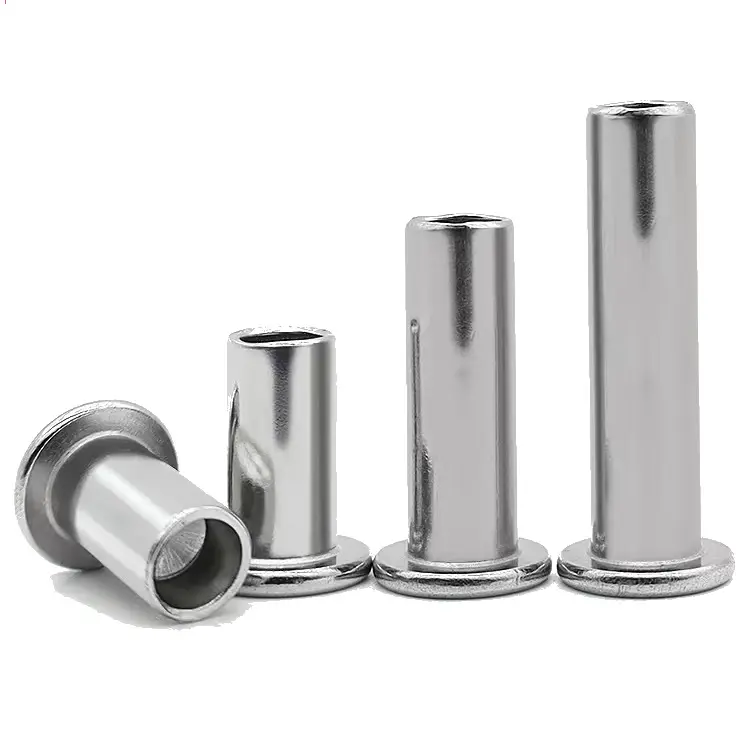
A brass half tubular rivet is a metal fastener that is solid at one end and partially hollow at the other – typically 45–55% of the barrel length. Unlike a solid rivet where the entire shank must deform, only the thin wall of the hollow section rolls outward during installation. This reduces setting force by approximately 70% compared to solid rivets.
Why do we have multiple names for the same product? Because different industries use different terms. Some customers search for "half tubular," others search for "semi‑tubular." We keep both pages so you can find us – regardless of which term you use.
C2680 Brass – The Material Behind the Fastener
| Property | C2680 Brass |
|---|---|
| Copper content | 64.0 – 68.5% |
| Zinc content | 31.5 – 36.0% |
| Electrical conductivity | ~28% IACS |
| Corrosion resistance | Good – develops protective patina |
| Key advantage | Harder and more wear‑resistant than C2600 |
C2680 offers the optimal balance of hardness, corrosion resistance, and formability for half tubular rivet applications.
Head Styles – What We Offer
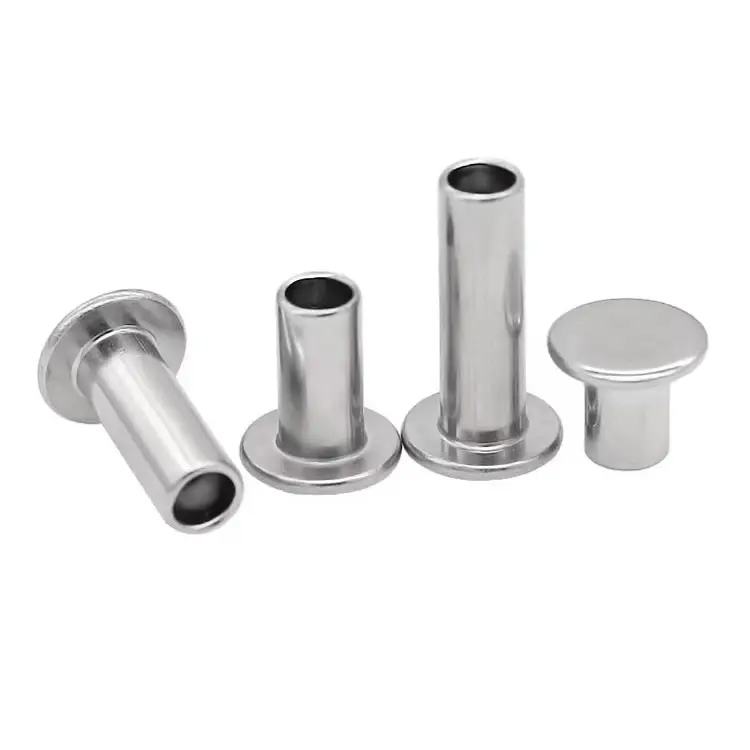
Brass half tubular rivets are available in six head styles to match your application requirements:
- Round head – The most common choice. Classic dome profile, suitable for general-purpose visible joints where maximum head strength is required.
- Flat head – Low-profile design for clearance-limited assemblies. Sits near flush with the material surface, ideal for sliding mechanisms or stacked components.
- Oval head – Slightly raised with a smooth, rounded appearance. Decorative and general-purpose, often used in visible assemblies where a softer look is desired.
- Countersunk head – Tapered design that sits flush with or below the material surface. Requires a pre-drilled countersink. Zero protrusion for mating parts or aerodynamic surfaces.
- Truss head – Extra-wide, low dome for soft materials or oversized holes. Provides maximum bearing surface to prevent pull-through in plastics, composites, and thin sheet metal.
- Mushroom head – Wide, low profile with a generous edge radius. Designed for applications where the rivet head contacts soft materials or needs a smooth, finished appearance.
Custom head dimensions are available upon request. If you are unsure which head style is right for your application, send us a drawing or sample part – we will recommend the optimal option.
Available Finishes
| Finish | Appearance | Best For |
|---|---|---|
| Natural lacquered | Bright gold | General purpose, visible applications |
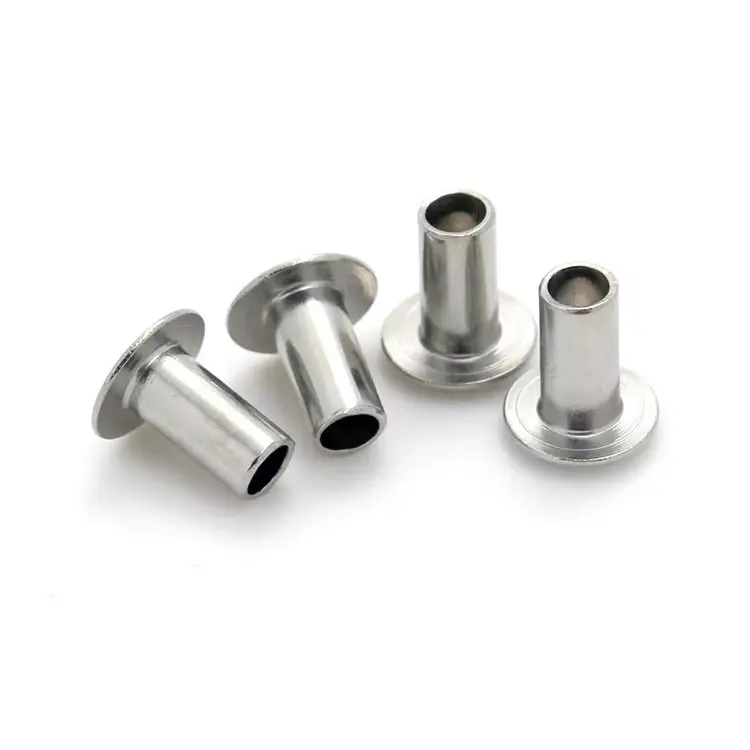
| Nickel‑plated | Bright silver | Matching silver hardware, modern appearance |
| Antique | Dark, aged bronze | Vintage‑style, decorative, leather goods |
One Real Application – Metal Toolbox Handle Attachment
A manufacturer of metal toolboxes needed a fastener for attaching handles to the box body. The handles were visible on the finished product – customers would see and touch them. The previous solid rivets required high setting force that distorted the thin steel panels. The customer needed a fastener that would set with low force, provide a clean appearance, and hold securely under the weight of heavy tools.
We supplied C2680 brass half tubular rivets – 4.0mm shank, 7.5mm round head, 6.0mm barrel length, nickel‑plated finish. The shallow cavity reduced setting force by over 60% – no distortion to the thin panels. The nickel plating matched the toolbox's silver hardware. The permanent clinch held securely under heavy loads. The customer tested 500 rivets across 250 toolboxes. After 10,000 handle‑lift cycles, zero loosening, zero failures. They now order brass half tubular rivets in batches of 150,000 pieces annually.
Why Half Tubular Rivets Crack During Setting – And How We Prevent It
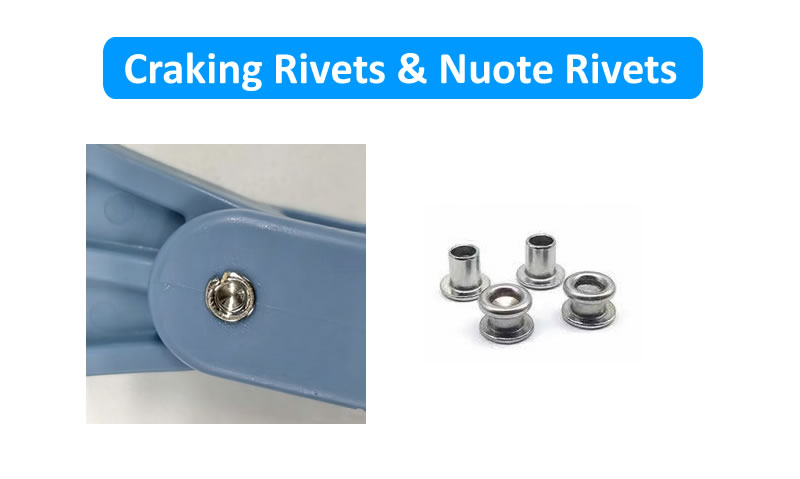
A rivet that cracks during setting is one of the most common frustrations we hear about. Here is why it happens – and how we design our half tubular rivets to prevent it.
Cause 1: Cavity depth is too deep
If the cavity exceeds 55% of the barrel length, the remaining wall is too thin to support the rolling action. The metal folds instead of rolling – and cracks. Our solution: We control cavity depth to exactly 45–55% of barrel length on every batch.
Cause 2: Material hardness is inconsistent
Brass that is too hard cracks during forming; brass that is too soft deforms unevenly. Our solution: Every coil of C2680 brass is hardness‑tested before production. We reject any coil outside HRB 60–75.
Cause 3: Hole size is too tight
If the hole is undersized, the barrel is compressed excessively during insertion – the wall cracks before setting even begins. Our solution: We specify the correct hole size (shank + 0.15–0.20mm) and provide a setting guide with every order.
Cause 4: Setting force is too high or uneven
Half tubular rivets only need 25–30% of the force required for solid rivets. Excessive or uneven force cracks the thin wall. Our solution: We recommend the optimal setting force for your rivet size and material – and can supply matched setting tools to ensure even pressure.
Cause 5: Tooling is worn or mismatched
Worn or incorrectly shaped setting punches create uneven pressure points. Our solution: Our setting tools are matched to our rivet dimensions and maintained with polished, wear‑resistant surfaces.
The result: a clean, symmetrical clinch on every rivet – no cracks, no weak spots, no field failures.
Manufacturing Process – Production Flow Chart
| Step | Process | Description |
|---|---|---|
| ① | Material Procurement | Certified C11000 copper wire from approved mills. Each coil comes with a mill test certificate and heat number for full traceability. |
| ② | Incoming Material Inspection | Wire checked for diameter (±0.02mm), hardness, and copper content (spectrometer verifies ≥99.9% Cu). Out‑of‑spec material is rejected before production begins. |
| ③ | Cold Heading (Multi‑Station) | The wire feeds into a progressive cold header. In a single continuous sequence: • Wire drawn to exact shank diameter • Cut to precise blank length • First blow: square the blank • Second blow: form the head • Third blow: extrude semi‑hollow cavity (45–55% depth) |
| ④ | Trimming | Flash around the head edge is removed for a clean, burr‑free finish. |
| ⑤ | Tumbling & Deburring | Micro‑burrs are eliminated and surface is prepared for finishing. |
| ⑥ | Plating or Coating | Applied as specified – tumbled, lacquered, tin‑plated, or plain. |
| ⑦ | Final Inspection | 100% optical sorting for critical dimensions. AQL sample manually verified. Dimensional report, material certificate, and Certificate of Conformance issued. |
| ⑧ | Finished Product – Ready for Shipment |
Sample lead time: 5–7 days standard; custom tooling: 15–20 days.
Our Certifications – Proof of Quality
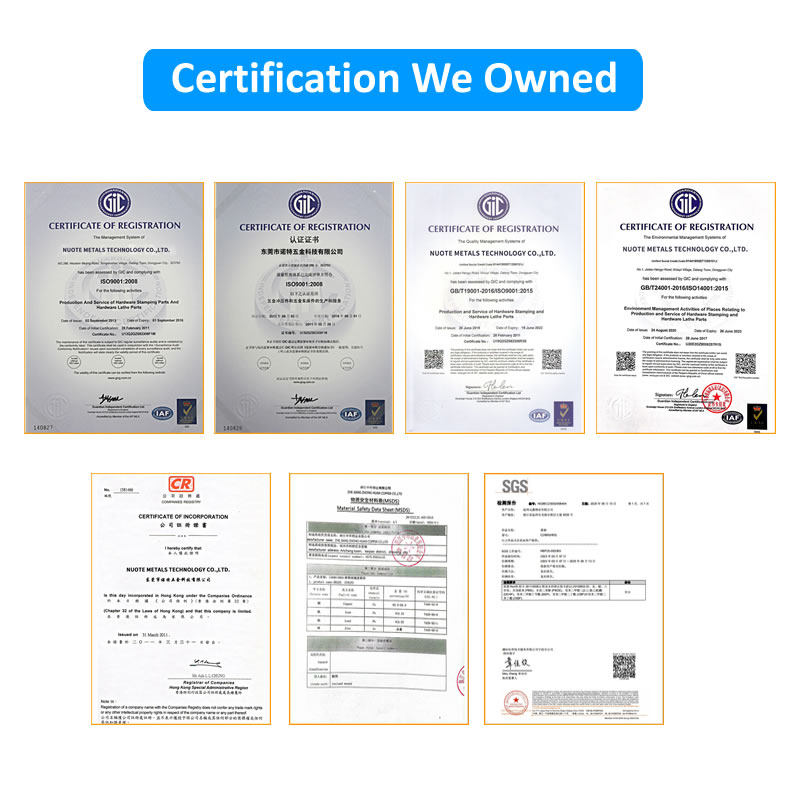
We maintain full traceability and quality documentation for every batch of brass half tubular rivets:
- ISO 9001:2015 – Certified quality management system
- RoHS compliance – Verified by SGS third‑party testing
- REACH compliance – Current SVHC declaration
- SGS test reports – Available upon request for specific batches
- Material certificates – Mill test certificates traceable to original coil
All certifications and test reports are available for download or upon request. We believe in full transparency – what we claim, we can prove.
Three Questions We Answer Often
Q: "Are brass half tubular rivets and brass semi‑tubular rivets the same thing?"
A: Yes – they are the same product. Some customers call them half tubular rivets, others call them semi‑tubular rivets or half hollow rivets. Different names, same reliable fastener. We manufacture the same product under multiple names so you can find us regardless of which term you use.
Q: "Can I get samples before ordering production quantities?"
A: Yes – we offer samples for all our products. For standard existing specifications, samples are provided free of charge – you only pay the shipping cost. For custom sizes or custom tooling, sample availability and lead time depend on the specific requirements. Please contact our sales team with your drawing or specification, and they will advise on sample cost and delivery timeline.
Q: "What is the difference between half tubular and full tubular rivets?"
A: A half tubular rivet has a shallow cavity at the tail (45–55% of barrel length) – the wall is thicker and the rivet offers 80–90% of solid rivet strength. A full tubular rivet (also called a tube rivet) is fully hollow – the wall is thinner and the rivet offers 60–70% of solid rivet strength, with even lower setting force (15–20% of solid). Choose half tubular for strength and durability; choose full tubular for soft materials and minimal setting force.
Hot Tags: Brass Half Tubular Rivets,Brass Rivets Manufacturer,Half Tubular Rivets Supplier
Related Categories
Send Inquiry
Please feel free to fill your inquiry in the form below. We will reply you in 24 hours.



X
We use cookies to offer you a better browsing experience, analyze site traffic and personalize content. By using this site, you agree to our use of cookies.
Privacy Policy