
Products
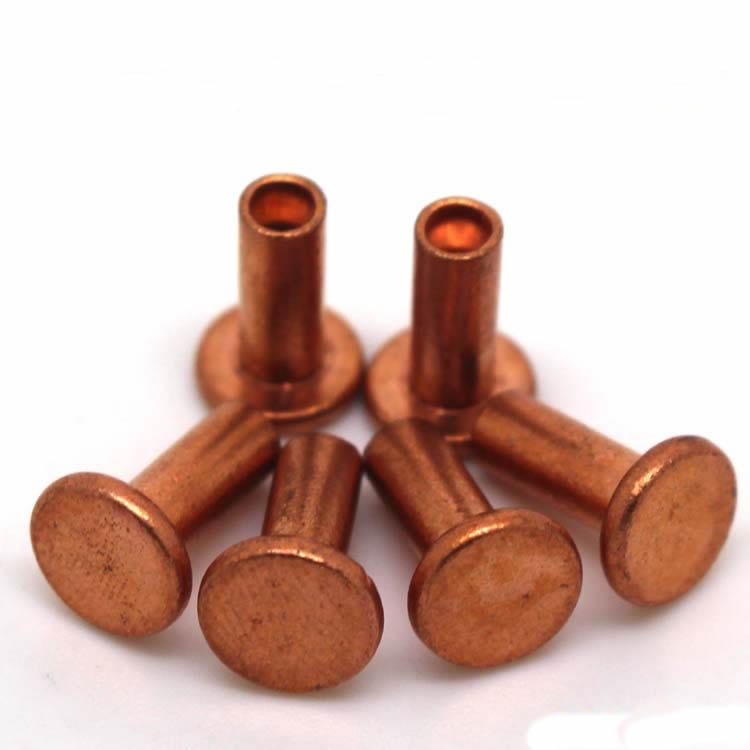
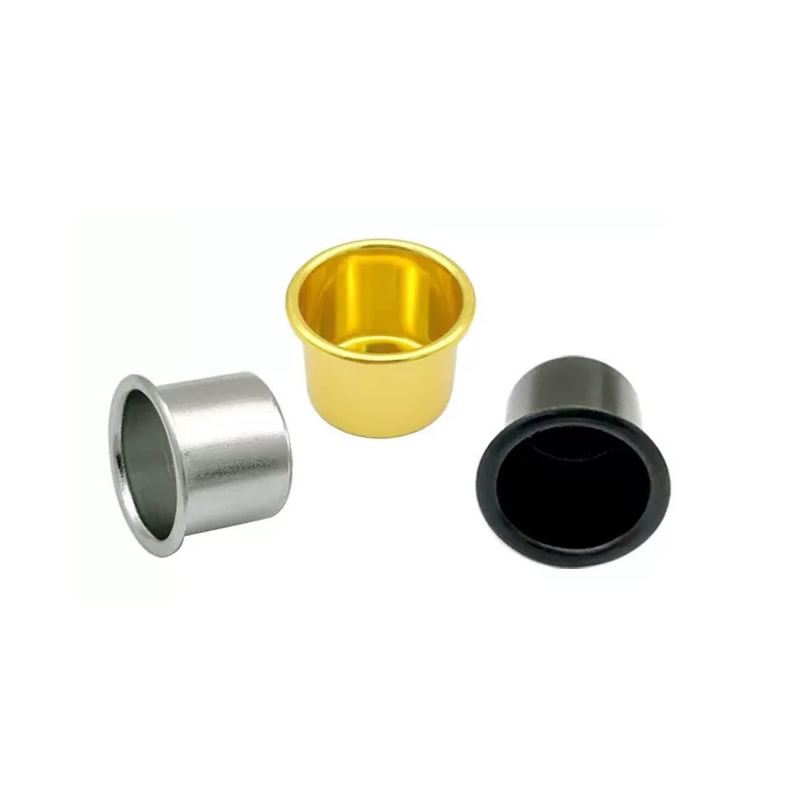
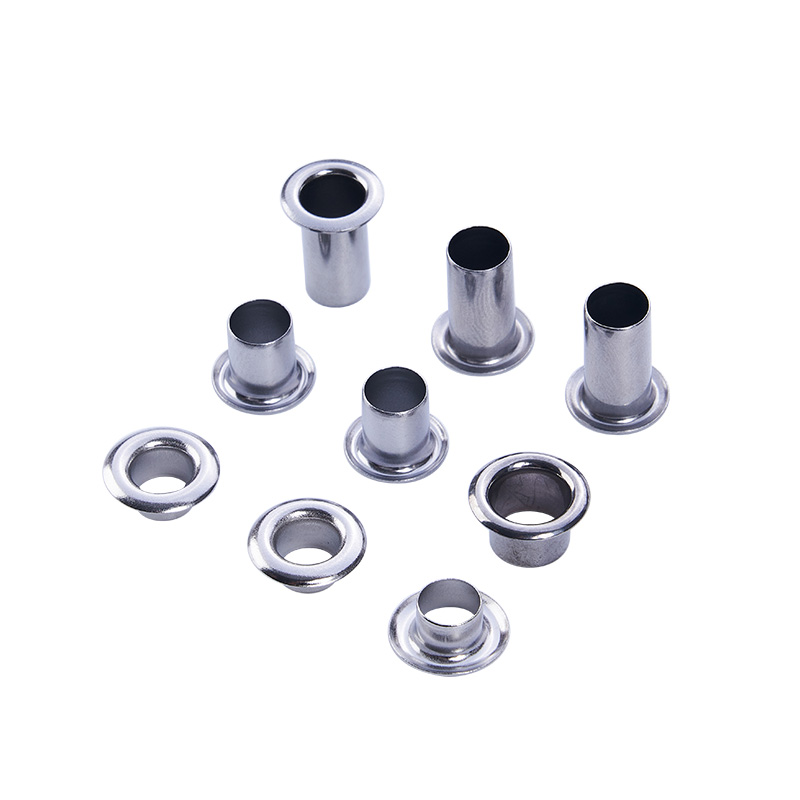
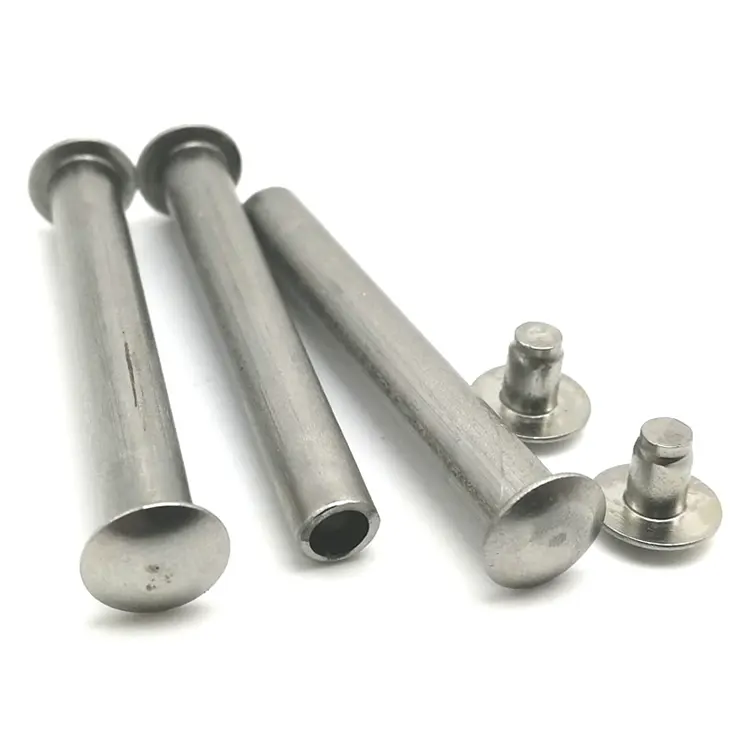
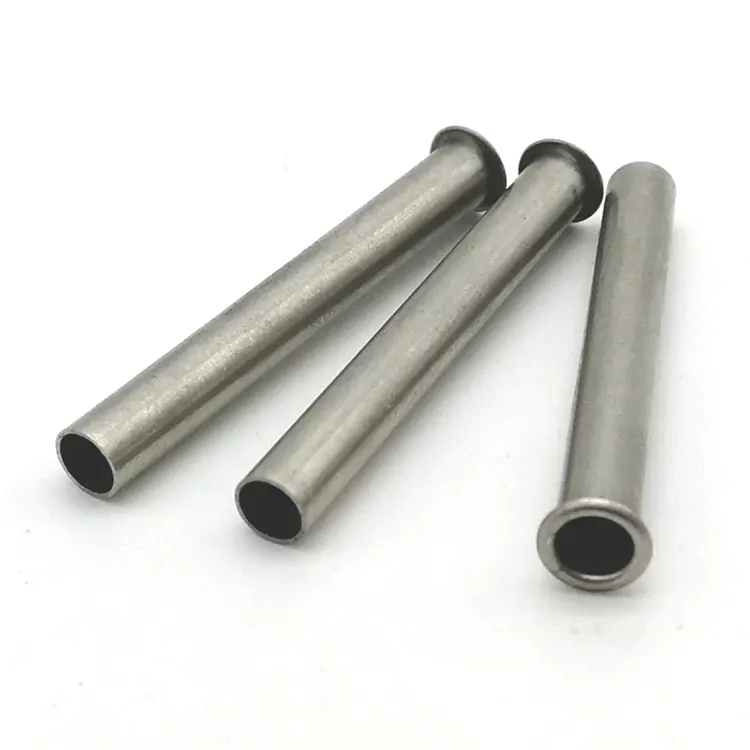
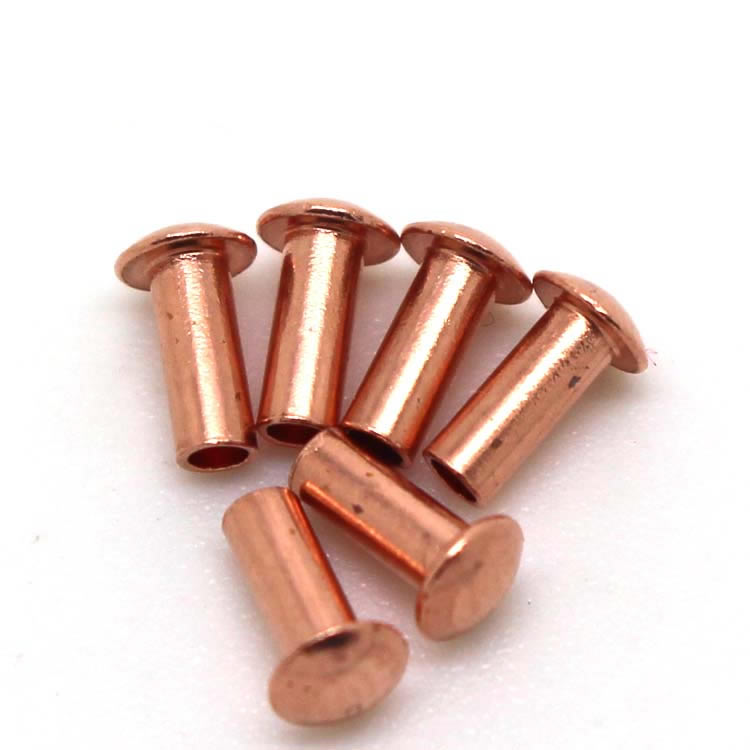
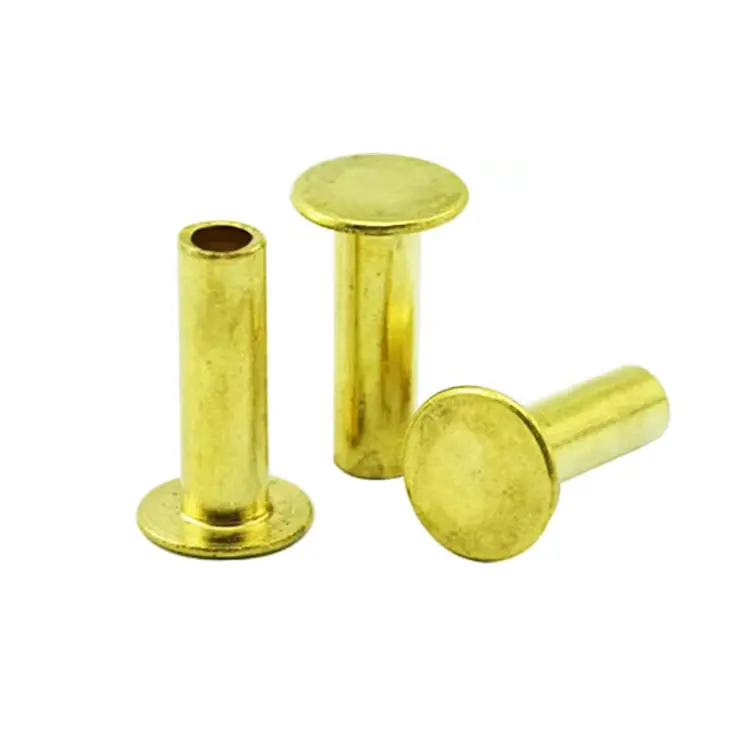
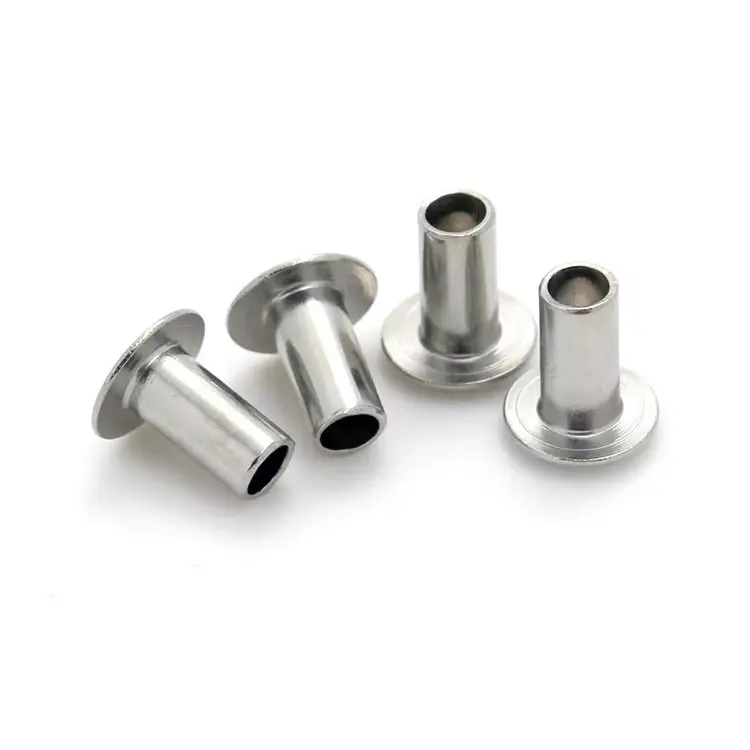
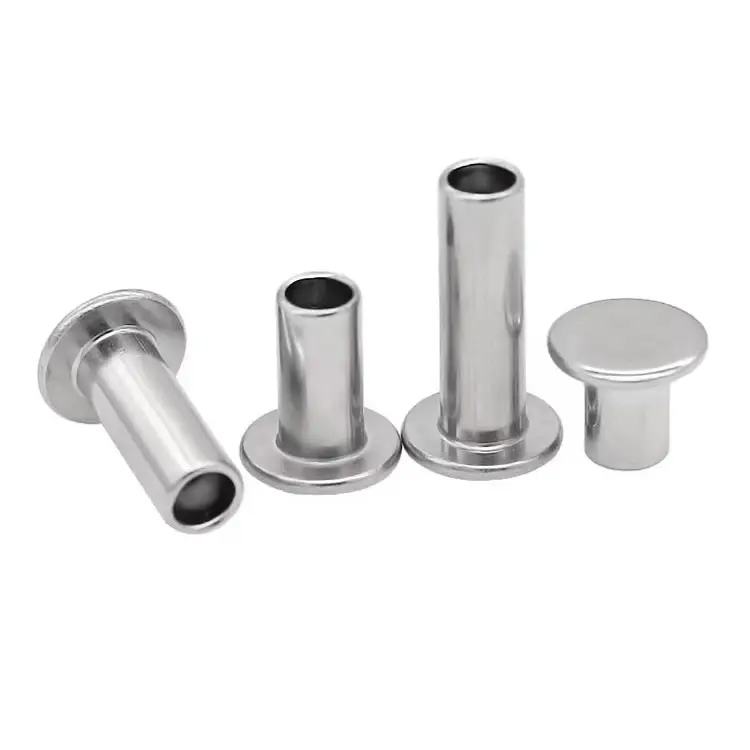
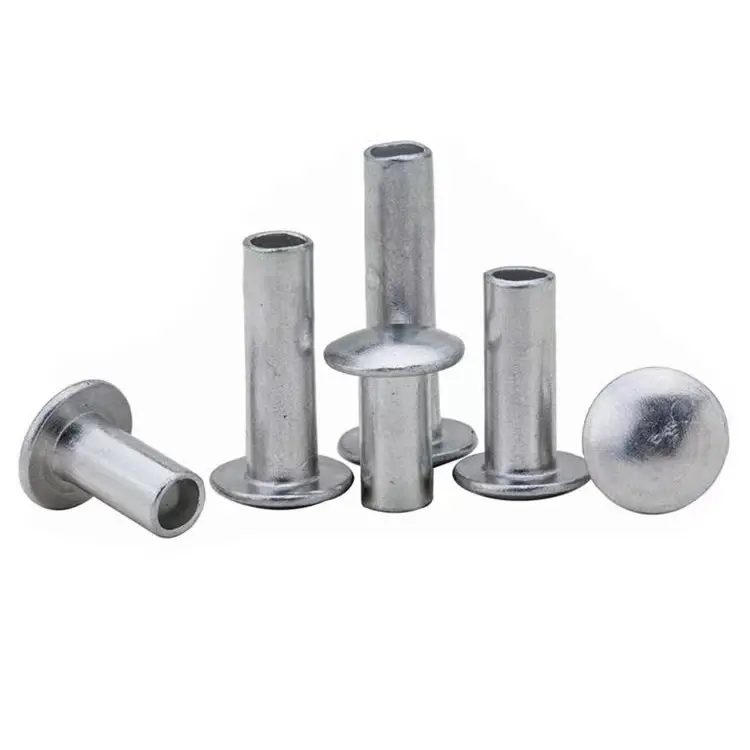
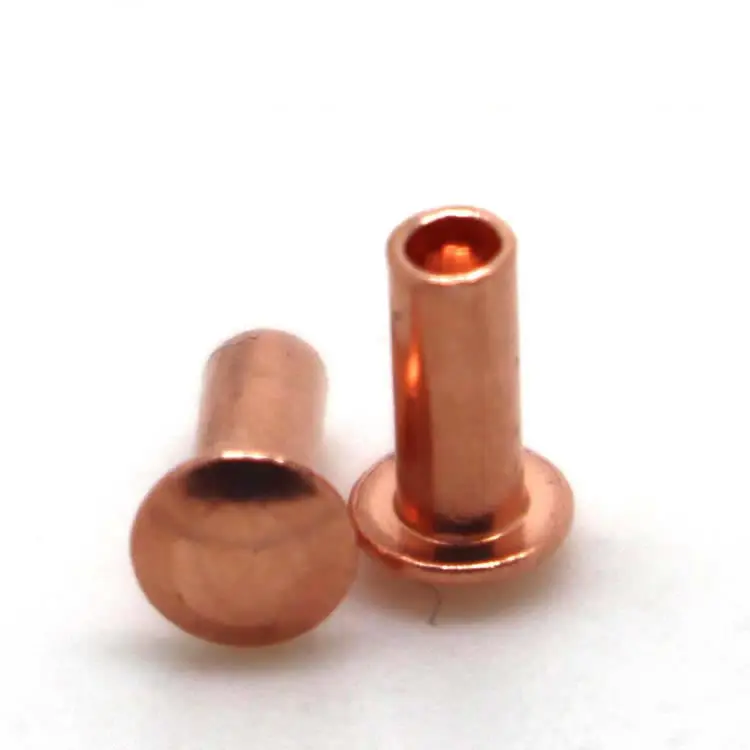
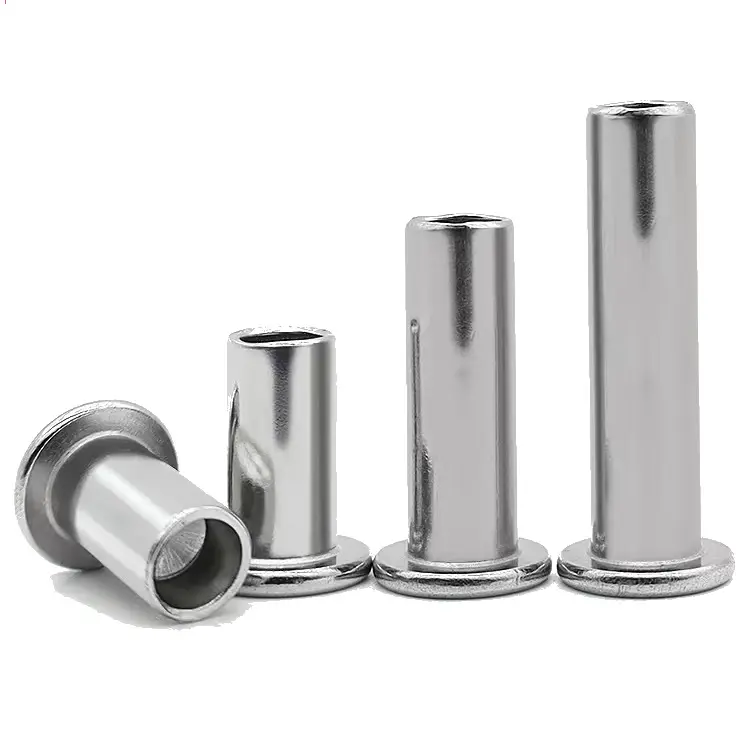
Copper Half Tubular Rivets
Nuote Metals supplies copper half tubular rivets – the only fastener that reduces setting force by 70% while delivering 100% IACS electrical conductivity, 401 W/m·K thermal conductivity, and natural antimicrobial properties. Made from C11000 pure copper, available in 0.8–8.0mm shank diameters and six head styles.
Send Inquiry
Product Description
Most rivets do one job: they hold things together. Copper half tubular rivets do three. They hold. They conduct electricity. They transfer heat. They also kill bacteria – a fourth if you are counting.
If your assembly needs any one of these, copper is worth considering. If it needs all three, copper is the only answer.
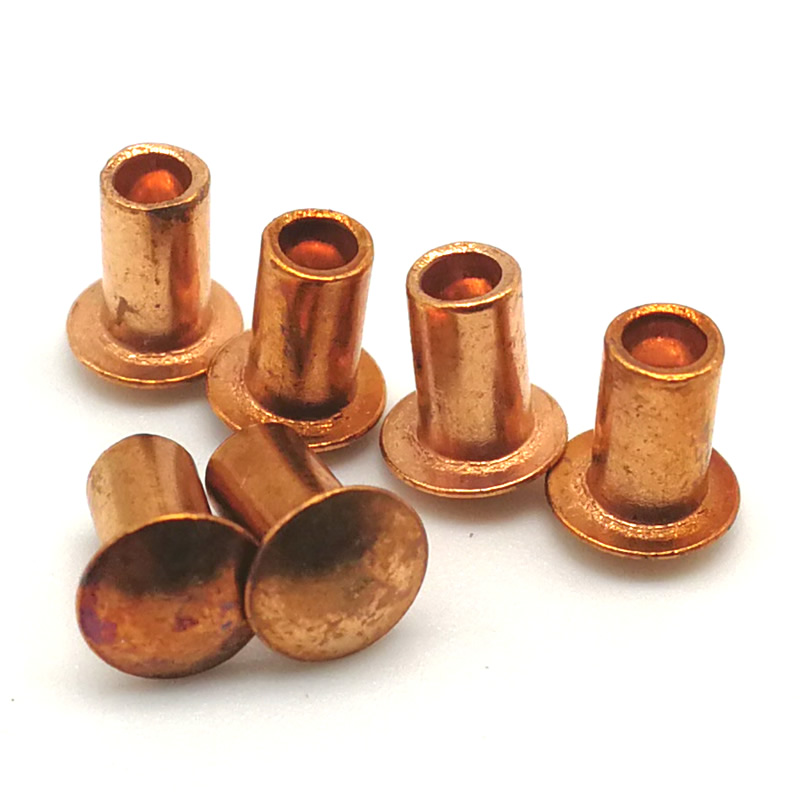
What Makes Copper Different
| Capability | Copper (C11000) | Brass | Aluminum | Steel |
|---|---|---|---|---|
| Electrical conductivity | 100% IACS | ~28% | ~61% | ~10% |
| Thermal conductivity | 401 W/m·K | ~120 | ~140 | ~50 |
| Antimicrobial | Yes | Limited | No | No |
| Setting force vs. solid | 70% less | 70% less | 70% less | 70% less |
The half tubular design already reduces setting force by 70% compared to a solid rivet. Copper adds the rest – conductivity, thermal transfer, and antimicrobial protection – without making installation harder.
What You Can Specify
Shank diameter: 0.8–8.0mm
Head styles: Round, flat, oval, countersunk, truss, mushroom
Finishes: Plain (as‑formed), tumbled (bright), lacquered, tin‑plated
Length: Custom to your material stack thickness
One Real Application – Induction Cooker Power Module
A manufacturer of high‑power induction cookers was losing units to heat failure. The IGBT module overheated because the steel screws attaching it to the heat sink could not move heat fast enough. The customer needed a fastener that would pull heat away from the module – and they needed it to set without cracking the ceramic substrate.
We supplied C11000 copper half tubular rivets – 3.0mm shank, 5.5mm round head, 5.0mm barrel length, plain finish. The copper pulled heat out of the module at 401 W/m·K. The half tubular cavity set at 1.0 ton instead of 3.5 – no cracked substrates. The customer tested 500 units. After 5,000 thermal cycles, zero failures. They now order 150,000 pieces annually.
Why Cracking Happens – And How We Stop It
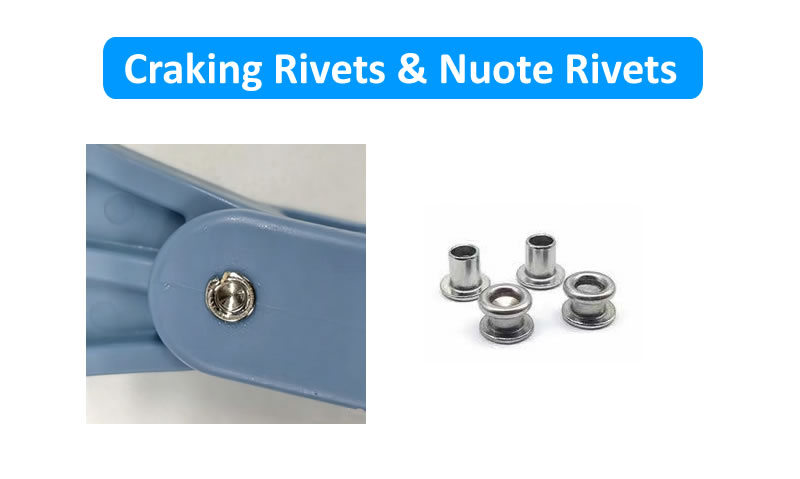
Copper is ductile, but it can still crack. Here is what we watch for:
- Cavity too deep – We hold cavity depth to 45–55% of barrel length.
- Copper purity – We spectrometer‑verify every coil. ≥99.9% or it does not enter production.
- Work hardening – We use polished carbide dies and control heading speed specifically for copper.
- Force too high – Half tubular rivets need only 25–30% of solid rivet force. We recommend the right setting pressure for your size.
- Hole too tight – Correct hole size is shank + 0.15–0.20mm. We include a setting guide with every order.
How We Work – From Inquiry to Delivery
We do not guess your specifications. We ask, we draw, we confirm, we produce.
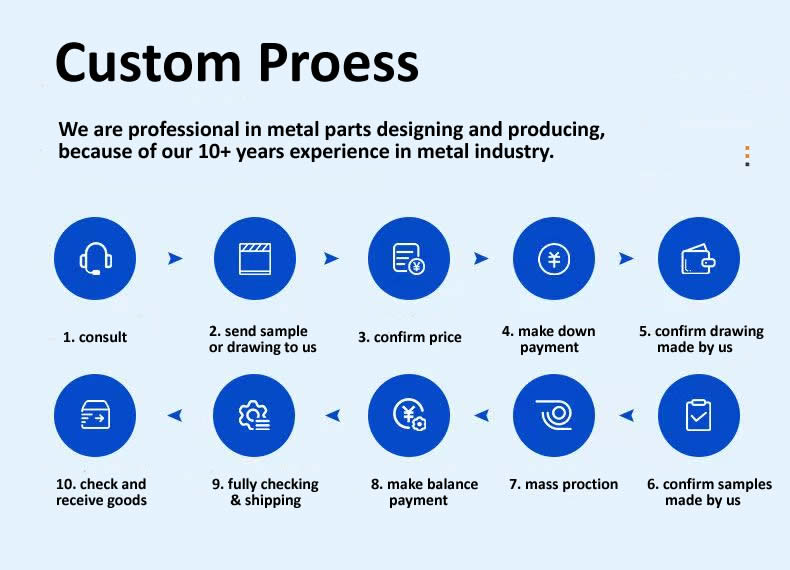
1.Consultation – You tell us your material, stack thickness, head style, and quantity.
2.Quotation – We send you a price breakdown – piece price, tooling cost (if any), and lead time.
3.Drawing – Our engineers prepare a production drawing. You approve it.
4.Production – We manufacture your rivets to the approved drawing.
5.Inspection – 100% optical sorting. AQL sample verified. Dimensional report and material certificate included.
6.Shipping – Packed to your requirement. Full documentation enclosed.
7.Follow‑up – We check that everything arrived and works as expected.
Sample lead time: 5–7 days standard; custom tooling: 15–20 days.
Our Certifications – Proof of Quality
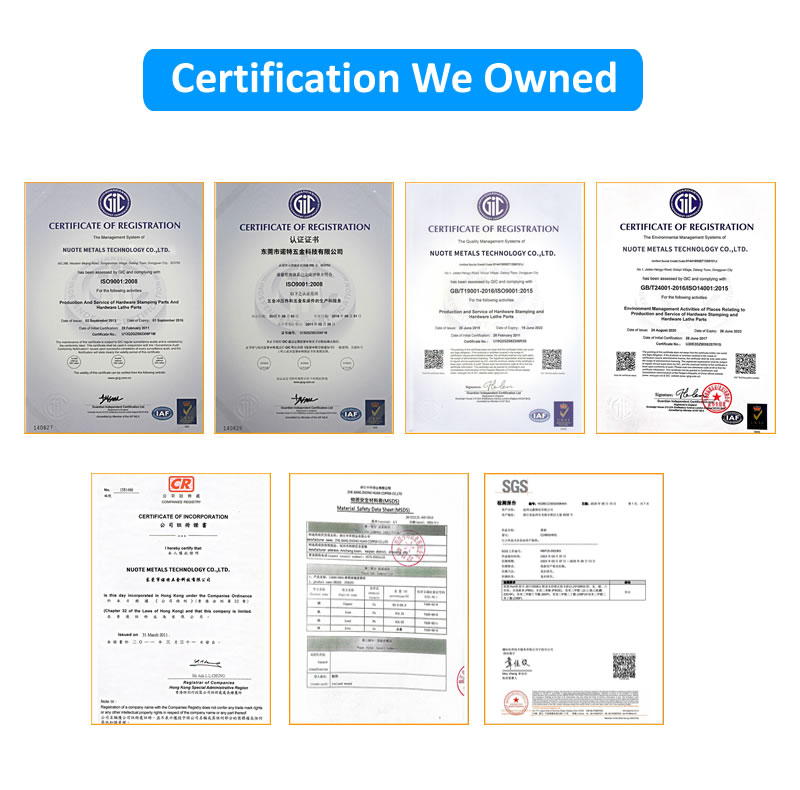
- ISO 9001:2015 – Certified quality management system
- RoHS compliance – Verified by SGS testing
- REACH compliance – Current SVHC declaration
- SGS test reports – Available per batch on request
- Material certificates – Traceable to original coil
Three Questions We Answer Often
Q: "Can I get samples before ordering production quantities?"
A: Yes. Standard specifications: free samples, you pay shipping. Custom sizes: contact our sales team for sample cost and lead time.
Q: "Why choose copper over brass for half tubular rivets?"
A: Copper offers 100% IACS conductivity; brass offers ~28%. If your rivet must carry current or transfer heat, copper is the right choice. Brass is harder and offers better wear resistance for mechanical applications – but for electrical, thermal, or antimicrobial requirements, copper is the only answer.
Q: "Will copper half tubular rivets tarnish? How do I prevent it?"
A: Copper naturally tarnishes when exposed to air – this is cosmetic and does not affect performance. If you need to maintain a bright finish, specify lacquered copper half tubular rivets. The clear coating seals the surface and prevents tarnishing for 2–3 years. For short‑term storage (under 6 months), plain copper rivets stored in sealed bags with desiccant will remain bright.
Hot Tags: Copper Half Tubular Rivets Factory,China Copper Half Tubular Rivets,China Rivets Manufacturer
Related Categories
Send Inquiry
Please feel free to fill your inquiry in the form below. We will reply you in 24 hours.



X
We use cookies to offer you a better browsing experience, analyze site traffic and personalize content. By using this site, you agree to our use of cookies.
Privacy Policy