
Products
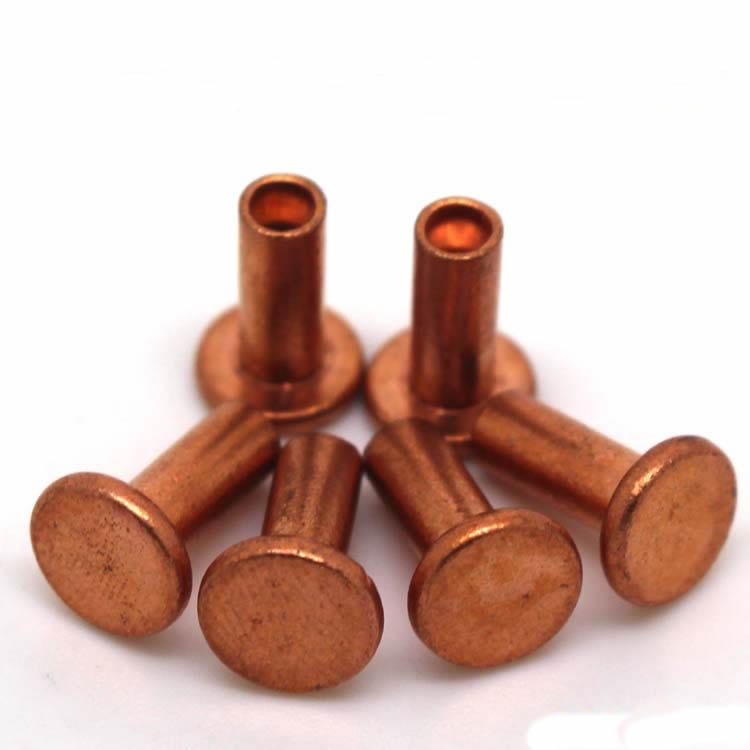
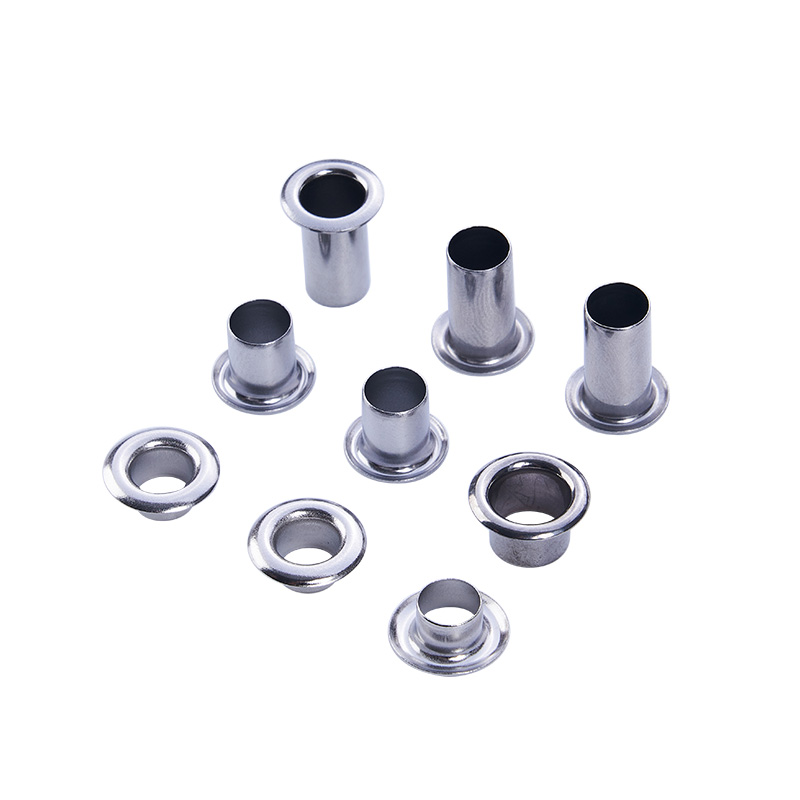
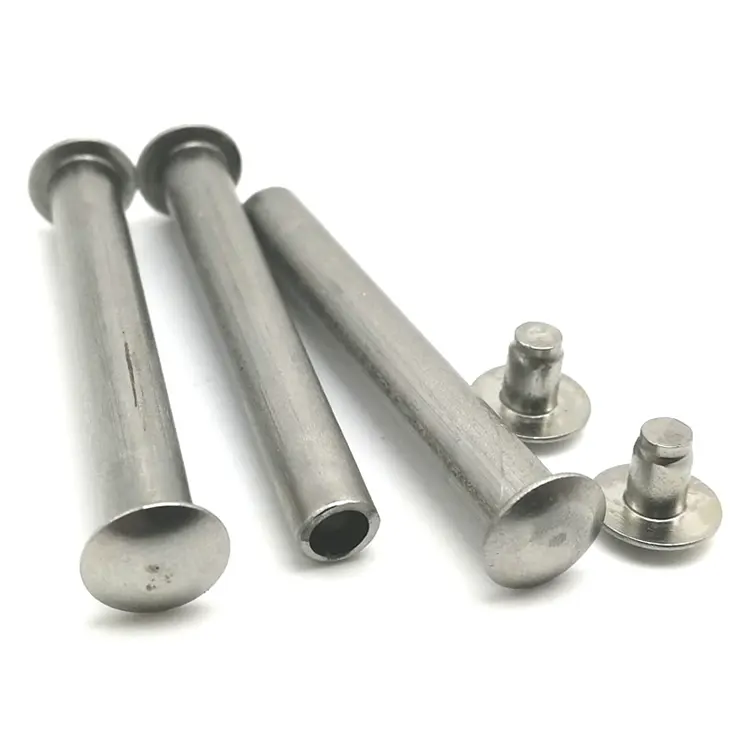
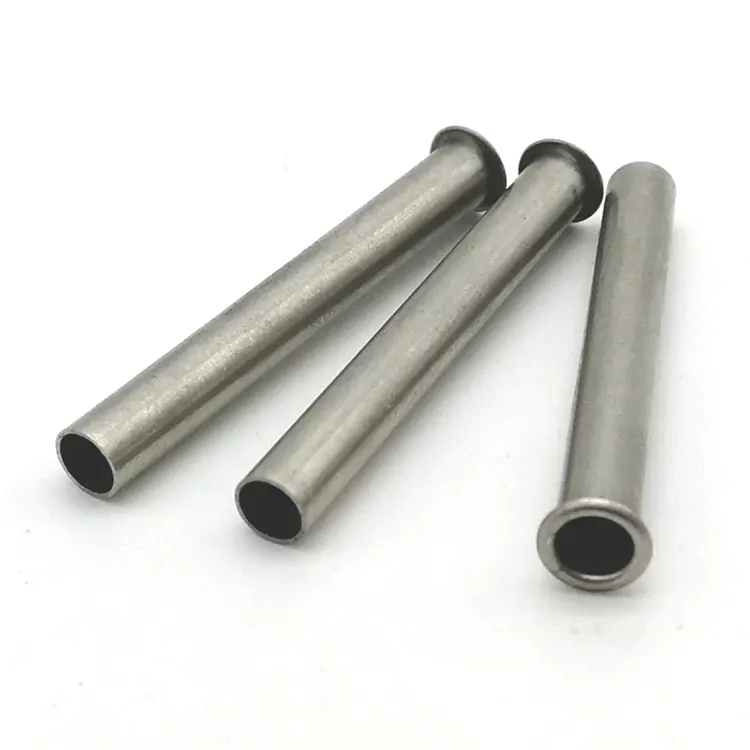
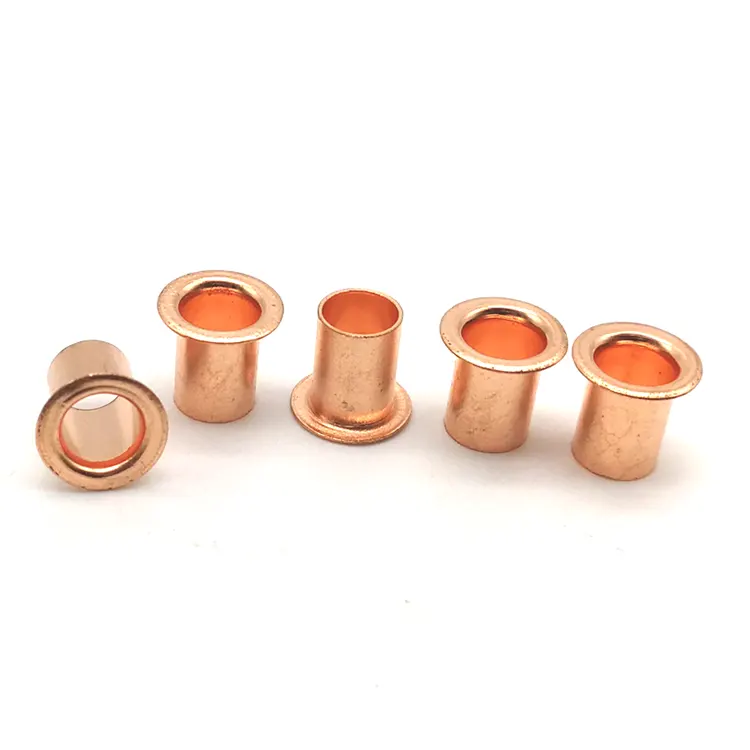
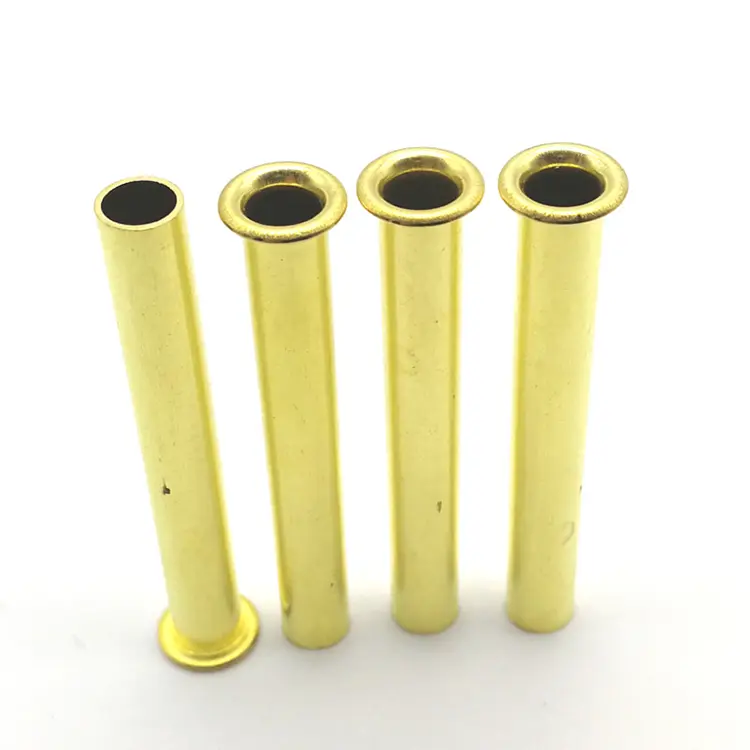
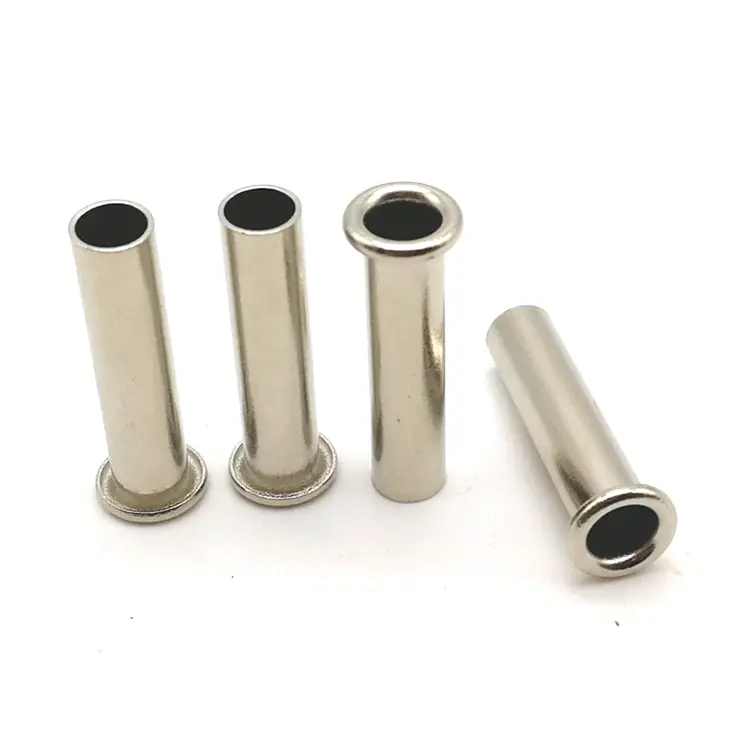
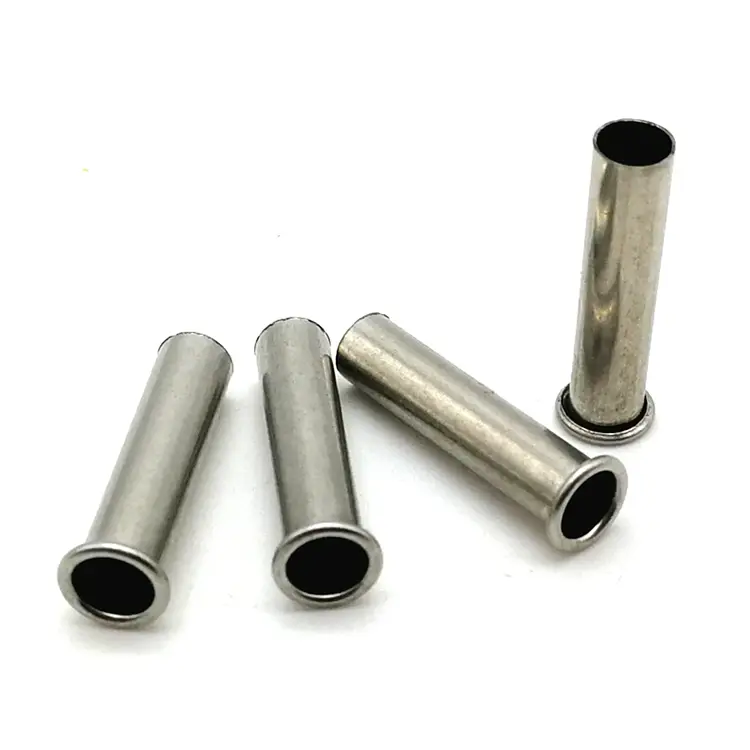
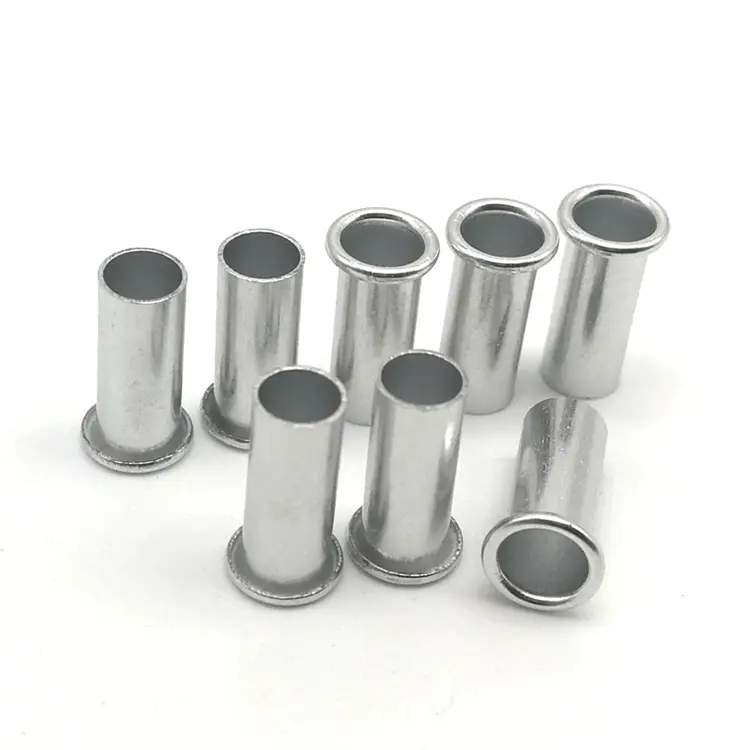
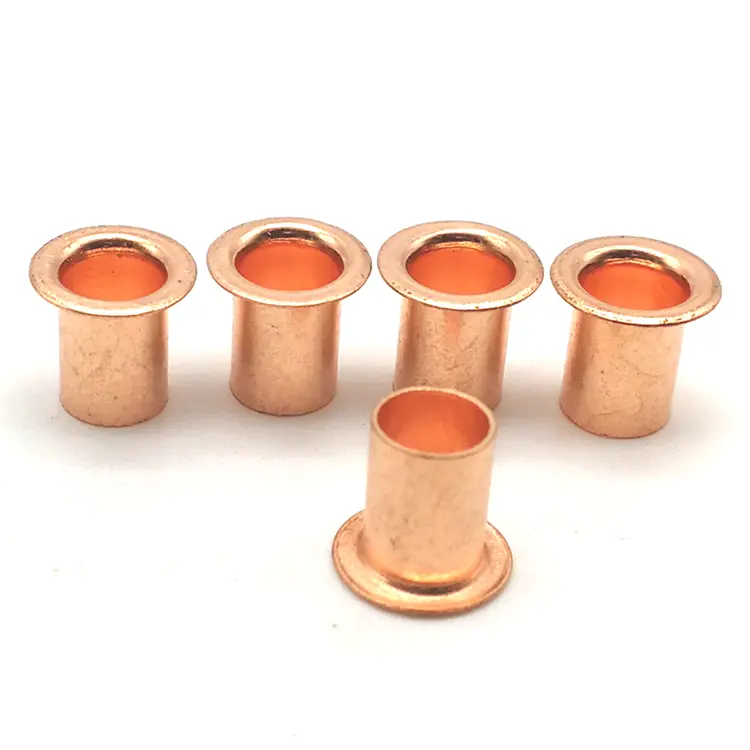
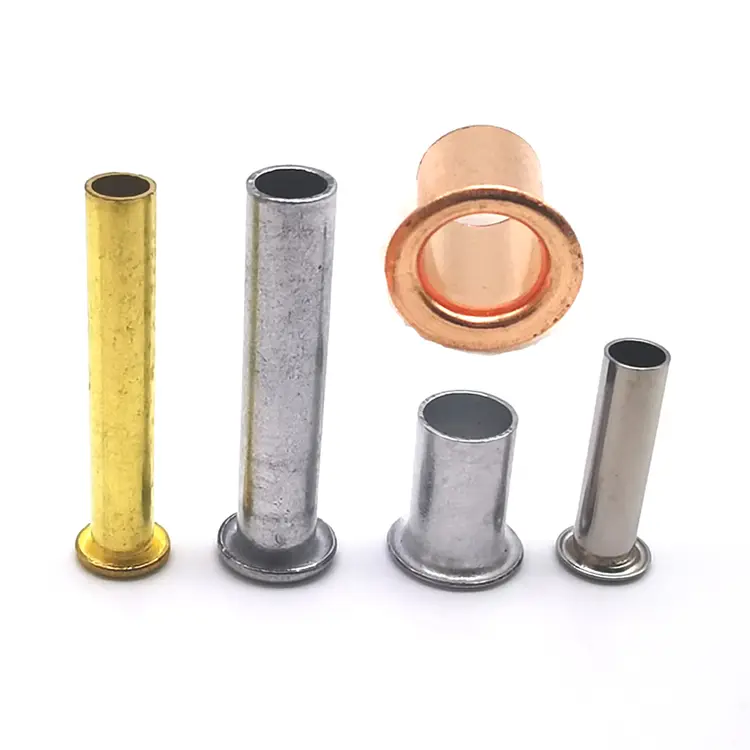
Copper Hollow Rivets
Nuote Metals supplies copper hollow rivets – the only hollow fastener that combines 100% IACS electrical conductivity, 401 W/m·K thermal conductivity, and natural antimicrobial properties. Available in tube‑cutting or deep‑drawn construction, 1.0–8.0mm shank diameters.
Send Inquiry
Product Description
Copper hollow rivets exist for a reason that no other hollow rivet can match: they do three things at once. They carry current. They move heat. They kill bacteria. If your application needs any one of these, copper is the answer. If it needs all three, copper is the only answer.
We offer two manufacturing routes – tube‑cutting with heading, or deep‑drawing from sheet – and we recommend the right one based on your drawing and volume.
Copper vs. Everything Else – The Numbers That Matter
| Material | Electrical Conductivity | Thermal Conductivity | Antimicrobial | Magnetic |
|---|---|---|---|---|
| Copper | 100% IACS | 401 W/m·K | Yes | No |
| Brass | ~28% IACS | ~120 W/m·K | Limited | No |
| Aluminum | ~61% IACS | ~140 W/m·K | No | No |
| Stainless Steel | <5% IACS | ~16 W/m·K | No | Slightly |
| Carbon Steel | ~10% IACS | ~50 W/m·K | No | Yes |
Which Process – Tube‑Cutting or Deep‑Drawing?
| Factor | Tube‑Cutting + Heading | Deep‑Drawing from Sheet |
|---|---|---|
| Tooling lead time | 2–3 weeks | 3–4 weeks |
| Best for | Larger diameters, thicker walls | Thin walls, tight tolerances, seamless bore |
| Tooling cost | Lower | Higher |
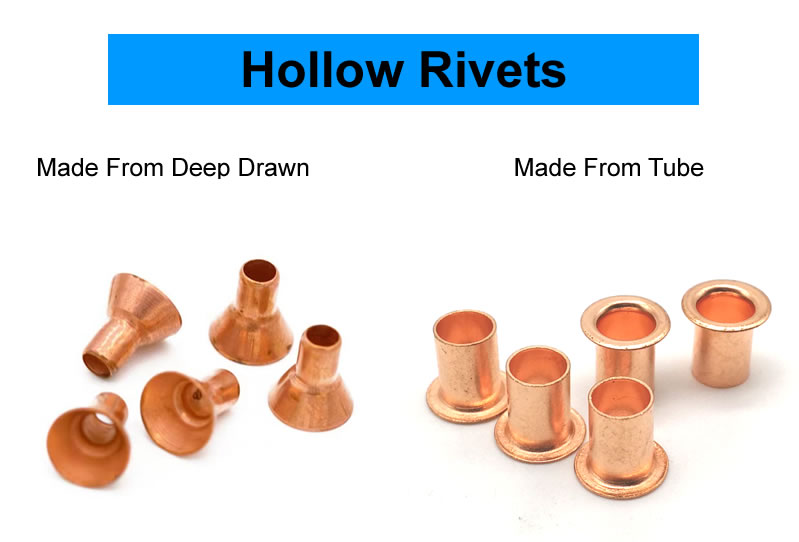
Send us your drawing – we recommend the optimal method at no charge.
One Real Application – LED Lighting Heat Sink Assembly
A manufacturer of high‑power LED fixtures needed a fastener to attach the driver board to the aluminum heat sink. Steel screws provided mechanical connection but poor thermal transfer – heat buildup was reducing LED lifespan. Solid copper rivets worked thermally but distorted the thin heat sink fins during setting.
We supplied C11000 copper hollow rivets – 4.0mm shank, 7.5mm round head, 6.0mm barrel length, plain finish. The copper delivered 401 W/m·K thermal conductivity – heat dissipated efficiently. The hollow design flared with minimal force – no distortion. The customer tested 500 rivets. After 5,000 thermal cycles, zero failures. They now order 150,000 pieces annually.
How We Make Copper Hollow Rivets
Route 1: Tube‑Cutting + Heading
Tube stock → cut to length → head formed → trimmed → tumbled → finished.
Route 2: Deep‑Drawing from Sheet
Sheet coil → progressive draw → pierce bore → flange coined → tumbled → finished.
Sample lead time: 5–7 days standard; custom tooling: 15–20 days.
Our Inspection Equipment – Protecting Your Quality

We maintain calibrated equipment to verify every batch of copper hollow rivets:
Laser micrometer – Shank diameter, wall thickness (±0.02mm)
Optical comparator – Head profile, flange diameter
2.5D image measuring system – Inner diameter, concentricity
Spectrometer – Material composition (≥99.9% Cu)
Salt spray chamber – Corrosion testing (when required)
All equipment is calibrated annually. Inspection records retained for five years.
Working with Customers Worldwide
We supply copper hollow rivets to manufacturers across North America, Europe, and Asia – LED lighting, electrical equipment, marine hardware, and antimicrobial surface applications.
Every batch includes:
- Material certificate – Traceable to original coil
- Dimensional inspection report – Actual measurements
- Certificate of Conformance – Signed, batch‑traceable
Three Questions We Answer Often
Q: "Can I get samples before ordering production quantities?"
A: Yes. For standard specifications, samples are free – you only pay shipping. For custom sizes, contact our sales team for sample cost and lead time.
Q: "Why choose copper over brass for electrical or thermal applications?"
A: Copper offers 100% IACS conductivity and 401 W/m·K thermal conductivity; brass offers ~28% and ~120 W/m·K. If your rivet must carry current or move heat, copper is the right choice. For the LED case above, copper was essential for thermal performance.
Q: "How can I prevent copper hollow rivets from cracking during setting?"
A: Copper is soft and ductile, but cracking can still occur. Common causes and solutions:
- Barrel too short – Measure stack thickness; we adjust length
- Force too high – Reduce setting pressure by 30–40%
- Work hardening – We use polished dies and controlled speeds
- Hole too tight – Increase hole size to shank +0.15–0.20mm
If none solve the problem, send us cracked samples and your material stack. We will diagnose and recommend a fix – at no charge.
Nuote Metals – Dongguan, China. ISO 9001:2015 certified. Free samples available. Contact us with your specs – we will respond within 24 hours.
Hot Tags: Copper Hollow Rivets Manufacturer, Custom Hollow Rivets Supplier, Hollow Rivets Wholesale
Related Categories
Send Inquiry
Please feel free to fill your inquiry in the form below. We will reply you in 24 hours.



X
We use cookies to offer you a better browsing experience, analyze site traffic and personalize content. By using this site, you agree to our use of cookies.
Privacy Policy