
Products
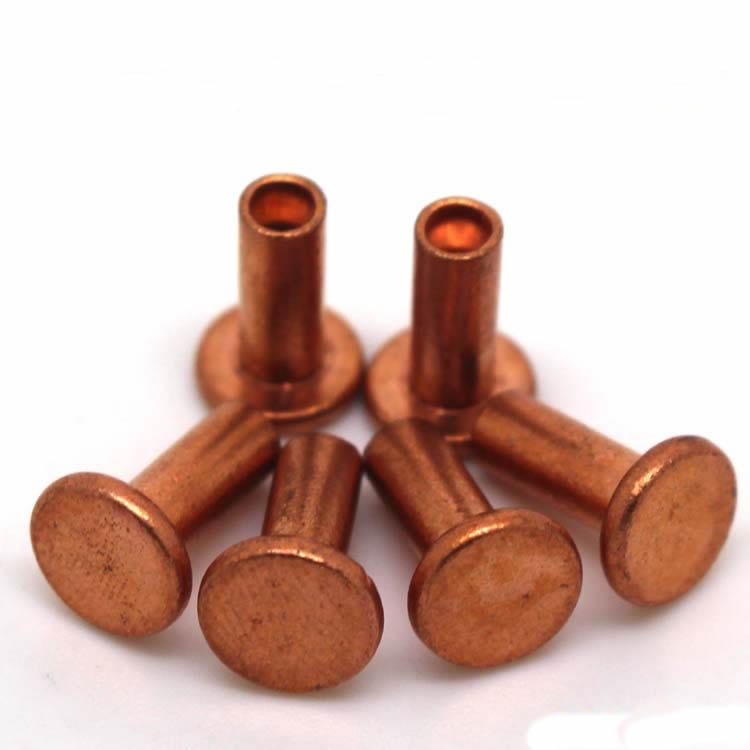
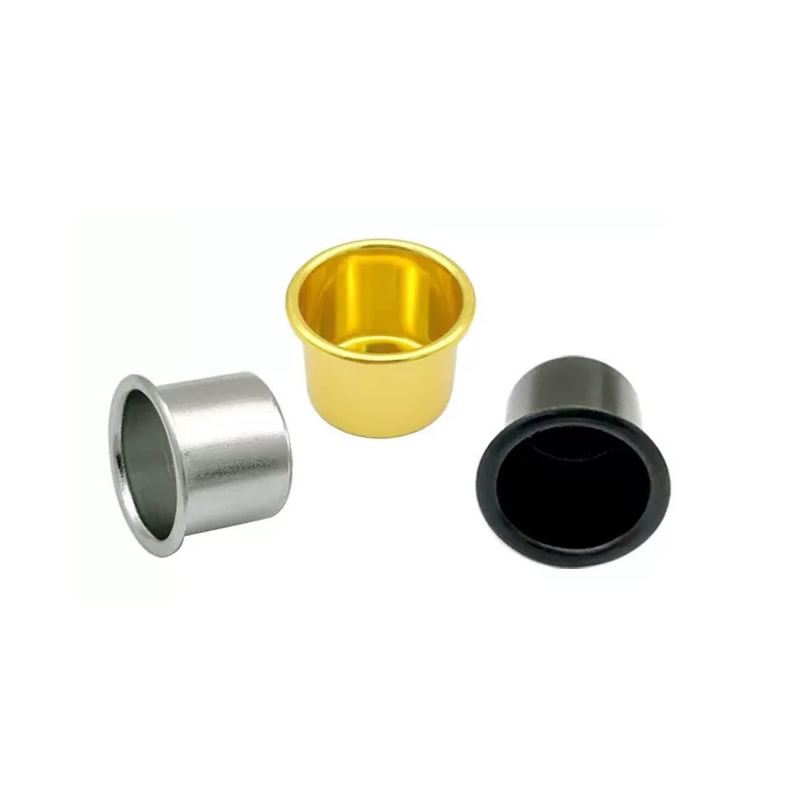
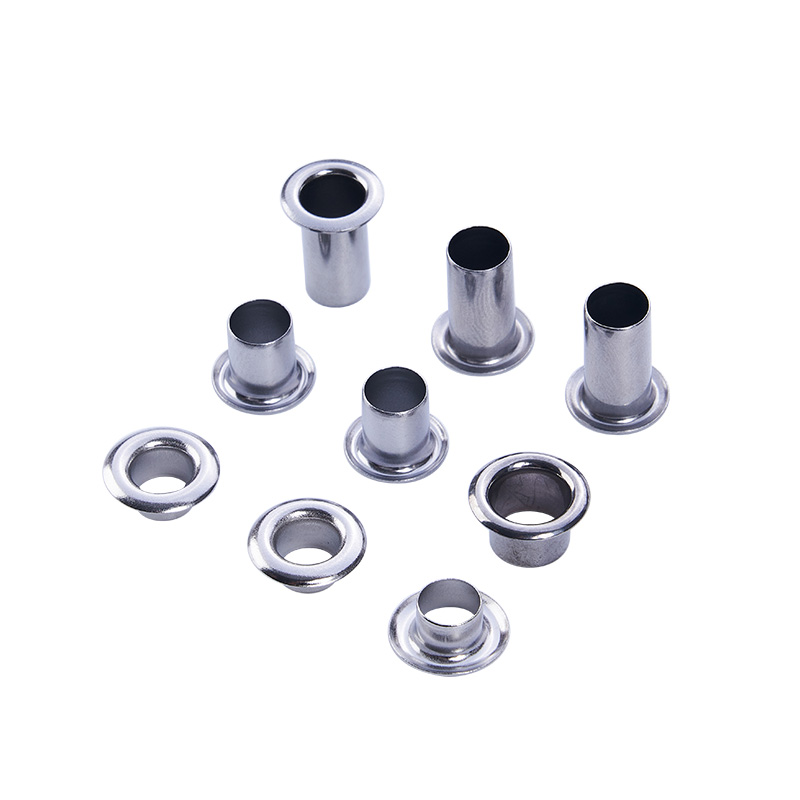
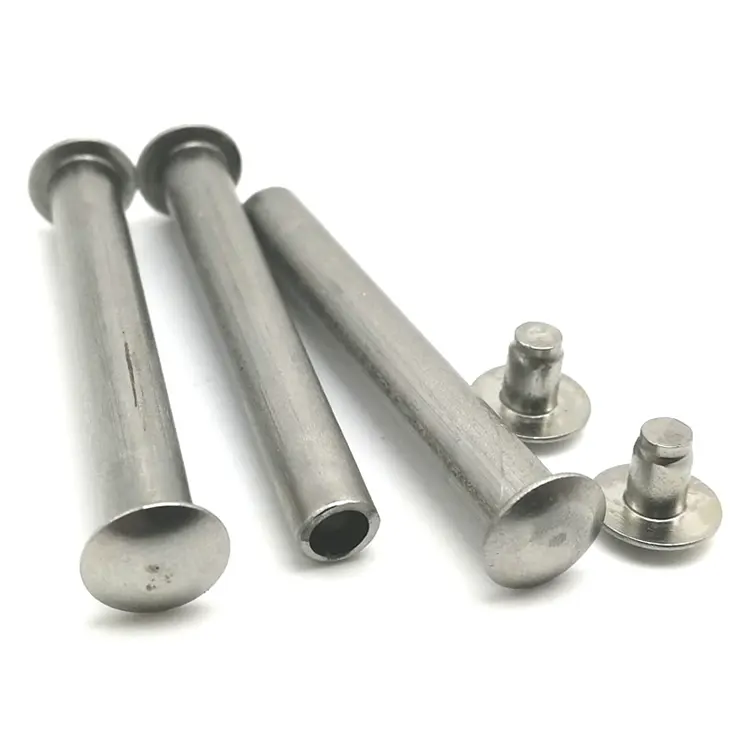
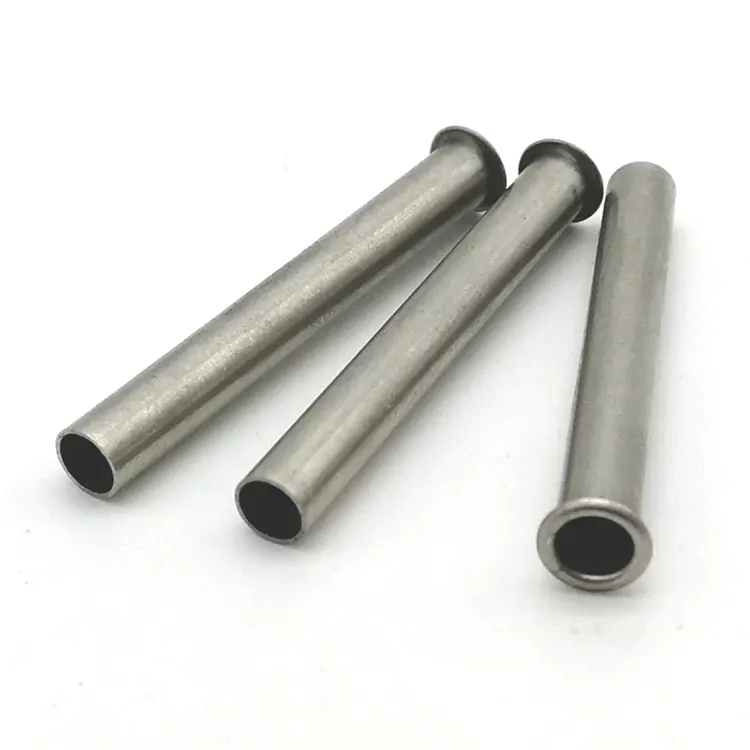
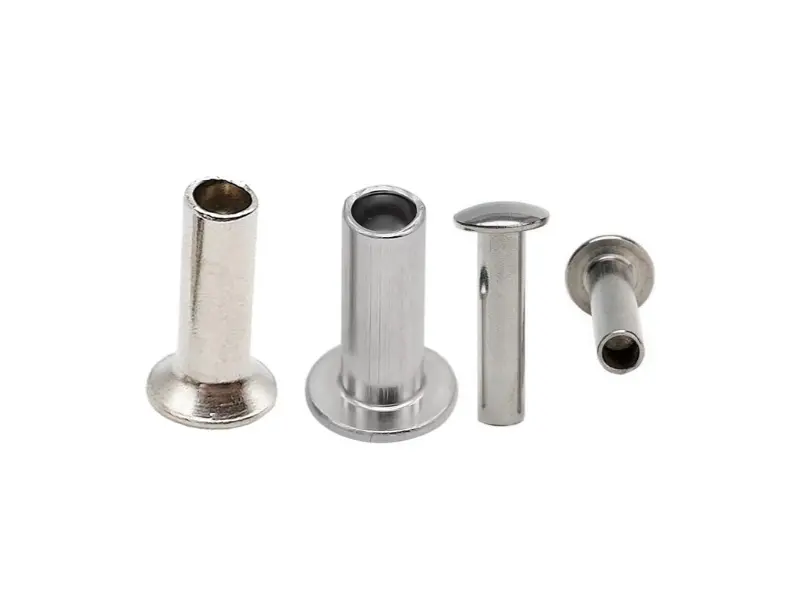
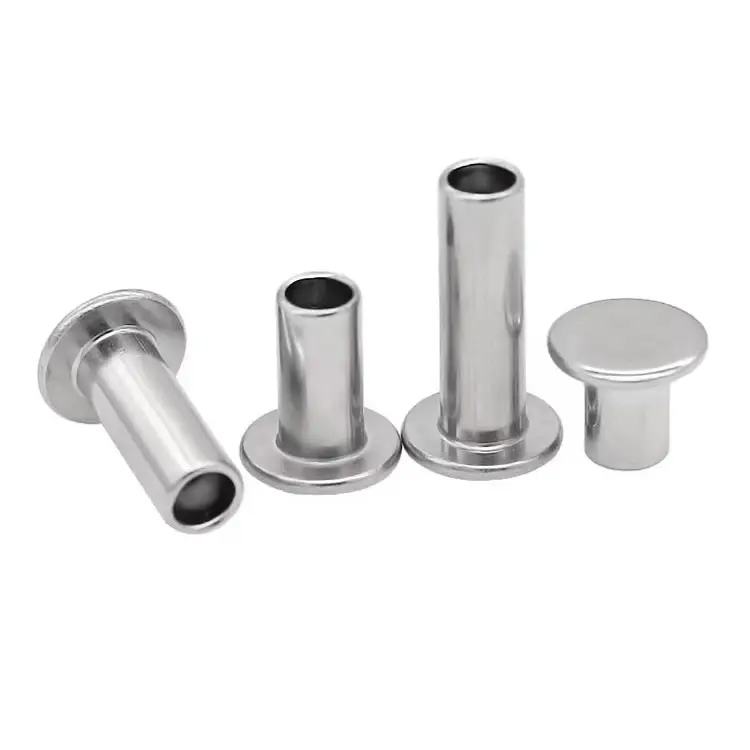
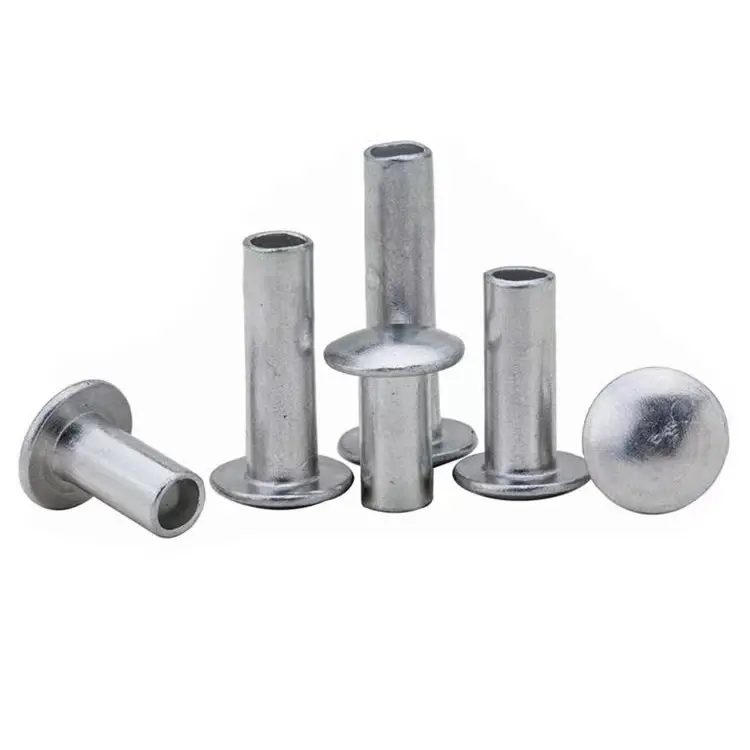
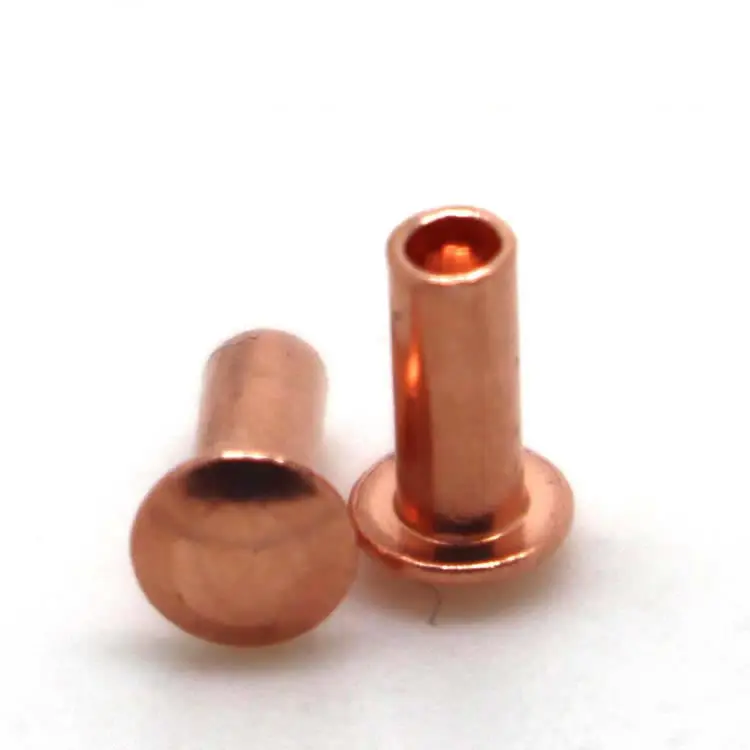
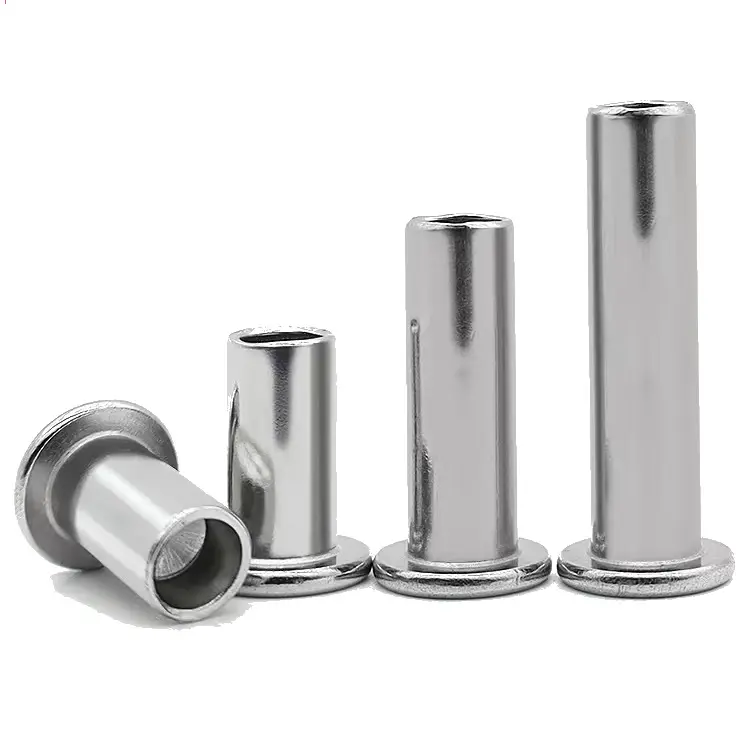
Iron Semi Hollow Rivets
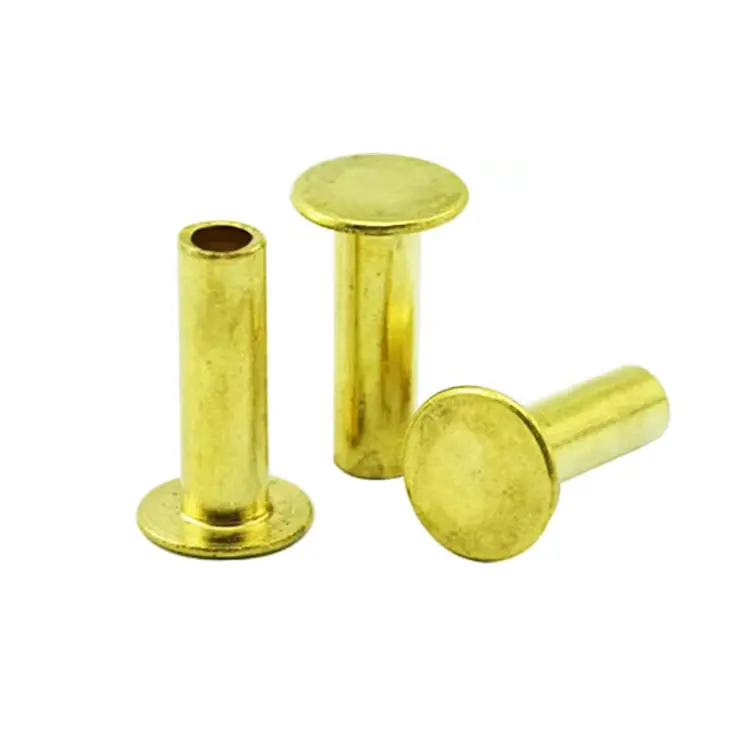
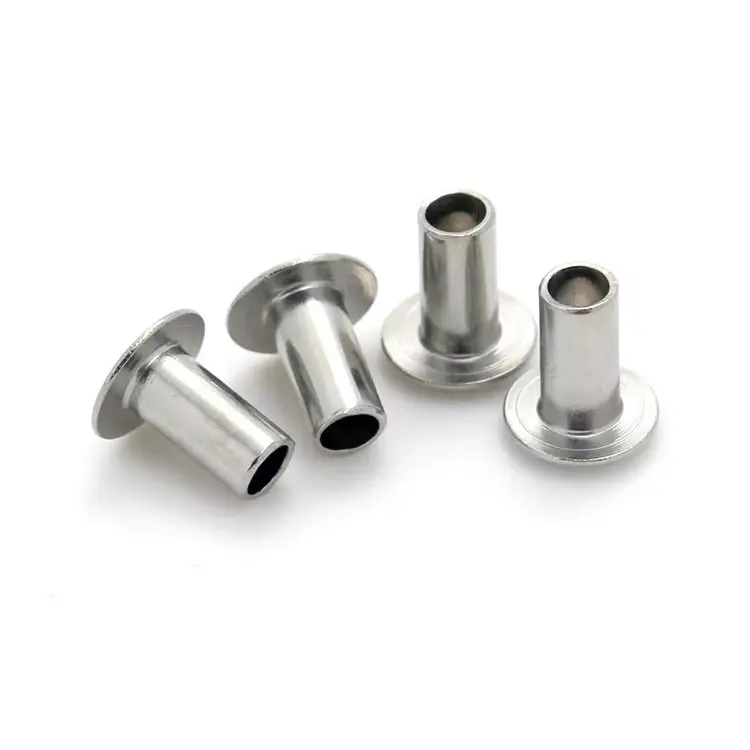
Nuote Metals is located in Dongguan, China. We specialize in the production of iron semi hollow rivets. The materials are generally 1T iron or carbon iron such as 1006 and 1008. Iron rivets are prone to rust, so they are usually surface treated with zinc plating, nickel plating, etc. We produce thousands of specifications of iron semi-hollow rivets, with the smallest rivet diameter being only 1.2mm and the largest being 10mm. We include various head shapes, such as flat head, half round head, countersunk head, mushroom head, etc.
Send Inquiry
Product Description
Iron Semi Hollow Rivets: Strong, Cost-Effective Fasteners for High-Volume Production
When your assembly requires a permanent joint but the high setting force of a solid rivet is causing deformation or slowing down your production line, iron semi hollow rivets offer a practical alternative. The shallow cavity at the tail reduces setting force by approximately 70% compared to a solid rivet, while retaining 80–90% of the shear strength. The result is a fastener that installs quickly, works with lighter tooling, and still delivers a reliable, permanent joint.
Nuote Metals cold-heads iron semi hollow rivets from low-carbon steel (1006, 1008, Q195) with diameters ranging from 1.2mm to 10mm. Available in multiple head styles and surface finishes, these rivets serve industries including furniture, automotive, hardware, and general industrial assembly.
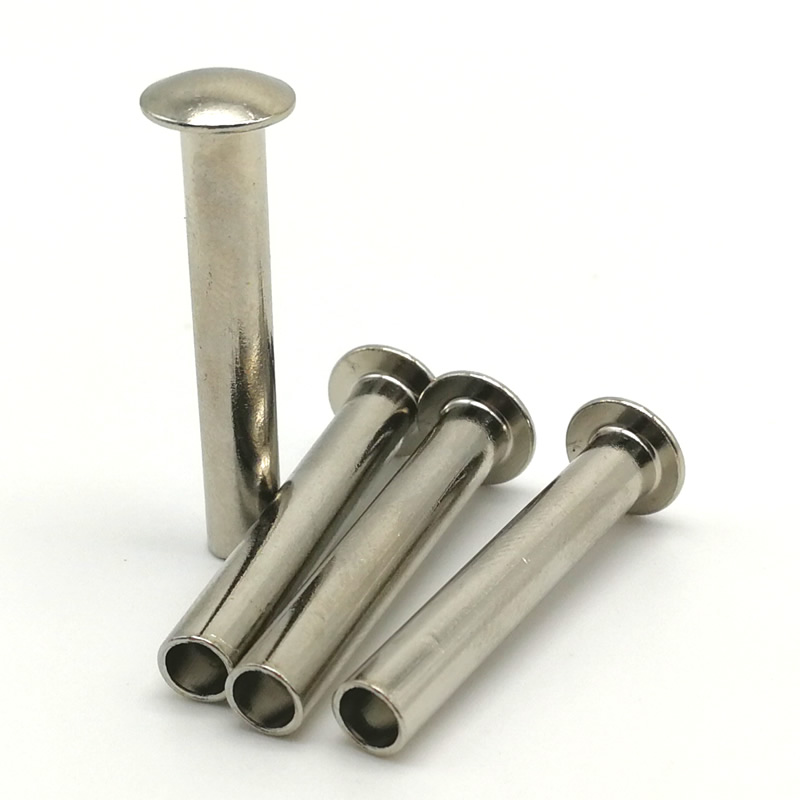
What Makes a Semi Hollow Rivet Different
The defining feature of a semi hollow rivet is the shallow cavity at the tail end—typically 45–55% of the barrel length. During installation, only the thin wall of this hollow section rolls outward to form the clinch. This is fundamentally different from a solid rivet, where the entire shank must deform.
| Feature | Iron Semi Hollow Rivet | Solid Iron Rivet |
|---|---|---|
| Tail design | Partially hollow (cavity depth 45–55% of length) | Fully solid throughout |
| Setting force | Approximately 25–30% of solid rivet force | High (requires heavy press or bucking bar) |
| Installation speed | Fast, suitable for automated assembly | Slower, requires more force and time |
| Shear strength | 80–90% of solid rivet | 100% (reference) |
| Best for | High-volume production, thin materials, pivot joints | Extreme structural loads, heavy-duty applications |
For most industrial, furniture, automotive, and hardware applications, the iron semi hollow rivet delivers more than enough strength while keeping production efficient.
Technical Specifications – Materials, Dimensions, and Finishes
Material Grades
| Material | Grades | Tensile Strength (MPa) | Hardness (HRB) | Key Characteristics |
|---|---|---|---|---|
| Low-carbon steel | 1006, 1008, Q195, SPCC | 400 – 500 | 70 – 85 | Good formability, cost-effective, suitable for most applications |
Iron rivets are prone to rust, so they are typically surface treated with zinc plating, nickel plating, or other finishes.
Standard Dimensions – Round Head
| Shank Diameter (mm) | Head Diameter (mm) | Head Height (mm) | Barrel Lengths (mm) | Cavity Depth | Grip Range (mm) |
|---|---|---|---|---|---|
| 1.2 | 2.0 – 2.2 | 0.8 – 1.0 | 2.0, 3.0, 4.0 | 45–55% of length | 1.0 – 2.5 |
| 2.0 | 3.2 – 3.6 | 1.2 – 1.4 | 3.0, 4.0, 5.0 | 45–55% of length | 1.5 – 3.0 |
| 3.0 | 5.0 – 5.5 | 2.0 – 2.2 | 4.0, 5.0, 6.0, 8.0 | 45–55% of length | 1.5 – 3.5 |
| 4.0 | 6.5 – 7.2 | 2.6 – 2.9 | 5.0, 6.0, 8.0, 10.0, 12.0 | 45–55% of length | 2.0 – 5.0 |
| 5.0 | 8.0 – 9.0 | 3.2 – 3.6 | 6.0, 8.0, 10.0, 12.0, 15.0 | 45–55% of length | 2.5 – 6.5 |
| 6.0 | 9.5 – 10.8 | 3.8 – 4.3 | 8.0, 10.0, 12.0, 15.0, 20.0 | 45–55% of length | 3.0 – 8.0 |
| 8.0 | 12.5 – 14.5 | 5.0 – 5.8 | 10.0, 12.0, 15.0, 20.0, 25.0 | 45–55% of length | 4.0 – 10.0 |
| 10.0 | 16.0 – 18.0 | 6.0 – 7.0 | 12.0, 15.0, 20.0, 25.0, 30.0 | 45–55% of length | 5.0 – 12.0 |
Tolerances: Shank diameter ±0.05mm, head diameter ±0.15mm, overall length ±0.15mm. Custom barrel lengths available upon request. Nominal diameters from 1.2mm to 10mm conform to industry standards.
Head Styles Available
| Head Style | Head Diameter / Shank | Profile | Best For |
|---|---|---|---|
| Round (Half Round) | 1.6 – 1.8 : 1 | Tall dome | Metal-to-metal, high shear, visible joints |
| Flat | 2.0 – 2.5 : 1 | Low, flat top | Clearance-limited, sliding surfaces |
| Countersunk | 1.8 – 2.0 : 1 | Tapered, flush fit | Flush surface requirements |
| Mushroom | 2.2 – 2.5 : 1 | Wide, low dome | Soft materials, wide bearing surface |
| Pan | 1.8 – 2.2 : 1 | Medium dome with straight wall | General assembly, visible applications |
Surface Finishes for Iron Rivets
| Finish | Description | Salt Spray Resistance (ASTM B117) | Best For |
|---|---|---|---|
| Zinc Plated (Clear/Blue) | Thin zinc coating, silver appearance | 48 – 72 hours | Indoor general use |
| Zinc Plated (Yellow) | Thicker zinc with chromate, gold appearance | 72 – 96 hours | Outdoor, moderate corrosion resistance |
| Nickel Plated | Bright silver, decorative finish | 96 hours | Decorative hardware, consumer products |
| Black Oxide | Matte black, anti-glare | 24 – 48 hours (requires oil) | Anti-reflective, mild corrosion protection |
| Phosphate | Matte grey, paint base | 24 – 48 hours | Paint adhesion, lubrication base |
How We Cold-Head Iron Semi Hollow Rivets
Cold heading is the process of forming metal at room temperature using high-speed presses and precision dies. For iron semi hollow rivets, we use a multi-station cold header that performs several operations in a single continuous sequence.
Wire drawing – Incoming steel wire is drawn to the exact shank diameter.
Cut-off – The wire is cut to the precise blank length for each rivet.
First blow (squaring) – The blank is centered and squared in the die.
Second blow (heading) – A carbide die forms the head (round, flat, countersunk, mushroom, or pan).
Third blow (cavity extrusion) – A punch creates the semi-hollow cavity at the tail (45–55% of barrel length).
Trimming – Any flash around the head edge is removed.
Tumbling – Micro-burrs are removed and the surface is prepared for plating.
Plating or coating – Zinc plating, nickel plating, black oxide, or phosphate is applied as specified.
Cold heading work-hardens the steel, increasing surface hardness by 15–20% without additional heat treatment. Our carbide dies are polished to Ra 0.1µm to ensure smooth head formation and consistent cavity depth.
Watch How We Make Iron Semi Hollow Rivets
Seeing is believing. Click the video below to see our cold-heading press in action—from wire feeding to finished rivet ejection. The entire sequence runs at 200–300 pieces per minute, with real-time quality monitoring at every stage.
Our multi-station cold header performs squaring, heading, cavity extrusion, and trimming in a single continuous cycle—all while maintaining tolerances of ±0.05mm. What you see is what we deliver, batch after batch.
Our Quality Control Process – From Raw Material to Your Production Line
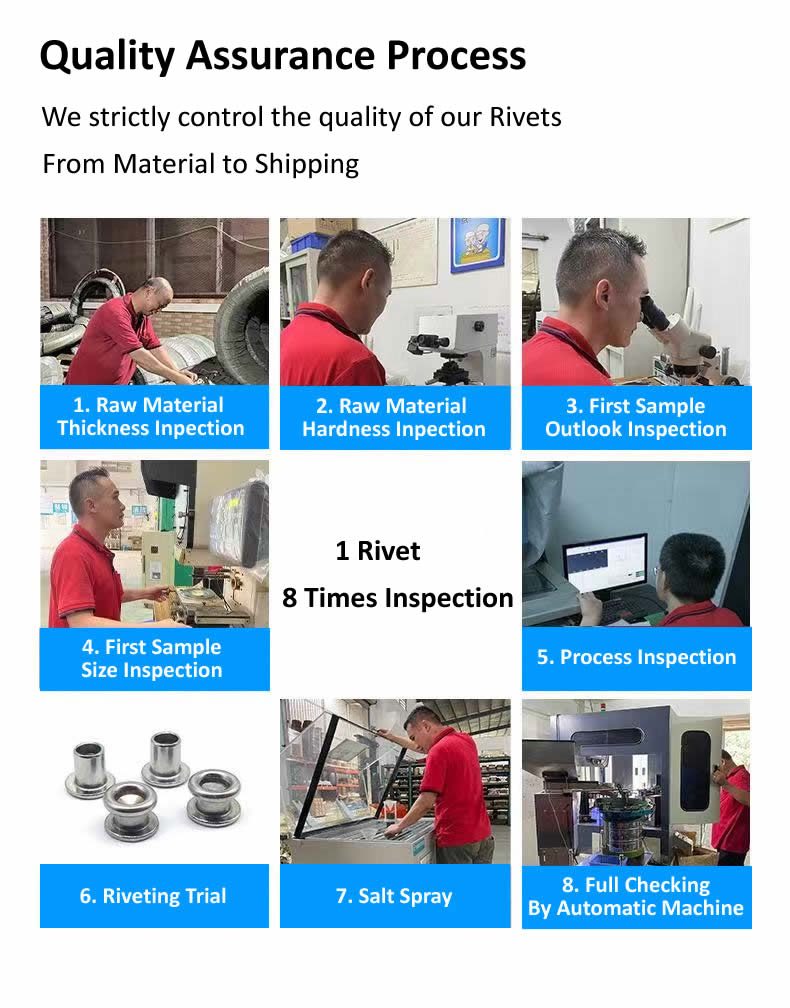
We do not rely on random sampling alone. Every batch of iron semi hollow rivets follows a layered inspection system that catches issues before they become problems.
Incoming material stage
Each coil of steel wire is checked for diameter (laser micrometer, ±0.02mm) and hardness (Rockwell tester, HRB 70–85). We reject any coil that deviates from the specified range.
Setup and first-off stage
When tooling is installed, the first 10 rivets are examined under 20× magnification for surface defects, then measured on an optical comparator. Head diameter, head height, shank diameter, overall length, and cavity depth must match the drawing before production begins.
During production stage
Operators pull 5 rivets every 500 pieces. They check critical dimensions with digital calipers and a go/no-go gauge for cavity depth. Any drift beyond tolerance triggers an immediate press stop and tool adjustment.
Clinch verification stage
Every 2,000 pieces, we set 3 rivets into a sample of your actual material (same thickness and composition). The rolled clinch is inspected for symmetry, tightness, and crack-free formation.
Corrosion testing (if applicable)
For plated rivets, samples are placed in our salt spray chamber per ASTM B117. Zinc plating: 48–96 hours minimum. A certificate is issued with the batch.
Final sorting stage
Every single rivet passes through an optical sorting machine with high-speed cameras. It rejects parts with incorrect head diameter, head height, shank diameter, or cavity depth. After sorting, a random AQL sample (Level II, 1.0) is manually verified with profile projector and micrometers.
All inspection records—including measurement logs, test setting photos, and salt spray reports—are retained for five years and are included with every shipment.
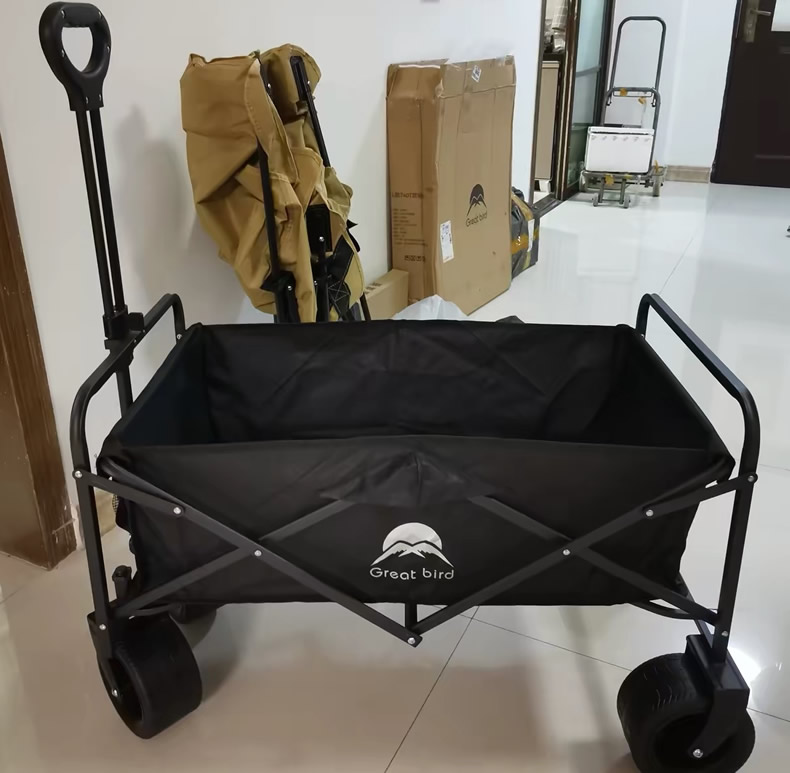
One Real Customer Example – Outdoor Folding Wagon Frame
This is one of many applications for iron semi hollow rivets. We include it to show real production use, not to suggest limitation.
A manufacturer of heavy-duty folding wagons for camping and gardening needed a durable, low-cost rivet for the scissor-hinge joints. The wagon frame used 2mm thick steel tubing. The original solid rivets required high setting force, which deformed the tubing and slowed assembly. The customer also wanted a corrosion-resistant finish for outdoor use.
Nuote Metals supplied iron semi hollow rivets – 5mm shank, 9mm round head, 12mm barrel length, yellow zinc plated. The semi-hollow cavity cut setting force from 4 tons to 1.6 tons, eliminating tubing deformation. The yellow zinc plating provided 96 hours of salt spray resistance – enough for rain and occasional mud.
The customer tested 1,000 rivets on 200 wagons. After 5,000 folding cycles with a 100kg load, no loosening or rust was observed. They now order iron semi hollow rivets in batches of 50,000 pieces, used across their entire folding wagon line.
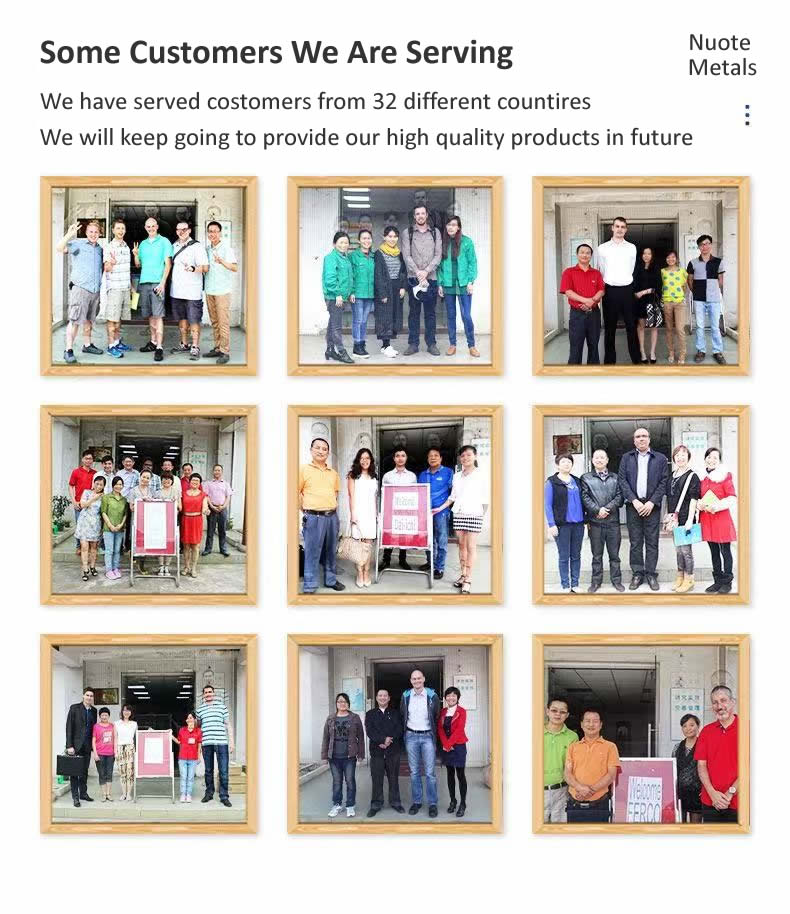
Trusted by Customers Worldwide
We are proud to work with customers across the globe. Below are photos from our factory visits, client meetings, and project collaborations over the years. These are not stock images—they are real moments with the people who trust us to deliver their rivets.
Your Order Comes with Full Traceability
We do not just ship rivets. Every order of iron semi hollow rivets leaves our factory with a complete set of documents that confirm exactly what was produced and how it was verified.
Material certificate – We include the mill test report showing chemical composition and tensile strength for the specific coil used in your batch.
First-piece inspection record – We measure 10 rivets from the start of the run and record every dimension—head diameter, head height, shank, length, and cavity depth.
Production log – A summary of all in-process checks performed during the run, including who checked, when, and the results.
Setting test report – We set samples into your specified material thickness and photograph the clinch. Pull-force results are recorded if requested.
Corrosion test certificate – For plated rivets, we include the salt spray test hours and results (ASTM B117).
Certificate of Conformance – Our QA manager signs off on every shipment with a batch-traceable number.
We keep a copy of all these records for five years. If you ever need to trace back to a specific batch, we can pull the full file.
Nuote Metals is ISO 9001:2015 certified. RoHS and REACH declarations are provided on request.
Policies
- Samples – 20–50 free pieces for standard stocked sizes (customer pays shipping)
- Trial order – 10,000 pieces recommended for first-time validation
- MOQ – 2,000 pieces (standard sizes), 5,000 pieces (custom barrel or head style)
- Lead time (stock) – 5–7 business days
- Lead time (custom) – 12–15 business days
- Tooling charges – None for standard round head tooling (1.2–10mm shank)
Three Questions We Answer Often
Q1: What is the difference between an iron semi hollow rivet and a solid iron rivet? When should I choose the semi-hollow version?
A: The fundamental difference is the hollow cavity in the tail. An iron semi hollow rivet has a shallow cavity at the tip, requiring only 25–30% of the force needed for a solid rivet of the same diameter, making it faster to install and gentler on surrounding materials. Solid rivets offer slightly higher shear strength (semi-hollow retains 80–90% of solid rivet strength) but require heavy equipment and more time. For most industrial, furniture, automotive, and hardware applications—including the folding wagon case above—semi-hollow rivets provide more than enough strength while keeping production efficient. Choose solid rivets only for extreme structural loads where maximum shear strength is the only priority.
Q2: Can iron semi hollow rivets be used outdoors without rusting?
A: Yes, with the right finish. Iron rivets are prone to rust and must be surface treated. Our standard low-carbon steel rivets are available with zinc plating (clear, blue, or yellow) which provides 48–96 hours of salt spray resistance—sufficient for rain, humidity, and occasional moisture. For the folding wagon case, yellow zinc plating was chosen for its balance of corrosion resistance and cost. Store iron semi-hollow rivets in a dry environment to avoid moisture-induced rust. It is recommended to store them in sealed containers or moisture-proof packaging. For more demanding outdoor or coastal environments, we recommend switching to stainless steel semi-hollow rivets (304 or 316) which offer 200–1,000+ hours of salt spray protection.
Q3: How do I select the correct barrel length for an iron semi hollow rivet?
A: Select a barrel length 1.5–2.0mm longer than your total material stack thickness. For example, if you are joining two 2mm steel sheets (total 4mm), choose a barrel length of 5.5–6.0mm. This extra length provides enough material for the hollow section to roll outward and form a secure clinch without bottoming out. If the barrel is too short, the clinch will be weak. Too long, and the barrel may crumple. Send us your material stack thickness, and we will recommend the exact barrel length.
Request a Quote – Tell Us What You Need
We understand that every assembly is different. Rather than asking you to fit a standard product into your design, we prefer to start with your requirements.
To receive a firm quotation for iron semi hollow rivets, please provide the following information:
- Shank diameter (mm) – from 1.2mm to 10mm
- Head style (round / flat / countersunk / mushroom / pan)
- Barrel length (mm) – or your total material stack thickness
- Finish (zinc plated clear/blue/yellow / nickel plated / black oxide / phosphate)
- Estimated annual quantity
You can also attach a drawing, a photo of your current rivet, or a sample part. We will reply within 24 hours with:
- Tooling cost (if any) – waived for standard sizes
- Piece price based on your annual volume
- Lead time for first samples and mass production
- Free sample policy – 20–50 pieces for standard stocked sizes
Send your RFQ to Nuote Metals today. No pressure, no obligation – just a clear, competitive quotation.
Hot Tags: Iron Semi Hollow Rivets,China Iron Rivets,China Semi Hollow Rivets
Related Categories
Send Inquiry
Please feel free to fill your inquiry in the form below. We will reply you in 24 hours.



X
We use cookies to offer you a better browsing experience, analyze site traffic and personalize content. By using this site, you agree to our use of cookies.
Privacy Policy