
Products
Pipe Rivets
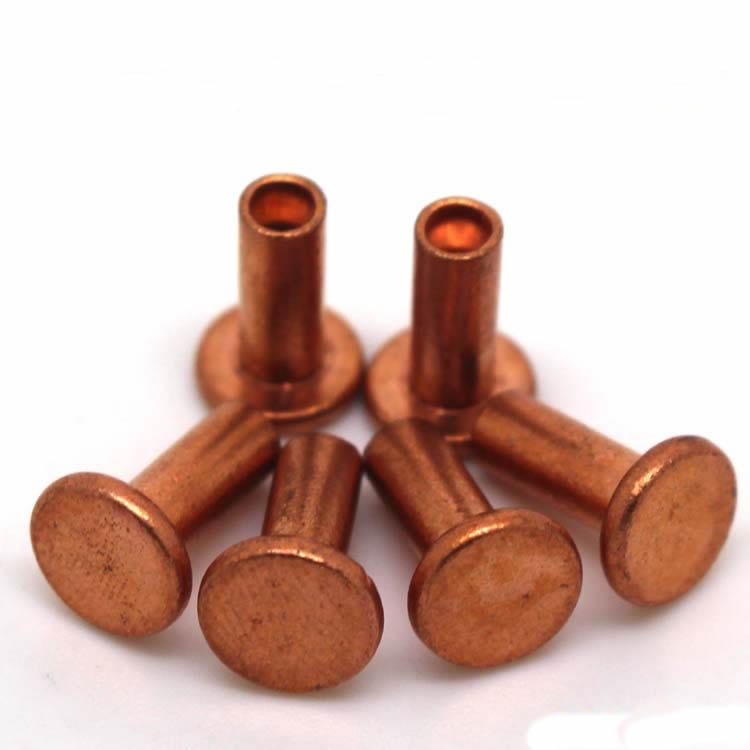
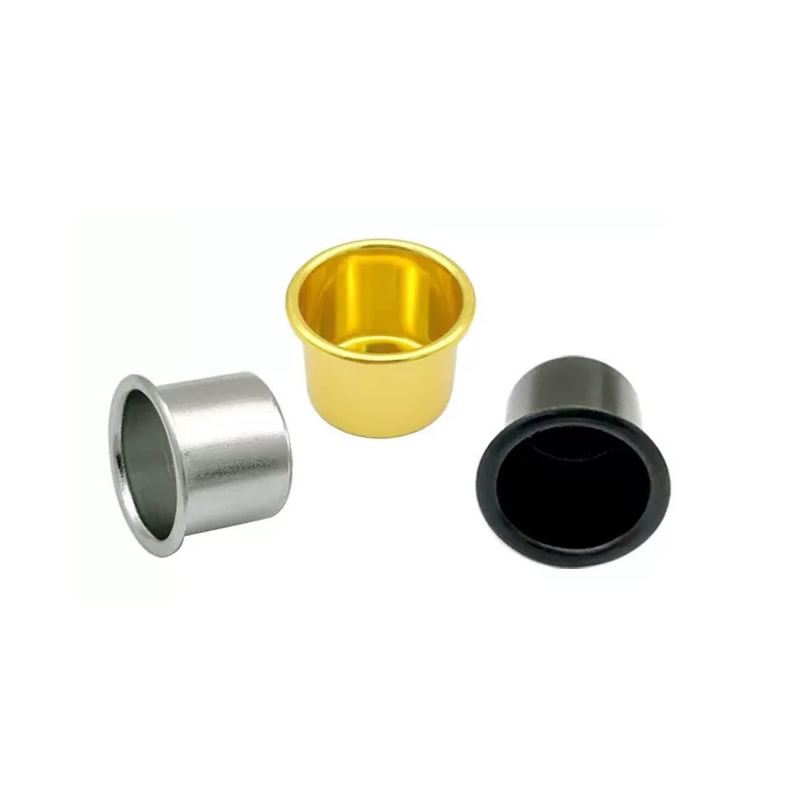
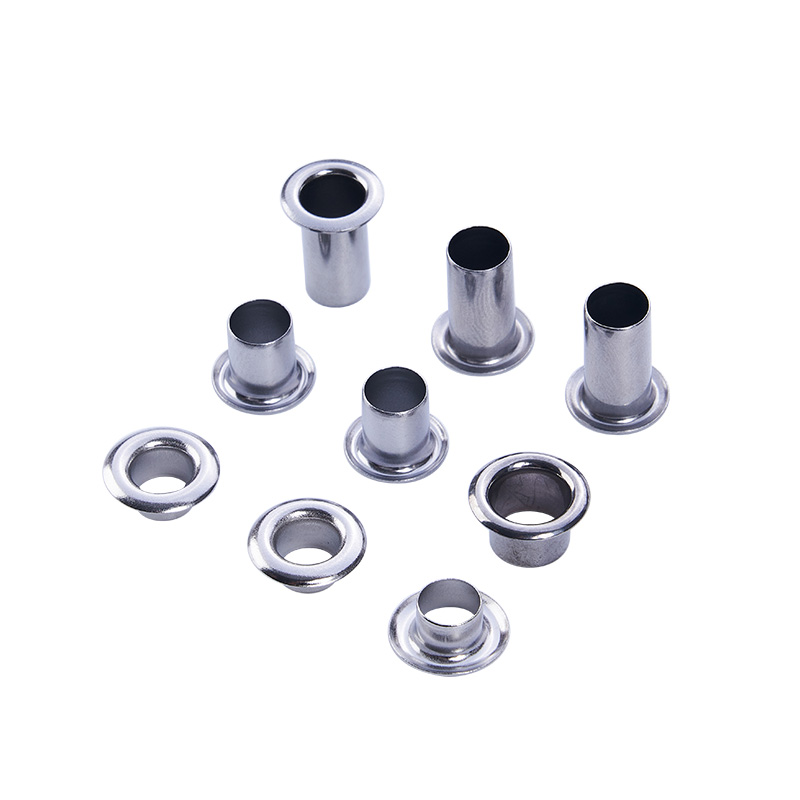
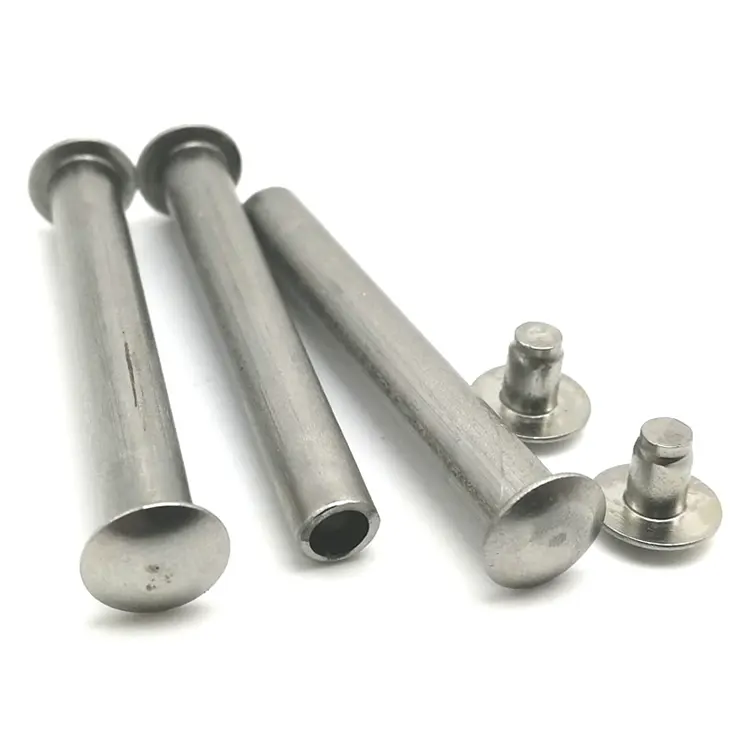
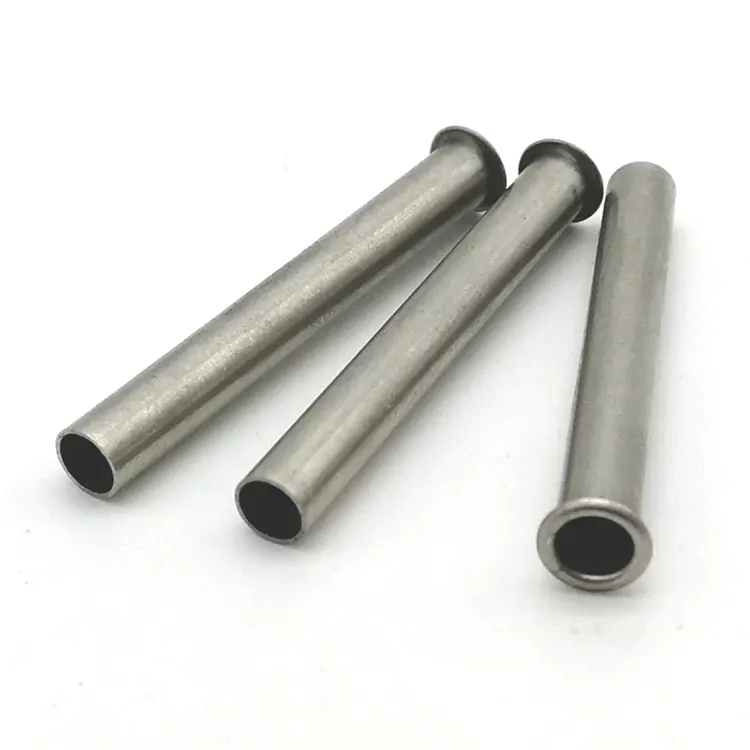
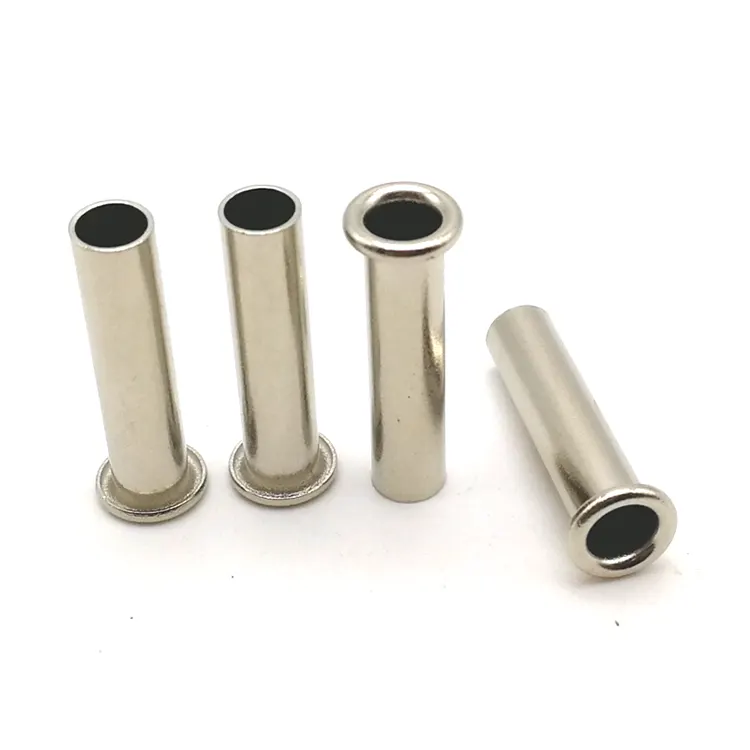
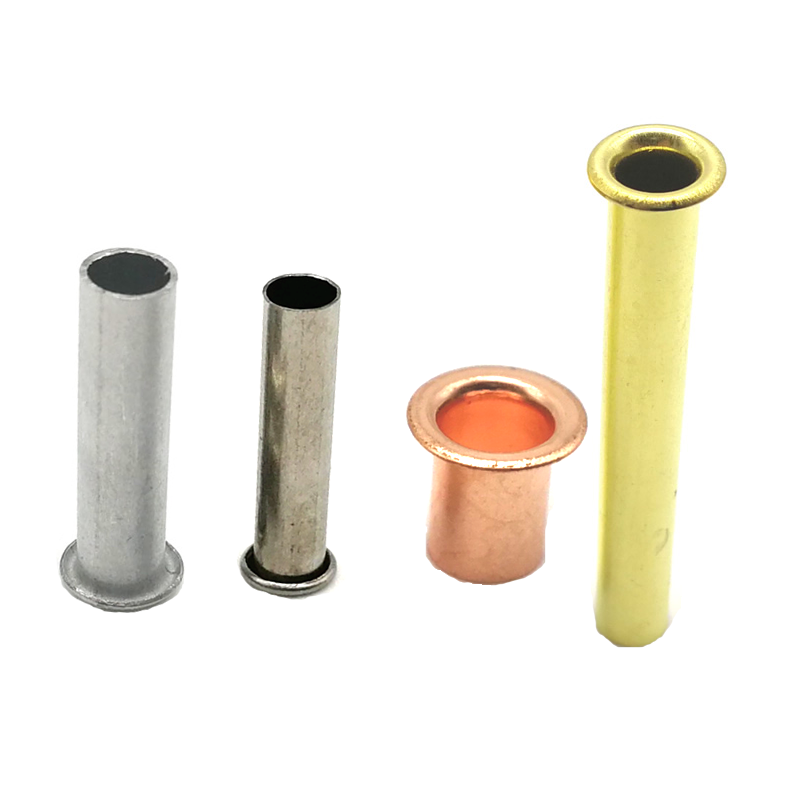
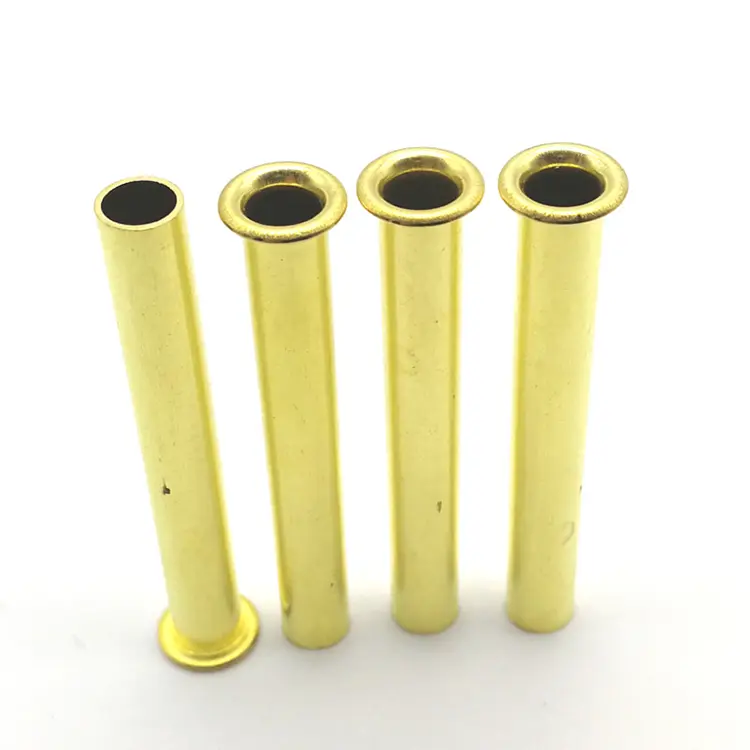
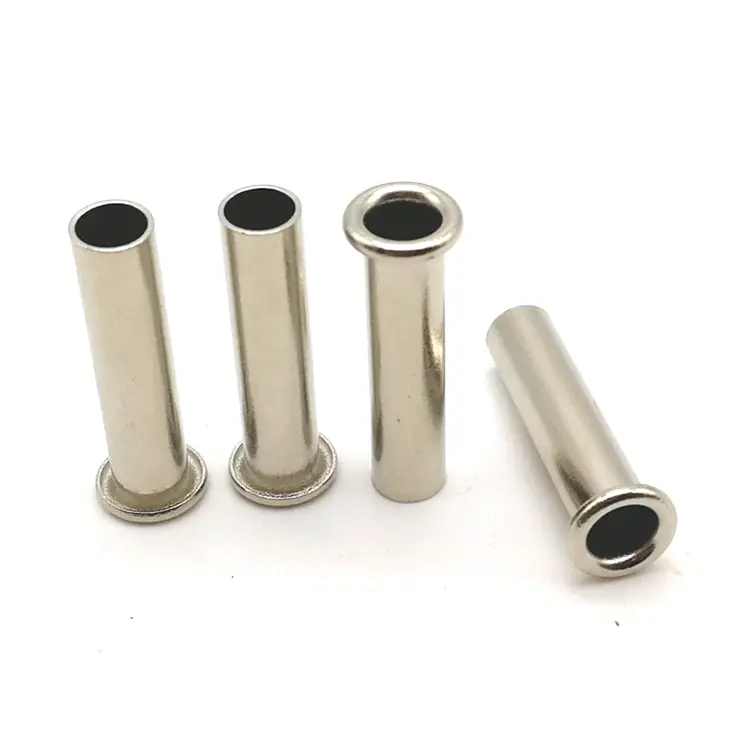
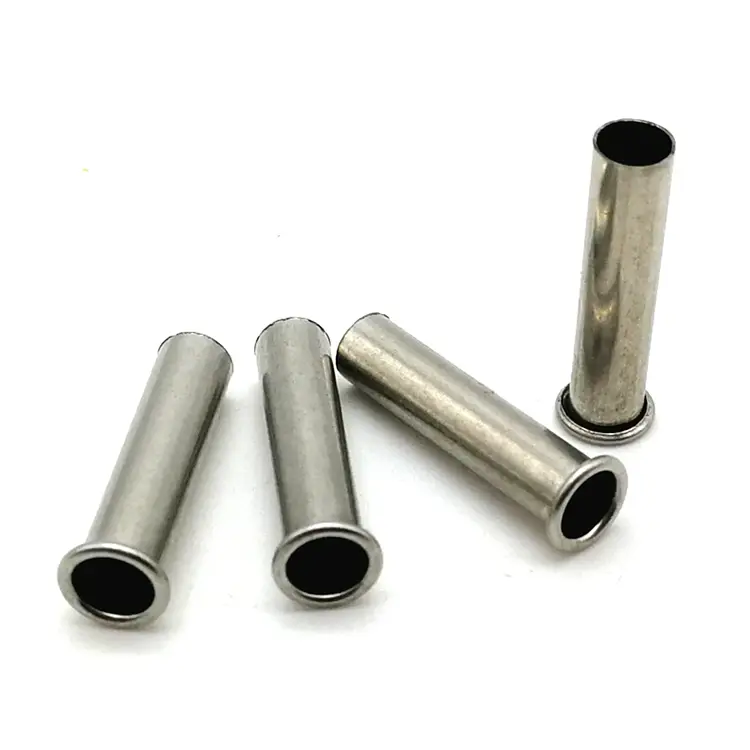
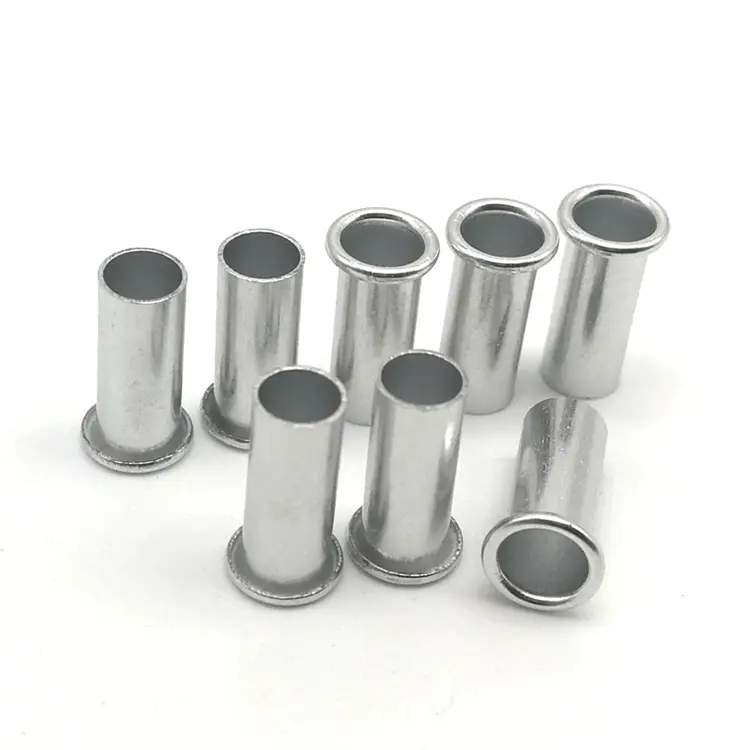
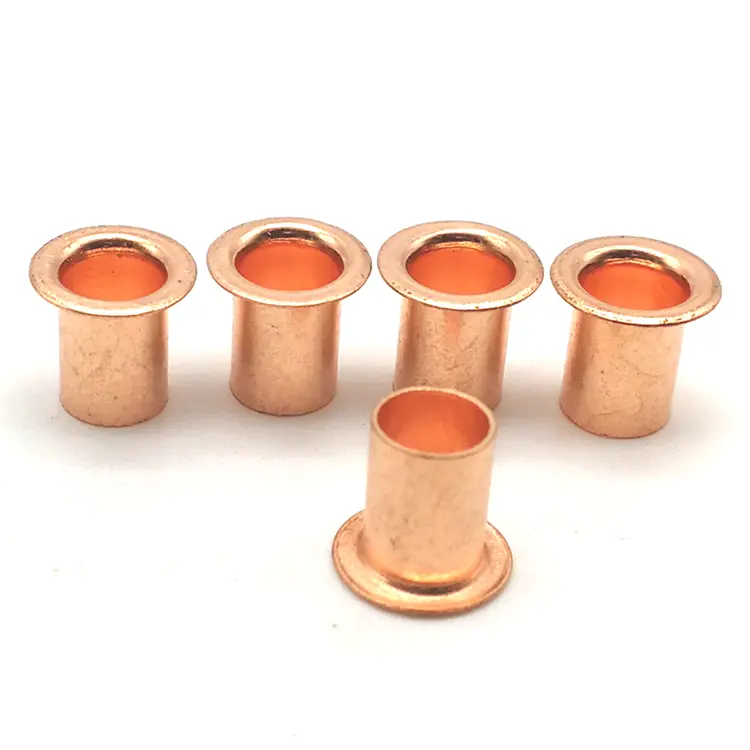
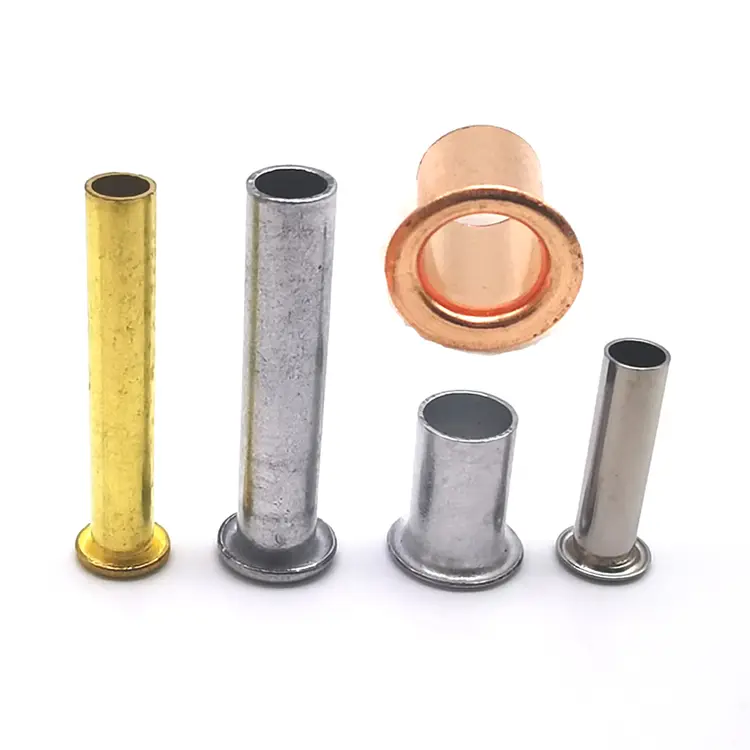
Nuote Metals is a China-based manufacturer of pipe rivets – hollow fasteners made from actual metal tube stock, cut to length and finished with a formed head. Unlike drawn hollow rivets, pipe rivets offer uniform wall thickness, consistent inside diameter, and a more substantial feel. Available in 1.5–10mm shank diameters, brass, copper, stainless steel, carbon steel, and aluminum.
Send Inquiry
Product Description
Most hollow rivets you will find on the market are drawn from sheet metal – a process that starts with a flat strip and forms the barrel through progressive drawing. Pipe rivets are different. They start as actual metal tube stock – seamless or welded tubing, cut to length, with a head formed on one end.
This difference matters. Because they begin as tubing, they have uniform wall thickness and a consistent inside diameter. They feel more substantial than drawn hollow rivets. They set cleanly with simple hand tools or presses. And the hollow center can be used for wiring, lacing, or simply to reduce weight.
If your application needs a hollow rivet with heft, strength, and a clean bore, they are what you are looking for.
Pipe Rivets vs. Drawn Hollow Rivets – The Difference That Matters
| Feature | Pipe Rivet | Drawn Hollow Rivet (Eyelet) |
|---|---|---|
| Starting material | Metal tube stock (seamless or welded) | Flat sheet metal strip |
| Manufacturing process | Tube cutting + heading | Progressive deep drawing |
| Wall thickness | Uniform, consistent | Varies (thinner at barrel tip) |
| Inside diameter | Consistent, smooth | May vary |
| Strength | More substantial, heavier wall | Lighter, thinner wall |
| Best for | Leather, saddlery, marine, electrical, structural feel | Fabric, paper, light-duty reinforcement |
Choose pipe one when: You need a hollow rivet with a more substantial feel. The application involves leather, saddlery, marine trim, or electrical assemblies. You need a consistent inside diameter for wiring or lacing. You want a fastener that feels built to last.
Materials We Can Offer
| Material | Grade | Key Characteristics | Typical Applications |
|---|---|---|---|
| Brass | C2680 / C2600 | Good conductivity, corrosion resistance, gold appearance | Electrical connections, decorative hardware, leather goods |
| Copper | C11000 (T2) | Best conductivity, thermal performance, antimicrobial | Electrical connectors, heat dissipation, marine |
| Stainless Steel | SUS304 / SUS316 | Corrosion resistant, non‑rusting, high strength | Outdoor, marine, food equipment, chemical environments |
| Carbon Steel | 1008 / Q195 | High strength, low cost, best value | Industrial, construction, automotive, high‑volume |
| Aluminum | 5052 / 5056 / 6061 | Lightweight, non‑magnetic, corrosion resistant | Aerospace, automotive, electronics, weight‑sensitive |
One Real Application – Camera Tripod Leg Hinge
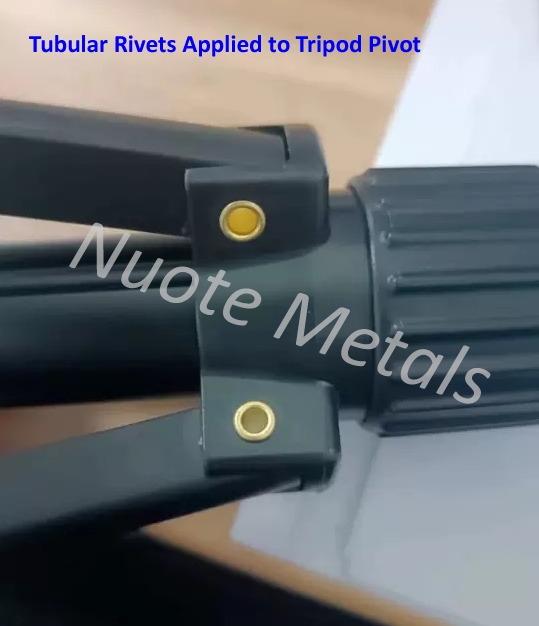
A professional camera tripod manufacturer needed a lightweight, clean fastener for the leg hinge mechanism. The leg sections telescope and fold – any protruding fastener would scrape against the inner leg tube during extension and retraction. The original solid rivets provided strength but added unnecessary weight and required high setting force that occasionally damaged the thin aluminum tubing. Drawn eyelets were too light and did not provide the substantial feel the customer wanted for a premium product.
We supplied aluminum pipe rivets – 4.0mm shank, 7.5mm round head, 8.0mm barrel length, clear anodized finish. The tube stock construction provided uniform wall thickness and a clean, consistent inside diameter. The hollow design reduced overall hinge weight by 15%. The round head sat cleanly on the hinge surface without scraping the inner leg tube. The customer tested 500 rivets across 250 tripods. After 10,000 extension‑retraction cycles, zero loosening, zero scrapes, zero failures. They now order our rivets in batches of 200,000 pieces annually.
Head Styles – What We Offer
They are available in three head styles:
| Head Style | Best For | Visual Profile |
|---|---|---|
| Round | Visible joints, general purpose | Classic dome |
| Flat | Clearance‑limited, low profile | Sits near flush |
| Countersunk | Flush surfaces, zero protrusion | Tapered, sits flush |
How We Manufacture Them – Tube Cutting + Heading
Pipe rivets start as metal tube stock – not wire, not sheet. The process is distinct from other rivet types.
1. Tube Stock Procurement – We purchase certified metal tube (seamless or welded) from approved mills – brass, copper, stainless steel, carbon steel, or aluminum. Each batch comes with a mill test certificate and heat number.
2. Incoming Material Inspection – Tube stock is checked for outside diameter (±0.02mm), wall thickness, and material composition. Tubes outside specification are rejected.
3. Tube Cutting – The tube is cut to precise blank length using high‑speed cutting equipment. Each blank becomes one rivet.
4. Heading – The cut tube blank is placed into a heading press. A carbide die forms the head (round, flat, or countersunk) on one end. The hollow tube remains open at the tail end.
5. Trimming – Flash around the head edge is removed.
6. Tumbling – Micro‑burrs are eliminated.
7. Plating or Coating – Zinc, nickel, passivation, lacquer, or other finishes are applied as specified.
8. Final Inspection – 100% optical sorting for critical dimensions. AQL sample manually verified. Dimensional report and Certificate of Conformance issued with every shipment.
Lead time: 5–10 days standard; custom tooling: 15–20 days.
One Rivet, Eight Checks – How We Ensure Quality
We do not rely on random sampling. Every batch of pipe rivets passes through eight separate quality gates before leaving our factory. The principle is simple: measure early, measure often, and never assume.
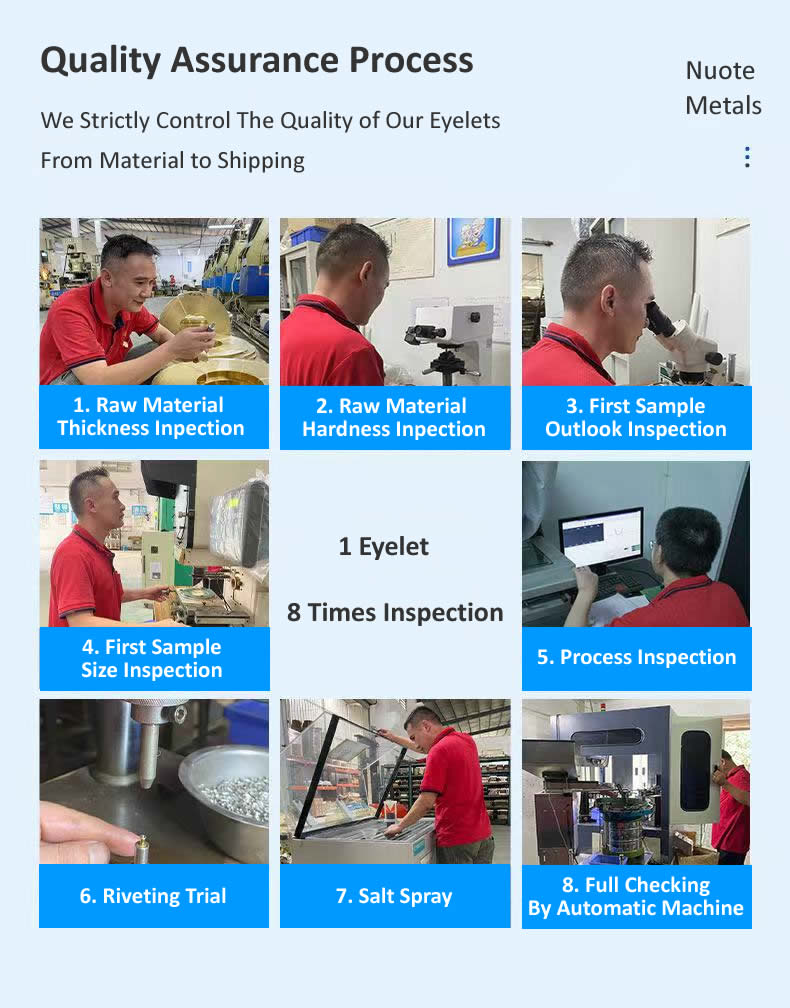
Raw material diameter check – Incoming tube stock is measured with a laser micrometer. Diameter tolerance: ±0.02mm. Any coil outside this range is rejected before it reaches the production floor.
Raw material hardness check – A sample from each batch of tube stock is tested on a Rockwell hardness tester. Acceptable range varies by material. Too soft, and the rivet will deform during heading. Too hard, and the tube may crack during flaring.
First article appearance check – After tooling setup, the first 10 rivets are visually inspected under magnification. We look for cracks, uneven heads, surface marks, or burrs. Any visible defect stops the press.
First article dimensional check – The same 10 rivets are measured on an optical comparator. Head diameter, head height, shank diameter, barrel length, and wall thickness must be within drawing tolerances before production starts.
In‑process checks – During mass production, the operator pulls 5 rivets every 500 pieces. Dimensions are verified with digital calipers and go/no‑go gauges. Any drift triggers tooling adjustment.
Test setting (trial flaring) – Every 2,000 pieces, we set 3 rivets into a representative material sample (same thickness and type as your assembly). The flared clinch is inspected for symmetry, tightness, and crack‑free formation. No loose or cracked rivets are accepted.
Salt spray test (if required) – For outdoor or plated rivets, we send samples to our lab for ASTM B117 salt spray testing. A certificate is issued with the batch.
Final outgoing inspection – Before packaging, every rivet passes through an optical sorting machine. Cameras check head diameter, head height, shank diameter, barrel length, and concentricity. Rejects are automatically ejected. A random AQL sample (Level II, 1.0) is then pulled for manual verification.
A pipe rivet that survives all eight steps is ready to leave our factory. We keep records of every check for five years.
What Our Customers Say – Real Feedback

Three Questions We Answer Often
Q: "What is the difference between pipe rivets and tubular rivets – are they the same thing?"
A: In many contexts, "pipe rivets" and "tubular rivets" are used interchangeably. Both refer to hollow rivets made from tube stock. However, there is a technical distinction: some tubular rivets (DIN 7339) are made from strip material formed into a tube, while pipe rivets (DIN 7340) are made from actual seamless or welded tube stock. At Nuote Metals, our rivets are made from genuine tube stock – cut to length and finished – giving them uniform wall thickness and a consistent inside diameter.
Q: "Can them be used for electrical connections?"
A: Yes – depending on the material. Brass pipe rivets offer excellent electrical and thermal conductivity, making them well‑suited for circuit board connections, grounding devices, and wire terminations. Copper pipe rivets provide even higher conductivity (100% IACS) for demanding electrical applications. Stainless steel and carbon steel pipe rivets are not recommended for electrical connections due to their lower conductivity.
Q: "Where are they commonly used, and what materials are best for each application?"
A: They are used across a wide range of industries, and the material choice depends on the application:
| Application | Recommended Material | Why |
|---|---|---|
| Marine canvas and boat covers | Brass, Stainless Steel | Corrosion resistance, saltwater durability |
| Camera tripods and lightweight equipment | Aluminum | Lightweight, non‑magnetic, clean appearance |
| Leather goods and saddlery | Brass, Copper | Decorative, non‑magnetic, soft setting |
| Electrical connections | Brass, Copper | High conductivity, low resistance |
| Industrial equipment and construction | Carbon Steel | High strength, low cost, best value |
| Outdoor architectural hardware | Stainless Steel | Permanent corrosion resistance, strength |
For the tripod case above, aluminum was the right choice – it delivered the lightweight, clean appearance the customer needed without compromising strength or durability.
Hot Tags: Pipe Rivets Supplier,Pipe Rivets Manufacturer,China Pipe Rivets
Related Categories
Send Inquiry
Please feel free to fill your inquiry in the form below. We will reply you in 24 hours.



X
We use cookies to offer you a better browsing experience, analyze site traffic and personalize content. By using this site, you agree to our use of cookies.
Privacy Policy