Products
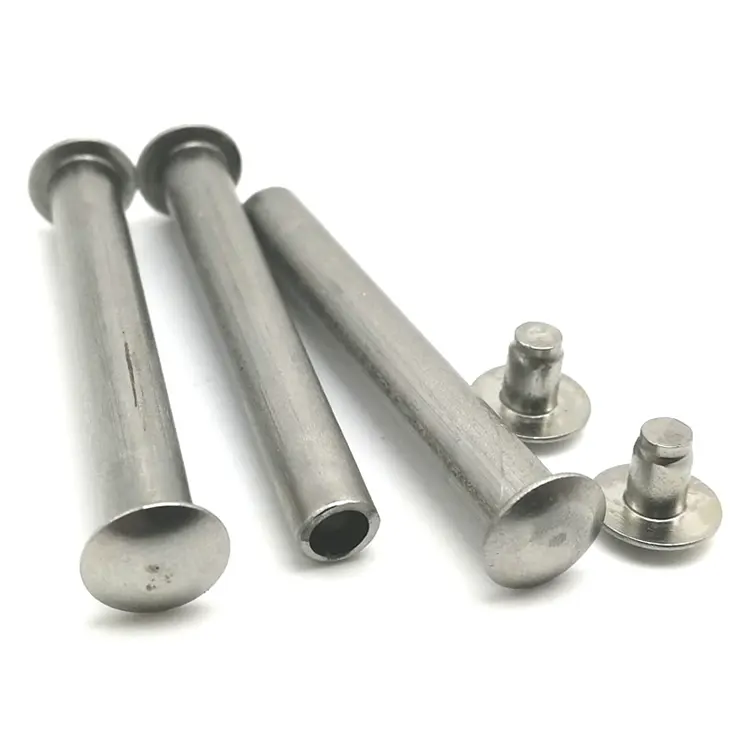
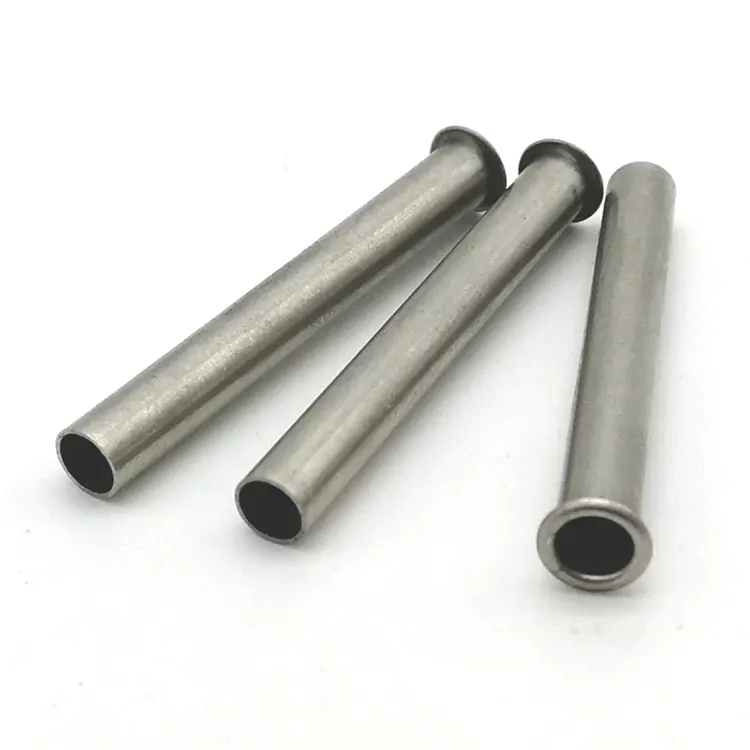

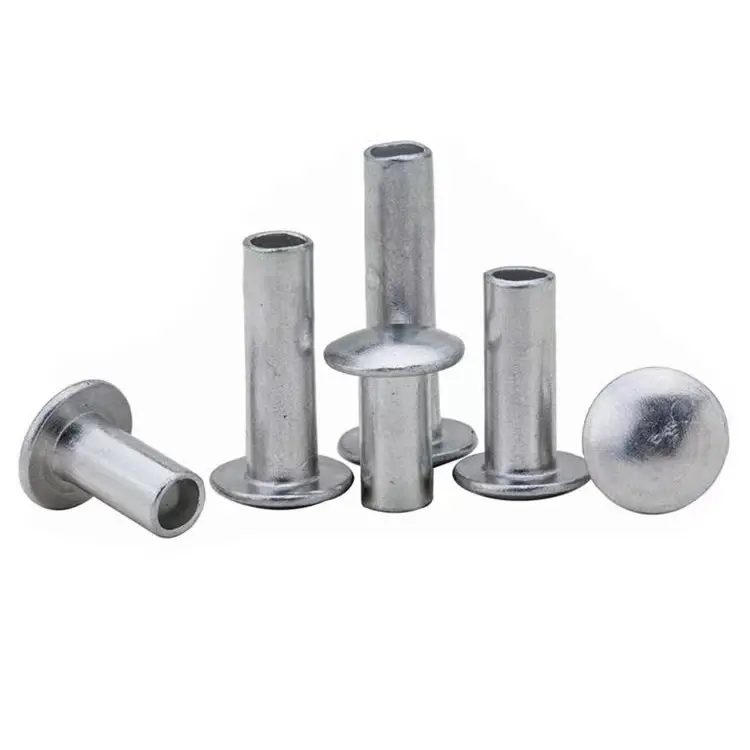
Aluminum Semi Hollow Rivets
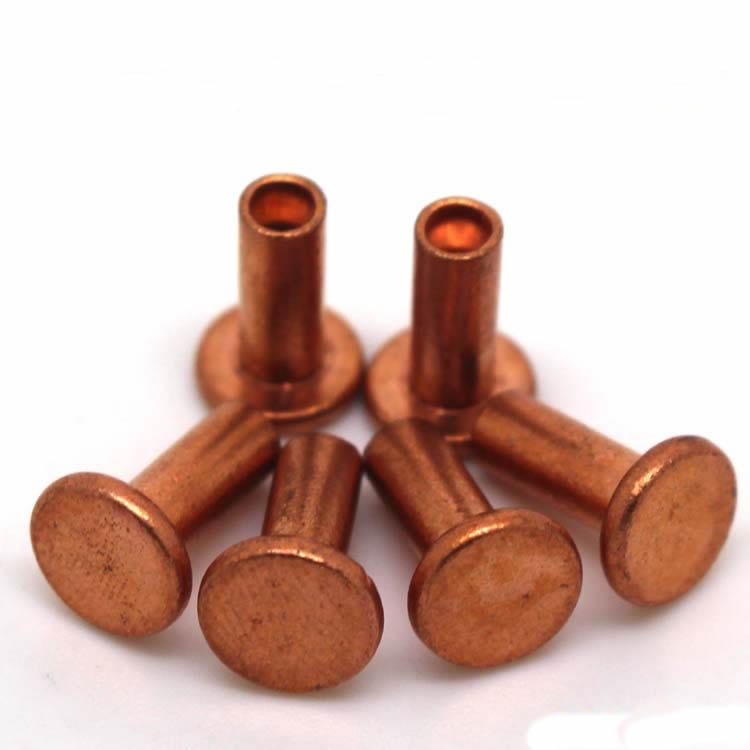
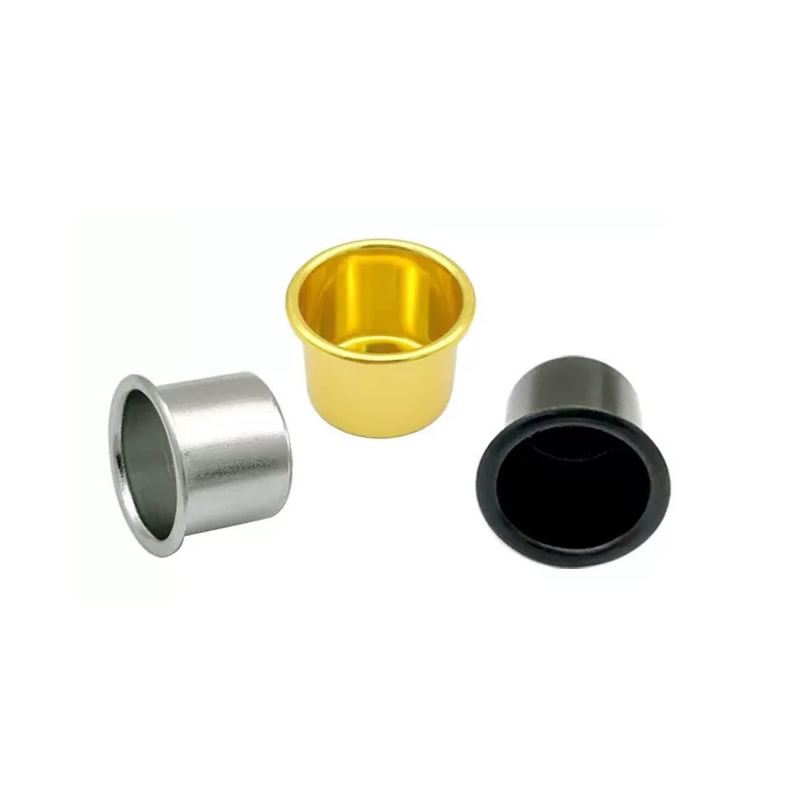
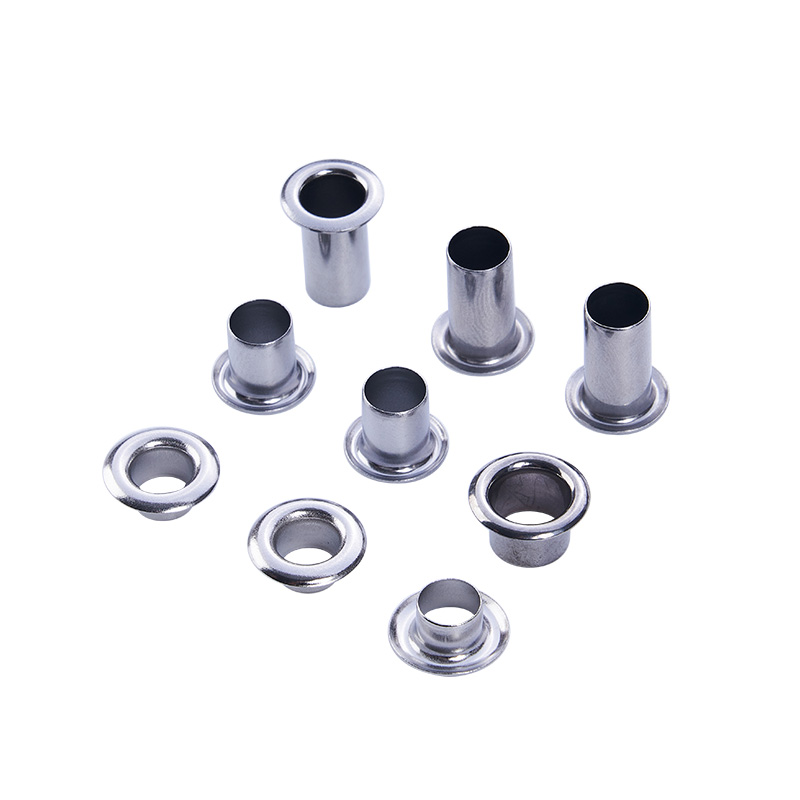
Aluminum semi hollow rivets are basically fasteners made from aluminum alloy. They have a solid head and a tail that's partially hollow. When you install them with a special tool, that hollow section flares out and curls back, creating a really strong, locked-in joint. Because they're aluminum, they're naturally lightweight and don't rust easily, which is a big plus when you're worried about weight or using them in tough environments. When you stack them up against rivets made from other materials, they really hit a sweet spot between being affordable and performing well.
Send Inquiry
Product Description
Aluminum semi hollow rivets are what you use when weight is the problem.
Steel is strong but heavy. Brass looks good but adds mass. Copper conducts but weighs you down. If your product moves, flies, or gets carried – every gram matters.
Aluminum solves that. One‑third the weight of steel. Non‑magnetic. Naturally corrosion‑resistant. And because it is a semi hollow design, you still get 70% less setting force than a solid rivet.
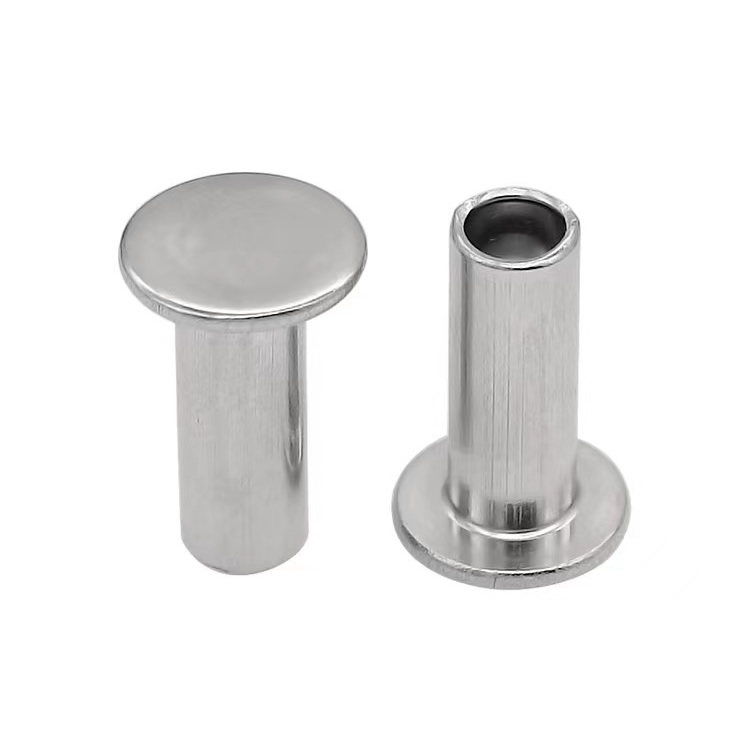
Aluminum vs. Other Materials – Where Aluminum Wins
| Feature | Aluminum Semi Hollow Rivet | Steel Semi Hollow Rivet | Brass Semi Hollow Rivet | Stainless Steel Semi Hollow Rivet |
|---|---|---|---|---|
| Weight (5mm) | ~0.6g (lightest) | ~1.8g | ~1.9g | ~1.8g |
| Weight vs. steel | ~33% | 100% | ~105% | ~100% |
| Tensile strength | 90–350 MPa | 400–500 MPa | 315–390 MPa | 620–750 MPa |
| Corrosion resistance | Excellent (natural oxide) | Depends on finish | Good (natural) | Excellent (material itself) |
| Electrical conductivity | ~61% IACS | ~10% | ~28% | <5% |
| Magnetic | Non‑magnetic | Magnetic | Non‑magnetic | Slightly |
| Cost | Medium | Lowest | Higher | Highest |
| Setting force reduction | 70% | 70% | 70% | 70% |
| Best for | Drones, portable equipment, sporting goods, aerospace | Industrial, high‑volume, cost‑sensitive | Decorative, visible, electrical | Marine, outdoor, food equipment |
Which Alloy – 1100, 5052, or 5056?
| Alloy | Strength | Best Use |
|---|---|---|
| 1100 | Lowest | Decorative, non‑structural, lightweight enclosures |
| 5052 | Moderate | General purpose, outdoor, moderate loads |
| 5056 | Highest | Marine, high‑stress, structural |
If you are not sure, 5052 is the safe choice for most applications.
One Real Application – Ultralight Camping Cot
A manufacturer of ultralight camping cots needed to reduce weight. The frame was already optimized – the only place left was the fasteners. Steel rivets were adding unnecessary mass.
We supplied 5052 aluminum semi hollow rivets – 4.0mm shank, 7.0mm round head, 8.0mm barrel length, clear anodized. Weight saving: 65%. Setting force dropped from 3.5 tons to 1.0 ton. No deformation of the thin‑wall tubing. The customer tested 1,000 rivets across 500 cots. After 5,000 folding cycles with a 100kg load, zero failures. They now order 250,000 pieces annually.
What Can Go Wrong – And How We Prevent It
| What Can Go Wrong | Why | How We Prevent |
|---|---|---|
| Cracking during setting | Cavity too deep | We hold 45–55% depth. |
| Clinch weak | Cavity too shallow | Same 45–55% rule. |
| Surface scratches | Aluminum is soft | Polished dies + tumbling. |
| Inconsistent clinch | Cavity varies across batch | Checked on first article and during production. |
Inside Our Production – 45 Machines, 10+ Years Experience
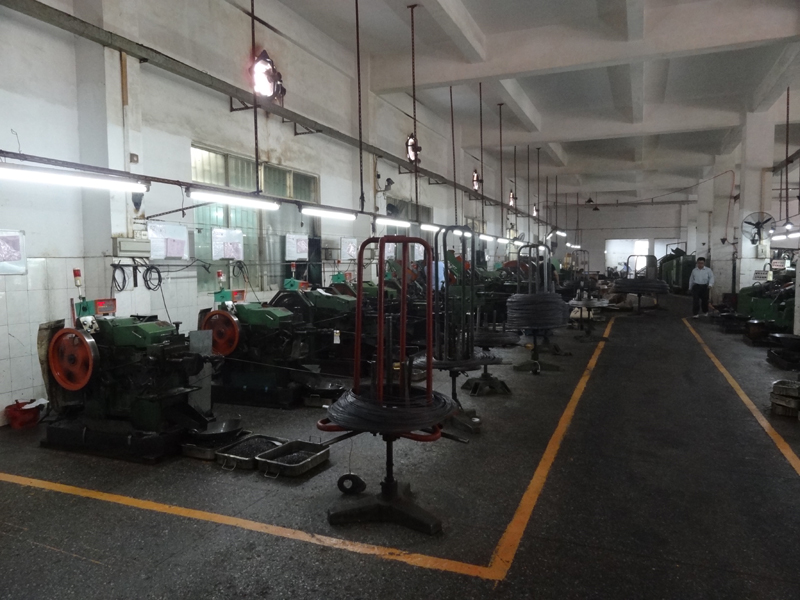
We manufacture aluminum semi hollow rivets on 45 cold‑heading machines in our Dongguan facility. Diameters from 0.8mm to 10mm. Standard heads and custom shapes.
Who makes them: Senior technicians with an average of 10+ years of cold‑heading experience.
What we check: Cavity depth, head geometry, shank diameter, hardness – every batch.
Production speed: Up to 400 pieces per minute.
What Our Customers Say – Real Feedback
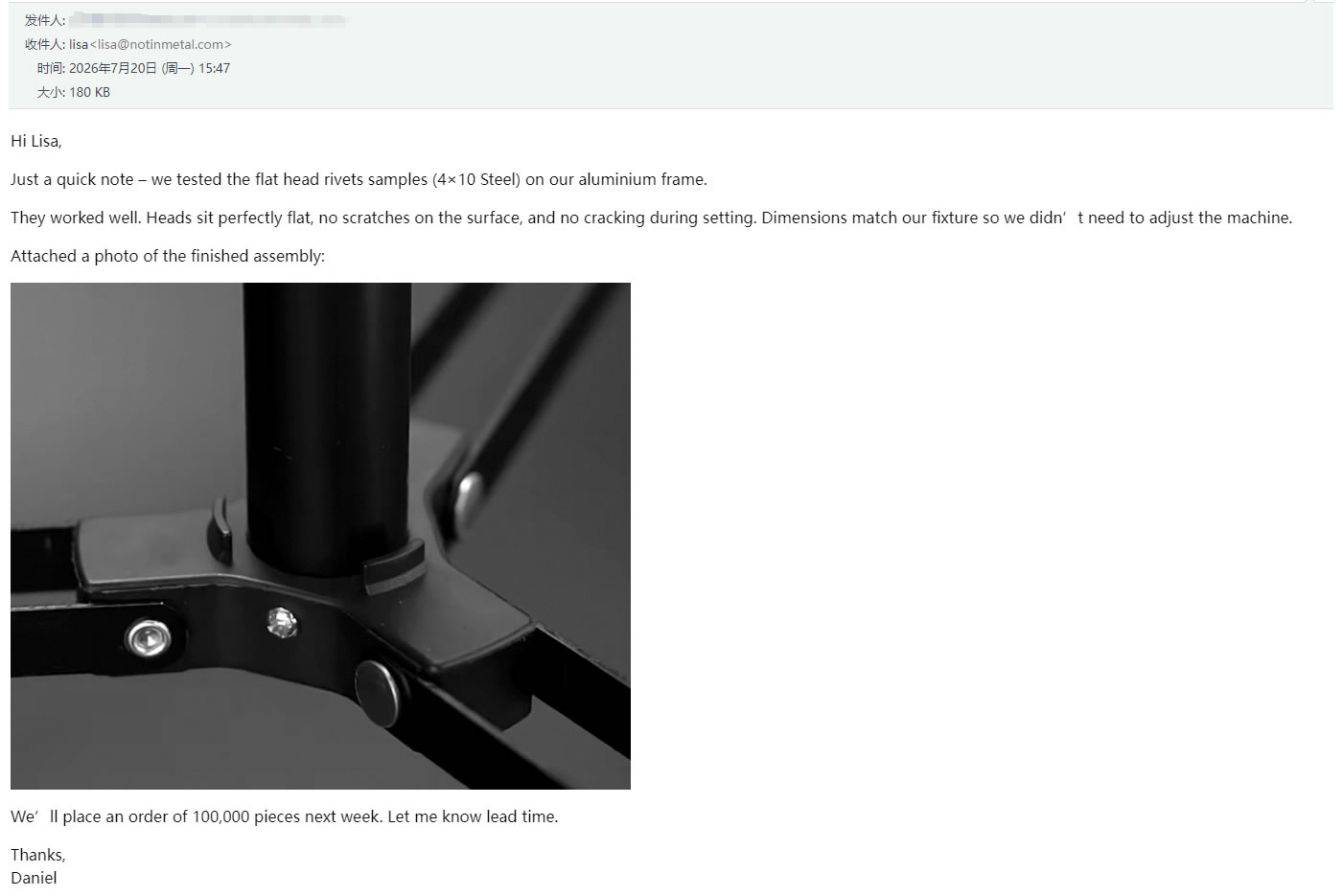
We let our customers speak for us. The images above show real feedback from manufacturers who have used our aluminum semi hollow rivets in their production lines – from camping equipment makers to drone builders to automotive lightweighting engineers.
They come back to us for the same reasons:
Weight savings that matter – One‑third the weight of steel, delivered on every batch.
Consistent quality – Cavity depth, head geometry, and dimensions match their drawings.
Reliable delivery – Samples ship in 5–7 days, production on schedule.
Two Questions We Answer Often
Q: "Can I get samples before ordering production quantities?"
A: Yes. Standard specs: free, you pay shipping. Custom sizes: contact us for sample cost and lead time.
Q: "Are aluminum semi hollow rivets strong enough to replace steel in structural applications?"
A: It depends on the load. Aluminum semi hollow rivets offer 80–90% of solid rivet strength, but aluminum itself has lower tensile strength than steel (90–350 MPa vs 400–500 MPa). For lightweight structural applications – drones, camping equipment, automotive interiors, aerospace non‑critical assemblies – aluminum is more than sufficient. For heavy‑duty structural loads, stick with steel. If you are unsure, send us your load requirements and we will calculate whether aluminum works for your application.
Hot Tags: Aluminum Semi Hollow Rivets,China Aluminium Rivets Manufacturer,Semi Hollow Rivets Supplier
Related Categories
Send Inquiry
Please feel free to fill your inquiry in the form below. We will reply you in 24 hours.



X
We use cookies to offer you a better browsing experience, analyze site traffic and personalize content. By using this site, you agree to our use of cookies.
Privacy Policy