Products
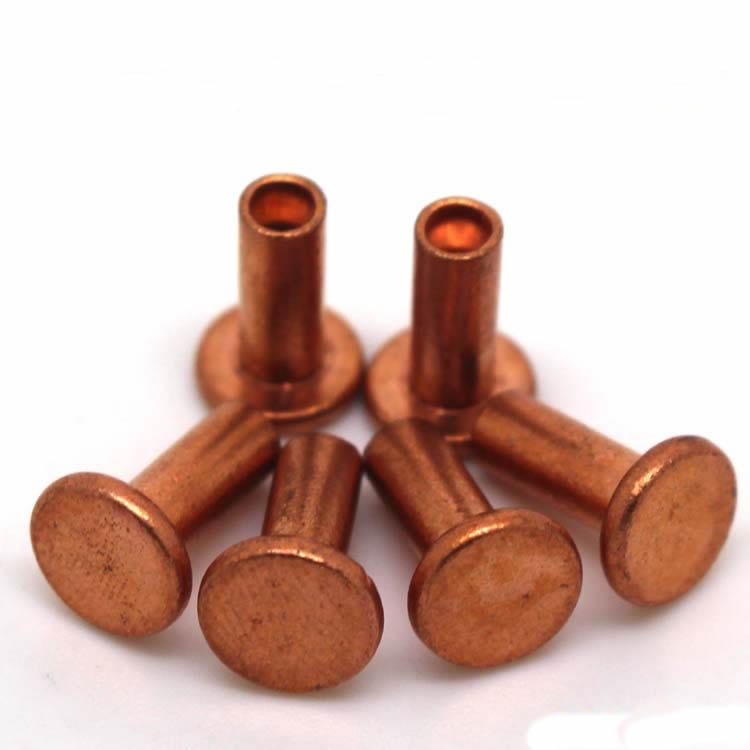
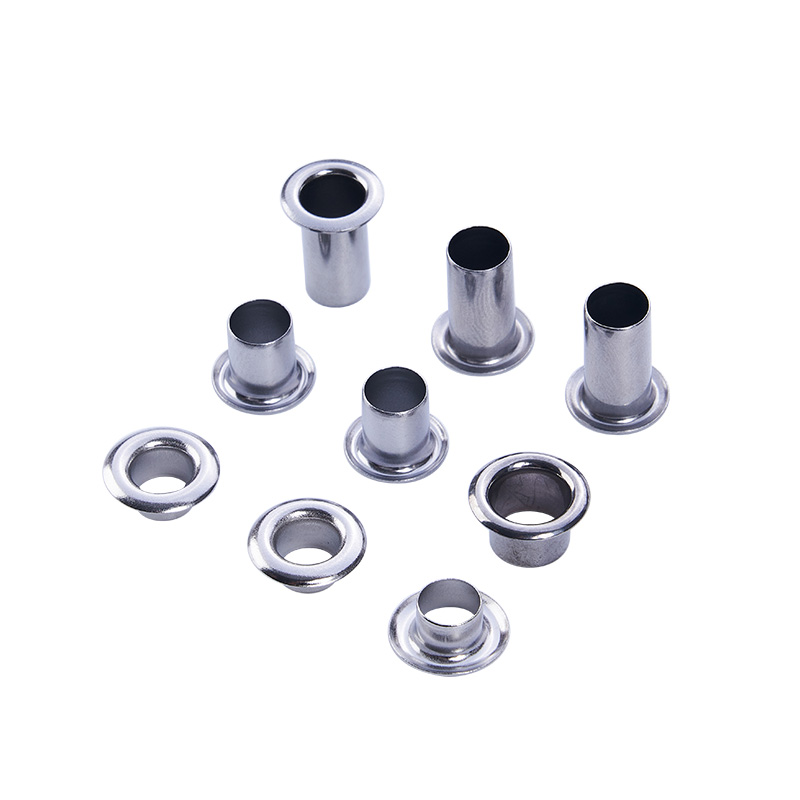
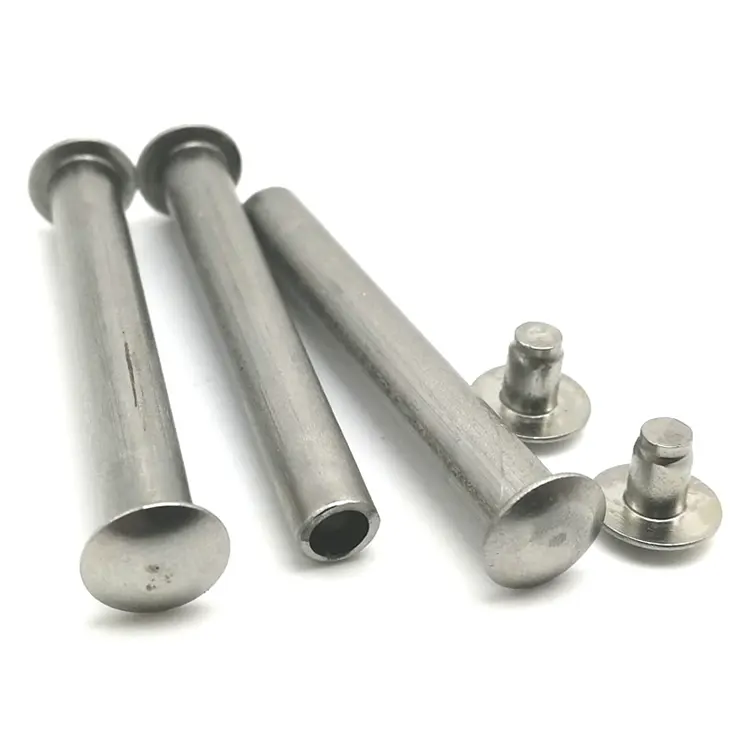
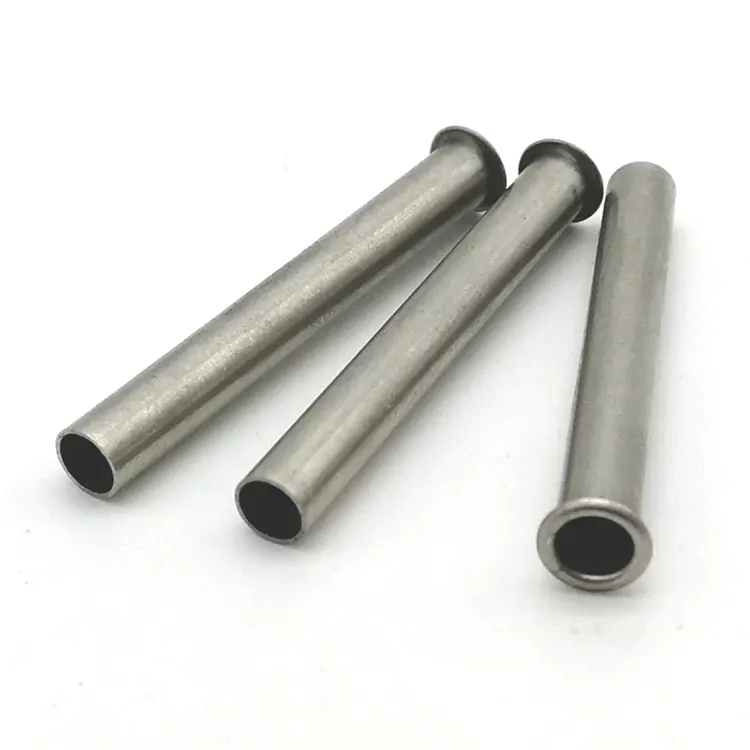
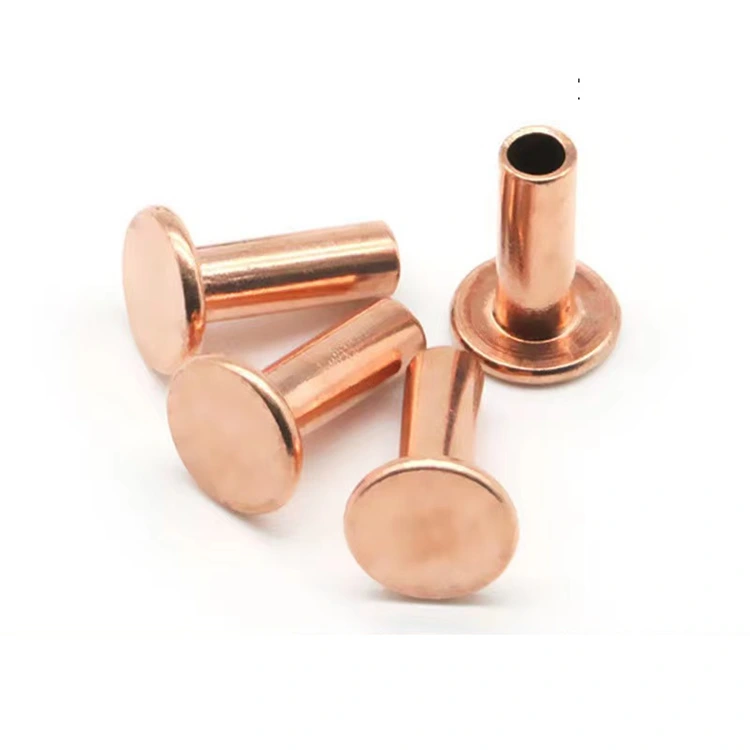
Copper Half Hollow Rivets
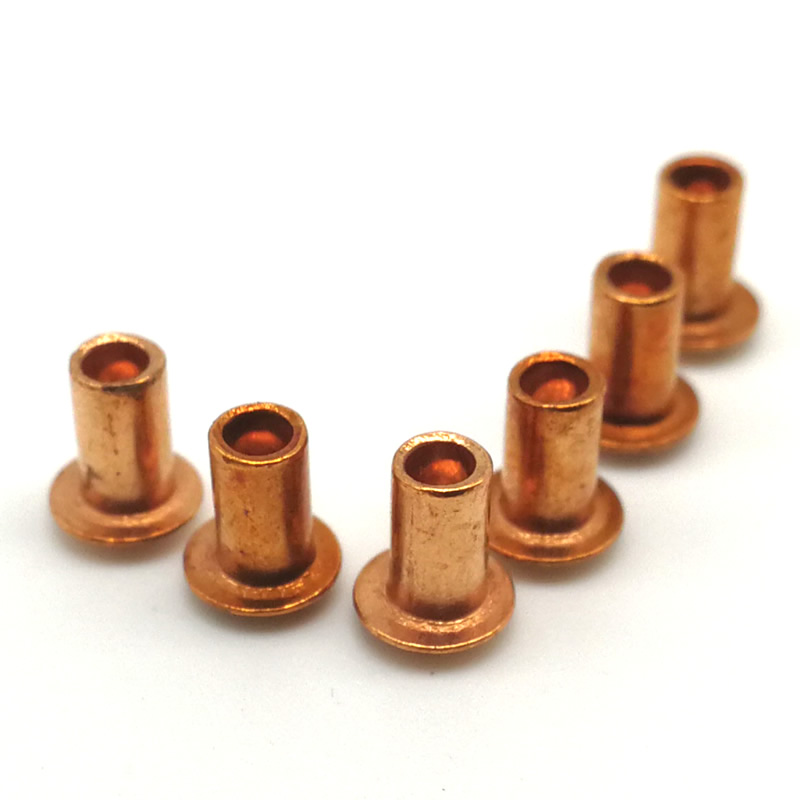
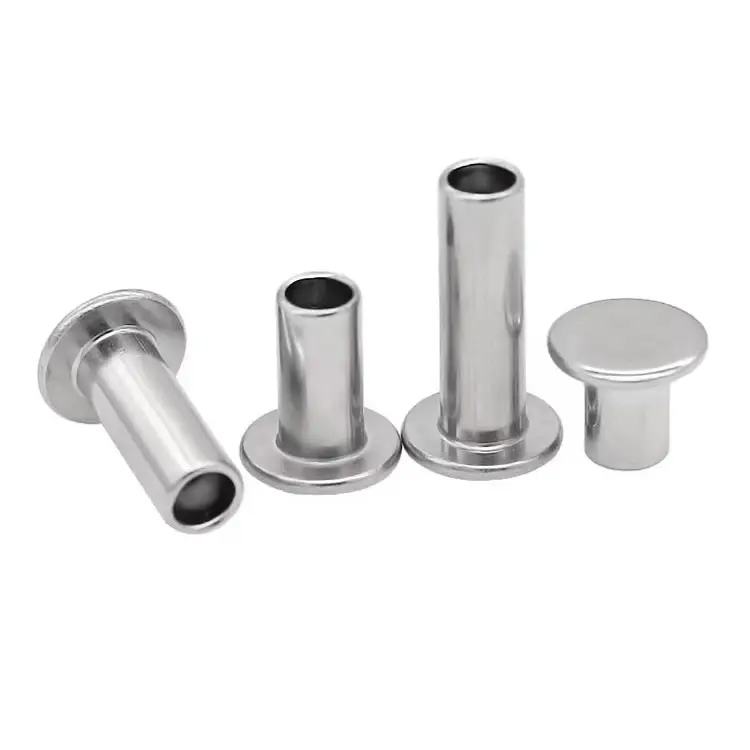
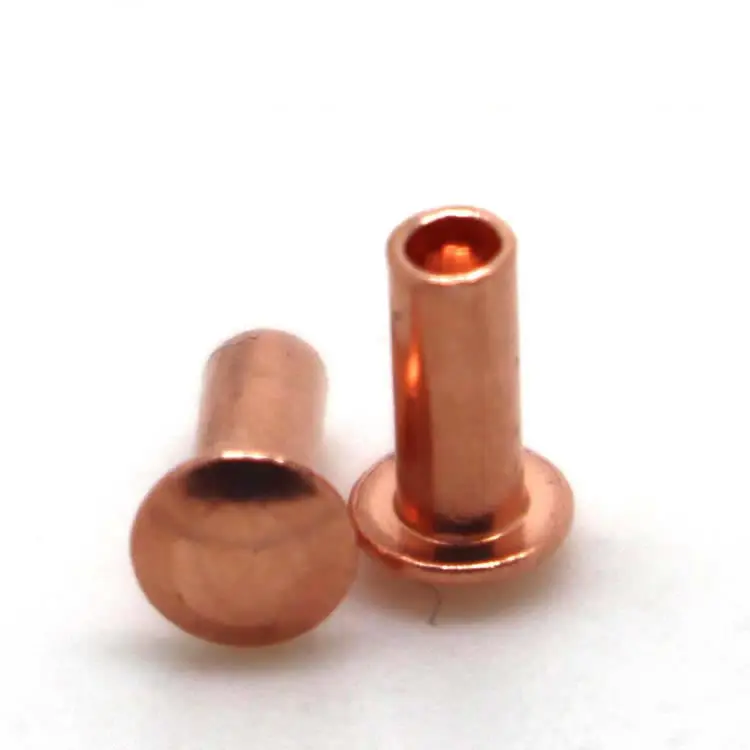
Nuote Metals supplies copper half hollow rivets – fasteners with a shallow cavity at the tail that reduces setting force by up to 70% compared to solid rivets. Also commonly called semi‑tubular rivets, half tubular rivets, or hollow‑end rivets. Made from C11000 pure copper, delivering 100% IACS electrical conductivity, 401 W/m·K thermal conductivity, and natural antimicrobial properties. Available in 0.8–8.0mm shank diameters, six head styles, and multiple finishes.
Send Inquiry
Product Description
If your assembly needs the low‑force installation of a half hollow rivet – and you also need to carry current, transfer heat, or maintain a hygienic surface – copper is the only material that delivers all three. Copper half hollow rivets combine the 70% setting force reduction of a semi‑tubular design with the unique properties of C11000 pure copper: 100% IACS electrical conductivity, 401 W/m·K thermal conductivity, and natural antimicrobial performance.
When conductivity and production efficiency both matter, copper half hollow rivets are the engineered answer.
Copper vs. Brass vs. Aluminum – The Numbers That Matter
| Property | Copper Half Hollow Rivet | Brass Half Hollow Rivet | Aluminum Half Hollow Rivet |
|---|---|---|---|
| Electrical conductivity | 100% IACS | ~28% | ~61% |
| Thermal conductivity | 401 W/m·K | ~120 | ~140 |
| Antimicrobial | Yes | Limited | No |
| Weight | Heavy | Heavy | Lightest |
| Corrosion resistance | Excellent | Good | Excellent |
| Setting force | 70% less than solid | 70% less than solid | 70% less than solid |
| Best for | Electrical, thermal, antimicrobial | Decorative, general purpose | Lightweight, non‑magnetic |
Choose copper when: The rivet must carry electrical current. The assembly needs to transfer heat away from components. Antimicrobial properties are required. You need the highest conductivity available in a half hollow fastener.
C11000 Copper – Material Properties
| Property | C11000 Copper |
|---|---|
| Copper content | ≥99.9% |
| Electrical conductivity | 100% IACS |
| Thermal conductivity | 401 W/m·K |
| Antimicrobial | Naturally kills 99.9% of bacteria within hours |
| Corrosion resistance | Excellent – forms protective patina |
| Key advantage | Highest conductivity of any common fastener material |
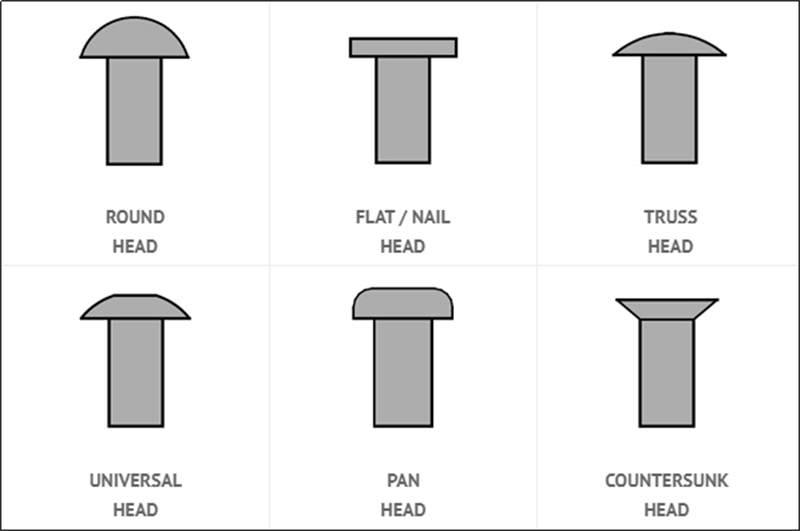
Head Styles – What We Offer
Copper half hollow rivets are available in six head styles:
| Head Style | Best For | Visual Profile |
|---|---|---|
| Round | Visible joints, general purpose | Classic dome |
| Flat | Clearance‑limited, low profile | Sits near flush |
| Oval | Decorative, smooth appearance | Slightly raised, rounded |
| Countersunk | Flush surfaces, zero protrusion | Tapered, sits flush |
| Truss | Soft materials, oversized holes | Extra‑wide, low dome |
| Mushroom | Soft materials, wide bearing surface | Wide, smooth, radiused edge |
One Real Application – LED Light Fixture Driver Board
A manufacturer of high‑power LED lighting fixtures needed a fastener to attach the driver board to the heat sink housing. The driver board generated significant heat during operation – previous steel screws provided mechanical connection but poor thermal transfer. Heat buildup was reducing LED lifespan. The customer needed a fastener that would transfer heat away from the driver board while setting with minimal force to avoid damaging the board.
We supplied C11000 copper half hollow rivets – 3.0mm shank, 5.5mm round head, 5.0mm barrel length, plain finish. The copper delivered 401 W/m·K thermal conductivity – heat dissipated efficiently from the driver board. The shallow cavity reduced setting force by over 60% – no damage to the driver board. The permanent clinch held securely under thermal cycling. The customer tested 500 rivets across 500 fixtures. After 5,000 thermal cycles, zero failures. They now order copper half hollow rivets in batches of 150,000 pieces annually.
Manufacturing Process – Production Flow Chart
| Step | Process | Description |
|---|---|---|
| ① | Material Procurement | Certified C11000 copper wire from approved mills. Each coil comes with a mill test certificate and heat number for full traceability. |
| ② | Incoming Material Inspection | Wire checked for diameter (±0.02mm), hardness, and copper content (spectrometer verifies ≥99.9% Cu). Out‑of‑spec material is rejected before production begins. |
| ③ | Cold Heading (Multi‑Station) | The wire feeds into a progressive cold header. In a single continuous sequence: • Wire drawn to exact shank diameter • Cut to precise blank length • First blow: square the blank • Second blow: form the head • Third blow: extrude semi‑hollow cavity (45–55% depth) |
| ④ | Trimming | Flash around the head edge is removed for a clean, burr‑free finish. |
| ⑤ | Tumbling & Deburring | Micro‑burrs are eliminated and surface is prepared for finishing. |
| ⑥ | Plating or Coating | Applied as specified – tumbled, lacquered, tin‑plated, or plain. |
| ⑦ | Final Inspection | 100% optical sorting for critical dimensions. AQL sample manually verified. Dimensional report, material certificate, and Certificate of Conformance issued. |
| ⑧ | Finished Product – Ready for Shipment |
Our Inspection Equipment – How We Verify Quality

We maintain a full range of calibrated inspection equipment to verify every batch of copper half hollow rivets before shipment:
- Laser micrometer – High‑speed, non‑contact measurement of shank diameter and wall thickness to ±0.02mm accuracy.
- Optical comparator (profile projector) – Visual inspection of head profile, flange diameter, and overall shape.
- 2.5D image measuring system – Automated measurement of inner diameter, flange concentricity, and barrel length.
- Spectrometer – Material composition verification for C11000 copper (≥99.9% Cu).
- Rockwell hardness tester – Raw material and finished product hardness verification.
- Salt spray test chamber – Corrosion resistance testing per ASTM B117 when required.
All equipment is calibrated annually by accredited third‑party laboratories. Inspection records are retained for five years and included with every shipment.
What Our Customers Say – Real Feedback
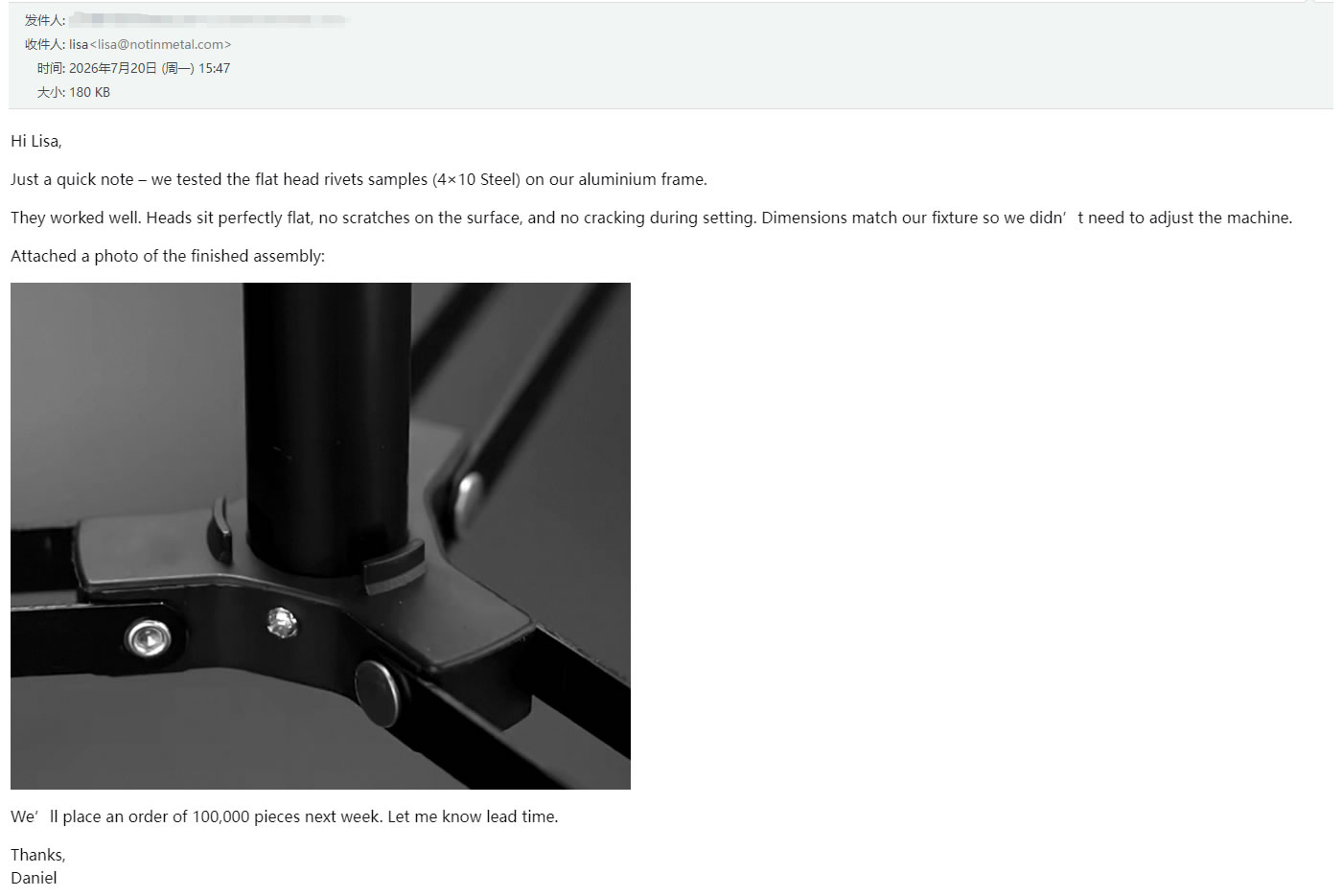
We let our customers speak for us. The images above show real feedback from manufacturers who have used our copper half hollow rivets in their production lines – from LED lighting manufacturers to power supply builders to electrical equipment suppliers.
They come back to us for the same reasons:
- Superior thermal performance – 401 W/m·K conductivity for effective heat dissipation
- Permanent conductivity – 100% IACS, no degradation over time
- Low‑force setting – 70% less force than solid rivets, protects sensitive components
- Consistent quality – Every batch meets their dimensional and performance requirements
- Reliable delivery – Samples ship in 5–7 days, production on schedule
Three Questions We Answer Often
Q: "Can I get samples before ordering production quantities?"
A: Yes – we offer samples for all our products. For standard existing specifications, samples are provided free of charge – you only pay the shipping cost. For custom sizes or custom tooling, sample availability and lead time depend on the specific requirements. Please contact our sales team with your drawing or specification, and they will advise on sample cost and delivery timeline.
Q: "What is the minimum wall thickness for copper half hollow rivets?"
A: The minimum wall thickness depends on the shank diameter and cavity depth. For a typical 3.0mm shank with 45–55% cavity depth, the wall thickness is approximately 0.20–0.30mm. For larger diameters, we can achieve thicker walls. The key is that the wall must be thick enough to support the rolling action during setting without cracking, but thin enough to allow the 70% reduction in setting force. If you have a specific wall thickness requirement, send us your drawing – we will verify feasibility and recommend the optimal design for your application.
Q: "Why choose copper over aluminum or brass for half hollow rivets?"
A: The choice depends on your application priorities. Copper offers 100% IACS electrical conductivity and 401 W/m·K thermal conductivity – if your rivet must carry current or transfer heat, copper is the only choice. It also provides natural antimicrobial properties, making it ideal for food equipment and hygiene‑critical applications. Brass is harder and offers better wear resistance for mechanical applications, but lower conductivity (~28% IACS). Aluminum is the lightest option and non‑magnetic, but does not offer the same conductivity or antimicrobial properties. For the LED fixture case above, copper was essential because the customer needed to move heat away from the driver board efficiently.
Hot Tags: Copper Half Hollow Rivets,Copper Rivets Manufacturer,Half Hollow Rivets Manufacturer
Related Categories
Send Inquiry
Please feel free to fill your inquiry in the form below. We will reply you in 24 hours.



X
We use cookies to offer you a better browsing experience, analyze site traffic and personalize content. By using this site, you agree to our use of cookies.
Privacy Policy