
Products
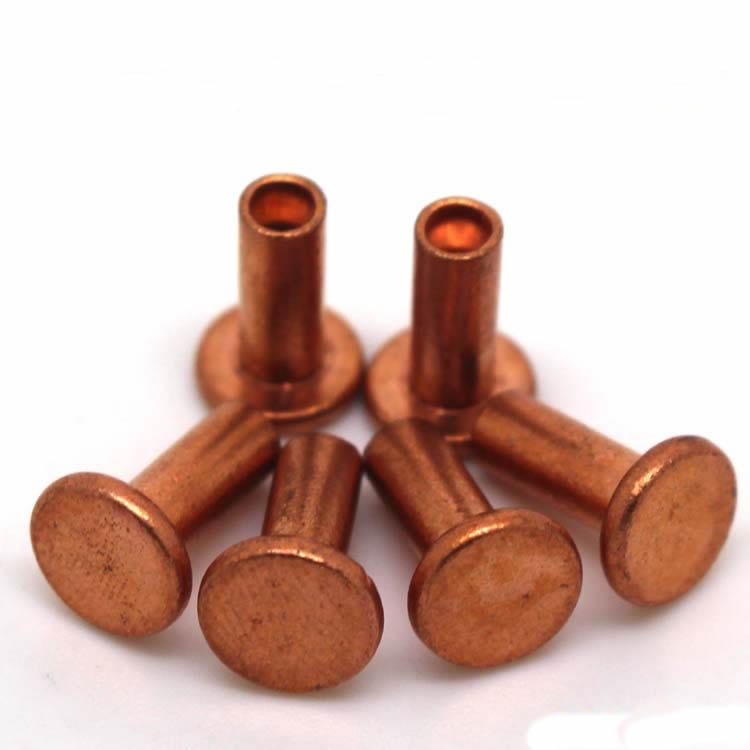
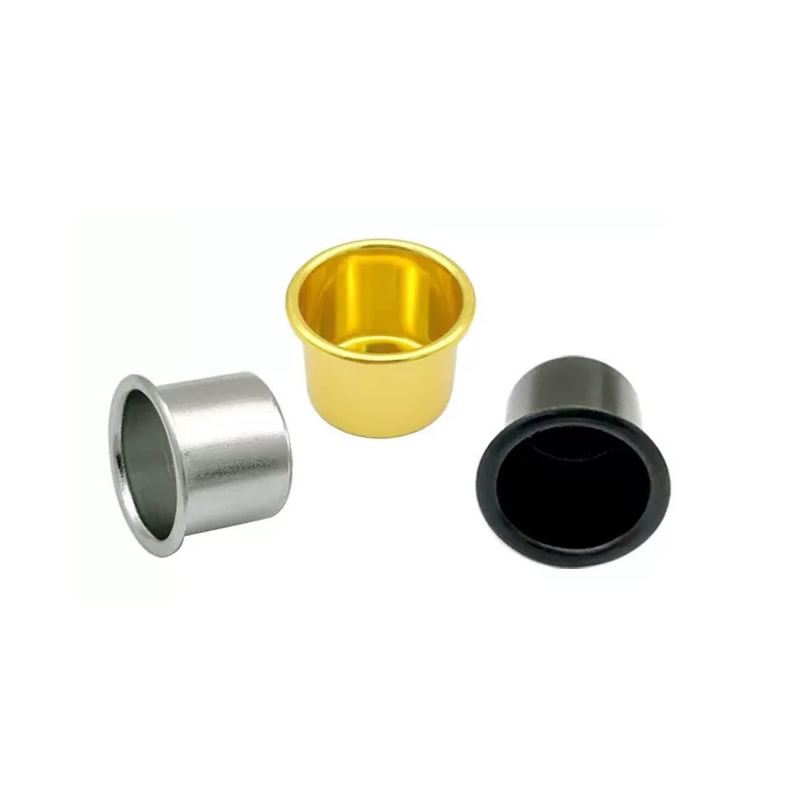
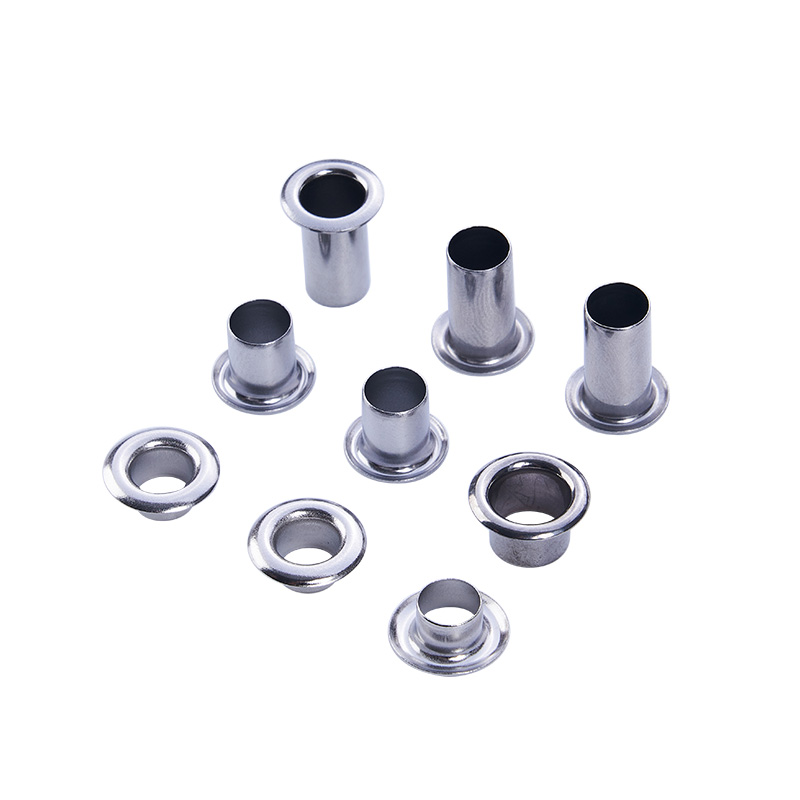
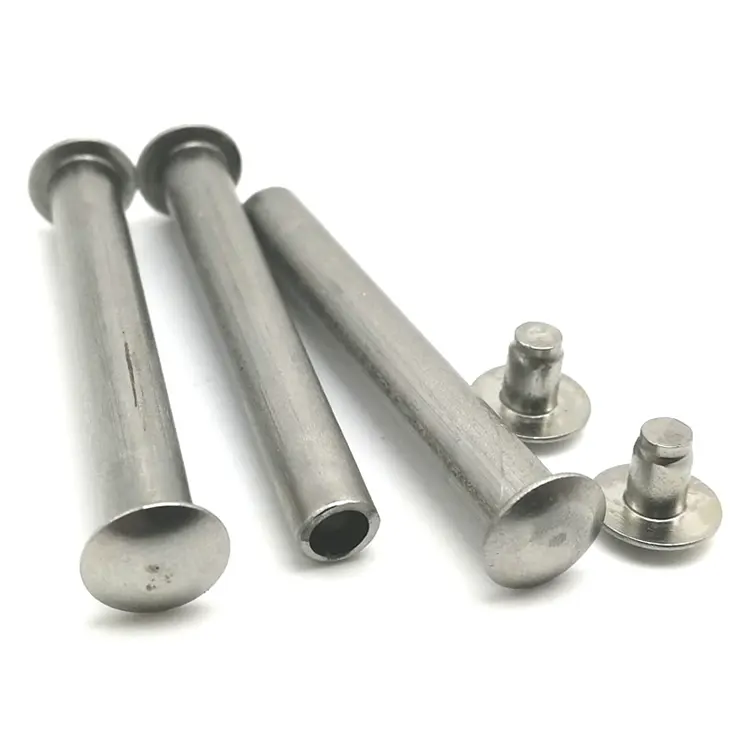
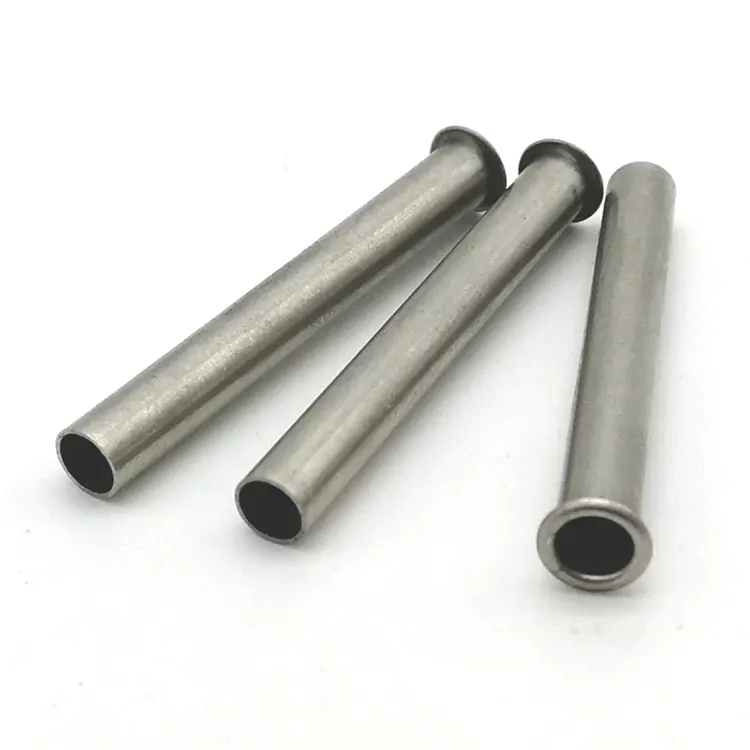
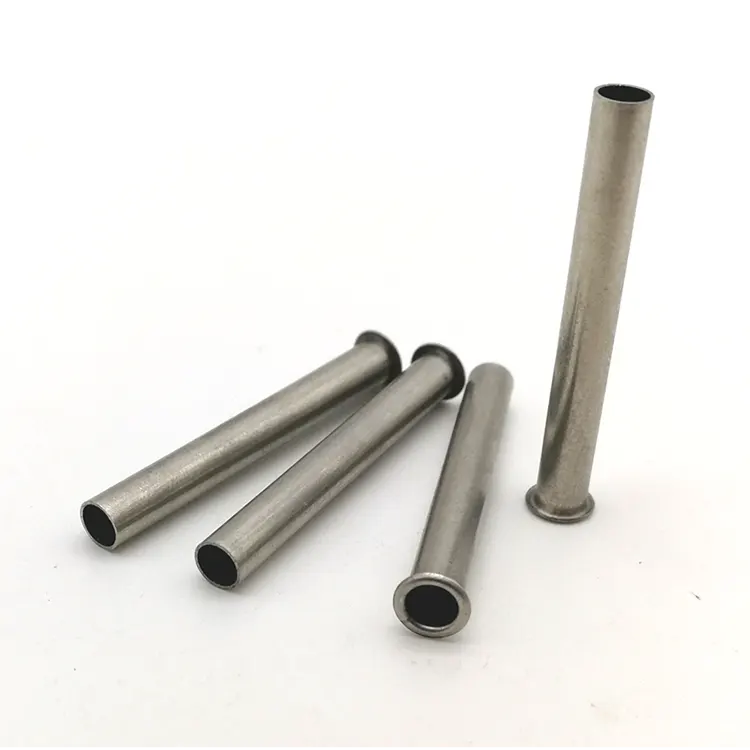
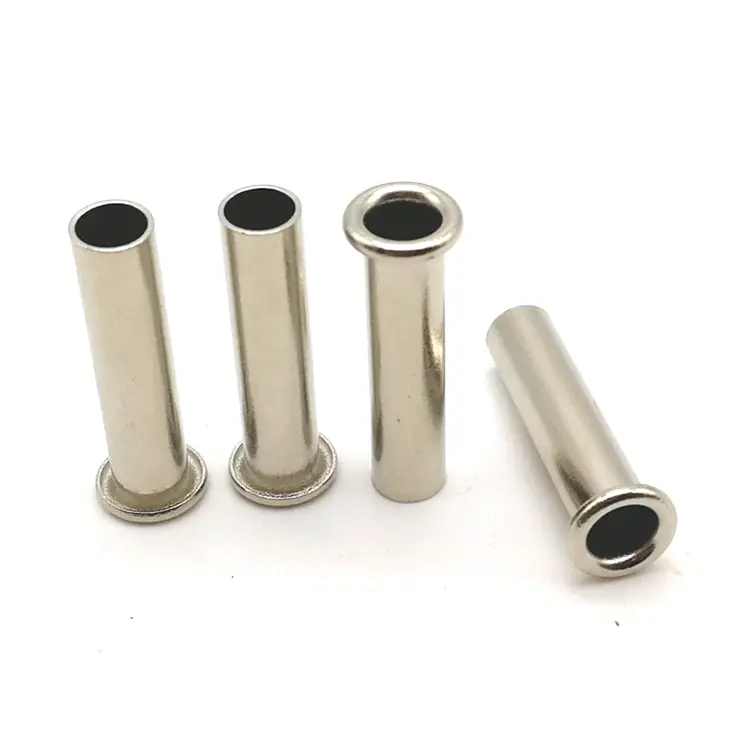
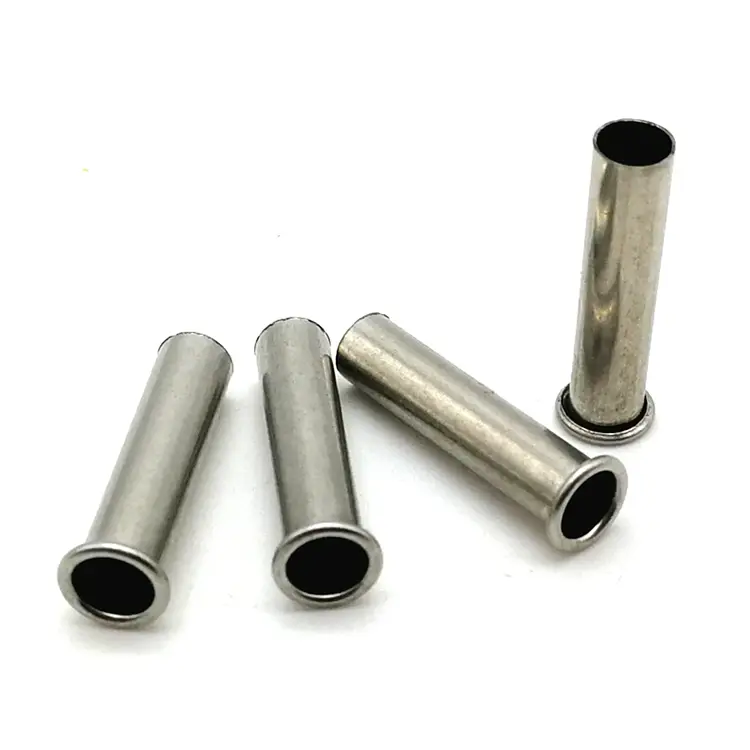
Stainless Steel Tube Rivets
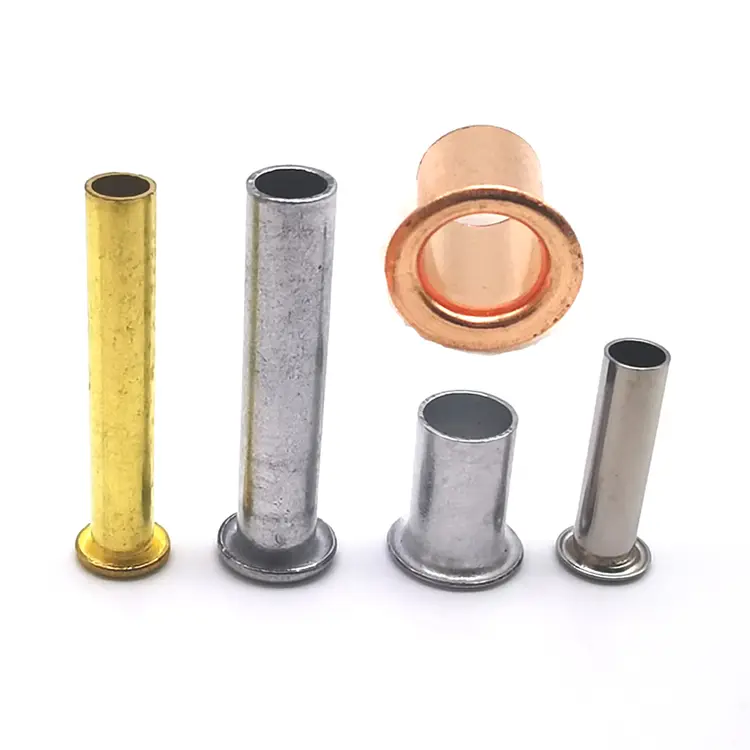
Nuote metals produces stainless steel tube rivets in China, Stainless steel tube rivets are one of the commonly used connectors. Due to the hollow design, they are small in size and light in weight, they can withstand higher pressure and tensile loads without breaking or deforming and they have good corrosion resistance and oxidation resistance, that’s why they are suitable for use in various environments.
Send Inquiry
Product Description
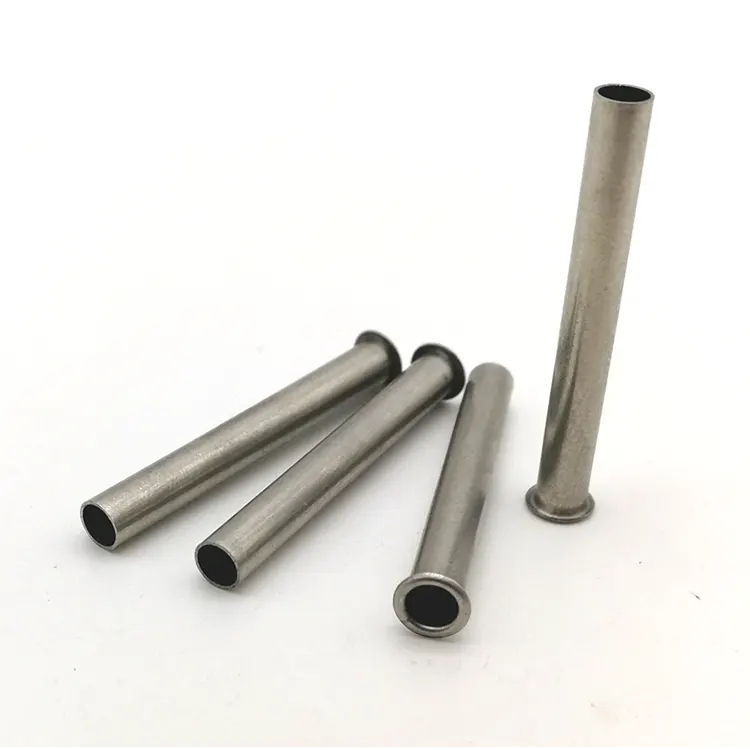
A stainless steel tube rivet is a short piece of stainless tubing with a head formed on one end. The shank is hollow from the tail to the head. During installation, the thin wall rolls outward with very low force – typically 15–20% of what a solid rivet requires.
This is the rivet you choose when your application is exposed to moisture, chemicals, or outdoor conditions – and you need the low‑force installation of a hollow fastener. No plating to wear off. No rust to worry about. Just permanent corrosion resistance that lasts as long as the assembly itself.
304 vs. 316 – Which Grade Do You Need?
| Grade | Key Alloy | Salt Spray Resistance | Best For |
|---|---|---|---|
| 304 | 18% Cr, 8% Ni | 200 – 500 hours | General outdoor, rain, humidity, food contact |
| 316 | 16% Cr, 10% Ni, 2% Mo | 1,000+ hours | Marine, coastal, saltwater, chemical, acidic environments |
Choose 304 for general outdoor applications, food processing equipment, and industrial assemblies where salt exposure is limited.
Choose 316 for marine environments, coastal installations, chemical plants, and any application where chlorides or acids are present.
Stainless Tube Rivet vs. Solid vs. Semi‑Tubular – Where the Hollow Wins
| Feature | Stainless Tube Rivet (Fully Hollow) | Stainless Semi‑Tubular Rivet | Stainless Solid Rivet |
|---|---|---|---|
| Hollow depth | 100% of shank | 45–55% of shank length | None |
| Setting force | 15–20% of solid | 25–30% of solid | 100% |
| Wall thickness | Thin (0.15–0.30mm) | Moderate | Solid |
| Weight | Lightest | Lighter | Heaviest |
| Corrosion resistance | Excellent (material itself) | Excellent (material itself) | Excellent (material itself) |
| Best for | Soft materials, outdoor, marine, lightweight assemblies | General purpose, moderate loads | Structural, maximum strength |
| Setting speed | Fastest | Fast | Slow |
Available Finishes
| Finish | Appearance | Best For |
|---|---|---|
| Passivated (standard) | Natural silver | All applications – restores oxide layer, prevents staining |
| Bead blasted | Matte silver | Anti‑glare, industrial |
| Electropolished | Bright, mirror‑like | Medical, food, high‑end decorative |
One Real Application – Outdoor BBQ Grill Hinge Assembly
A manufacturer of premium outdoor BBQ grills needed a fastener for the lid hinge mechanism. The grills were exposed to rain, humidity, grease, and temperature changes year‑round. The previous zinc‑plated steel tube rivets showed rust after one season – customers complained, and warranty claims increased. The customer needed a fastener that would never rust and would maintain a clean appearance.
We supplied 304 stainless steel tube rivets – 4.0mm shank, 7.5mm round head, 6.0mm barrel length, passivated finish. The 304 stainless provided 200–500 hours of salt spray resistance – more than enough for outdoor grills. The passivated surface maintained a clean, bright appearance. The hollow design flared with minimal force – no distortion to the thin hinge brackets. The customer tested 500 rivets across 100 grills. After 18 months of outdoor exposure, zero rust, zero failures. They now order stainless tube rivets in batches of 150,000 pieces annually.
How We Make Stainless Tube Rivets – Precision for Stainless
Stainless tube rivets start as genuine stainless tube stock – but stainless is harder to work with than carbon steel. It work‑hardens quickly and puts more stress on tooling. Our process is designed specifically for stainless.
Tube cutting – Stainless tube is cut to precise blank length. Tolerance: ±0.02mm. Carbide blades prevent work‑hardening at the cut edge.
Heading – A carbide die forms the head (round, flat, or countersunk) on one end. Controlled forming speed prevents cracking.
Trimming & tumbling – Flash is removed. Micro‑burrs are eliminated.
Passivation – Free iron particles are removed, and the chromium oxide layer is restored. Included at no extra charge.
Final inspection – 100% optical sorting. AQL sample manually verified.
What makes this work for production:
Material traceability – Each coil comes with a mill test certificate and heat number. We can trace every batch back to the original melt.
Stainless‑specific tooling – Our heading dies are designed and maintained specifically for stainless steel – polished surfaces, controlled speeds, and regular inspection.
Volume capability – We produce stainless tube rivets in quantities from 2,000 to 500,000+ pieces.
Sample lead time: 5–7 days standard; custom tooling: 15–20 days.
Our Inspection Equipment – How We Confirm Quality

We maintain a full range of calibrated inspection equipment to verify every batch of stainless steel tube rivets before shipment:
Laser micrometer – High‑speed, non‑contact measurement of shank diameter, outer diameter, and wall thickness to ±0.02mm accuracy.
Optical comparator (profile projector) – Visual inspection of head profile, flange diameter, edge radius, and overall shape against master overlay templates.
2.5D image measuring system – Automated measurement of inner diameter, flange concentricity, barrel length, and surface flatness.
Spectrometer – Material composition verification to confirm 304 or 316 grade.
Rockwell hardness tester – Raw material and finished product hardness verification.
Salt spray test chamber – Corrosion resistance testing per ASTM B117 standards when required.
XRF thickness gauge – Passivation verification and surface quality confirmation.
All equipment is calibrated annually by accredited third‑party laboratories. Inspection records are retained for five years and included with every shipment.
What Our Customers Say – Real Feedback

We let our customers speak for us. The images above show real feedback from manufacturers who have used our stainless steel tube rivets in their production lines – from outdoor grill manufacturers to marine hardware suppliers to food processing equipment builders.
They come back to us for the same reasons:
Zero rust complaints – Permanent corrosion resistance eliminates field failures
Consistent quality – Every batch meets their dimensional and performance requirements
Reliable delivery – Samples ship in 5–7 days, production on schedule
Three Questions We Answer Often
Q: "Can I get samples before ordering production quantities?"
A: Yes – we offer samples for all our products. For standard existing specifications, samples are provided free of charge – you only pay the shipping cost. For custom sizes or custom tooling, sample availability and lead time depend on the specific requirements. Please contact our sales team with your drawing or specification, and they will advise on sample cost and delivery timeline.
Q: "Can stainless steel tube rivets be used in food processing or medical equipment?"
A: Yes – 304 and 316 stainless steel are both FDA‑compliant for food contact and widely used in medical and pharmaceutical applications. 304 is suitable for most food processing equipment, commercial kitchens, and beverage manufacturing. 316 offers additional protection against more aggressive cleaning agents and acidic foods. For medical applications, both grades are used in surgical instruments, hospital equipment, and sterile environments. We recommend electropolished finish for medical and pharmaceutical applications – it creates a smoother surface that is easier to clean and sanitize. We also provide material certificates and passivation documentation with every shipment for full traceability.
Q: "What temperature range can stainless steel tube rivets withstand?"
A: Stainless steel tube rivets maintain their mechanical properties across a wide temperature range. 304 stainless is typically rated for continuous service from ‑196°C to 800°C (‑320°F to 1470°F), making it suitable for most industrial, outdoor, and food processing applications. 316 offers similar temperature resistance with enhanced corrosion protection. For BBQ grill applications – like the case above – the lid hinge typically operates at 200–400°C, well within the safe operating range of 304 stainless. If your application involves higher temperatures (exhaust systems, ovens), contact our technical team – we can verify the specific grade and wall thickness needed for your operating conditions.
Hot Tags: Stainless Steel Tube Rivets, Tube Rivets Manufacturer, Stainless Tube Rivets Supplier
Related Categories
Send Inquiry
Please feel free to fill your inquiry in the form below. We will reply you in 24 hours.



X
We use cookies to offer you a better browsing experience, analyze site traffic and personalize content. By using this site, you agree to our use of cookies.
Privacy Policy