
Products
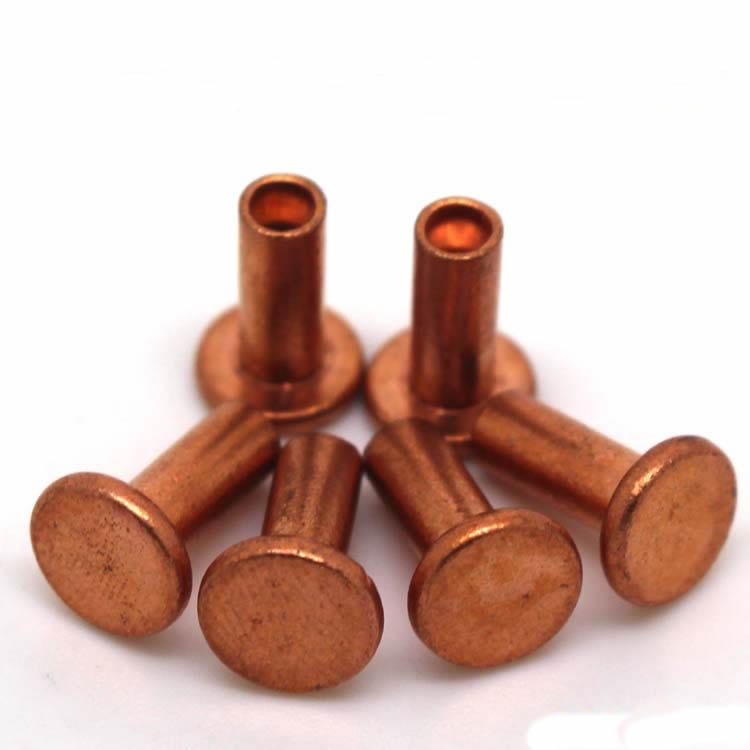
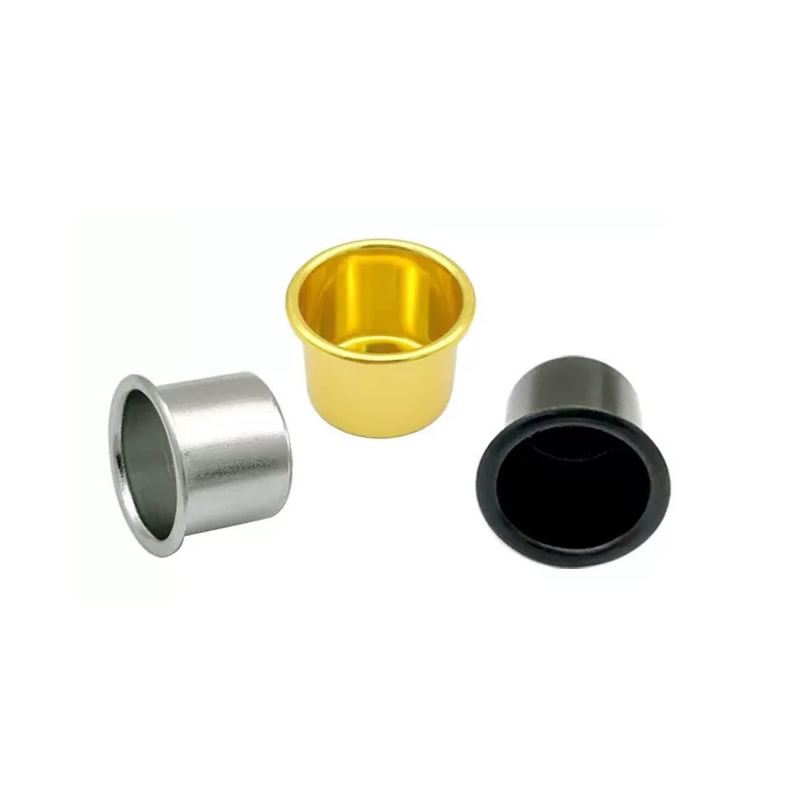
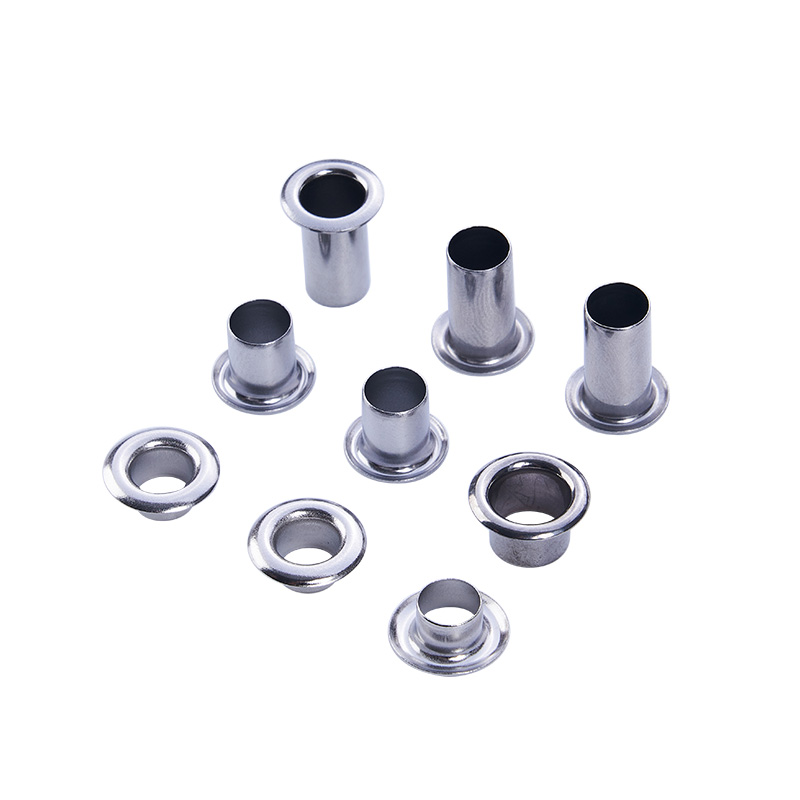
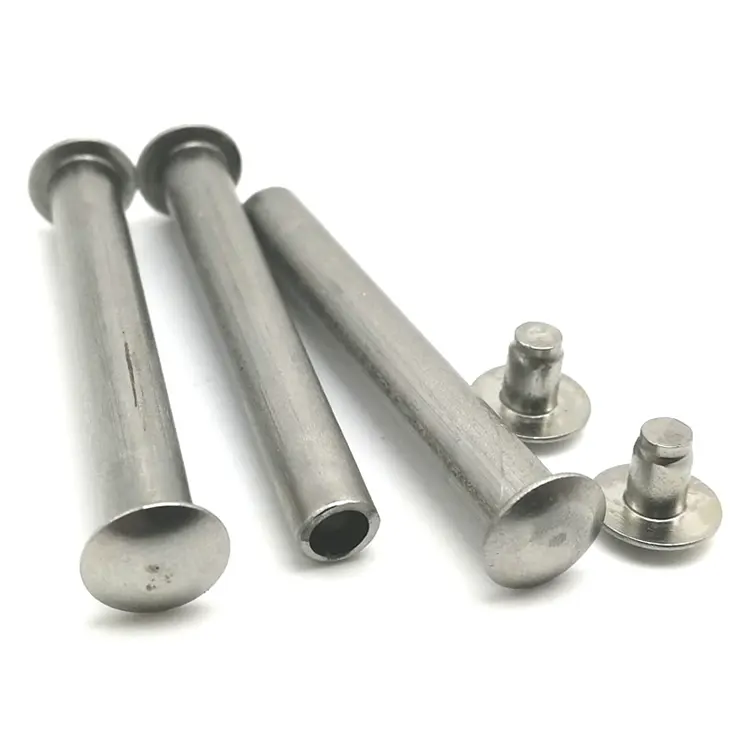
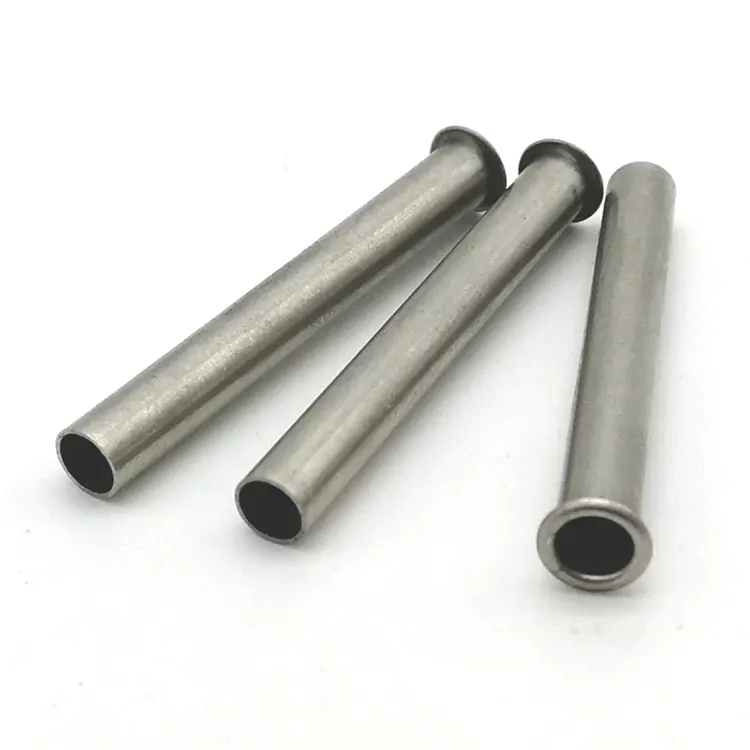
Steel Tube Rivets
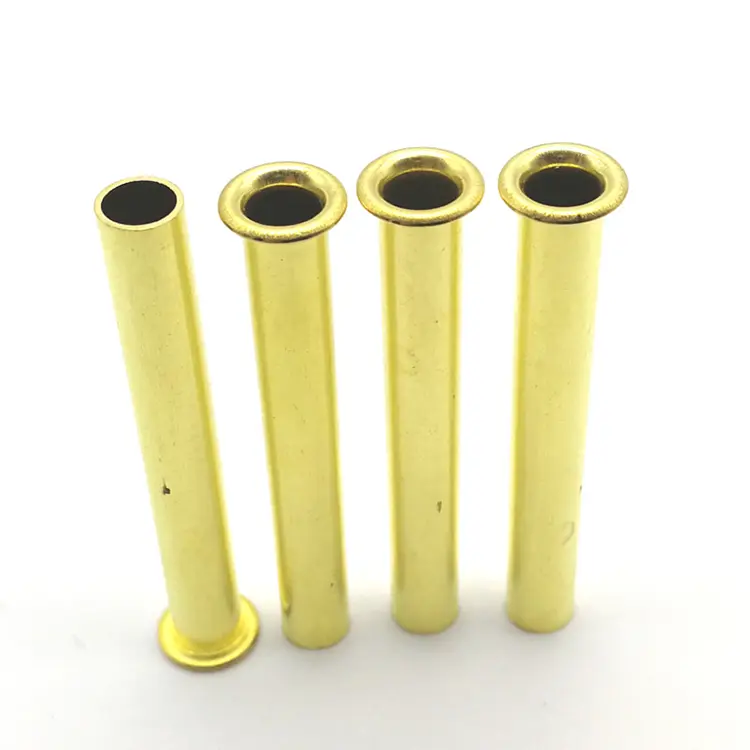
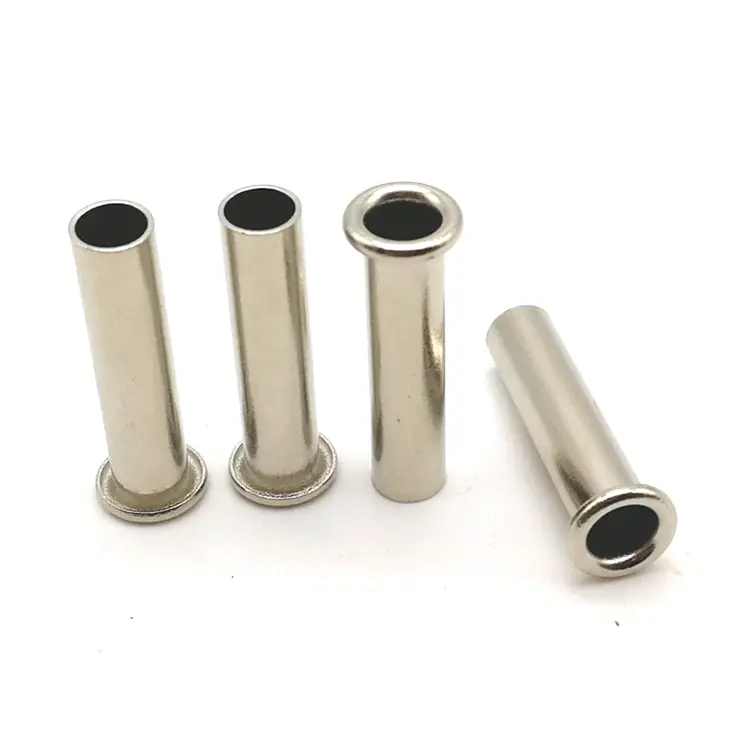
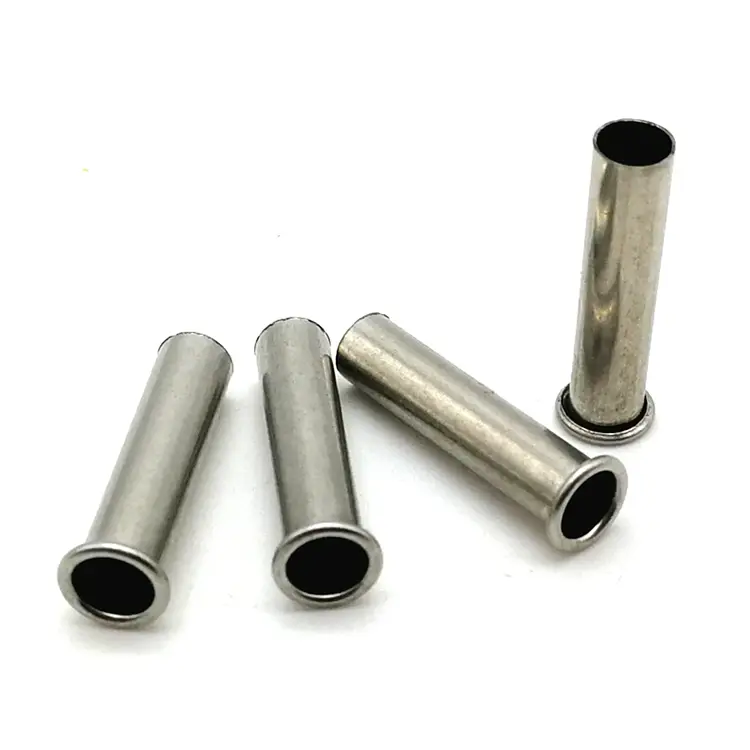
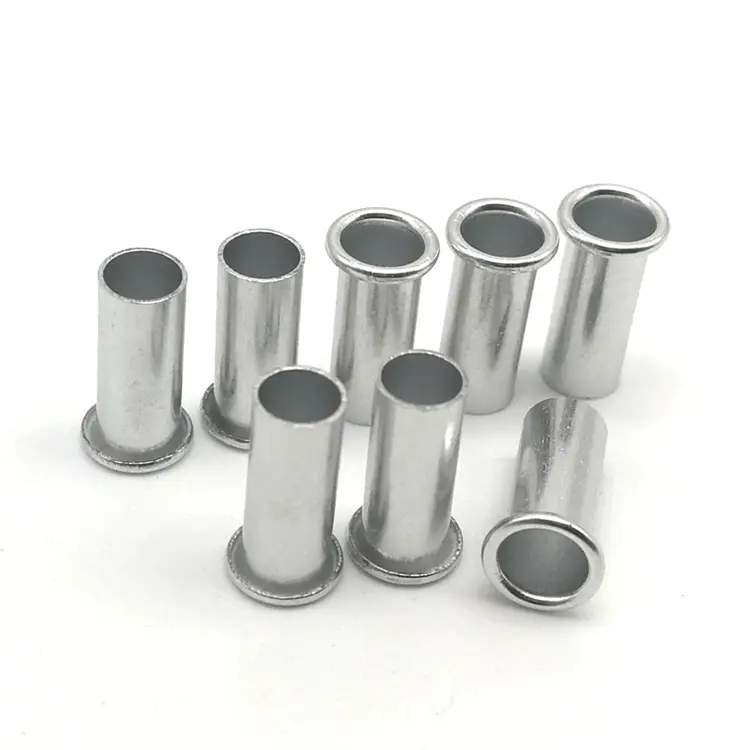
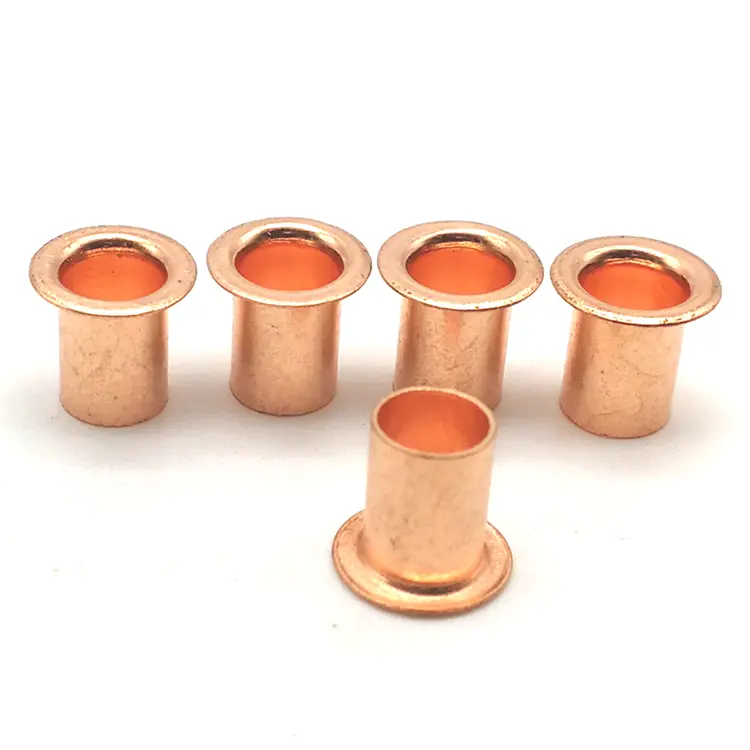
Steel tube rivets are a type of metal fastener that achieves connection through stamping deformation. They consist of a hollow tubular rod and an end cap head, and belong to the hollow fastener category in the field of mechanical engineering.Nuote Metals offer these kinds of steel tube rivets in Dongguan,China, for more than 10 years. Welcome to send us your design.
Send Inquiry
Product Description
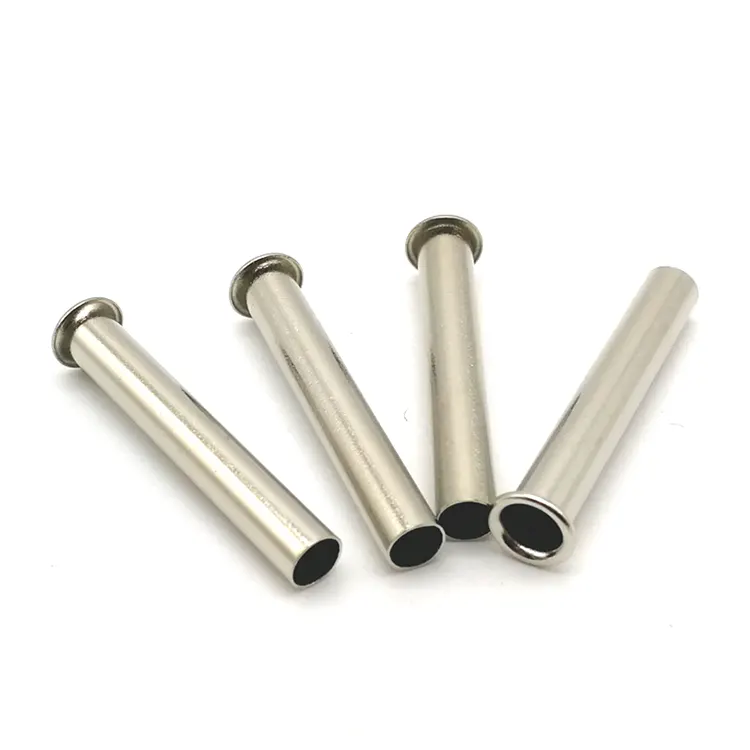
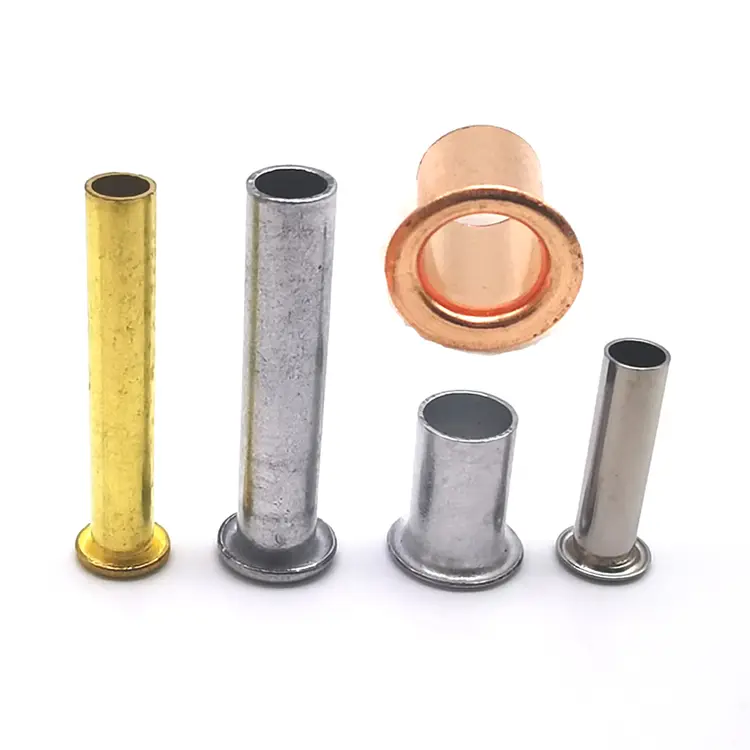
A steel tube rivet is a short piece of steel tubing with a head formed on one end. The shank is hollow from the tail to the head. During installation, the thin wall rolls outward with very low force – typically 15–20% of what a solid rivet requires.
This is the fastener you choose when your budget is tight and your production volume is high. Steel tube rivets offer the same hollow design and low-force setting as brass or aluminum tube rivets – at a significantly lower cost. When appearance is not the priority, they deliver reliable performance at the lowest possible price per piece.
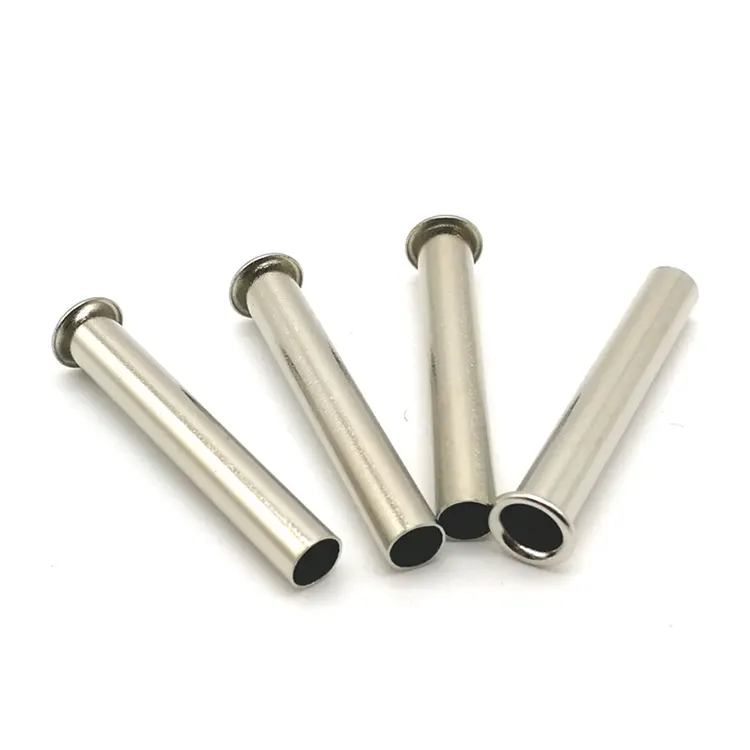
Steel Tube Rivet vs. Solid vs. Semi‑Tubular – The Hollow That Changes Everything
| Feature | Steel Tube Rivet (Fully Hollow) | Steel Semi‑Tubular Rivet | Steel Solid Rivet |
|---|---|---|---|
| Hollow depth | 100% of shank (fully hollow) | 45–55% of shank length | None |
| Setting force | 15–20% of solid | 25–30% of solid | 100% |
| Wall thickness | Thin (0.15–0.30mm) | Moderate | Solid |
| Weight | Lightest | Lighter | Heaviest |
| Cost | Lowest | Low | Medium |
| Best for | High-volume, cost-sensitive, soft materials | General purpose, moderate loads | Structural, high-load |
| Setting speed | Fastest | Fast | Slow |
Available Finishes
| Finish | Appearance | Corrosion Protection | Best For |
|---|---|---|---|
| Plain (uncoated) | Raw steel | None | Indoor, dry environments |
| Zinc‑plated (clear) | Silver | 48 hrs salt spray | Indoor general use, cost‑effective |
| Zinc‑plated (yellow) | Gold tint | 96 hrs salt spray | Sheltered outdoor, industrial |
| Nickel‑plated | Bright silver | 96 hrs salt spray | Consumer products, visible hardware |
| Black oxide | Matte black | 24 hrs salt spray | Anti‑glare, industrial, automotive |
| Tin‑plated | Matte silver | Good | Solderability, corrosion resistance |
One Real Application – Stackable Storage Bin Handles
A manufacturer of plastic stackable storage bins needed a low-cost fastener to attach metal handles to the plastic bin bodies. Each bin used 4 handle rivets. Production volume was 500,000 bins per year – 2 million rivets annually. The previous solution used self-tapping screws – they loosened over time with repeated lifting. Solid rivets were too slow to set and cracked the thin plastic walls.
The customer needed:
A fastener that would set quickly on their automated assembly line
Low setting force – no cracking of the thin plastic
Permanent holding – no loosening over time
Lowest possible cost for a 2-million-piece annual volume
We supplied zinc‑plated steel tube rivets – 4.0mm shank, 7.5mm round head, 6.0mm barrel length, clear zinc finish. The fully hollow design flared outward with minimal force – no cracking of the plastic. The zinc plating provided corrosion protection. The steel material kept the cost low for the high-volume production run. The customer tested 1,000 rivets across 250 bins. After 10,000 lift cycles with a 20kg load, zero loosening, zero failures. They now order our tube rivets in batches of 500,000 pieces annually.
How We Make Them – Production That Scales
Steel tube rivets are made from steel tube stock. The process is straightforward, which is exactly why they are the most economical hollow fastener you can specify.
Tube cutting – Steel tube is cut to precise blank length. Tolerance: ±0.02mm.
Heading – The blank is placed into a heading press. A carbide die forms the head (round, flat, or countersunk) on one end.
Trimming & tumbling – Flash is removed. Micro‑burrs are eliminated.
Plating or coating – Zinc, nickel, black oxide, or other finishes applied as required.
Final inspection – 100% optical sorting. AQL sample manually verified.
That is the production side. But what makes this work for high‑volume manufacturing is what we do around the production:
Material traceability – Each coil of tube stock comes with a mill test certificate and heat number. We can trace every batch back to the original melt.
Tooling flexibility – We maintain tooling for round, flat, and countersunk heads. If you need a different head style, we can cut new tooling in 15–20 days.
Volume capability – We produce steel tube rivets in quantities from 5,000 to 5,000,000+ pieces. Our press lines run at speeds that keep your per‑piece cost low.
Sample lead time: 5–7 days standard; custom tooling: 15–20 days.
Our Inspection Equipment – How We Confirm Quality

We maintain a full range of calibrated inspection equipment to verify every batch of tube rivets before shipment:
Laser micrometer – High‑speed, non‑contact measurement of shank diameter, outer diameter, and wall thickness to ±0.02mm accuracy.
Optical comparator (profile projector) – Visual inspection of head profile, flange diameter, edge radius, and overall shape against master overlay templates.
2.5D image measuring system – Automated measurement of inner diameter, flange concentricity, barrel length, and surface flatness.
Spectrometer – Material composition verification to confirm grade and consistency.
Rockwell hardness tester – Raw material and finished product hardness verification.
Salt spray test chamber – Corrosion resistance testing per ASTM B117 standards when required.
XRF thickness gauge – Non‑destructive verification of plating thickness (zinc, nickel, etc.) to ensure coating meets specification.
All equipment is calibrated annually by accredited third‑party laboratories. Inspection records are retained for five years and included with every shipment.
Who We Work With – Trusted by Manufacturers Worldwide
We supply steel tube rivets to manufacturers across North America, Europe, and Asia. Our customers build:
- Storage and organization products – Plastic bins, toolboxes, shelving
- Furniture – Stackable chairs, folding tables, bed frames
- Automotive interiors – Trim panels, seat components, soft assemblies
- Industrial equipment – Guards, panels, lightweight assemblies
- HVAC ductwork – Fastening thin sheet metal
- Agricultural equipment – Lightweight assemblies, cost-sensitive components
We partner with both small assembly shops and large OEMs – from rapid prototyping to high‑volume production runs. Our strength is flexibility: custom sizes, quick samples, and consistent quality at any volume.
Three Questions We Answer Often
Q: "Can I get samples before ordering production quantities?"
A: Yes – we offer samples for all our products. For standard existing specifications, samples are provided free of charge – you only pay the shipping cost. For custom sizes or custom tooling, sample availability and lead time depend on the specific requirements. Please contact our sales team with your drawing or specification, and they will advise on sample cost and delivery timeline.
Q: "How do steel tube rivets compare to brass tube rivets in terms of cost and performance?"
A: Steel tube rivets typically cost 40–60% less than brass tube rivets of the same size. The performance difference depends on the application:
| Factor | Steel Tube Rivet | Brass Tube Rivet |
|---|---|---|
| Cost | Lowest | Higher |
| Corrosion resistance | Depends on plating | Good (natural) |
| Appearance | Industrial (unless plated) | Warm, decorative |
| Conductivity | Poor | Good (~28% IACS) |
| Setting force | Same (15–20% of solid) | Same (15–20% of solid) |
Choose steel for cost-sensitive, high-volume, or industrial applications where appearance is not critical. Choose brass for decorative, electrical, or visible hardware applications. For the storage bin case above, steel was the right choice – the rivets were functional, not visible, and the customer needed to keep costs low for a 2-million-piece annual run.
Q: "The wall of the steel tube rivet looks thin – will it collapse during setting?"
A: The thin wall is intentional – it allows the rivet to roll outward with minimal force. However, collapse can happen if conditions are not correct. Common causes and solutions:
Barrel length too short – If the barrel does not extend 1.5–2.0mm beyond your material thickness, the wall has nowhere to go and collapses. We will adjust the length based on your stack thickness.
Setting force too high – Tube rivets only need 15–20% of the force required for solid rivets. Reduce press pressure.
Hole size too tight – The barrel must have room to expand. Increase hole size to shank + 0.15–0.20mm.
Tooling mismatch – Use a concave anvil that supports the head evenly. We can supply matched tooling.
Hot Tags: Steel Tube Rivets Supplier, Tube Rivets Manufacturer, Custom Tube Rivets China
Related Categories
Send Inquiry
Please feel free to fill your inquiry in the form below. We will reply you in 24 hours.



X
We use cookies to offer you a better browsing experience, analyze site traffic and personalize content. By using this site, you agree to our use of cookies.
Privacy Policy