
Products
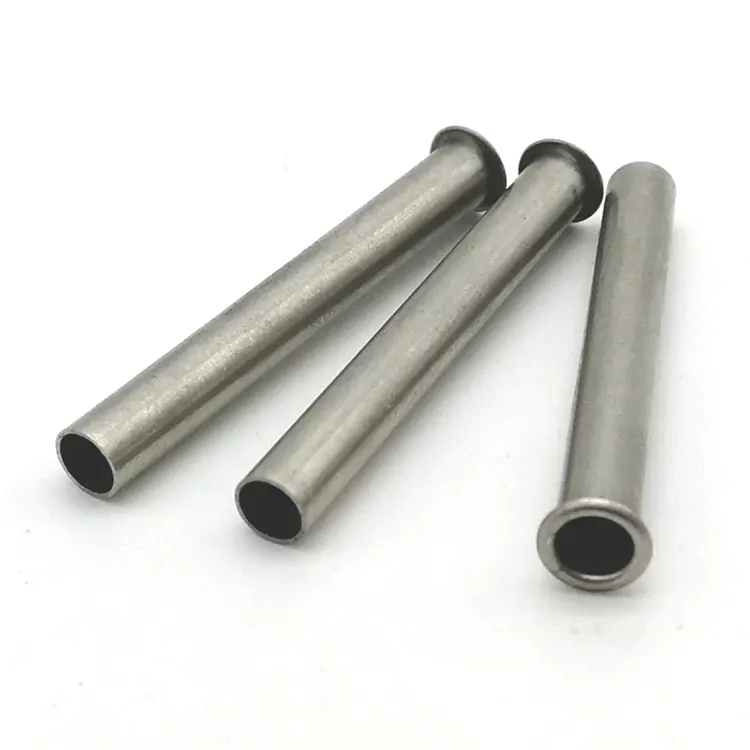
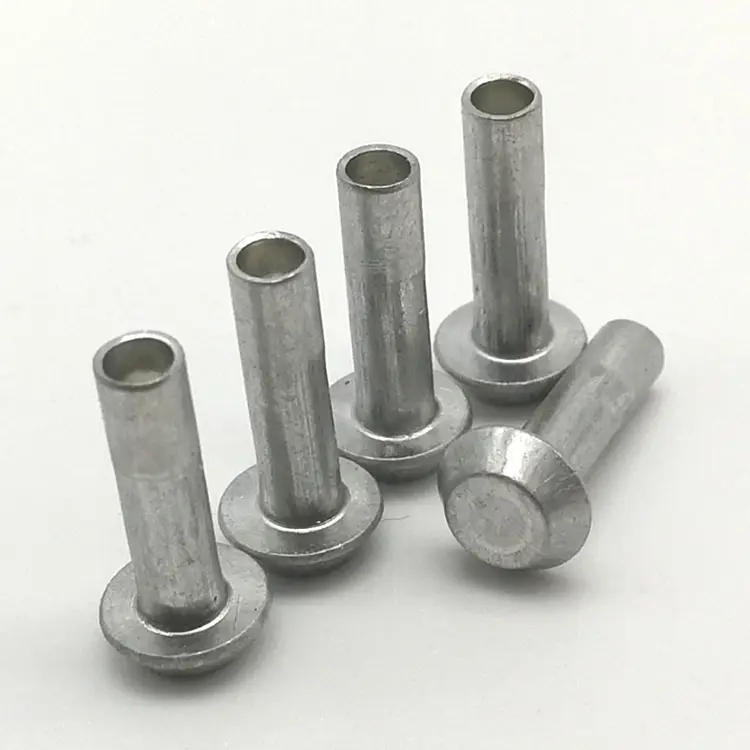
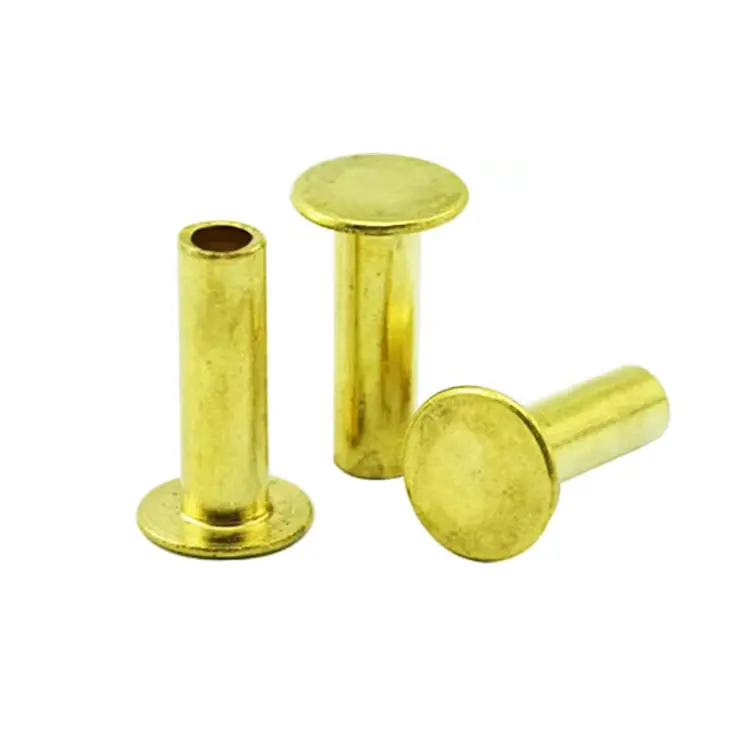
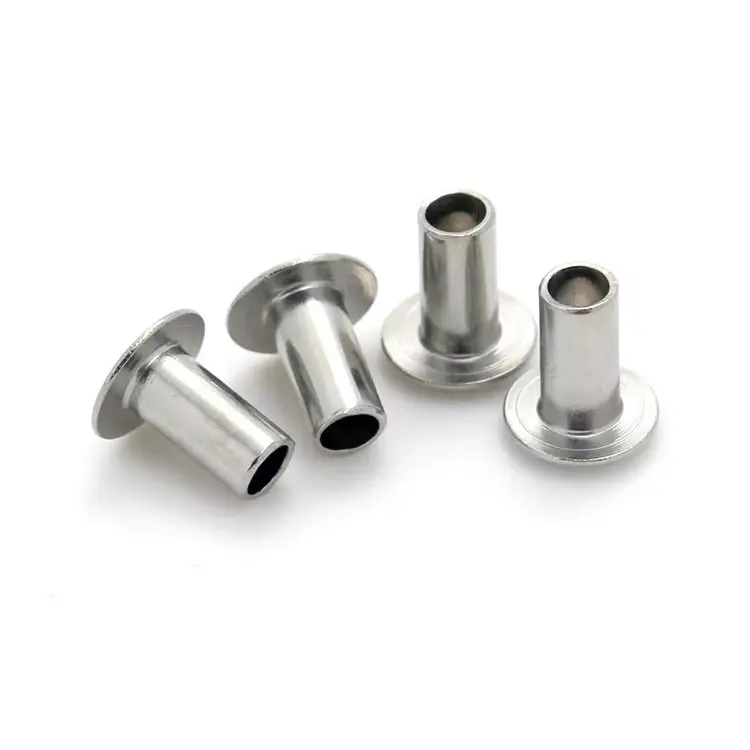
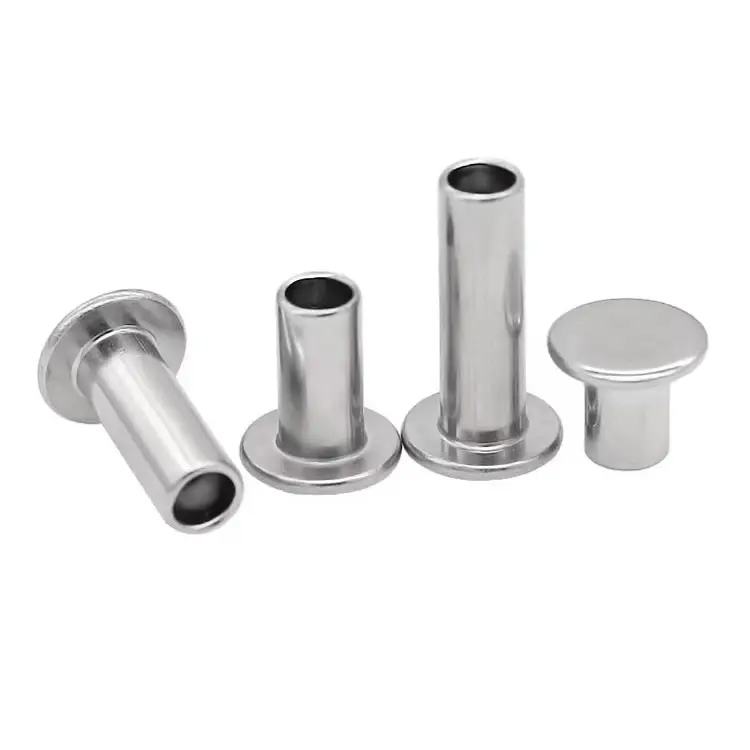
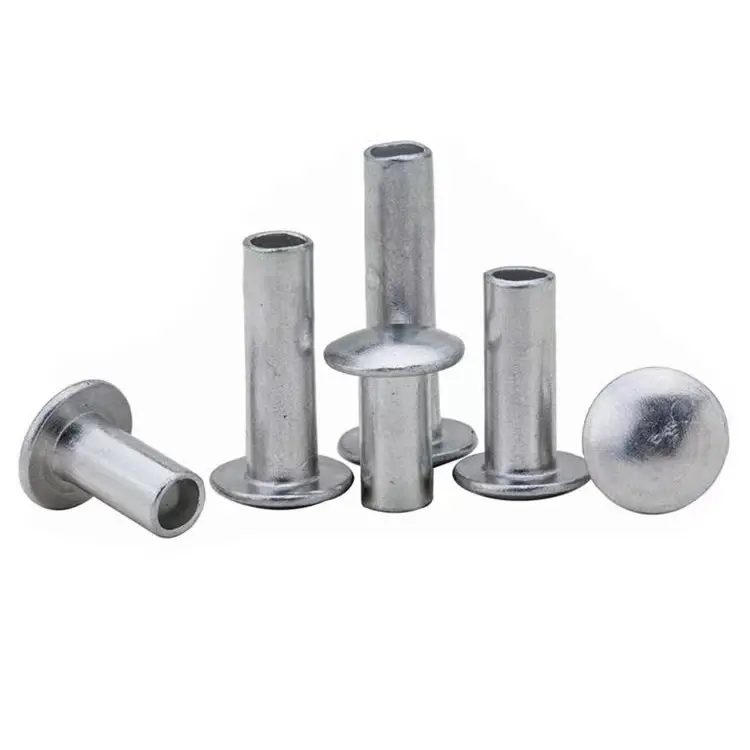
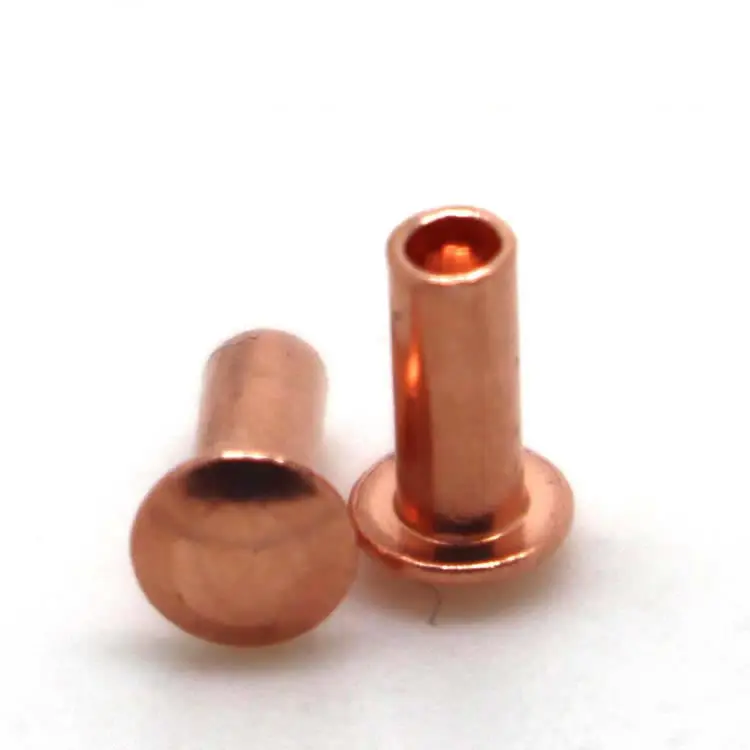
Universal Head Semi-Tubular Rivets
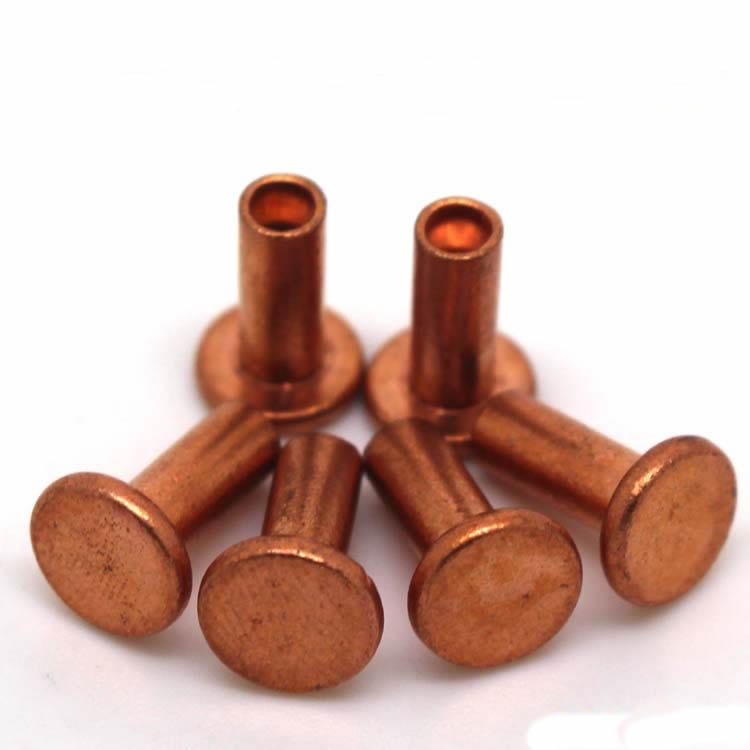
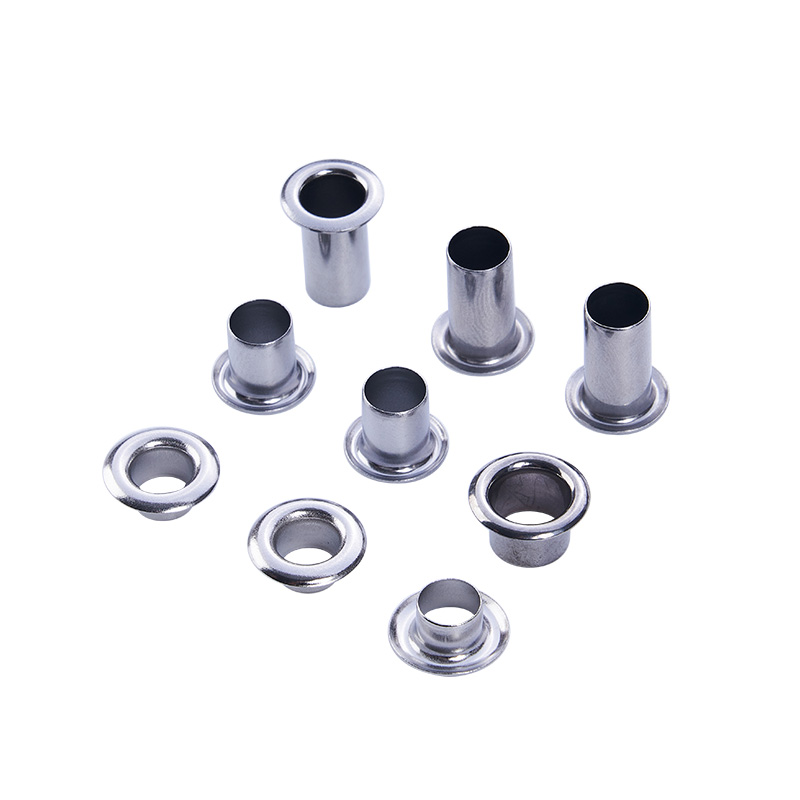
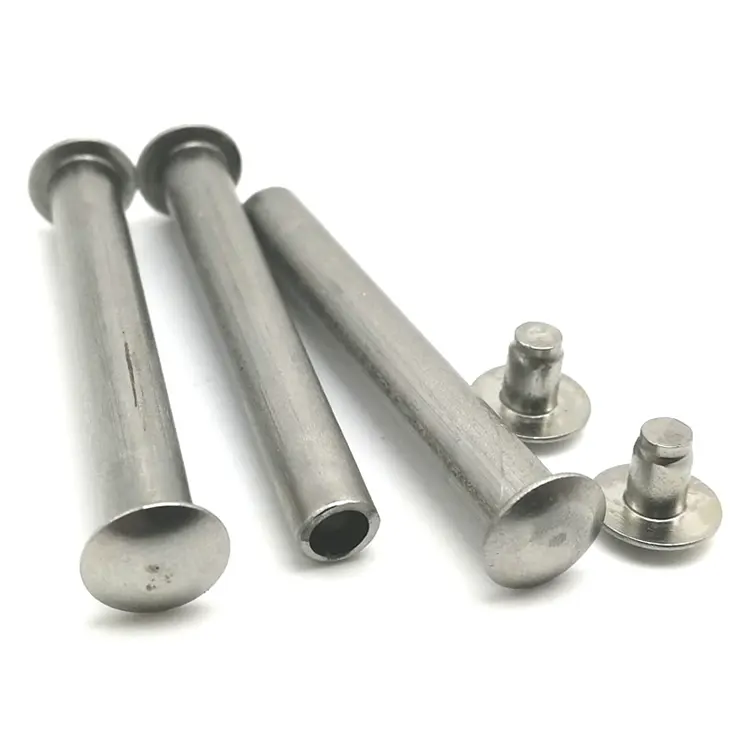
Universal head semi-tubular rivets can also be called as cone head semi tubular rivets, Nuote Metals is a professional manufacturer of this kind of rivets in Dongguan,China, we have a professinal team to design tools according to client’s drawing. Welcome to send us your requirement.
Send Inquiry
Product Description
Sometimes you do not know exactly which head style to specify. Round is too narrow. Flat is too low. Truss is too wide. The universal head semi-tubular rivet is the middle ground – wide enough to prevent pull‑through in most materials, low enough to avoid snagging, and rounded enough to look professional. And the semi‑hollow cavity reduces setting force by 70% compared to solid rivets.
When you are not sure which head style to choose, the universal head is the safe bet.
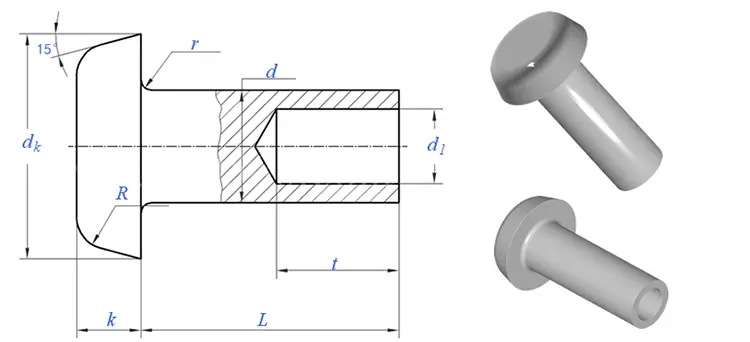
Universal vs. Other Heads – Where the Middle Ground Wins
The universal head sits between a round head and a truss head. It is wider than round, narrower than truss, and lower than round but higher than flat.
| Head Style | Head Dia / Shank | Head Height | Profile | Best For |
|---|---|---|---|---|
| Round | 1.6 – 1.8 : 1 | Tall (45–50%) | Continuous dome | Metal‑to‑metal, high shear |
| Universal | 2.0 – 2.2 : 1 | Medium (35–40%) | Smooth, radiused | Mixed materials, general purpose |
| Flat | 2.0 – 2.5 : 1 | Low (25–30%) | Flat top | Clearance‑limited |
| Truss | 2.2 – 2.8 : 1 | Very low | Extra‑wide dome | Soft materials, oversized holes |
Choose universal head when: You are not sure which head style to choose – universal is the safe default. You are assembling mixed materials (metal + plastic, metal + wood). You want a balance of bearing area and profile. You want a rivet that looks professional without drawing attention.
Semi‑Tubular vs. Solid – Where the Hollow Wins
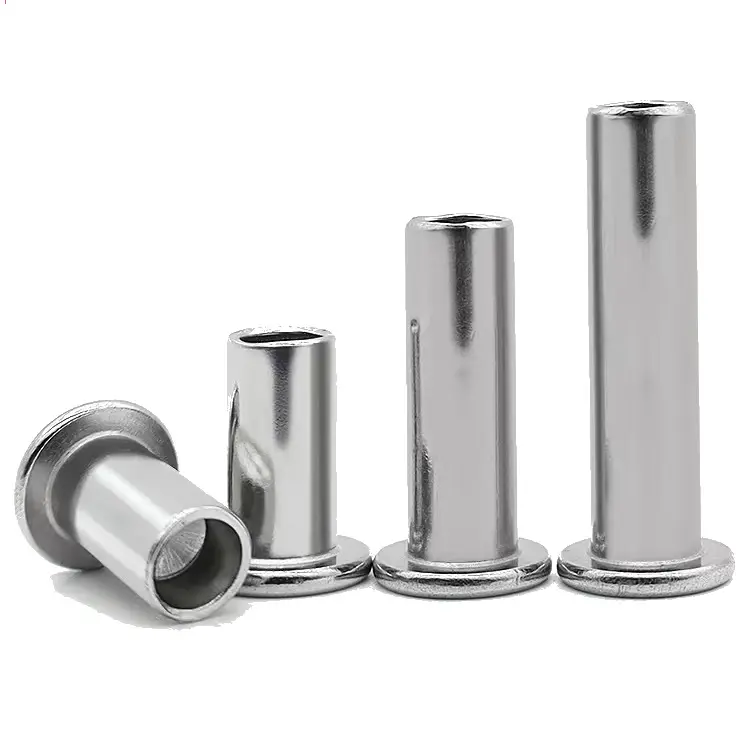
The semi‑tubular design has a shallow cavity at the tail (45–55% of barrel length). During installation, only the thin wall of this hollow section rolls outward to form the clinch – requiring only 25–30% of the force of a solid rivet.
| Feature | Universal Head Semi-Tubular Rivet | Universal Head Solid Rivet |
|---|---|---|
| Tail design | Partially hollow (45–55% of length) | Fully solid |
| Setting force | 25–30% of solid rivet force | 100% |
| Shear strength | 80–90% of solid rivet | 100% |
| Installation speed | Fast, automated | Slower, heavy press |
| Best for | High‑volume, mixed materials, general purpose | Structural, maximum strength |
One Real Application – Residential Gate Hinge Assembly
A hardware manufacturer was producing a line of residential gate hinges and latches. The gate components were powder‑coated steel with plastic bearing inserts. Round head rivets were too narrow – the heads pulled through the powder‑coated steel after repeated use. Truss head rivets were too wide – they looked bulky and industrial on a residential product.
We supplied zinc‑plated steel universal head semi tubular rivets – 5.0mm shank, 10.5mm head diameter, 12.0mm barrel length. The universal head provided the extra bearing area needed to prevent pull‑through without looking bulky. The smooth, radiused profile matched the residential aesthetic. The semi‑hollow cavity kept setting force low, preventing damage to the plastic bearing inserts. The customer tested 1,000 rivets across 500 gate sets. After 10,000 open‑close cycles and outdoor exposure testing, no pull‑through, no loosening. They now order universal head semi-tubular rivets in batches of 200,000 pieces annually.
Materials and Finishes – What We Offer
Nuote Metals manufactures universal head semi tubular rivets in multiple material families:
| Material | Key Advantage | Best For |
|---|---|---|
| Low‑carbon steel (zinc‑plated) | Highest strength, cost‑effective | Industrial, high‑volume, cost‑sensitive |
| Stainless steel (304/316, passivated) | Permanent corrosion resistance | Outdoor, marine, food equipment |
| Brass (C2680) | Decorative, conductive, non‑magnetic | Leather goods, visible hardware, electronics |
| Copper (C11000) | 100% IACS conductivity, antimicrobial | Electrical, thermal applications |
| Aluminum (5052/5056) | Lightweight, non‑magnetic | Aerospace, portable equipment, drones |
Standard finishes: Zinc‑plated, nickel‑plated, passivated, lacquered, antiqued, plain.
The Universal Head Difference – Balanced, Versatile, Reliable
The universal head is the most versatile head style we make. It is wide enough to prevent pull‑through in mixed materials, low enough to avoid snagging, and smooth enough to look professional. The continuous radius from center to edge distributes load evenly and reduces stress concentration. The bearing surface at 2.0–2.2× shank diameter provides significantly more area than round head – enough for most mixed‑material assemblies.
Manufacturing Process – Watch How We Make Universal Head Semi Tubular Rivets
Our cold‑heading process transforms wire into finished universal head semi tubular rivets in a continuous sequence.
Material Preparation: Certified wire is drawn to exact shank diameter (±0.02mm). Spectrometer verifies material grade. Out‑of‑spec material is rejected before production begins.
Cold Heading: The wire feeds into a multi‑station cold header. In a single sequence, the blank is squared, the head is formed with the smooth radiused profile, and the semi‑hollow cavity is extruded at 45–55% depth. Polished carbide dies prevent surface marks.
Trimming & Tumbling: Flash is removed, and micro‑burrs are eliminated.
Plating or Coating: Applied as specified – zinc, nickel, passivation, lacquer, or antique finish.
Final Inspection: 100% optical sorting verifies head diameter, head height, shank diameter, barrel length, and cavity depth. AQL sample manually verified.
Sample lead time: 5–7 days standard; custom tooling: 15–20 days.
Why Rivets Crack During Setting – Good vs. Bad
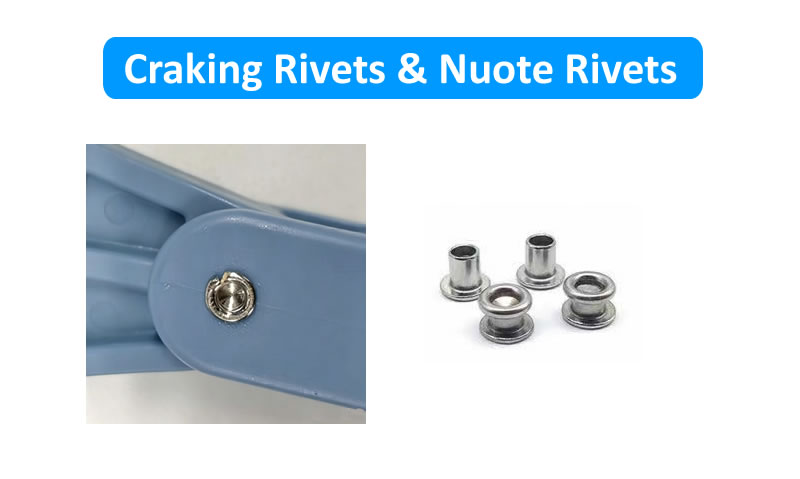
A rivet that cracks during setting is a production nightmare. It wastes material, slows down your line, and can lead to field failures. Here is what causes cracking – and how our rivets prevent it.
| Issue | Bad Rivet (Cracks) | Good Rivet (Nuote Metals) |
|---|---|---|
| Cavity depth | Too deep (>55%) – wall too thin | 45–55% – optimal wall thickness |
| Material quality | Inconsistent hardness, impurities | Certified wire, spectrometer-verified |
| Wall thickness | Uneven – thin spots crack first | Consistent – rolled uniformly |
| Surface condition | Micro-burrs create stress points | Smooth, tumbled finish |
| Plating | Hydrogen embrittlement from poor plating | Controlled plating process |
The most common cause of cracking is inconsistent cavity depth. If the cavity is too deep, the remaining wall is too thin to support the rolling action – it cracks instead of rolling. We control cavity depth to 45–55% of barrel length on every batch. If you are experiencing cracking, send us a sample. We will measure the cavity depth and diagnose the issue – at no charge.
Our Inspection Equipment – How We Verify Quality

We maintain a full range of calibrated inspection equipment to verify every batch of universal head semi tubular rivets:
Laser micrometer – High‑speed, non‑contact shank diameter measurement to ±0.02mm
Optical comparator (profile projector) – Head diameter, head height, and cavity depth inspection
2.5D image measuring system – Full contour measurement and concentricity verification
Rockwell hardness tester – Raw material hardness verification
Spectrometer – Material composition verification
Salt spray test chamber – Corrosion resistance testing (ASTM B117) when required
XRF thickness gauge – Plating thickness verification
All equipment is calibrated annually by accredited third‑party labs. Inspection records are retained for five years and included with every shipment.
Three Questions We Answer Often
Q: "Can I get samples before ordering production quantities?"
A: Yes – we offer samples for all our products. For standard existing specifications, samples are provided free of charge – you only pay the shipping cost. For custom sizes or custom tooling, sample availability and lead time depend on the specific requirements. Please contact our sales team with your drawing or specification, and they will advise on sample cost and delivery timeline.
Q: "When should I choose universal head over round head?"
A: The universal head is wider (2.0–2.2× shank diameter versus 1.6–1.8×) and slightly lower than a round head. It also has a more continuous, radiused profile – less of a distinct dome. The visual difference is subtle, but the functional difference is real: the universal head provides more bearing area to prevent pull‑through in mixed materials. For metal‑to‑metal assemblies with tight holes, round head is still the better choice. For mixed materials – steel to plastic, steel to wood, steel to composites – universal head is the safer bet. In the gate hardware case above, round head pulled through; universal head held.
Q: "Can universal head semi tubular rivets be used outdoors?"
A: Yes, with the right material and finish. For outdoor applications, we recommend stainless steel (304 or 316) with passivated finish for permanent corrosion resistance. 304 is sufficient for general outdoor exposure (rain, humidity). 316 is recommended for coastal or salt‑spray environments. If you are working with a tighter budget, zinc‑plated steel with yellow chromate provides 96 hours of salt spray resistance – suitable for sheltered outdoor use. In the gate hardware case above, the customer chose zinc‑plated steel because the gates were sheltered (under a porch) and the cost savings were significant.
Hot Tags: Universal Head Semi-Tubular Rivets, Industrial Rivets Supplier, Custom Semi-Tubular Rivets
Related Categories
Send Inquiry
Please feel free to fill your inquiry in the form below. We will reply you in 24 hours.



X
We use cookies to offer you a better browsing experience, analyze site traffic and personalize content. By using this site, you agree to our use of cookies.
Privacy Policy