
Products
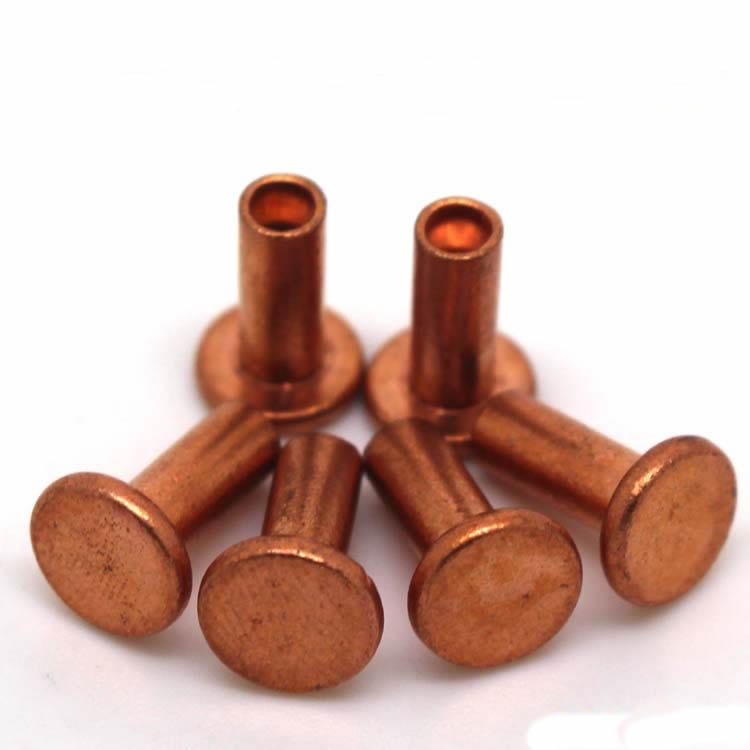
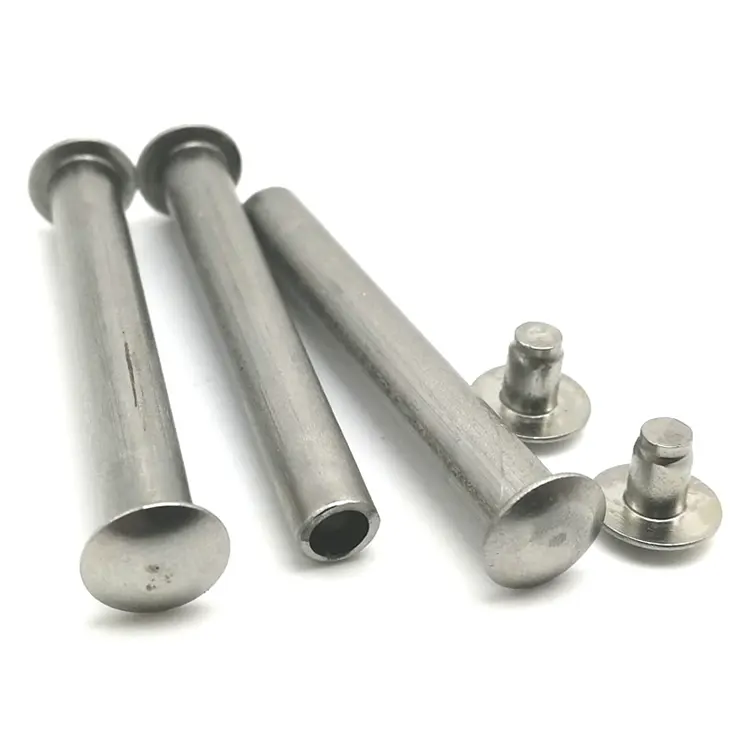
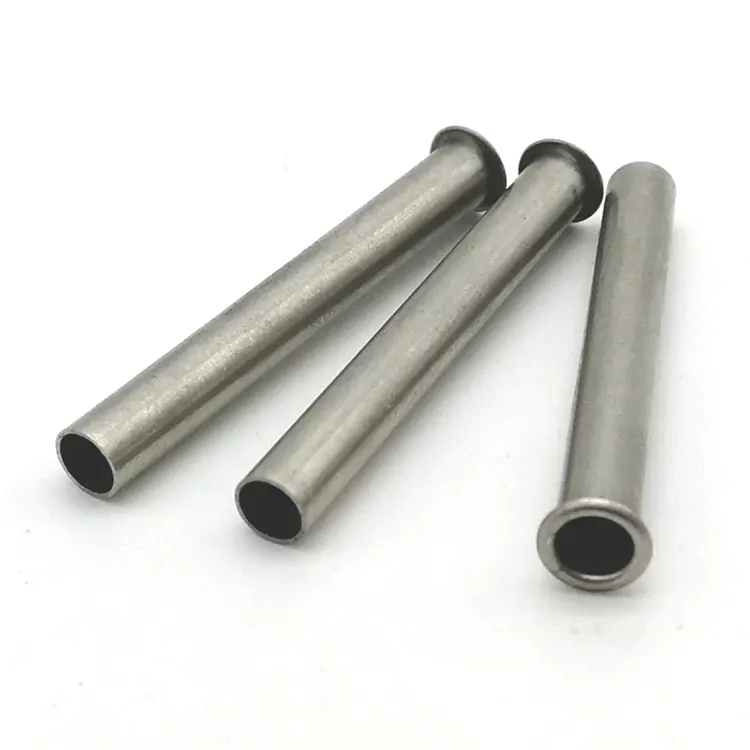
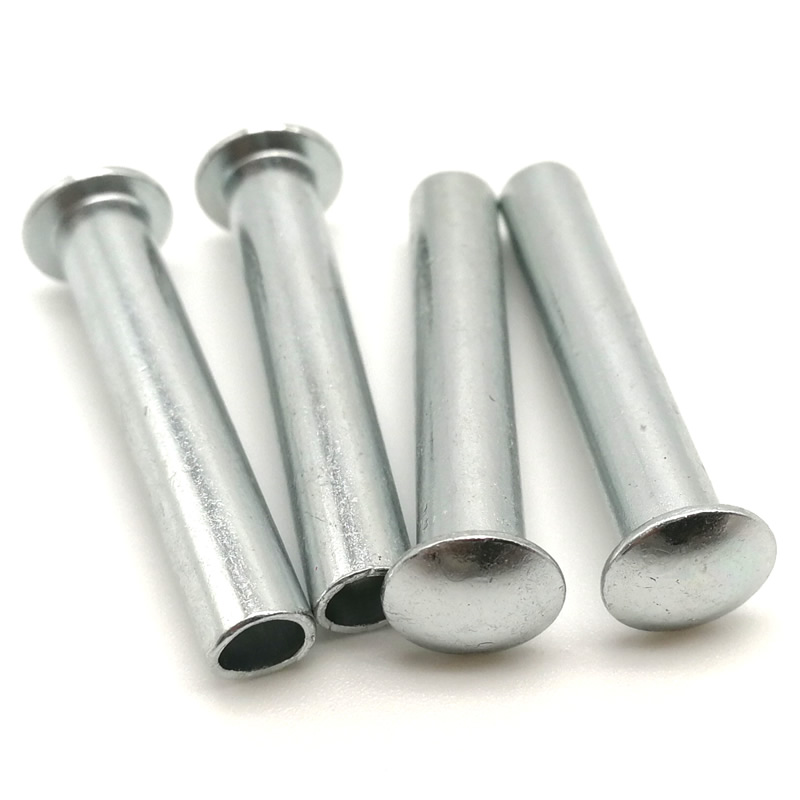
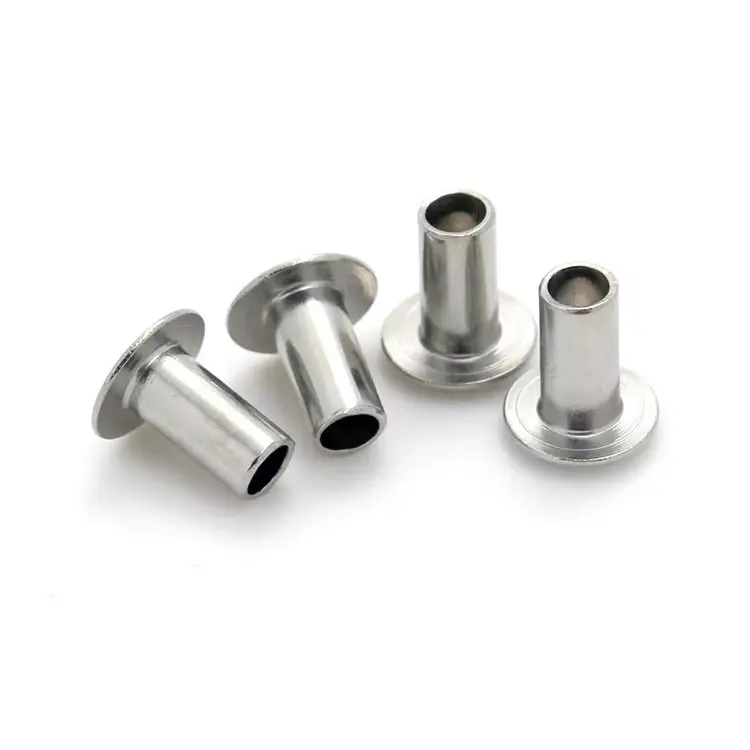
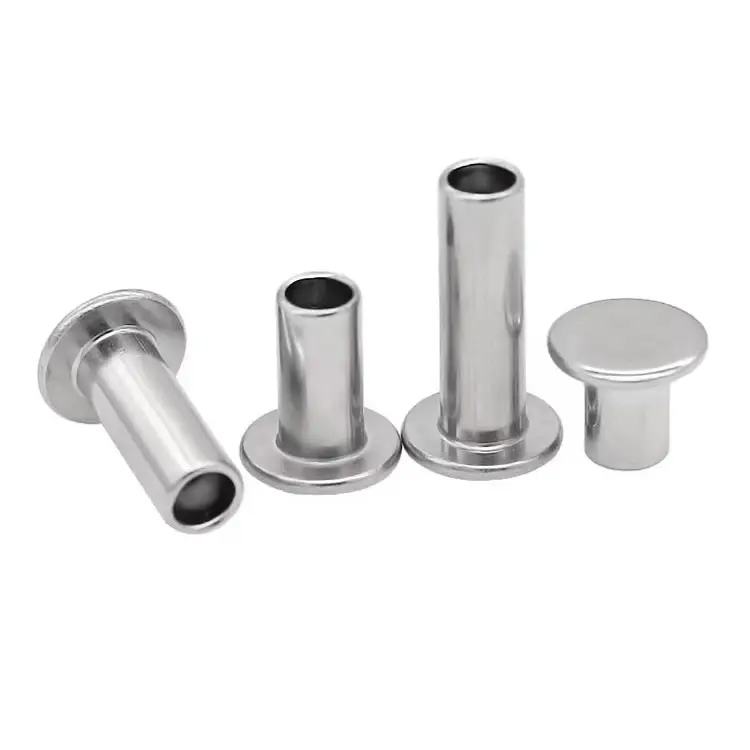
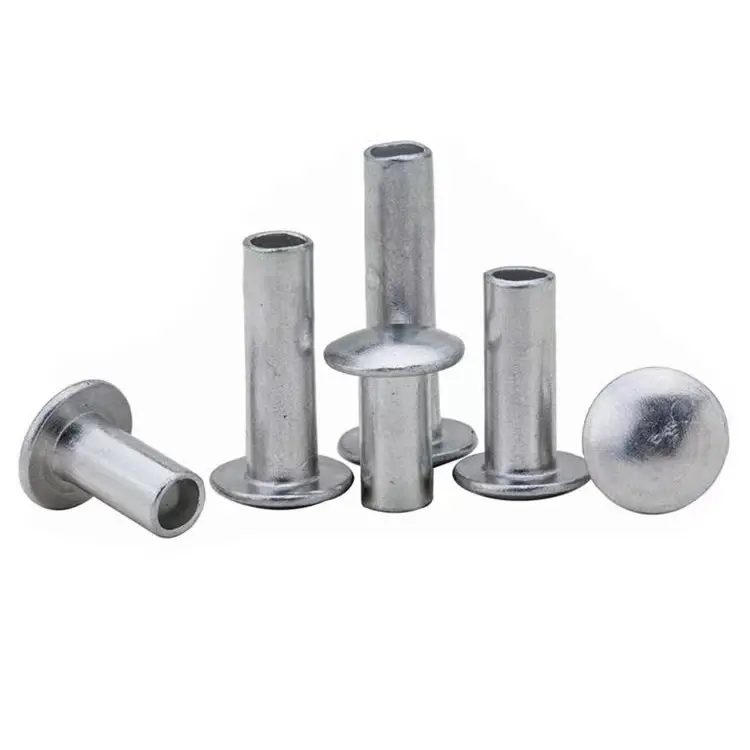
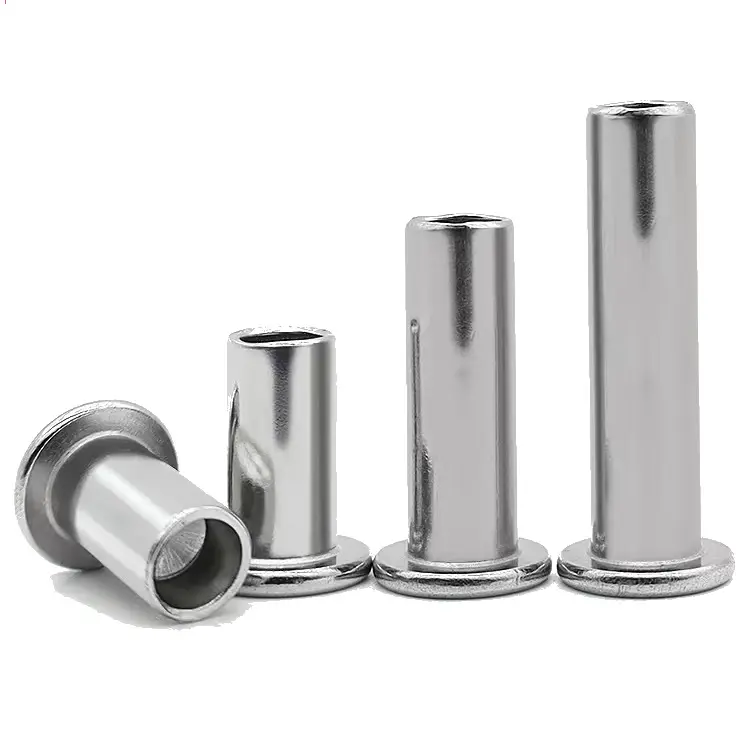
Truss Head Half Hollow Rivets
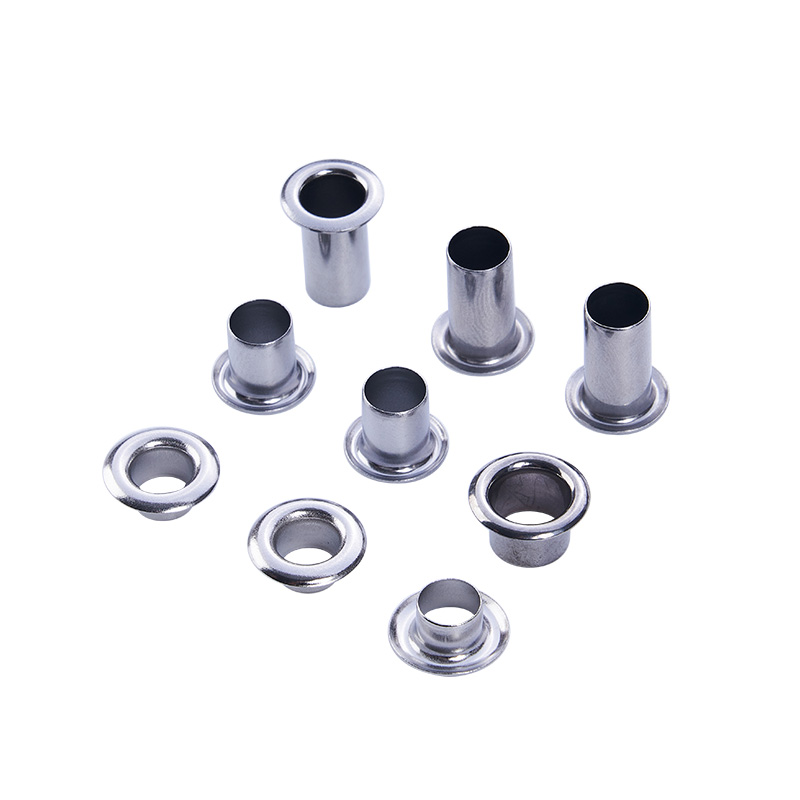
Truss head half hollow rivets are a kind of fastener with a rounded head on one end and a hollow structure on the other. The "semi-tubular" in the name refers to the hollow shank and solid head. This design allows the rivet to expand and secure into the joined materials during installation by squeezing the hollow portion. The rounded head provides a superior appearance and sufficient tensile strength. Nuote Metals is a rivet maker based in China, producing a wide array of rivets like solid, semi-tubular, and full-tubular types. And we offer a full selection of specs and ensure quick delivery.
Send Inquiry
Product Description
A standard round head rivet has a head diameter about 1.6–1.8 times the shank diameter. That works fine for metal‑to‑metal joints. But when you fasten plastics, composites, thin sheet metal, or wood – that narrow head often pulls through. The bearing surface is simply not large enough.
Truss head half hollow rivets solve this with a head diameter 2.2–2.8 times the shank – the widest of any standard head style. The wide, low dome spreads the load over a larger area, stops pull‑through, and sits low enough to avoid snagging.
And because they are half hollow, the shallow cavity at the tail reduces setting force by about 70% compared to a solid rivet. Extra width. Lower force. Same permanent joint.
Truss Head vs. Round Head – Why Width Matters
| Feature | Truss Head Half Hollow Rivet | Round Head Half Hollow Rivet |
|---|---|---|
| Head diameter / shank ratio | 2.2 – 2.8 : 1 | 1.6 – 1.8 : 1 |
| Bearing area | Largest of any standard head | Moderate |
| Head height | Very low (25–30% of head dia) | Tall (45–50% of head dia) |
| Best for | Soft materials, plastics, thin sheet, oversized holes | Metal‑to‑metal, structural |
| Pull‑through resistance | Excellent | Moderate |
The truss head is sometimes called a "wagon box rivet" because it was originally used to fasten metal bands to wooden wagon boxes. The principle is the same today – the wide head prevents the rivet from pulling through soft or brittle materials.
Choose truss head when: You are fastening plastics, composites, thin sheet metal, softwood, or any material where a standard head would pull through. The hole is oversized and needs a wider head to cover it. You need a low profile but want maximum bearing area.
Truss Head Half Hollow vs. Solid – The Hollow Advantage
| Feature | Truss Head Half Hollow Rivet | Truss Head Solid Rivet |
|---|---|---|
| Tail design | Partially hollow (45–55% of length) | Fully solid |
| Setting force | 25–30% of solid rivet force | 100% |
| Shear strength | 80–90% of solid rivet | 100% |
| Installation speed | Fast, automated | Slower, heavy press |
| Best for | High‑volume, soft materials, thin substrates | Structural, maximum strength |
The half hollow design only swells at the tail, making it ideal for assemblies where the surrounding material must not be damaged. Truss head half hollow rivets are often used in plastics, composites, thin sheet metal, and applications where pull‑through is a concern.
Materials and Finishes – What We Offer
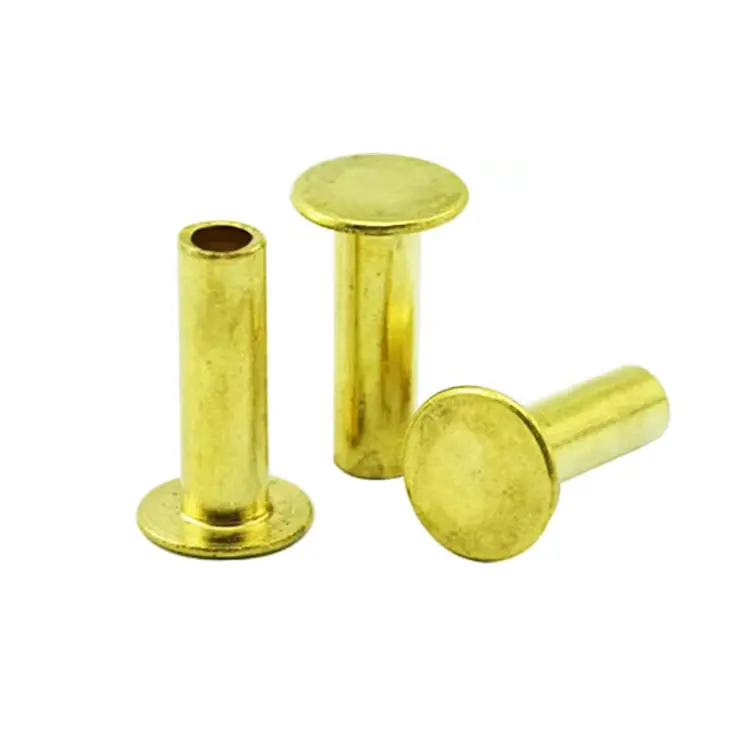
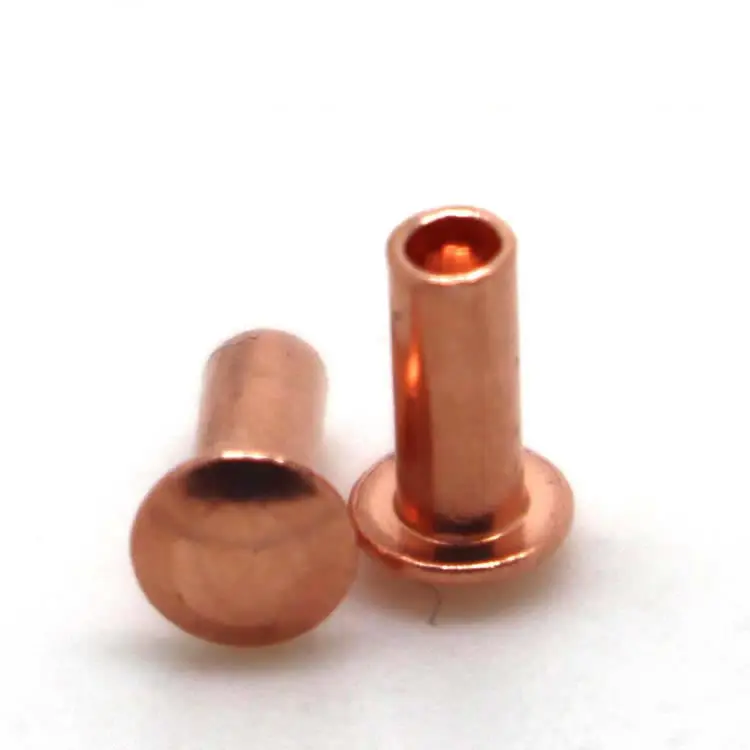
Materials: Carbon steel (zinc‑plated), stainless steel (304/316, passivated), brass (C2680), copper (C11000), aluminum (1100/5052/5056)
Finishes: Zinc‑plated, nickel‑plated, passivated, lacquered, black oxide, plain
One Real Application – Plastic Garden Stool Seat
A manufacturer of plastic garden stools was using round head rivets to attach metal leg brackets to the polypropylene seat. The narrow bearing surface pulled through the plastic after repeated use. Round heads failed; flat heads marked the surface. The customer needed a wider head – and they needed the low‑force installation of a half hollow design to avoid cracking the plastic.
We supplied zinc‑plated steel truss head half hollow rivets – 4.0mm shank, 11.0mm head, 10.0mm barrel length. The extra‑wide head distributed the load over a larger area – no more pull‑through. The half hollow cavity cut setting force from 3.5 tons to 1.0 ton – no stress cracks in the plastic. The customer tested 500 stools. After 10,000 load cycles, zero failures. They now order truss head half hollow rivets in batches of 150,000 pieces annually.
Inside Our Production – 45 Machines, 10+ Years Experience
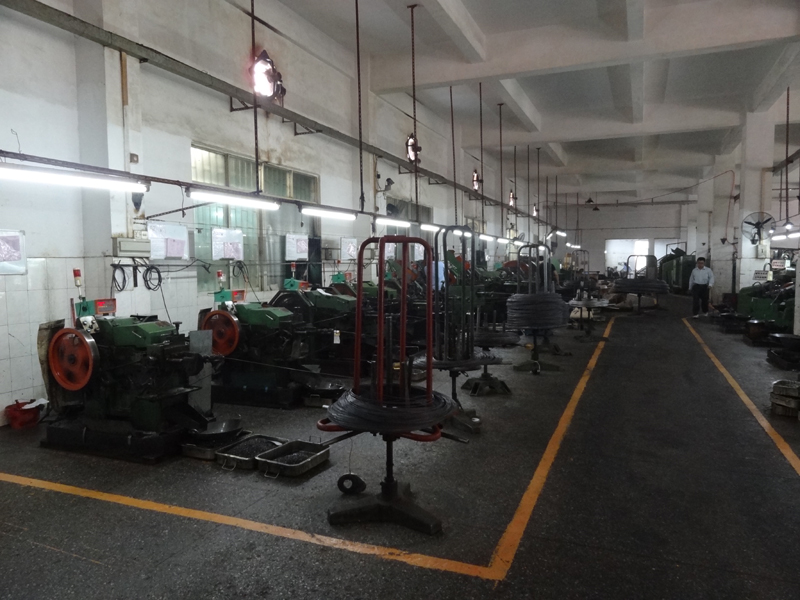
We manufacture truss head half hollow rivets on 45 cold‑heading machines in our Dongguan facility. Capable of producing rivets from 0.8mm to 10mm in diameter.
What we produce: Standard rivets for high‑volume orders, and custom rivets with non‑standard head profiles or lengths.
Who makes them: Our senior technicians have an average of 10+ years of cold‑heading experience. They understand how the wide truss head forms without wrinkling – the metal must flow evenly into the die to create the low, broad dome.
What we check: Cavity depth (45–55% of barrel length), head diameter, head height, shank diameter, hardness – every batch.
Production speed: Up to 400 pieces per minute on standard diameters.
Working with Customers Worldwide

We supply truss head half hollow rivets to manufacturers across North America, Europe, and Asia. Our customers build:
- Plastic furniture and garden products – Chairs, stools, tables, storage bins
- HVAC equipment – Ductwork connections, fan housings, panel assemblies
- Appliances – Plastic housings, hinge points, panel attachments
- Automotive – Interior trim panels, soft assemblies, under‑hood components
- Signage and displays – Acrylic and sheet metal fastening
- Electronics enclosures – Plastic and thin metal housings
We partner with both small assembly shops and large OEMs – from rapid prototyping to high‑volume production runs. Our strength is flexibility: custom sizes, quick samples, and consistent quality at any volume.
Two Questions We Answer Often
Q: "What happens if I use a standard round head rivet on a plastic assembly instead of a truss head?"
A: The most common failure is pull‑through. A round head has a head diameter only 1.6–1.8 times the shank – the bearing surface is too small for soft materials. Over time, or under load, the head pulls into the plastic – the joint fails. The truss head, at 2.2–2.8 times the shank, spreads the load over roughly twice the area. In the garden stool case above, round heads failed; truss heads held. If you are fastening any soft or brittle material, truss head is not a suggestion – it is the right fastener.
Q: "Can I set truss head half hollow rivets with a hand tool, or do I need a pneumatic press?"
A: Both work, but the choice depends on your volume. For low volumes (under 500 rivets), a manual rivet squeezer or a hammer with a setting punch works fine – place the rivet on a steel plate, insert the punch, and strike once. For production volumes (1,000+ rivets), we strongly recommend a pneumatic or hydraulic press – it provides consistent setting force, faster cycles, less operator fatigue, and prevents damage to the wide truss head. The key requirement: the setting punch must have a flat or slightly concave face that matches the truss head profile to avoid marking the head. We can supply matched setting tools for your rivet dimensions – tooling lead time is 5–7 days.
Hot Tags: Truss Head Half Hollow Rivets,Truss Head Rivets Factory,China Truss Head Rivets
Related Categories
Send Inquiry
Please feel free to fill your inquiry in the form below. We will reply you in 24 hours.



X
We use cookies to offer you a better browsing experience, analyze site traffic and personalize content. By using this site, you agree to our use of cookies.
Privacy Policy