
Products
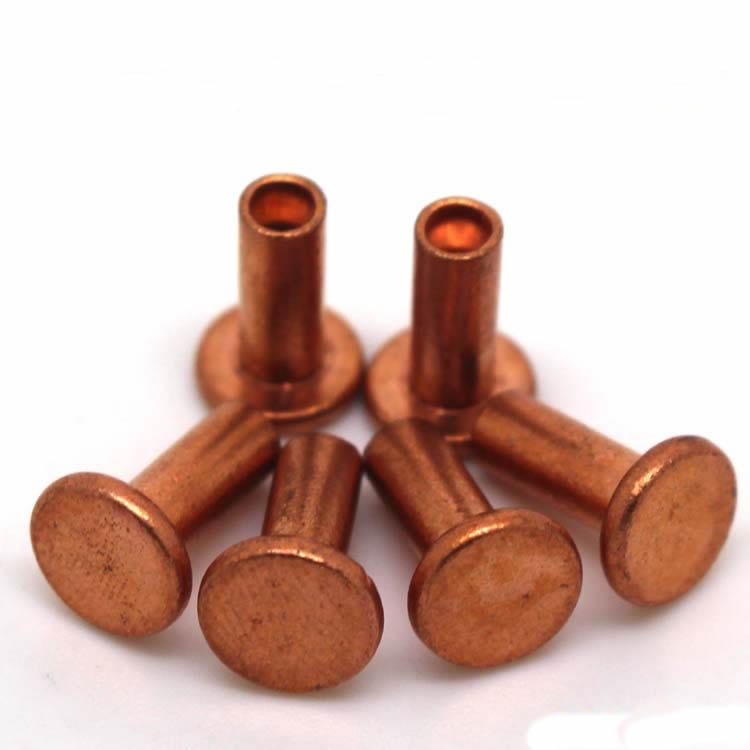
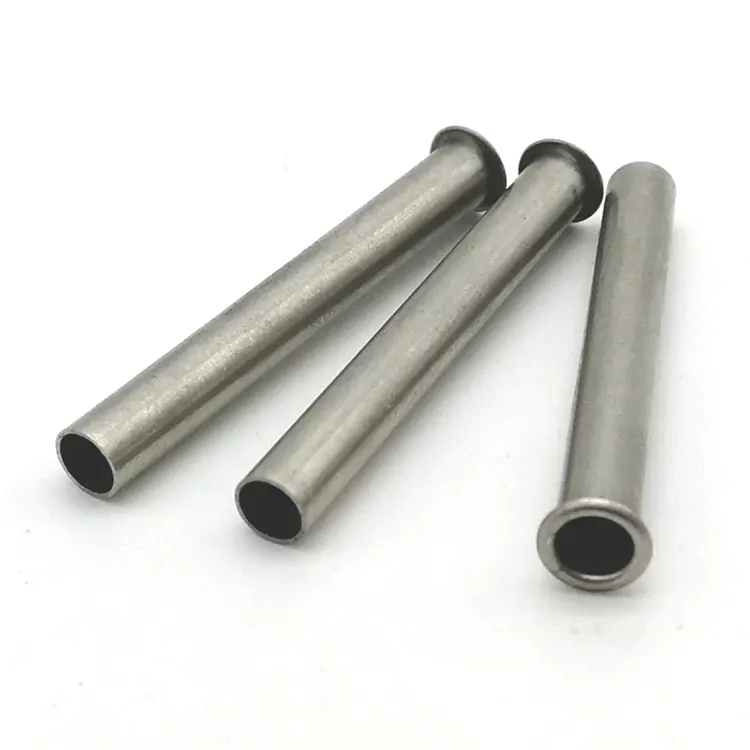
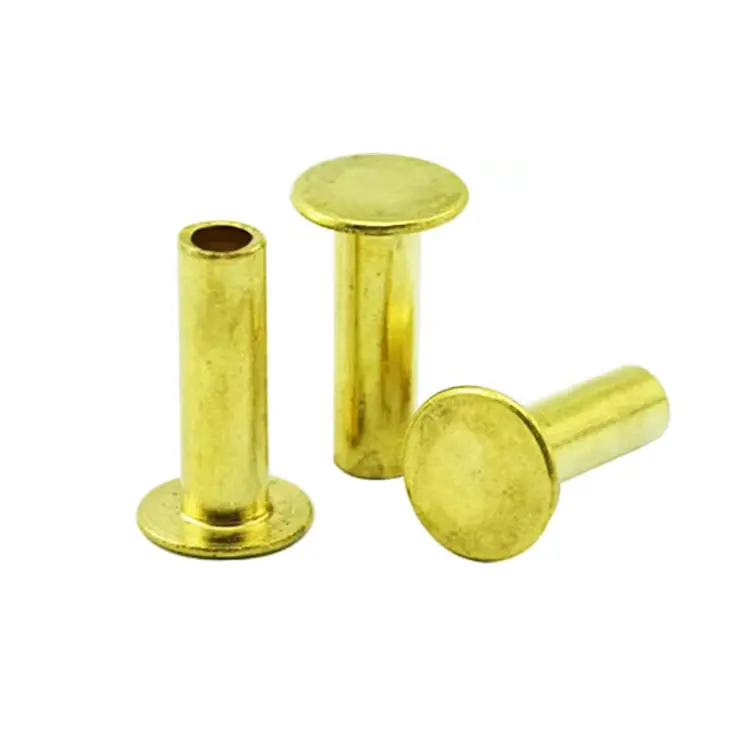
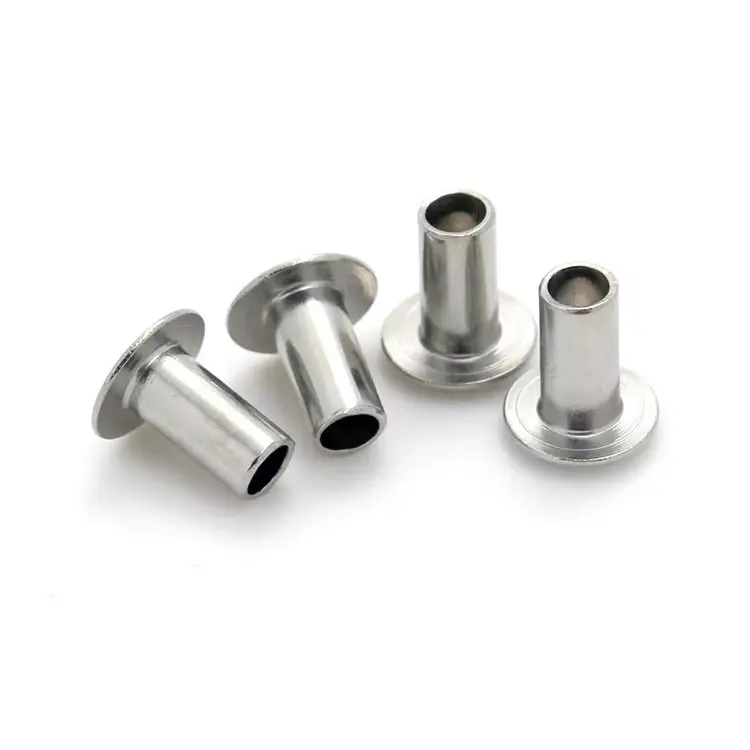
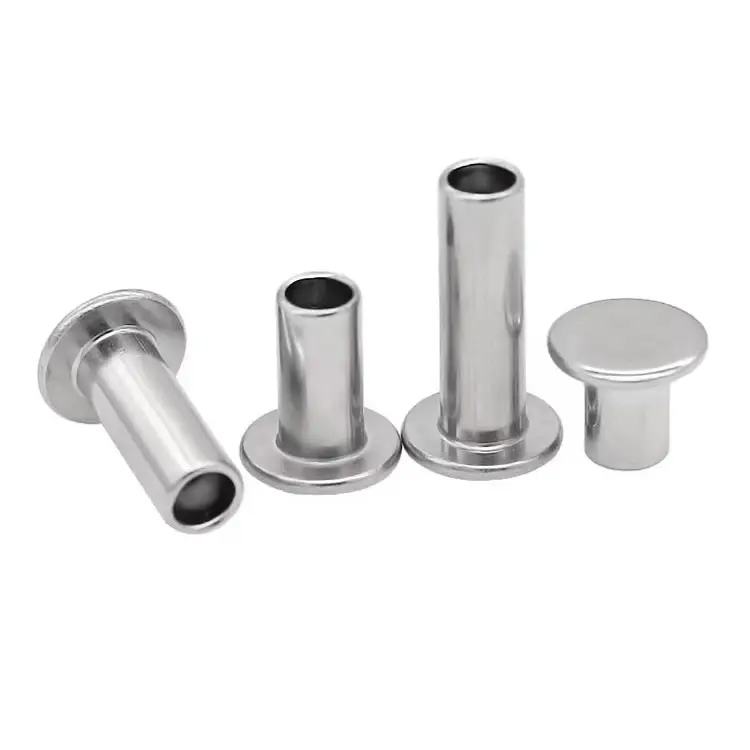
Mushroom Head Half Tubular Rivets
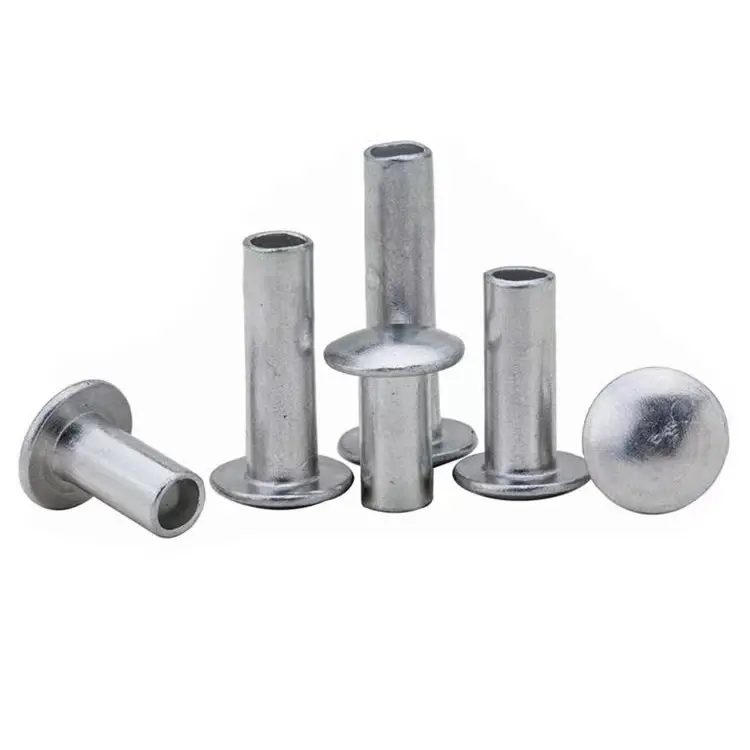
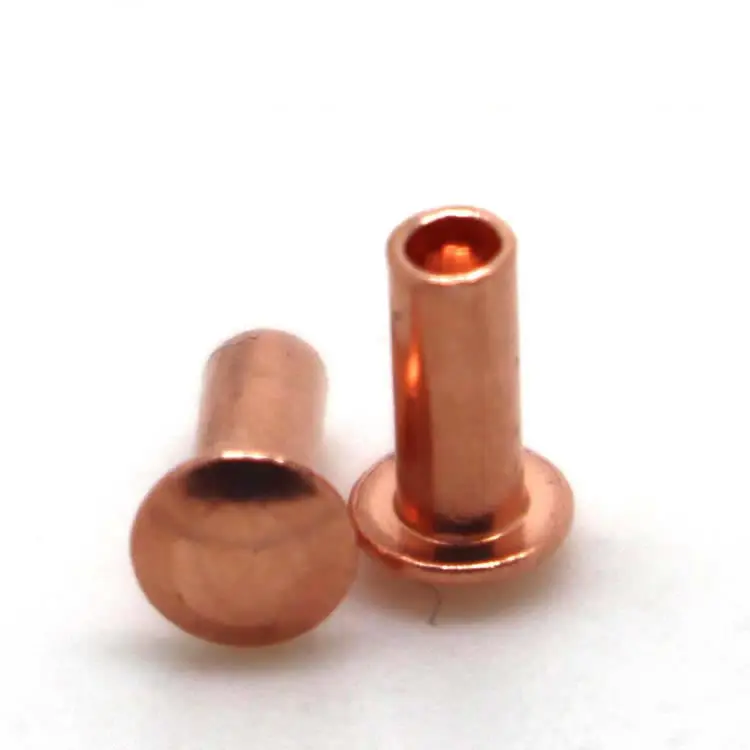
Nuote Metals is a China-based factory, we present mushroom head half tubular rivets for leather goods and tool handles. The broad, domed head offers enhanced grip and a clean finish, while the half-tubular design ensures quick, secure fastening. Ideal for craftsmen and manufacturers seeking both strength and style. Trust the factory for consistent quality.
Send Inquiry
Product Description
When joining soft or thin materials where a standard rivet head might pull through, mushroom head half tubular rivets provide the ideal solution. The broad, domed head distributes clamping force over a larger area while the hollow tail allows low-force installation.
Nuote Metals has engineered precision fasteners for over twenty years. Our mushroom head half tubular rivets serve industries ranging from leather goods and upholstery to automotive trim and agricultural equipment—anywhere a wide, low-profile head is required to prevent material tear-out.
What Are Mushroom Head Half Tubular Rivets?
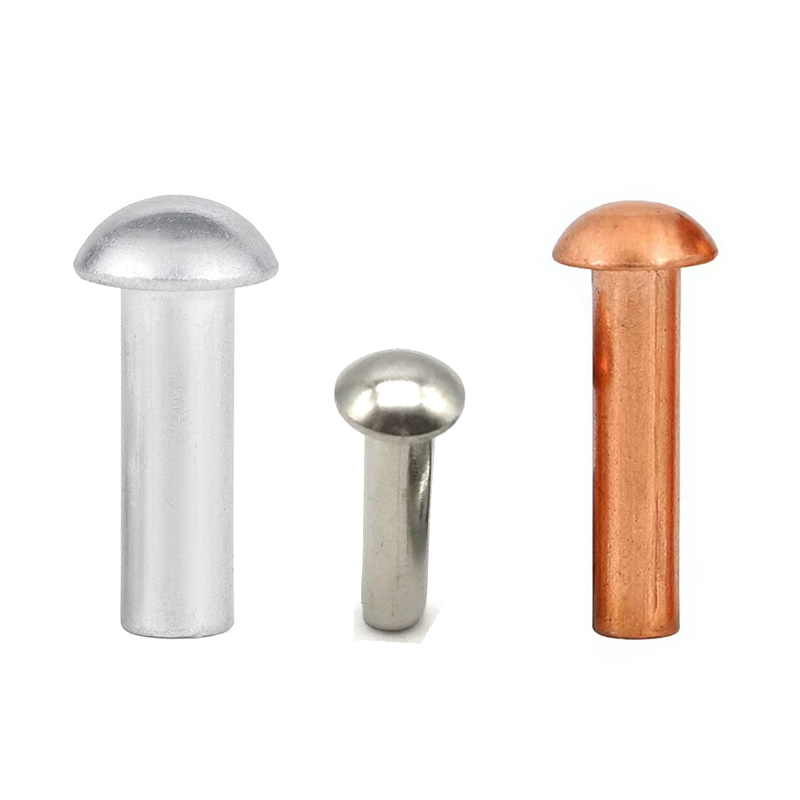
Mushroom head half tubular rivets feature a wide, rounded head that resembles the cap of a mushroom, combined with a shank that contains a shallow hollow cavity at the tail end (typically 40–60% of the shank length).
The distinguishing characteristics of mushroom head half tubular rivets include:
Large head diameter – typically 2.0–2.5 times the shank diameter
Low dome profile – the head rises only 0.6–1.2mm above the surface
Smooth, radiused edge – no sharp corners to damage adjacent materials
Half tubular tail – reduces setting force by approximately 70% compared to solid rivets
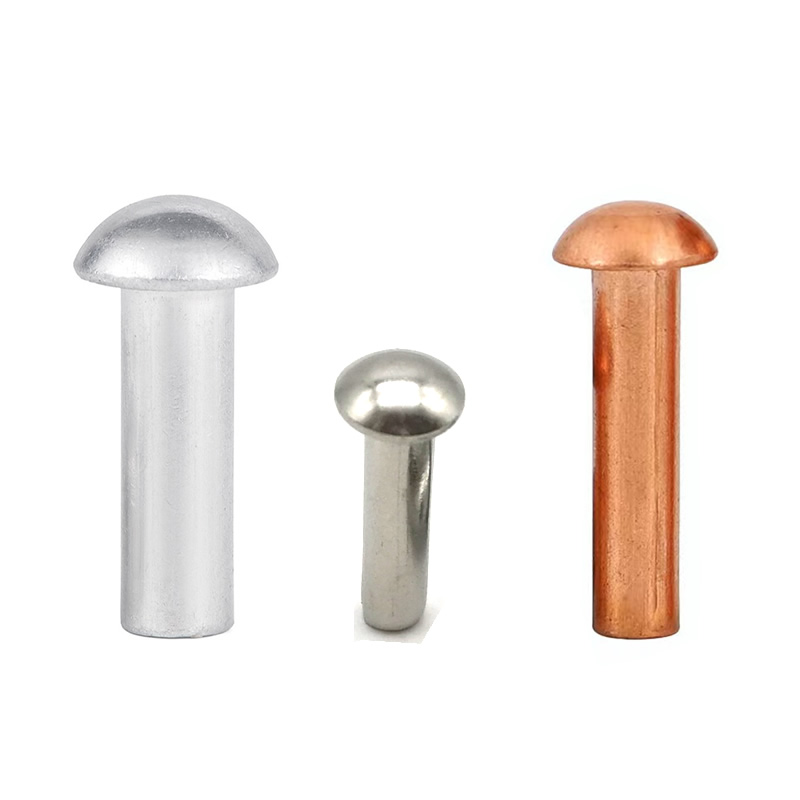
This geometry makes these rivets particularly suitable for:
Soft materials such as leather, rubber, plastics, and composites
Thin sheet metal where a small head would pull through
Textile assemblies including canvas, tarpaulin, and upholstery
Applications requiring vibration resistance without damaging the substrate
Why Choose Mushroom Head Half Tubular Rivets Over Other Head Styles?
Before examining technical specifications, consider where Nuote Metals recommends mushroom head half tubular rivets over alternatives.
Head Style Comparison
| Head Style | Head Diameter / Shank Ratio | Bearing Area | Best Application |
|---|---|---|---|
| Mushroom Head | 2.0 – 2.5 : 1 | Very large | Soft materials, leather, plastic, rubber |
| Flat (Countersunk) | 1.8 – 2.0 : 1 | Moderate | Flush surface applications |
| Oval Head | 1.6 – 1.8 : 1 | Moderate | General industrial use |
| Round Head | 1.5 – 1.7 : 1 | Moderate | Heavy structural joints |
| Truss Head | 2.2 – 2.8 : 1 | Largest | Extremely soft materials, roofing felt |
Advantages of the Mushroom Head Design
Prevents pull-through – the wide head acts as a built-in washer
Reduces material stress – load is distributed over a larger area
Provides a finished appearance – the smooth dome looks professional
Minimises snagging – the radiused edge does not catch on fabrics or hands
Compatible with soft substrates – plastic and rubber do not crack under the head
Different Kinds Of Rivets We Make
We make different kinds of rivets, such as solid rivets, semi-tubular rivets and full tubular rivets and special customized rivets.
1. Solid Rivets, including solid round head rivets, solid flat head rivets and solid countersunk head rivets in different materials.
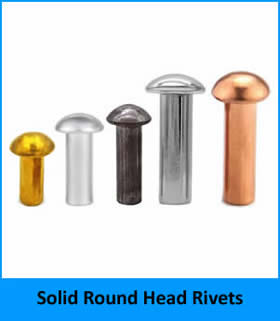
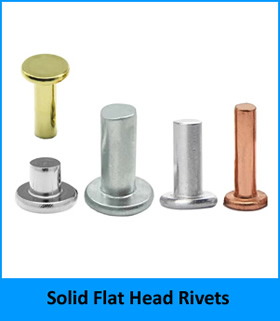
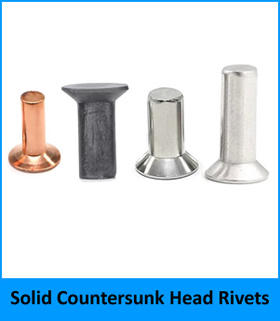
If you want to know more about our solid rivets, please click 
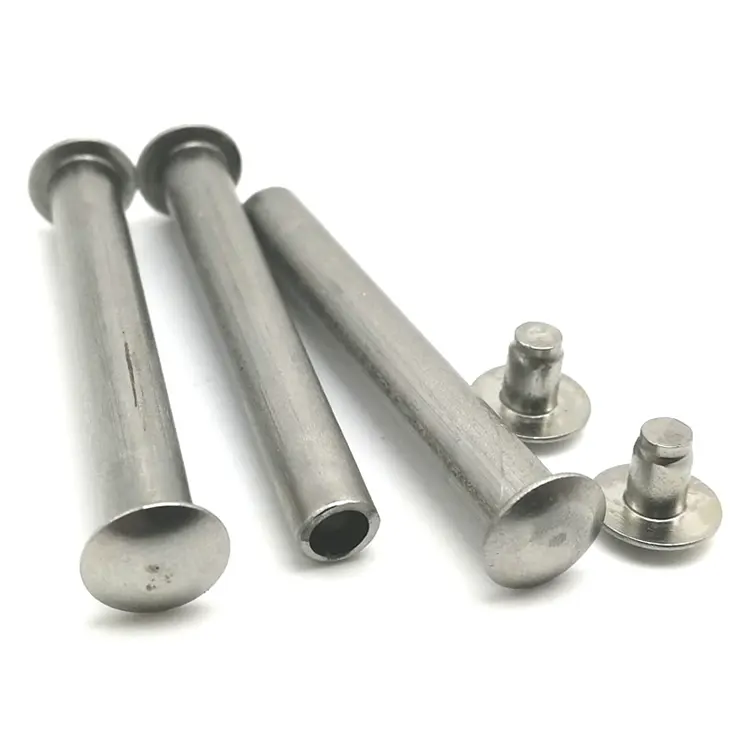
2. Semi-Tubular Rivets, including semi-tubular round head rivets, semi-tubular flat head rivets and semi-tubular countersunk head rivets in different materials.
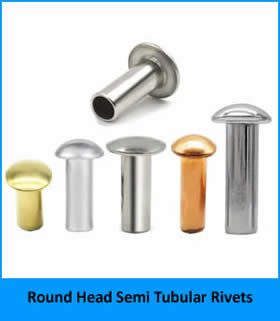
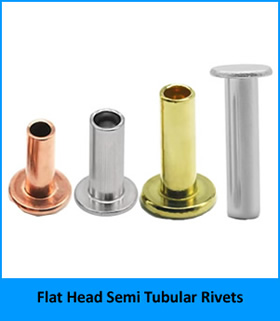
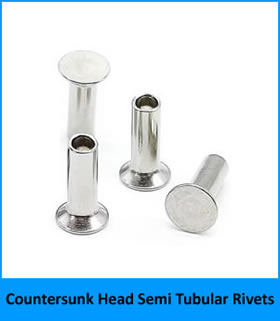
Click  to view more about our semi-tubular rivets.
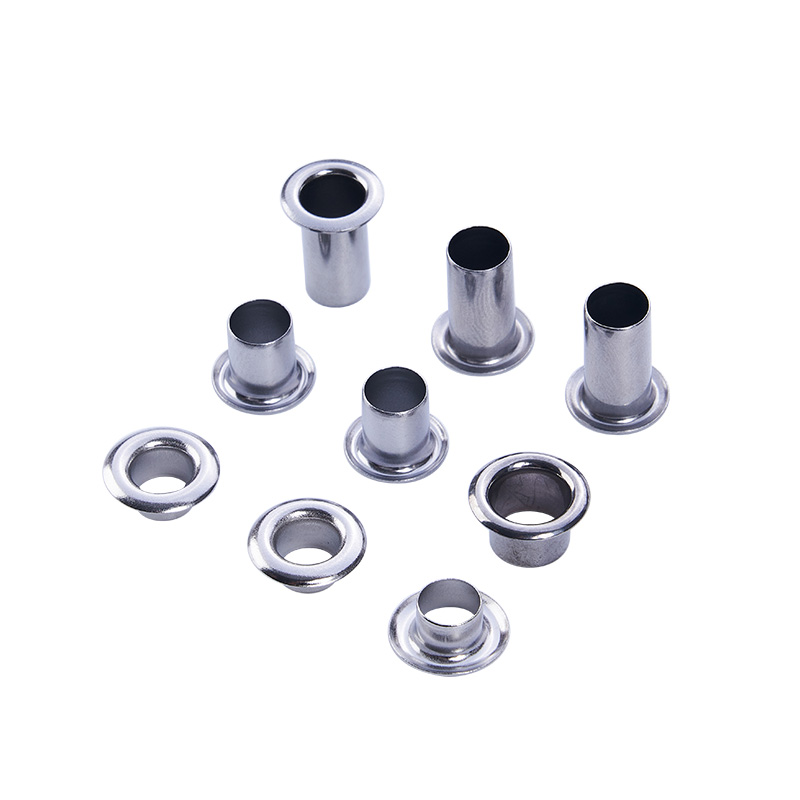
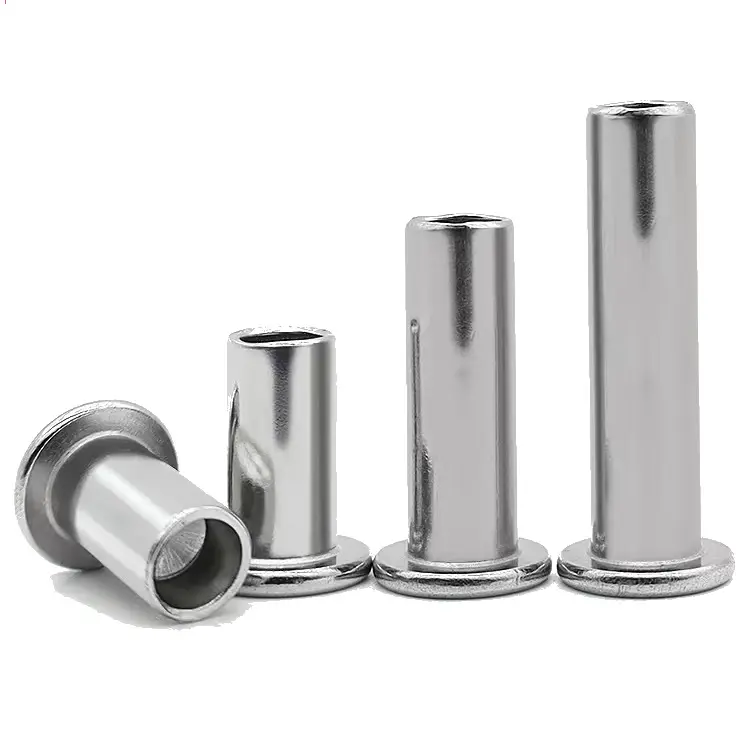
3. Full Tubular rivets in brass, copper, stainless steel, aluminum and steel.
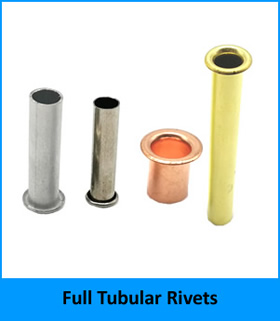
If you want to know more about tubular rivets, please click 
4. Special Rivets
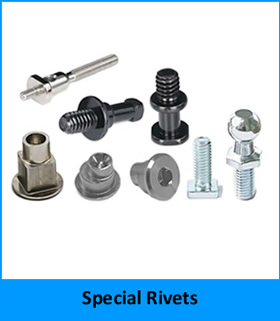
Cilck  to view more about our special rivets.
Detailed Product Parameters of Nuote Metals Mushroom Head Half Tubular Rivets
All mushroom head half tubular rivets from Nuote Metals are manufactured from low-carbon steel, brass, or aluminium, depending on application requirements. The mushroom head is designed to provide maximum bearing area while maintaining a low profile.
Material Specifications
| Parameter | Low Carbon Steel | Brass (C26000) | Aluminium (5056) |
|---|---|---|---|
| Tensile Strength | 400–500 MPa | 315–390 MPa | 280–350 MPa |
| Hardness (as-manufactured) | HRB 70–85 | HRB 60–75 | HRB 45–60 |
| Head Style | Mushroom (wide dome) | Mushroom (wide dome) | Mushroom (wide dome) |
| Head Diameter Ratio | 2.0–2.5 x shank | 2.0–2.5 x shank | 2.0–2.5 x shank |
| Surface Finishes | Zinc plated, black oxide, phosphate, galvanised | Natural lacquered, antique, nickel-plated | Clear anodised, colour anodised |
| Compliance | ASTM F1941, ASME B18.1 | ASTM B36/B36M | QQ-A-430 |
Standard Dimensions – Steel Mushroom Head Half Tubular Rivets
Nuote Metals manufactures mushroom head half tubular rivets in the following standard size range. Custom dimensions are available for volume orders.
| Shank Diameter (mm) | Head Diameter (mm) | Head Height (mm) | Barrel Length Range (mm) | Hollow Depth (mm) | Recommended Grip Range (mm) |
|---|---|---|---|---|---|
| 2.0 | 4.5 – 5.0 | 0.8 – 1.0 | 3.0 – 8.0 | 1.5 – 4.0 | 1.0 – 2.5 |
| 2.5 | 5.5 – 6.0 | 0.9 – 1.1 | 4.0 – 10.0 | 2.0 – 5.0 | 1.5 – 3.0 |
| 3.0 | 6.5 – 7.5 | 1.0 – 1.2 | 5.0 – 12.0 | 2.5 – 6.0 | 2.0 – 4.0 |
| 4.0 | 8.5 – 10.0 | 1.2 – 1.5 | 6.0 – 16.0 | 3.0 – 8.0 | 2.5 – 5.5 |
| 5.0 | 10.5 – 12.5 | 1.4 – 1.7 | 8.0 – 20.0 | 4.0 – 10.0 | 3.0 – 7.0 |
| 6.0 | 12.5 – 15.0 | 1.6 – 2.0 | 10.0 – 25.0 | 5.0 – 12.5 | 4.0 – 9.0 |
| 8.0 | 16.0 – 20.0 | 2.0 – 2.5 | 12.0 – 32.0 | 6.0 – 16.0 | 5.0 – 12.0 |
| 10.0 | 20.0 – 25.0 | 2.5 – 3.0 | 15.0 – 40.0 | 8.0 – 20.0 | 6.0 – 15.0 |
Tolerances: Shank diameter ±0.05mm, head diameter ±0.15mm, head height ±0.10mm, overall length ±0.15mm. Hollow depth is approximately 50% of barrel length for standard half tubular rivets.
Mechanical Performance Data (Steel, 4mm Diameter, 2mm Grip)
| Parameter | Value |
|---|---|
| Single Shear Strength (Steel) | 38,000 – 42,000 psi (260–290 MPa) |
| Tensile Pull-Out Force (Steel, 2mm leather) | 150 – 200 kg (330–440 lbs) |
| Head Pull-Through Force (2mm soft plastic) | 120 – 160 kg (265–353 lbs) |
| Recommended Hole Size | Shank diameter + 0.25mm to 0.30mm |
| Recommended Setting Force | 0.8 – 1.5 tons (depending on diameter) |
| Setting Force Relative to Solid Rivet | Approx. 25–30% |
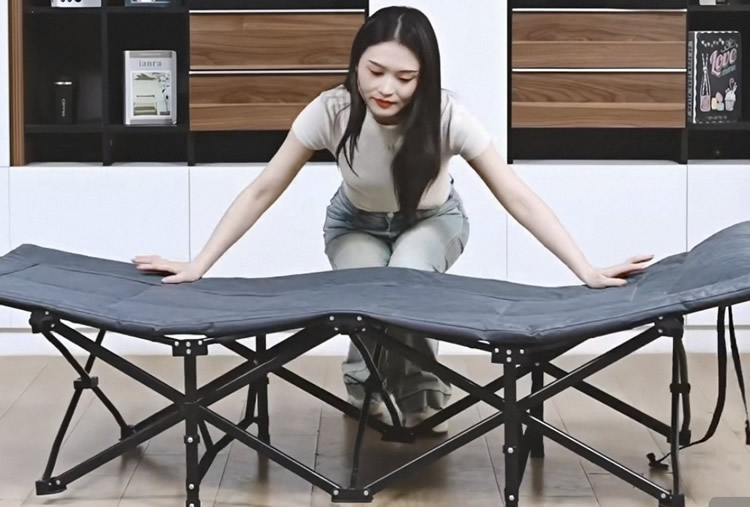
Customer Case – Folding Camping Bed (Steel, Nickel‑Plated)
A manufacturer of compact camping furniture approached us with a recurring problem. Their folding bed used round head rivets at the scissor‑hinge joints. The round head protruded too far, scraping against the fabric sleeping surface during folding. Worse, the zinc‑plated steel rivets showed white rust after a few uses in humid conditions. They needed a rivet with a wider, lower head to clear the fabric, plus better corrosion resistance.
We recommended a steel mushroom head semi hollow rivet with nickel plating. The 5mm shank, 11mm mushroom head sat only 1.6mm proud – low enough to clear the fabric but wide enough to distribute the hinge load. The nickel plating provided 96 hours of salt spray protection (versus 48 hours for zinc), eliminating the rust issue. The semi‑hollow cavity reduced setting force by 70%, preventing deformation of the thin steel tubing.
The customer tested 200 rivets across 50 beds. After 5,000 folding cycles and a week in a humidity chamber, no snagging, no rust, no loosening. They now use our nickel‑plated mushroom head rivets across their entire folding bed product line.
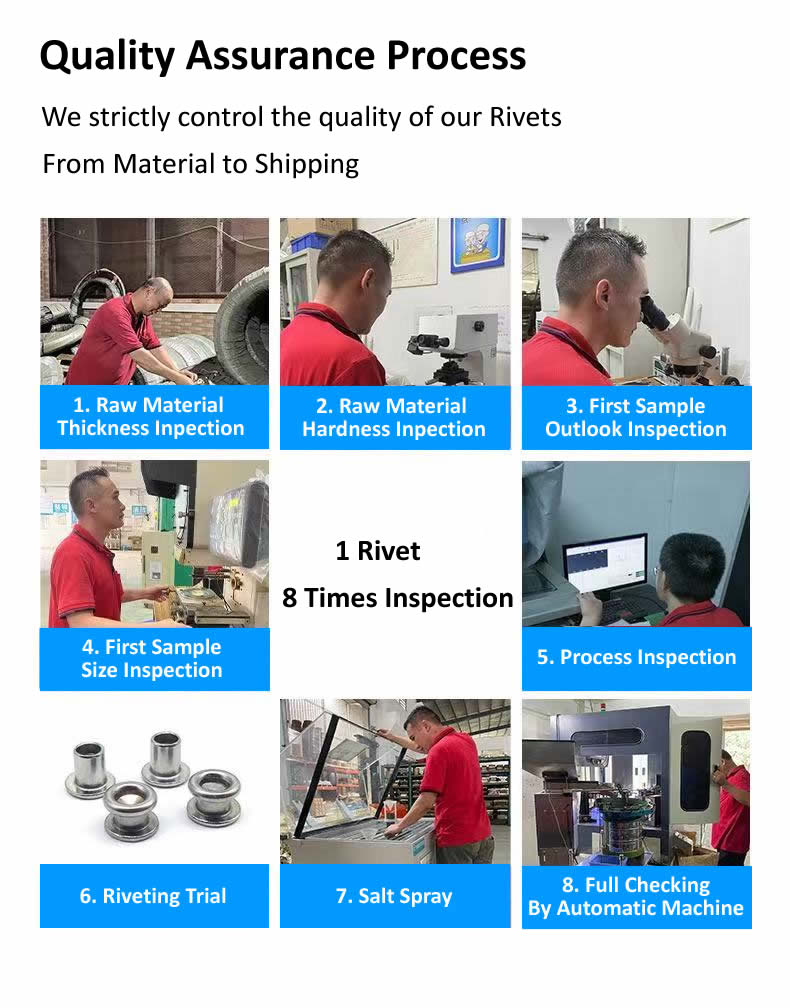
Our Quality Control Process – From Incoming Wire to Outgoing Box
We do not rely on luck. Every batch of mushroom head half tubular rivets goes through a documented inspection sequence using calibrated instruments. Below is our standard workflow.
Step‑by‑Step Inspection Flow
Incoming wire inspection – We check the raw material diameter with a digital micrometer (accuracy ±0.001mm). A sample from each coil is tested for hardness using a Rockwell hardness tester (HRB scale). Only wire within HRB 70–85 passes.
First article inspection – appearance – The first 10 rivets from the heading machine are examined under a toolmaker‘s microscope (20× magnification). We look for cracks, flash, uneven heads, or surface marks.
First article inspection – dimensions – Using a digital caliper (resolution 0.01mm) and a micrometer, we measure shank diameter, head diameter, head height, and total length. A profile projector (optical comparator) projects the rivet at 20× magnification to verify cavity depth and head concentricity. A 2.5D image measuring system captures the full contour and compares it to the CAD drawing. All measurements must be within ±0.05mm for shank and ±0.15mm for length.
In‑process inspection – During production, the operator pulls 5 rivets every 500 pieces. Dimensions are verified with a digital caliper and a go/no‑go gauge for cavity depth. Any drift beyond tolerance stops the press.
Test setting (trial riveting) – Every 2,000 pieces, we set 3 rivets into a representative material sample using a hydraulic press. The clinch is inspected for symmetry and tightness. No loose or cracked rivets are accepted.
Salt spray testing (if required) – For outdoor or plated rivets, we place samples in a salt spray test chamber (ASTM B117). Steel with nickel plating: 96 hours minimum. Stainless steel: 200–500 hours (304) or 1,000+ hours (316). A certificate is issued with the batch.
Final outgoing inspection – Before packaging, every rivet passes through an optical sorting machine with high‑speed cameras. It checks head diameter, head height, shank diameter, total length, and cavity depth. Rejects are automatically ejected. A random AQL sample (Level II, 1.0) is then pulled for manual verification using calipers, micrometers, and a profile projector.
Our In‑House Equipment List
| Equipment | Brand/Model | Usage |
|---|---|---|
| Digital caliper (0–150mm) | Mitutoyo | Shank, head, length measurement |
| Micrometer (0–25mm) | Mitutoyo | Precision diameter check |
| 2.5D image measuring system (二次元) | Sinpo | Full contour, hole position, concentricity |
| Profile projector (optical comparator) | Nikon | Cavity depth, head angle, edge radius |
| Rockwell hardness tester | Wilson | HRB hardness of raw wire and finished rivets |
| Salt spray test chamber | Ascott | ASTM B117 corrosion testing (plated/304/316) |
All equipment is calibrated annually by an accredited third‑party lab. Records are kept for five years.

Nuote Metals does not guess. We measure. Every mushroom head half tubular rivet that leaves our factory has passed these checks.
Trust Through Testing
Every batch of mushroom head half tubular rivets from Nuote Metals undergoes:
Dimensional inspection – head diameter, head height, shank diameter, hollow depth
Hardness testing – Rockwell scale appropriate to material
Pull-through testing – on representative substrate (leather, plastic, or fabric)
Salt spray testing – for coated products (zinc plated: 72 hours minimum)

Installation Guide for Half Tubular Rivets
Proper installation of mushroom head half tubular rivets requires attention to hole size and setting tool selection. Follow these steps from Nuote Metals:
Pre-Installation Preparation
Select the correct hole diameter – 0.25–0.30mm larger than shank diameter
Punch or drill clean holes – avoid tearing the substrate material
Deburr both sides – especially important for plastics and rubber
For leather only – slightly wet the hole area to allow natural contraction
Installation Methods
Method 1 – Manual Rivet Setter with Hammer (Low Volume)
Insert the rivet through the prepared holes (mushroom head on the visible side)
Place a concave setter over the hollow tail (match setter diameter to head shape)
Strike the setter with a hammer to roll the tail outward
Stop when the tail forms a flat or slightly rounded clinch
Method 2 – Pneumatic Squeezer (Medium Volume)
Use a rivet squeezer with mushroom-shaped anvil on the head side
Apply gradual pressure until the tail rolls fully
This method provides consistent clinch without impact damage to soft substrates
Method 3 – Hydraulic or Kick Press (High Volume)
Ideal for production runs exceeding 10,000 pieces
Nuote Metals can supply matched setting tools (punch and die) calibrated to our rivet dimensions
Set pressure to 0.8–1.5 tons depending on diameter
Inspection After Setting
Head inspection – the mushroom head should sit flat against the substrate with no gap
Clinched tail – should be fully rolled, without cracks or asymmetrical expansion
Substrate inspection – no cracking around the hole (especially for plastic or leather)
Pull test – sample rivets should withstand expected working load

Frequently Asked Questions About Mushroom Head Half Tubular Rivets
Below are the most common technical inquiries received by Nuote Metals regarding mushroom head half tubular rivets.
Q1: What is the difference between mushroom head half tubular rivets and standard round head rivets? When should I use each?
A: The primary difference is the head geometry and its functional purpose. Mushroom head half tubular rivets have a wider head (2.0–2.5 times shank diameter) with a lower, more radiused profile compared to standard round head rivets (typically 1.5–1.7 times shank diameter with a taller dome). The wider head of mushroom head half tubular rivets provides a larger bearing surface, making them ideal for soft materials like leather, rubber, plastic, and fabric where a smaller head would pull through. Standard round head rivets are better suited for metal-to-metal joints where the substrate strength is high and pull-through is not a concern. For example, use mushroom head half tubular rivets when attaching a fabric strap to a plastic component; use standard round head rivets when joining two steel brackets. Nuote Metals can provide sample packs so you can test both head styles on your specific material.
Q2: Can mushroom head half tubular rivets be used in applications with high vibration, such as agricultural equipment or automotive interiors?
A: Yes, mushroom head half tubular rivets perform very well in high-vibration environments, provided the substrate material is appropriate. The half tubular tail expands and fills the hole, creating a tight interference fit that resists loosening under vibration. For metal-to-metal applications, we recommend steel mushroom head half tubular rivets with a zinc or phosphate coating. For automotive interiors where plastics or composites are common, the wide mushroom head actually improves vibration resistance by distributing cyclic loads across a larger area, reducing stress concentration. However, for extreme vibration applications (e.g., engine components), Nuote Metals recommends pairing the rivet with a thread-locking compound or selecting a different fastener type such as a lockbolt. For most agricultural equipment (guards, trim, signage) and automotive interior applications, mushroom head half tubular rivets are a proven, reliable choice.
Q3: How do I prevent cracking or splitting when installing mushroom head half tubular rivets into brittle plastics or thin acrylic?
A: This is a common challenge. To prevent cracking when installing mushroom head half tubular rivets into brittle plastics, Nuote Metals recommends the following steps. First, increase the hole diameter slightly – for brittle plastics, use a hole that is 0.05–0.10mm larger than our standard recommendation (e.g., shank + 0.35mm instead of +0.25mm). Second, chamfer the entrance and exit of the hole with a 45° countersink to remove sharp edges that initiate cracks. Third, use a controlled pressure setting method – a manual or pneumatic squeezer applies gradual force, whereas a hammer blow can shock-crack the plastic. Fourth, consider using a backing washer under the clinched tail to distribute the expansion force. For extremely brittle materials (acrylic, polycarbonate), Nuote Metals offers a soft-set version of mushroom head half tubular rivets with a slightly thinner wall at the hollow section, which expands with lower radial force. Contact our technical team with your specific plastic type and thickness for a custom recommendation.
Q4: What is the maximum grip range for mushroom head half tubular rivets? Can you make longer barrel lengths for thick material stacks?
A: The standard grip range for mushroom head half tubular rivets from Nuote Metals is typically 1.0mm to 15.0mm, depending on shank diameter. For thicker material stacks, we offer custom barrel lengths up to 50mm for diameters 8mm and above. The rule for selecting barrel length is: barrel length should exceed the total material thickness by 1.0–1.5mm for proper clinch formation. For example, if your material stack is 8.0mm thick, select a rivet with a barrel length of 9.0–9.5mm. Nuote Metals maintains tooling for barrel lengths in 0.5mm increments from 3mm to 25mm for most diameters. For lengths beyond 25mm, custom tooling is required with a minimum order quantity of 50,000 pieces. Contact us with your exact material stack thickness, and we will calculate the optimal barrel length and provide a quotation.

Why Partner with Nuote Metals for Mushroom Head Half Tubular Rivets?
Choosing the right supplier ensures consistent head geometry, reliable clinching, and expert technical support. Nuote Metals offers:
Stock availability – 3000+ common sizes in steel and brass, ready for dispatch within 3–5 days
Custom manufacturing – tooling for non-standard head diameters, barrel lengths, or hollow depths (25,000-piece minimum for custom dimensions)
Material options – steel (zinc/black oxide/phosphate), brass (natural/antique/nickel), aluminium (clear anodised)
Free samples – available for all stocked sizes (customer pays shipping)
Technical documentation – dimensional drawings, installation guides, and material certificates provided with every order
Global shipping – logistics support to North America, Europe, Asia-Pacific, Middle East, and South America
100% quality inspection – each batch inspected before shipment, with retained samples for traceability
Contact Nuote Metals today to request a sample kit, technical datasheet, or quotation for your mushroom head half tubular rivets application.
Hot Tags: Mushroom Head Half Tubular Rivets,Half Tubular Rivets Factory,China Rivet Factory
Related Categories
Send Inquiry
Please feel free to fill your inquiry in the form below. We will reply you in 24 hours.



X
We use cookies to offer you a better browsing experience, analyze site traffic and personalize content. By using this site, you agree to our use of cookies.
Privacy Policy