
Products
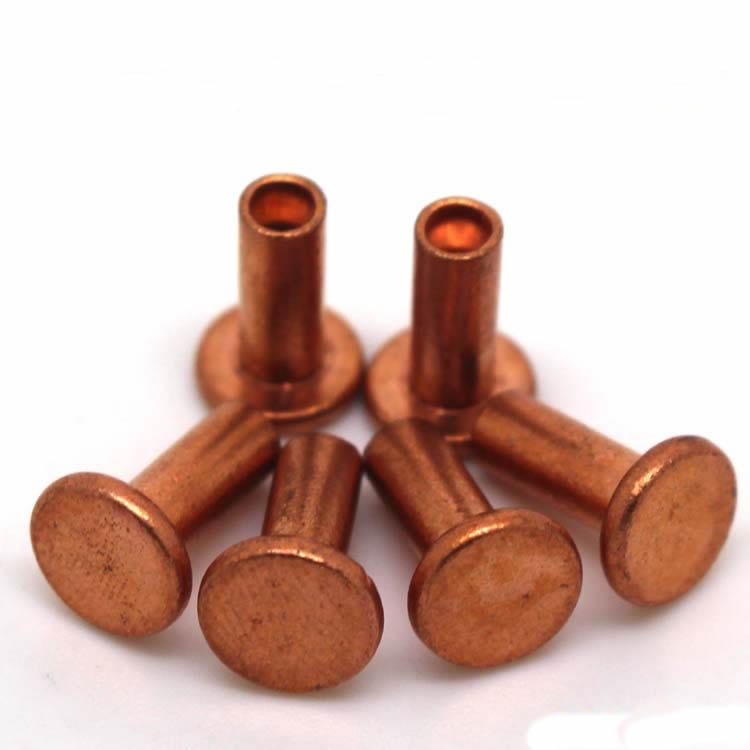
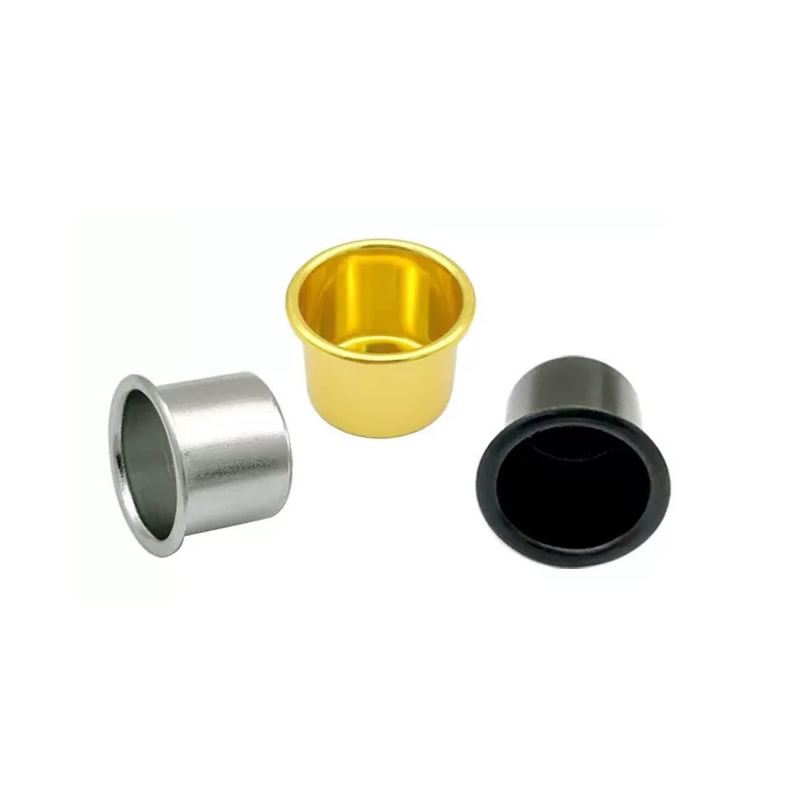
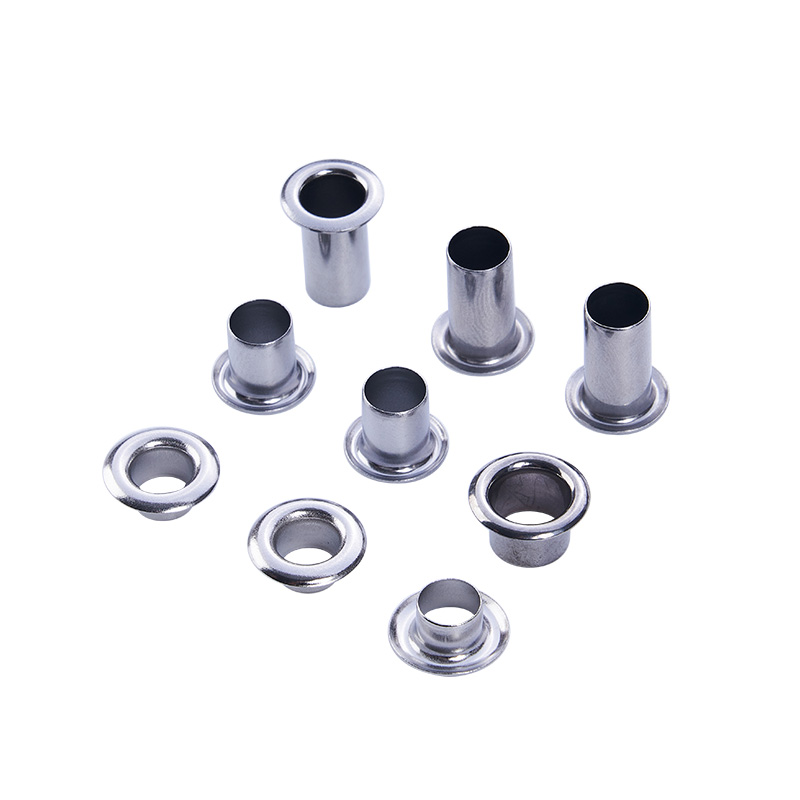
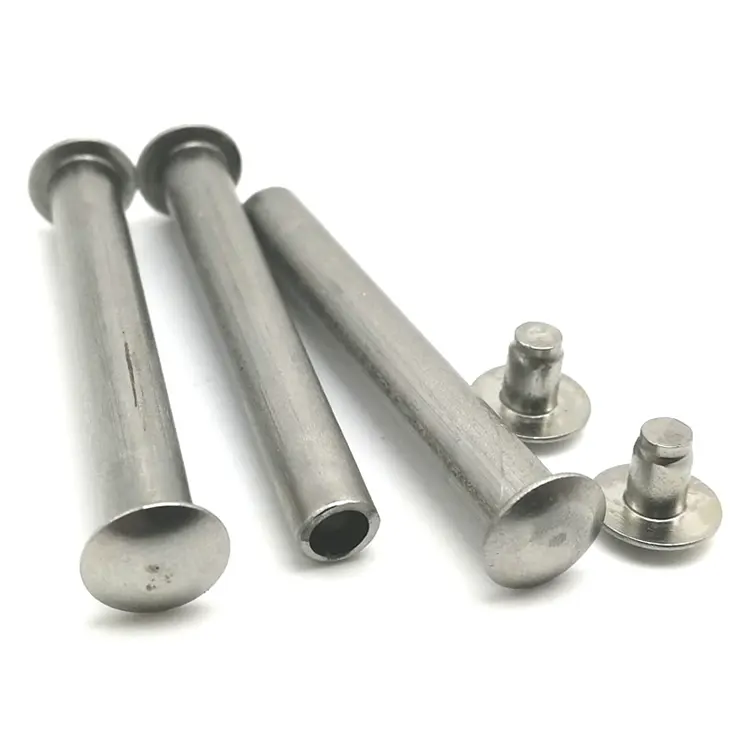
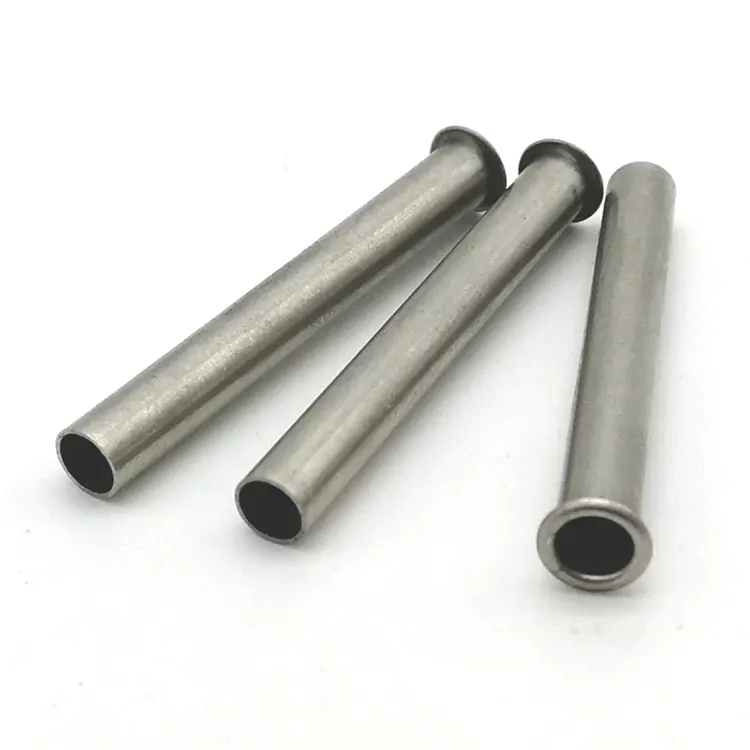
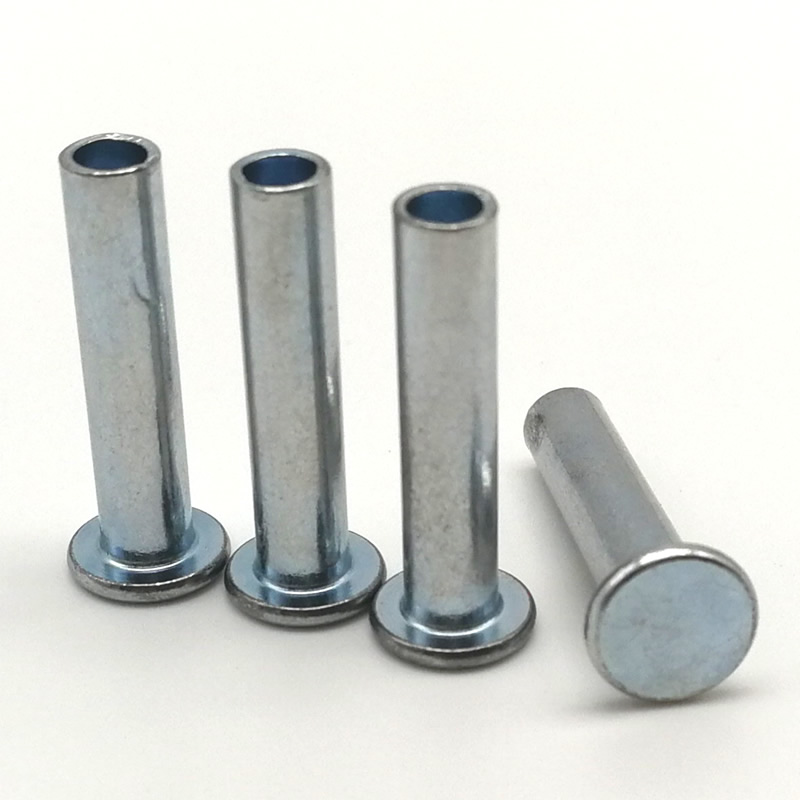
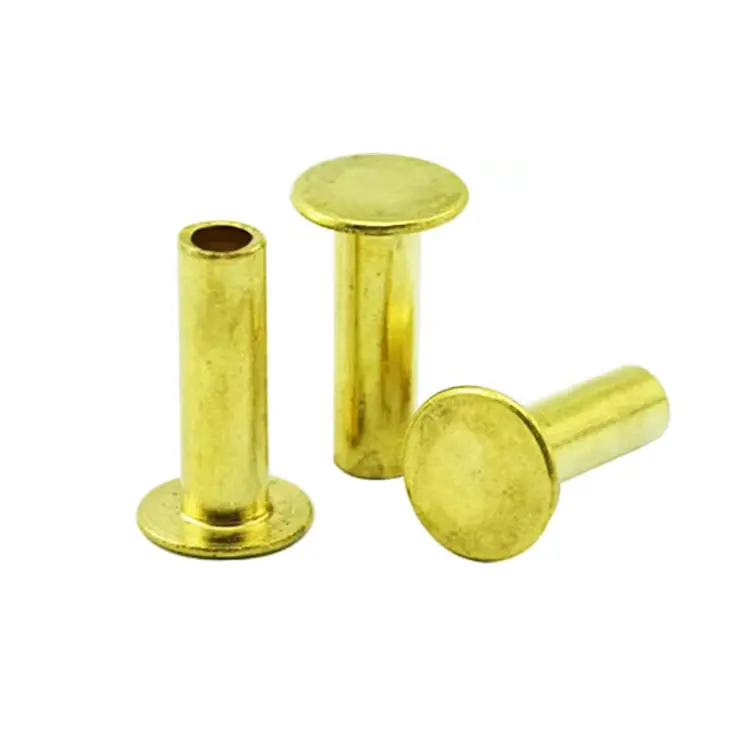
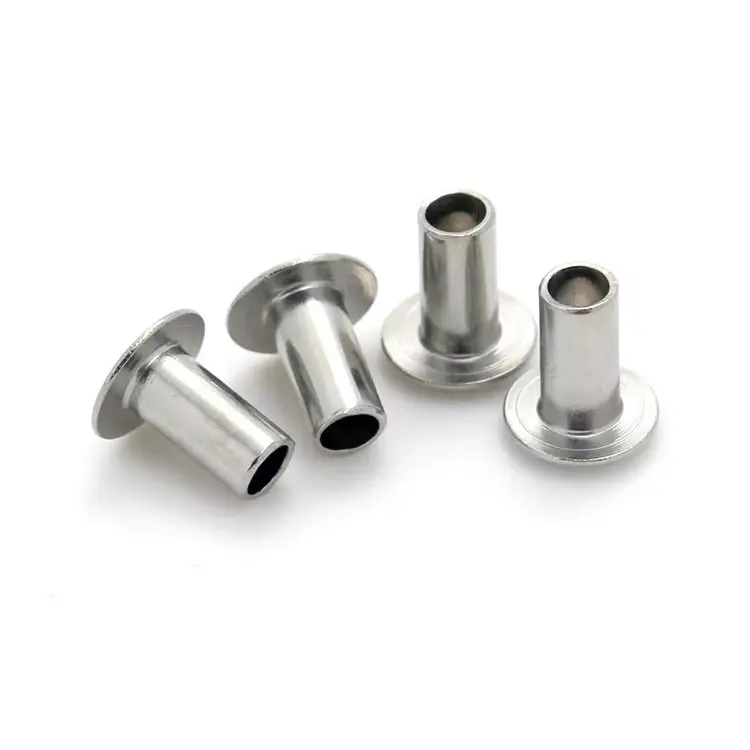
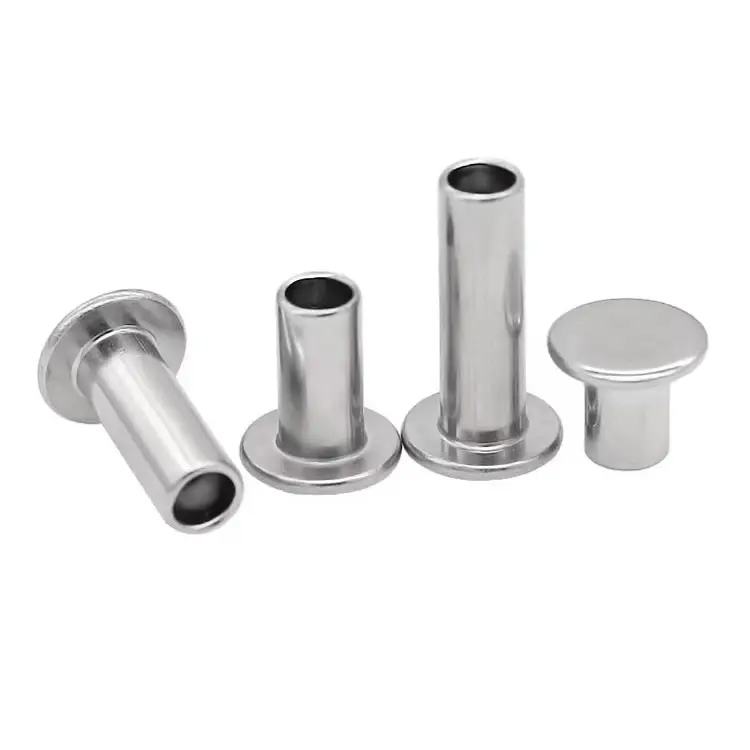
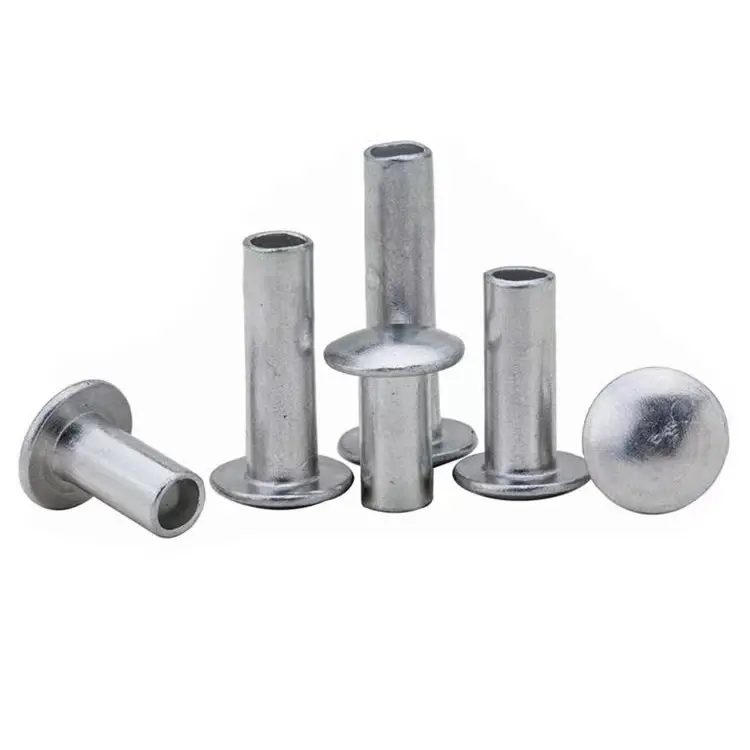
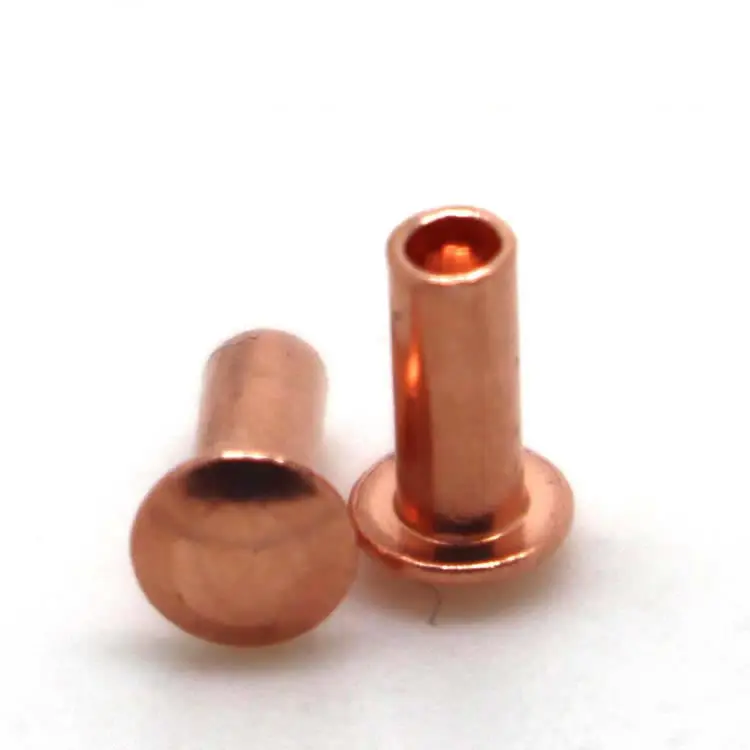
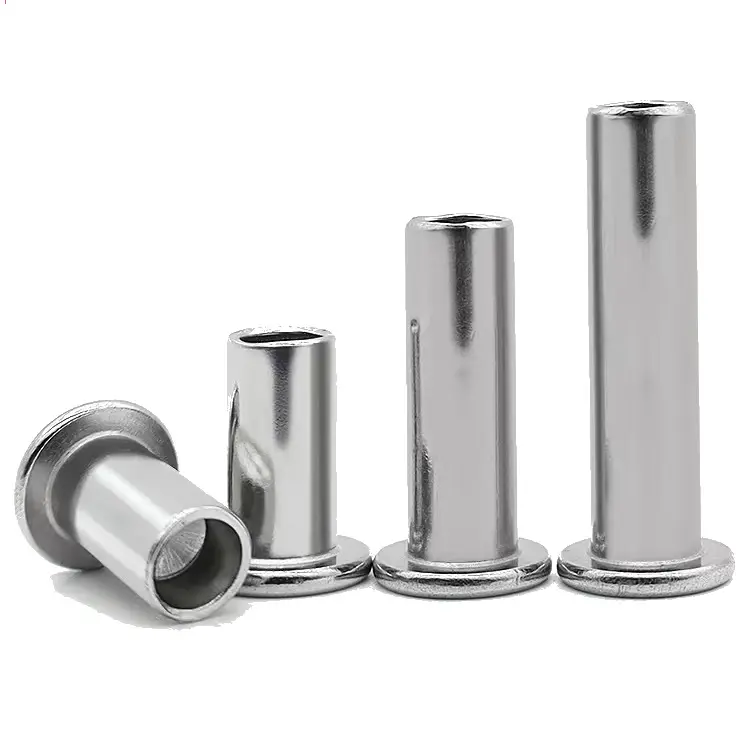
Flat Head Half Tubular Rivets
Nuote Metals, a China-based factory, offers flat head half tubular rivets for smooth, secure fastening in electronics and automotive assembly. The flat head sits flush, while the half-tubular design simplifies setting. Perfect for engineers and repair pros, these rivets deliver reliable strength. Trust the factory for precision and value.
Send Inquiry
Product Description
When a joint requires a perfectly smooth surface without protruding rivet heads, flat head half tubular rivets become the fastener of choice. These components combine the low-profile aesthetics of a countersunk head with the installation efficiency of a hollow-end design.
Nuote Metals has manufactured precision fasteners for over two decades. Our flat head half tubular rivets serve industries where surface smoothness matters—from aircraft interior panels to consumer electronics enclosures and architectural metalwork.
What Are Flat Head Half Tubular Rivets?
Flat head half tubular rivets feature a shallow hollow cavity at the tail end (typically 30–50% of the shank length) and a flat, low-profile head on the opposite side. The term “half tubular” indicates that the hollow depth is approximately half the total shank length.
The defining characteristic of flat head half tubular rivets is the head geometry. Unlike oval or round heads that stand proud of the surface, the flat head sits flush with or slightly below the material surface when properly installed.
This design delivers three distinct advantages:
Smooth exterior surfaces with no snag points
Lower setting force compared to solid rivets (typically 25–30% of solid rivet force)
Controlled material deformation during clinching
See how we make a rivet through the below video
Different Head Types of Rivets Nuote Metals Make
Nuote Metals make rivets with different types of head, such as flat head rivets, round head rivets, countersunk head rivets, truss head rivets, mushroom head rivets etc.
1. Flat head rivets, including flat head solid rivets, flat head semi-tubular rivets, flat head tubular rivets.
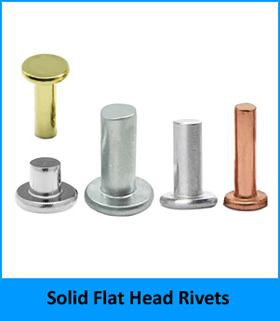
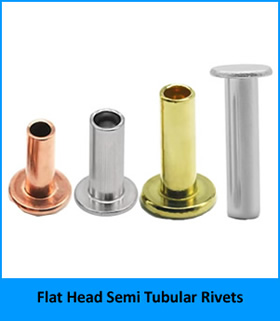
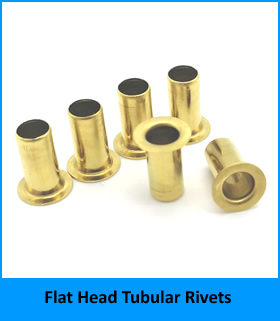
Do you want to know more about our flat head rivets? just click 
2. Round head rivets, including round head solid rivets and round head semi-tubular rivets.
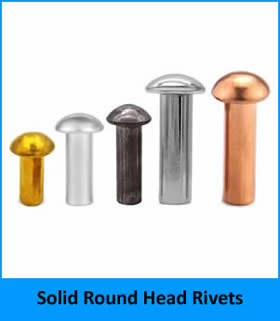
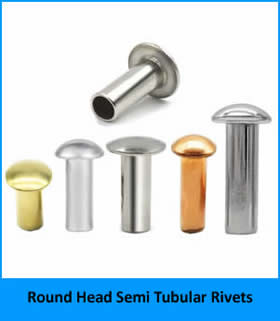
Click  to know more about our round head rivets.
3. Countersunk head rivets, including countersunk head solid rivets, countersunk head semi-tubular rivets, countersunk head tubular rivets.
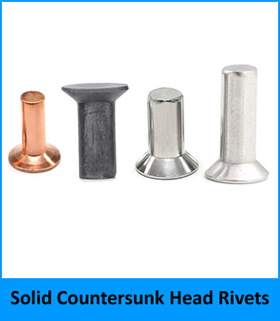
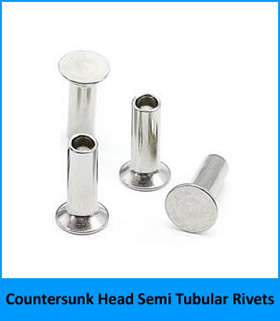
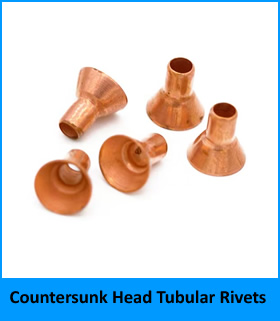
If you want to get more information of countersunk head rivets, please click 
4. Truss head rivets, including truss head solid rivets and truss head semi-tubular rivets.
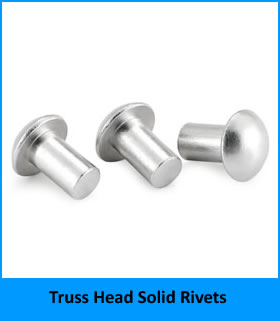
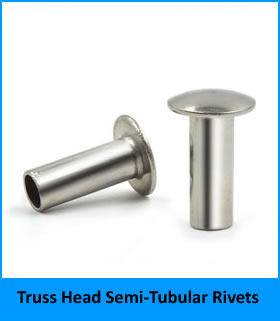
Need more information of truss head rivets? Just click 
5. Mushroom head rivets, including mushroom head solid rivets and mushroom head semi-tubular rivets.
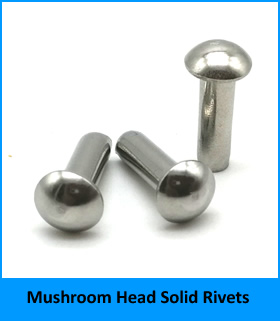
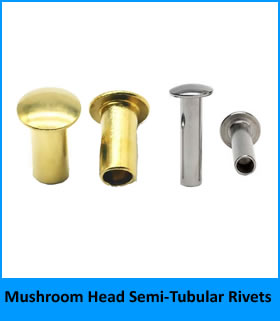
Click  to get more details about our mushroom head rivets.
Why Choose Flat Head Half Tubular Rivets Over Other Fastener Types?
Before reviewing technical specifications, consider where Nuote Metals recommends flat head half tubular rivets over alternatives:
Visible product surfaces where appearance matters (consumer goods, furniture, automotive interiors)
Aerodynamic or hydrodynamic applications where protruding heads create drag
Sliding or rolling contact surfaces where raised heads would interfere with movement
Thin materials that cannot withstand the high setting forces of solid rivets
Mass production environments requiring rapid, consistent installation
Comparison with Other Rivet Head Styles
| Head Style | Surface Profile | Typical Application | Installation Force |
|---|---|---|---|
| Flat Head (Countersunk) | Flush or slightly below surface | Aircraft panels, electronics, architectural metalwork | Low (half tubular design) |
| Oval Head | Raised dome, 1.5–2mm proud | General industrial, machinery guards | Low (half tubular design) |
| Round Head | Full dome, 2–3mm proud | Heavy structural, load-bearing joints | Medium (half tubular) or High (solid) |
| Truss Head | Wide, shallow dome | Soft materials requiring larger bearing area | Low (half tubular design) |
Detailed Product Parameters of Nuote Metals Flat Head Half Tubular Rivets
All flat head half tubular rivets from Nuote Metals are manufactured from low-carbon steel or aluminium, depending on application requirements. The flat head is designed to ISO 7823 countersunk head dimensions, ensuring compatibility with standard countersinking tools.
Material Specifications
| Parameter | Low Carbon Steel | Aluminium (5056) |
|---|---|---|
| Base Material | Q195 / 1008–1010 | 5056 (Al-Mg alloy) |
| Carbon/Magnesium Content | ≤0.10% C | 4.5–5.6% Mg |
| Tensile Strength | 400–500 MPa | 280–350 MPa |
| Hardness (as-manufactured) | HRB 70–85 | HRB 45–60 |
| Head Style | Flat (countersunk) | Flat (countersunk) |
| Head Angle | 90° or 100° | 90° or 100° |
| Surface Finishes | Zinc plated, black oxide, phosphate | Clear anodised, colour anodised |
Standard Dimensions
Nuote Metals manufactures flat head half tubular rivets in the following standard size range. Custom dimensions are available upon request.
| Shank Diameter (mm) | Head Diameter (mm) | Head Height (mm) | Barrel Length Range (mm) | Hollow Depth (mm) | Grip Range (mm) |
|---|---|---|---|---|---|
| 2.0 | 4.0 | 0.5 | 3.0 – 8.0 | 1.5 – 4.0 | 1.0 – 2.5 |
| 2.5 | 5.0 | 0.6 | 4.0 – 10.0 | 2.0 – 5.0 | 1.5 – 3.0 |
| 3.0 | 6.0 | 0.7 | 5.0 – 12.0 | 2.5 – 6.0 | 2.0 – 4.0 |
| 4.0 | 8.0 | 0.9 | 6.0 – 16.0 | 3.0 – 8.0 | 2.5 – 5.5 |
| 5.0 | 10.0 | 1.1 | 8.0 – 20.0 | 4.0 – 10.0 | 3.0 – 7.0 |
| 6.0 | 12.0 | 1.3 | 10.0 – 25.0 | 5.0 – 12.5 | 4.0 – 9.0 |
| 8.0 | 16.0 | 1.7 | 12.0 – 32.0 | 6.0 – 16.0 | 5.0 – 12.0 |
Tolerances: Shank diameter ±0.05mm, head diameter ±0.1mm, overall length ±0.15mm. Hollow depth is approximately 50% of barrel length for standard half tubular rivets.
Mechanical Performance Data (Steel, 3mm Diameter)
| Parameter | Value |
|---|---|
| Single Shear Strength (Steel) | 36,000 – 40,000 psi (250–275 MPa) |
| Tensile Pull-Out Force (Steel, 2mm grip) | 180 – 220 kg (397–485 lbs) |
| Recommended Hole Size | Shank diameter + 0.010″ (0.25mm) |
| Recommended Countersink Depth | Head height + 0.05mm to 0.10mm |
| Setting Force (relative to solid rivet) | Approx. 28% of solid rivet force |
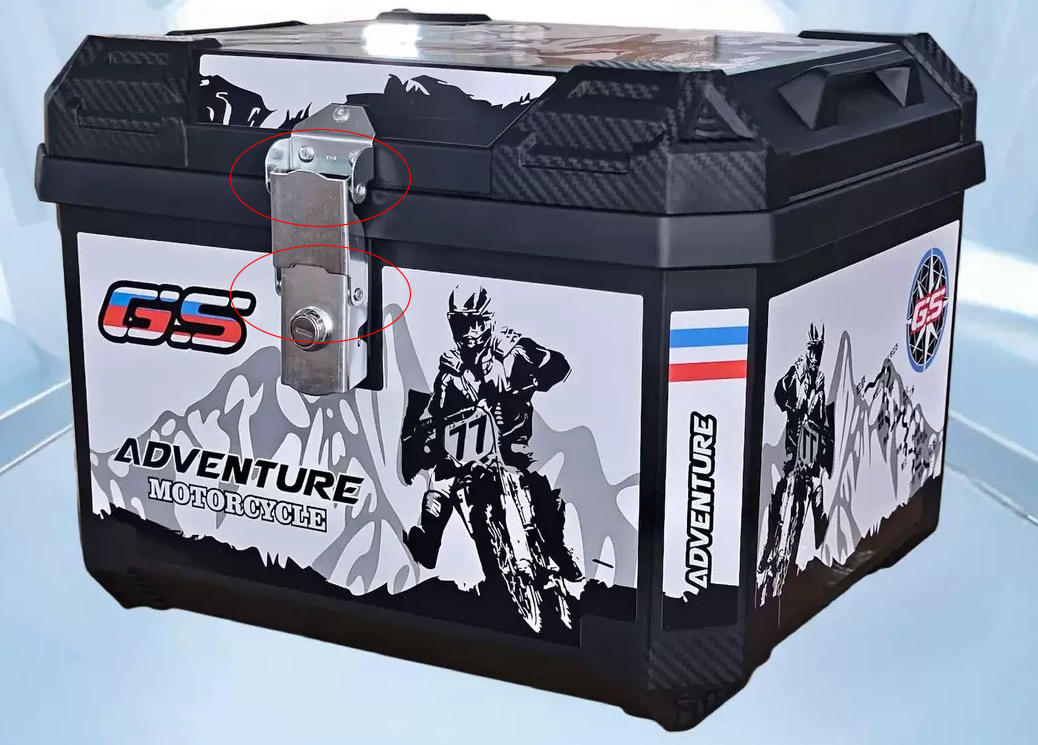
One Customer Example – Motorcycle Top Case Lock Latch
This is one of many applications for flat head half tubular rivets. We include it to show real production use, not to suggest limitation.
A manufacturer of motorcycle luggage (top cases and side panniers) needed to attach the metal lock latch to the ABS plastic backplate. The latch required a rivet with a very low head – the space between the latch and the case inner wall was only 1.2mm. A round head would scrape. A countersunk head would require an expensive mould modification. The customer also needed corrosion resistance because the cases are used in rain and road salt.
Nuote Metals supplied two versions of flat head half tubular rivets depending on the customer’s cost and performance requirements:
304 stainless steel – For premium cases sold in coastal or high‑humidity markets. Passivated finish, 500 hours salt spray.
Carbon steel with nickel plating – For standard cases, offering 96 hours salt spray at a lower cost. Nickel plating also matched the silver latch hardware.
Both versions used the same dimensions: 4mm shank, 8mm flat head (1.0mm head height), 7mm barrel length. The low flat head cleared the 1.2mm gap. The semi‑hollow cavity allowed a gentle press set into ABS without cracking the plastic.
The customer first ordered 10,000 rivets (mixed stainless and steel) for validation. After assembly and field testing on 500 top cases, no failures were reported. Subsequent annual orders have ranged from 50,000 to 100,000 pieces. The manufacturer now uses our flat head half tubular rivets across all top case models, and has also adopted them for side pannier latches.
Authoritativeness Through Compliance
Our flat head half tubular rivets are manufactured to:
ANSI/ASME B18.1.2 (Small Solid Rivets – Countersunk Head dimensions apply)
ISO 14581 (Countersunk flat head rivets)
ISO 9001:2015 Quality Management Systems
RoHS compliance for electronics applications

Installation Guide for Flat Head Half Tubular Rivets
Proper installation of flat head half tubular rivets requires attention to countersink preparation. Follow these steps from Nuote Metals:
Pre-Installation Preparation
Countersink the top hole using a drill or countersink bit matching the rivet head angle (90° or 100°)
Depth the countersink so the rivet head sits 0.05–0.10mm below the material surface
Drill the through hole to diameter = shank diameter + 0.25mm (0.010″)
Deburr both sides of the hole to ensure smooth rivet insertion
Installation Methods
Method 1 – Manual Rivet Setter with Flat Die
Insert the rivet through the prepared holes (head enters the countersunk side)
Place a flat-faced setter against the hollow tail
Strike the setter with a hammer to roll the tail outward
Stop when the tail forms a flat, even clinch
Method 2 – Pneumatic Press (Recommended for Production)
Use a rivet press with a flat anvil and adjustable depth stop
Apply controlled pressure until the hollow tail expands fully
Verify the head sits flush with or below the surface
Method 3 – Orbital Riveting (For Delicate Assemblies)
For electronics or thin materials, orbital (spin) riveting applies low radial force
This method minimises material stress and prevents head damage
Post-Installation Inspection
Run a finger across the rivet head – it should not catch or protrude
Check the clinched tail – it should be uniform, without cracks
Perform pull-test on sample rivets to verify clinch strength
Frequently Asked Questions About Flat Head Half Tubular Rivets
Below are the most common technical inquiries received by Nuote Metals regarding flat head half tubular rivets.
Q1: What is the difference between flat head half tubular rivets and standard solid flat head rivets? Why would I choose the half tubular version?
A: The fundamental difference is the hollow cavity in the tail of flat head half tubular rivets. Solid flat head rivets have no cavity and require high compressive force (using a bucking bar or rivet gun) to form the tail. Half tubular rivets require approximately 70–75% less setting force because only the thin wall of the hollow section needs to roll outward. This lower force translates to faster installation, reduced operator fatigue, and less risk of deforming thin or delicate materials. Additionally, half tubular rivets produce a more consistent clinch in mass production because the material displacement is predictable. Nuote Metals recommends flat head half tubular rivets for any application where the assembly includes thin sheet metal (under 2mm), plastics, or composites. Solid rivets are still preferred for extreme structural loads where maximum shear strength is the only priority.
Q2: How do I select the correct barrel length for flat head half tubular rivets when the material stack thickness varies across the assembly?
A: This is a common challenge in assemblies with stepped or tapered material stacks. The barrel length of flat head half tubular rivets must be sufficient to extend through the thickest portion of the material stack plus an additional 1.0–1.5mm for clinch formation. For variable thickness, Nuote Metals recommends one of two approaches. First, use the thickest material stack to determine barrel length – the rivet will still function in thinner sections, though the clinch may sit slightly higher. Second, for significant thickness variation (more than 2mm difference), consider using two different rivet lengths in different zones of the assembly. Our standard production tolerances allow barrel length variation of ±0.15mm, which accommodates normal manufacturing variation. For extreme cases, Nuote Metals offers stepped barrel designs where the hollow depth varies along the shank – contact our technical team for custom engineering.
Q3: Can flat head half tubular rivets be used in blind applications where I cannot access the tail side after assembly?
A: No. By definition, flat head half tubular rivets require access to both sides of the assembly. The head is installed from one side, and the tail must be accessible to apply the setting tool (hammer, press, or orbital riveter). For blind applications where only one side is accessible, Nuote Metals recommends blind rivets (also known as pop rivets) or self-piercing rivets. However, if you have a flat head requirement in a blind application, consider our flat head blind rivets (pull-type with countersunk head) – these are a different product family but achieve a similar flush finish. Contact Nuote Metals with your specific access constraints, and we will recommend the appropriate fastener type.
Q4: How does the head angle (90° vs 100°) affect the performance of flat head half tubular rivets?
A: The head angle determines how the rivet seats into the countersunk hole. Nuote Metals manufactures flat head half tubular rivets with either 90° or 100° head angles. The 90° head is the traditional standard for inch-system fasteners and remains common in North American industrial applications. The 100° head is specified by ISO and aerospace standards (e.g., NAS rivets) and provides a slightly shallower countersink, which reduces stress concentration around the hole. For most general applications, both angles function identically provided the countersink tool matches the rivet head angle. The critical rule is this: never mix angles. A 100° rivet in a 90° countersink will sit proud of the surface; a 90° rivet in a 100° countersink will sit below the surface but may rock or fail to seat properly. Nuote Metals clearly marks the head angle on all product packaging and certificates. When in doubt, request samples to verify fit.

Why Partner with Nuote Metals for Flat Head Half Tubular Rivets?
Choosing the right supplier ensures consistent head geometry, reliable clinching, and competitive pricing. Nuote Metals offers:
Stock availability: 3000+ common sizes held in inventory (steel and aluminium)
Custom manufacturing: Tooling for non-standard diameters, head angles, or hollow depths
Competitive MOQ: 10,000 pieces for standard sizes; 50,000 pieces for custom dimensions
Free samples: Available for stocked sizes (customer pays shipping)
Technical support: Installation guidance, setting tool recommendations, and troubleshooting
Global shipping: Logistics support to North America, Europe, Asia-Pacific, and South America
100% inspection: Every batch inspected before shipment with retained samples
Contact Nuote Metals today to request a sample kit, dimensional drawing, or quotation for your flat head half tubular rivets application.
Hot Tags: Flat Head Half Tubular Rivets,Half Tubular Rivets Factory,Flat Head Rivets Manufacturer
Related Categories
Send Inquiry
Please feel free to fill your inquiry in the form below. We will reply you in 24 hours.



X
We use cookies to offer you a better browsing experience, analyze site traffic and personalize content. By using this site, you agree to our use of cookies.
Privacy Policy